The Short Answer: No, Not All Genesis Cars Are Electric
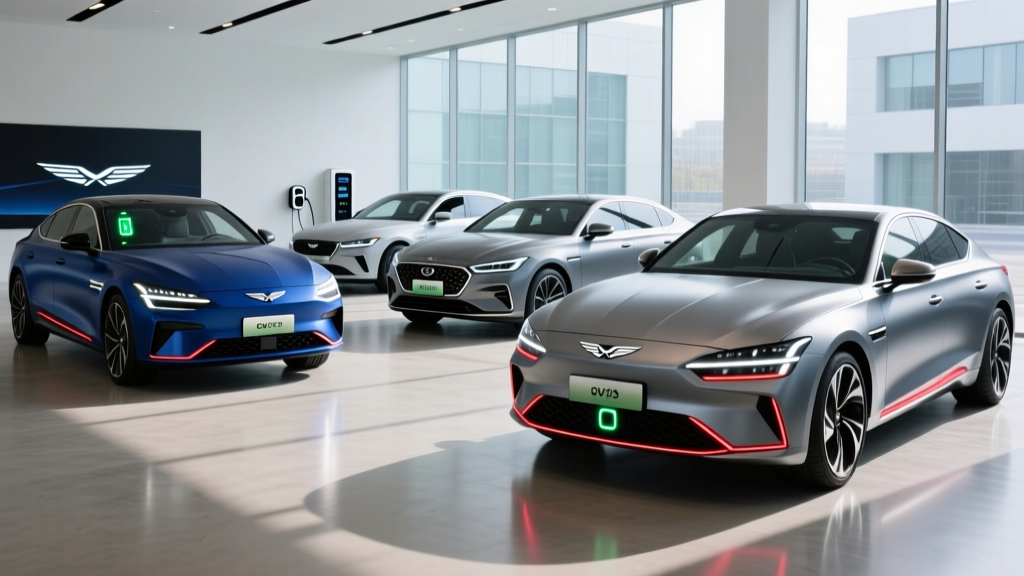
As of the 2026 model year, Genesis sells three fully electric vehicles in the U.S. — the Electrified G80 sedan, Electrified GV70 SUV, and GV60 crossover — alongside several conventional gasoline models (G70, G80, G90, GV70, GV80). Genesis has not yet transitioned its entire lineup to battery-electric powertrains, and the brand has slowed its earlier pledge to go fully electric by 2030. If you walk into a Genesis dealership today, roughly half the showroom is still powered by internal combustion engines.
The Full 2026 Genesis Lineup: Electric vs. Gas
Genesis positions itself as a luxury brand competing with BMW, Mercedes-Benz, and Lexus. Its electrification strategy has been deliberate rather than comprehensive. Here's exactly what's available right now:
| Model | Powertrain | EPA Range / MPG | Starting MSRP |
|---|---|---|---|
| GV60 | BEV (77.4 kWh, NMC) | 248–294 mi | $53,350 |
| Electrified GV70 | BEV (77.4 kWh, NMC) | 236 mi | $68,050 |
| Electrified G80 | BEV (87.2 kWh, NMC) | 282 mi | $80,300 |
| GV70 | Gas (2.5T / 3.5T) | 22–25 MPG combined | $48,050 |
| GV80 | Gas (2.5T / 3.5T) | 21–24 MPG combined | $58,700 |
| G70 | Gas (2.5T / 3.3T) | 23–26 MPG combined | $42,550 |
| G80 | Gas (2.5T / 3.5T) | 24–26 MPG combined | $54,400 |
| G90 | Gas (3.5T V6) | 20–23 MPG combined | $89,150 |
Three battery-electric vehicles against five gasoline models. No plug-in hybrids, no conventional hybrids in the U.S. market. That means if you want electrification from Genesis, you're going fully electric or not at all.
Genesis EVs: Range, Charging, and Real-World Performance
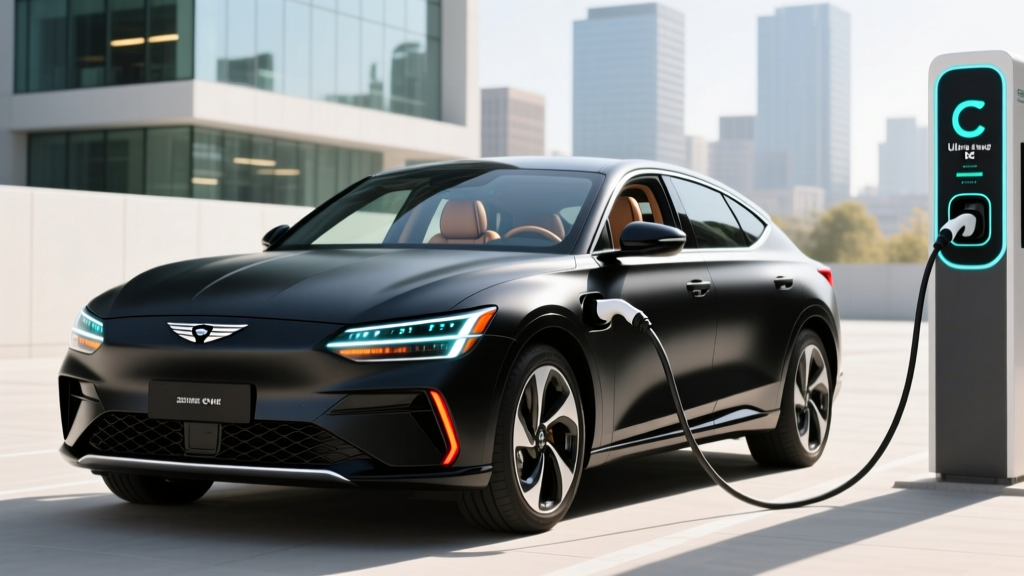
The three Genesis electric models share Hyundai Motor Group's E-GMP platform architecture, which means 800V electrical systems capable of very fast DC charging. Here's what the numbers look like in detail:
GV60 (Compact Luxury Crossover)
The GV60 is Genesis's EV-dedicated model — no gas equivalent exists. With its 77.4 kWh NMC battery, the Standard Range RWD delivers an EPA-estimated 294 miles, while the dual-motor AWD Advanced trim drops to 248 miles. DC fast charging peaks at roughly 240 kW, meaning a 10–80% charge takes approximately 18 minutes under ideal conditions. Real-world highway driving at 75 mph will net closer to 210–260 miles depending on the trim, and cold-weather conditions (below 32°F) can reduce that by another 20–30%. The GV60 produces 314 hp in dual-motor form (429 hp in Performance trim) and hits 0–60 mph in 5.3 seconds (3.9 seconds Performance). (Source: EPA fueleconomy.gov)
Electrified GV70 (Midsize Luxury SUV)
This is the GV70's body shell fitted with a 77.4 kWh battery and dual motors producing 429 hp. The EPA range is 236 miles — modest for the segment, and real-world highway figures often land around 195–215 miles. The trade-off is a 4,500-lb towing capacity and a plush, quiet ride. DC charging peaks around 240 kW with a similar 10–80% time of ~18 minutes. At a base price of $68,050, it competes with the BMW iX and Mercedes EQB, though its range trails both.
Electrified G80 (Full-Size Luxury Sedan)
The flagship EV sedan carries a larger 87.2 kWh NMC pack for an EPA-estimated 282 miles of range. Dual motors deliver 365 hp and a 0–60 time of 4.9 seconds. Real-world highway range typically sits at 235–260 miles. DC charging peaks at approximately 240 kW. The cabin is exceptionally well-insulated, but at $80,300 to start, it's a commitment. The Electrified G80 qualifies for federal tax credits under IRS §30D depending on your income, the vehicle's MSRP cap compliance, and battery-sourcing requirements — consult a tax professional for your specific eligibility.
Cost of Ownership: Genesis EV vs. Gas Models
The purchase price is only the beginning. Here's a five-year cost comparison between the Electrified GV70 and the gas-powered GV70 2.5T, assuming 12,000 miles per year, $3.50/gallon regular fuel, and $0.14/kWh home electricity:
| Cost Factor (5 Years) | Electrified GV70 (BEV) | GV70 2.5T (Gas) |
|---|---|---|
| Purchase Price (base MSRP) | $68,050 | $48,050 |
| Federal Tax Credit (est.) | Up to $7,500* | $0 |
| Fuel / Energy (60,000 mi) | $2,940 (home charging) | $8,727 (premium req.) |
| Maintenance (est.) | $1,200 | $3,500 |
| Insurance (est. avg.) | $12,500 | $10,800 |
| 5-Year Total (before depreciation) | ~$77,190 | ~$71,077 |
*§30D credit eligibility depends on buyer AGI limits ($150K single / $300K joint), MSRP cap ($80K SUVs), battery critical-mineral and component sourcing. Rules are subject to change — verify at irs.gov and with your tax advisor.
The EV costs roughly $6,100 more over five years before depreciation, driven primarily by the $20,000 higher purchase price. However, fuel and maintenance savings of about $8,087 narrow the gap substantially. If you qualify for the full $7,500 credit, the EV breaks nearly even. Depreciation data for Genesis EVs is still maturing, though luxury EVs generally lose 45–55% of value over five years compared to 40–50% for luxury gas models.
Common Misconceptions About Genesis and EVs
| Myth | Fact |
|---|---|
| "Genesis is a fully electric brand now." | Only 3 of 8 U.S. models are electric. The majority of Genesis sales are still gasoline-powered. |
| "Genesis EVs can't road-trip." | With 240 kW peak DC charging and the expanding NACS/Tesla Supercharger network access (via adapter or native port on newer models), a 300-mile trip requires one 20-minute stop. Viable for most routes. |
| "All Genesis EVs get 300+ miles of range." | Only the GV60 Standard Range RWD approaches 294 miles EPA. The Electrified GV70 manages just 236 miles. Real-world highway range is lower still. |
| "I'll save money immediately by going electric." | Higher purchase prices mean break-even takes 4–7 years for most buyers, depending on mileage, electricity rates, and tax-credit eligibility. |
| "Genesis EVs don't qualify for tax credits." | Eligibility varies by model year, battery sourcing, and buyer income. Check the IRS qualified vehicle list — some Genesis EVs have qualified in prior years, and rules evolve. |
Who Should Buy a Genesis EV — and Who Shouldn't
Choose a Genesis EV if:
- You have reliable home Level 2 charging (240V, 40–48A circuit) — this is non-negotiable for convenient ownership
- You value cabin luxury, ride comfort, and dealership service experience over maximum range
- Your daily driving is under 150 miles round-trip, with occasional road trips you're willing to plan around DC fast chargers
- You live in a moderate climate, or you accept 20–30% winter range loss as a tradeoff for heated seats, steering wheel, and a heat pump
- You want the Genesis complimentary maintenance plan (3 years / 36,000 miles) and valet service
Stick with a gas Genesis (or look elsewhere) if:
- You lack home charging access and your area has sparse public DC fast-charging infrastructure
- You regularly drive 300+ miles in a single day in cold or mountainous conditions
- Your budget is under $50,000 — the cheapest Genesis EV starts at $53,350 before incentives
- You tow frequently beyond light loads (the Electrified GV70 can tow 4,500 lbs, but range drops dramatically under load)
- You prioritize cutting-edge EV range and charging — competitors like the Lucid Air (516 mi EPA) or Hyundai Ioniq 5 (311 mi, faster real-world charging curves) lead on pure EV metrics
What First-Time Genesis EV Buyers Need to Know
Home charging is the foundation. A Level 2 home charger (7.2–11.5 kW) adds roughly 25–40 miles of range per hour of charging. Installation costs range from $500–$2,500 depending on your electrical panel capacity — a 200-amp panel typically supports a 48A charger on a 60A circuit without upgrades. Older homes with 100-amp service may require a $1,500–$3,000 panel upgrade. Always get a quote from a licensed electrician before committing.
Charging speed tapers above 80%. Genesis EVs peak at ~240 kW but only sustain that rate between roughly 10–55% state of charge. From 80–100%, charging slows to under 30 kW. Plan road-trip stops around 10–80% intervals for the fastest experience. (Source: Genesis USA)
Battery warranty coverage is strong. Genesis provides a 10-year / 100,000-mile warranty on the high-voltage battery pack, covering defects and capacity loss below a specified threshold (typically 70% state of health). This is among the best in the luxury segment and significantly reduces long-term replacement risk.
NACS adapter access matters. Hyundai Motor Group has committed to adopting the North American Charging Standard (NACS) port on future models. For current Genesis EVs with CCS ports, a NACS adapter enables access to Tesla Supercharger stations — dramatically expanding your fast-charging network on road trips. Confirm adapter availability and compatibility for your specific model year.
Frequently Asked Questions
Is Genesis discontinuing gas cars?
Genesis originally announced plans to go fully electric by 2030, but the brand has since walked back that timeline. As of 2026, gas models remain in active production and sale. A full transition is not imminent.
Does Genesis make any hybrid or plug-in hybrid vehicles?
No. Genesis does not currently sell any hybrid (HEV) or plug-in hybrid (PHEV) models in the United States. The lineup is split between pure gasoline and pure battery-electric — there is no middle ground.
Which Genesis EV has the longest range?
The Electrified G80 sedan at 282 miles EPA, thanks to its larger 87.2 kWh battery. The GV60 Standard Range RWD achieves 294 miles EPA but only in its single-motor, lower-output configuration.
Are Genesis EVs reliable?
Genesis as a brand has consistently ranked near the top of J.D. Power initial quality and dependability studies. The E-GMP platform underpinning its EVs is shared with the Hyundai Ioniq 5 and Kia EV6, which have accumulated hundreds of thousands of real-world miles with generally positive reliability feedback. Long-term battery degradation data for Genesis-specific packs is still limited given the models' 2022–2023 launch dates.
Can I charge a Genesis EV at a Tesla Supercharger?
Current CCS-equipped Genesis EVs can access Tesla Superchargers using a NACS adapter. Future Genesis models are expected to ship with native NACS ports. Always verify adapter compatibility and check the Tesla app for station availability before relying on Supercharger access.
What does it cost to charge a Genesis EV at home?
At the U.S. average residential rate of ~$0.14/kWh, fully charging the GV60's 77.4 kWh battery costs approximately $10.84. The Electrified G80's 87.2 kWh pack costs about $12.21. That equates to roughly $0.04–$0.05 per mile — compared to $0.14–$0.18 per mile for a gas Genesis at current fuel prices.