What Is the Archer Electric Airplane?
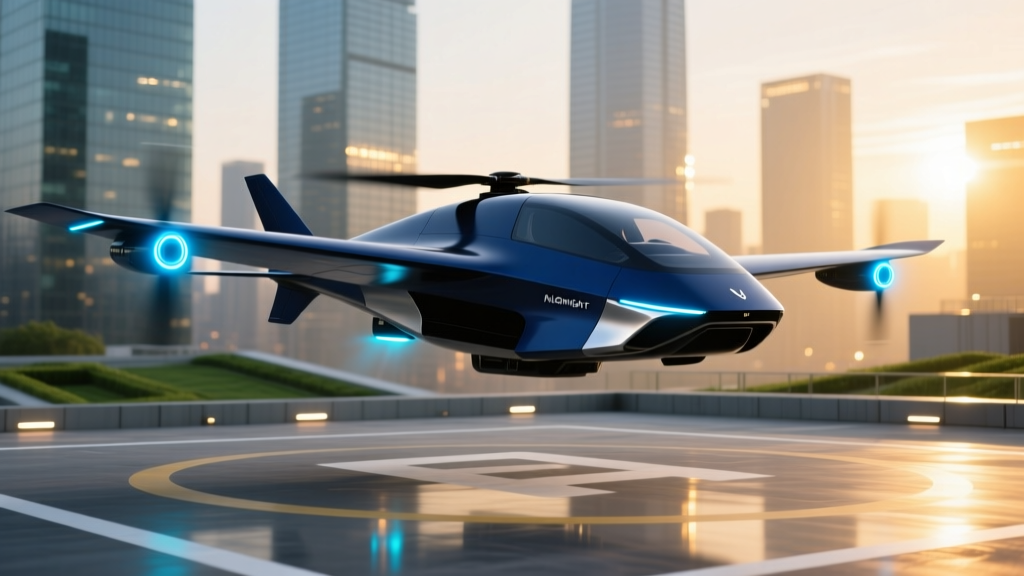
The Archer Midnight is a piloted electric vertical takeoff and landing (eVTOL) aircraft built by Archer Aviation. It is not a consumer vehicle you can buy — it is designed for short-range urban air taxi services (air mobility networks) launching in select U.S. and international cities. As of early 2026, Archer has completed FAA certification flight testing milestones and begun limited commercial operations through partnerships with airlines like United Airlines. The Midnight carries up to four passengers plus a pilot, cruises at roughly 150 mph, and targets trips of 10–20 miles. Projected per-seat ride pricing starts around $50–$80 for a typical airport-transfer route, aiming to compete with premium rideshare or helicopter services — not with ground-based EVs you drive yourself.
If you landed here searching for an electric vehicle you can purchase and charge in your garage, the Archer Midnight is not it. But if you're an EV-curious buyer or current owner trying to understand how electric aviation fits into the broader electrified-transport ecosystem — and whether it will affect your commute, your wallet, or your next car purchase — this guide breaks down exactly what Archer's electric airplane is, what it costs, and how its underlying battery and powertrain technology compares to the EVs on your driveway.
Midnight eVTOL: Core Specs and Battery Architecture
Archer's Midnight uses a distributed electric propulsion system with 12 small electric motors — six dedicated lift motors for vertical takeoff and landing, and six tilt-rotors that transition to forward cruise flight. This is fundamentally different from a single-motor or dual-motor EV powertrain, but the underlying battery chemistry and energy-management challenges are remarkably similar to what automakers face with ground-based EVs.
| Specification | Value |
|---|---|
| Aircraft Type | Piloted eVTOL (4 passengers + 1 pilot) |
| Propulsion | 12 electric motors (6 lift, 6 tilt-cruise) |
| Battery Chemistry | NMC (nickel manganese cobalt) lithium-ion cells |
| Estimated Battery Capacity | ~80–100 kWh usable (estimated, not publicly confirmed) |
| Cruise Speed | ~150 mph (241 km/h) |
| Target Range per Charge | ~20 miles (32 km) with reserves |
| Charge Turnaround Time | ~10 minutes between flights (target) |
| Noise Level (cruise) | ~45 dBA at ground (target, helicopter is ~80 dBA) |
| Max Takeoff Weight | ~6,500 lbs (estimated) |
| FAA Certification Status | Type certification in progress; limited ops authorized |
| Consumer Purchase | Not available — ride-service only |
The battery pack is the most EV-relevant component here. Archer has partnered with major cell suppliers and uses high-energy-density NMC pouch cells — the same chemistry family found in many long-range EVs like the Ford Mustang Mach-E Extended Range and the Hyundai Ioniq 5. The difference is that aviation demands extreme power-to-weight ratios: the Midnight's battery must deliver enormous discharge rates during vertical lift (far exceeding any EV's peak acceleration draw) while staying light enough to keep the aircraft airborne. This means the pack operates under thermal and electrical stress that dwarfs typical automotive duty cycles.
How Archer's Midnight Compares to Ground-Based EVs and Helicopters
The most useful comparison isn't Archer vs. a Tesla — it's Archer vs. the alternatives for the specific short-trip use case it targets: airport transfers, downtown-to-suburb hops, and event shuttles in congested metro areas.
| Mode | Travel Time | Estimated Cost (Per Person) | Energy Source |
|---|---|---|---|
| Archer Midnight (eVTOL) | ~10–12 min (flight) + 5 min boarding | $50–$80 | Grid-charged NMC battery |
| Uber Black / Waymo (ground EV) | 35–75 min (traffic-dependent) | $45–$90 | Grid-charged EV battery |
| Traditional Helicopter | ~12 min (flight) | $200–$500+ | Jet-A fuel |
| Personal EV (owner-driven) | 30–70 min | ~$3–$5 (electricity) | Home/public charging |
The data shows a clear positioning: the Midnight aims to undercut helicopter pricing dramatically while beating ground transport on time. For a business traveler making a tight connection, a 15-minute, $65 flight from Manhattan to JFK could justify the premium over a 60-minute Uber. But for routine commuting, a personal EV at roughly $0.04–$0.06 per mile (based on national average electricity rates of ~$0.16/kWh and typical EV efficiency of 3–4 mi/kWh) remains orders of magnitude cheaper.
Real Costs: What Powers the Midnight, and What It Means for EV Owners
Archer's operating model depends on rapid battery swap or ultra-fast charging between flights — targeting roughly 10-minute turnarounds. This requires charging infrastructure delivering sustained power in the 400–600 kW range per aircraft, which exceeds even the most aggressive DC fast-charging stations available to consumer EVs today (Tesla V4 Superchargers peak around 350 kW; Electrify America's fastest stalls deliver 350 kW).
Energy & Charging Cost Context
| Metric | Archer Midnight (est.) | Typical Long-Range EV (e.g., Tesla Model Y LR) |
|---|---|---|
| Battery Capacity | ~80–100 kWh | ~75 kWh usable |
| Energy per Trip | ~30–50 kWh (20-mi flight w/ VTOL) | ~5–7 kWh (20-mi drive at 3.5 mi/kWh) |
| Charging Power | ~400–600 kW (dedicated vertiport) | Up to 250 kW (DC fast charge) |
| Cost per Trip (energy) | ~$5–$10 (commercial electricity rate) | ~$0.80–$1.75 (home L2 at $0.16/kWh) |
| Cost per Mile (energy only) | ~$0.25–$0.50 | ~$0.04–$0.06 |
The energy economics make one thing clear: vertical flight is enormously energy-intensive. The Midnight consumes roughly 6–8× more energy per mile than a ground-based EV. That's physics, not engineering inefficiency — lifting 6,500 lbs vertically and sustaining flight requires far more work than rolling 4,000 lbs on pavement. This is why eVTOL services will always carry a price premium over ground EVs, even as battery costs decline.
For EV owners, the relevant takeaway is that the same battery supply chain (NMC cells, thermal management systems, power electronics) serves both aviation and automotive applications. As Archer and competitors like Joby Aviation scale cell procurement, expect upward pressure on NMC supply — potentially affecting EV battery pricing and availability in the 2027–2030 timeframe, though LFP adoption in ground vehicles may partially offset this.
Battery Degradation, Chemistry, and Why Aviation Pushes the Limits
EV owners worry about battery degradation over 100,000+ miles. Archer faces a far more aggressive degradation profile: each flight cycle involves a high-C-rate discharge during takeoff (potentially 5–8C, compared to an EV's typical 1–3C during hard acceleration) followed by rapid high-power recharging. This thermal cycling accelerates capacity loss.
| Factor | eVTOL (Archer Midnight) | Consumer EV (Typical NMC Pack) |
|---|---|---|
| Peak Discharge Rate | 5–8C (vertical lift) | 1–3C (0-60 acceleration) |
| Charge Rate | 4–6C (rapid turnaround) | 1–2C (DC fast charge, 10–80%) |
| Cycles per Day | 15–30 flights | 0.5–1 full equivalent cycle |
| Expected Pack Swap Interval | Every 1–3 years (est.) | 8–10 years / 100,000+ mi before 10% loss |
| Thermal Management | Liquid cooling, aviation-grade | Liquid cooling, automotive-grade |
| Warranty (consumer) | N/A (operator-maintained) | 8 yr / 100,000 mi (federal mandate, 70% capacity) |
Archer plans to manage this through modular battery packs designed for quick swap at vertiports, rather than waiting for a full charge. This sidesteps the degradation problem operationally — retired aviation packs may then cascade into stationary energy storage, similar to how some EV manufacturers envision second-life applications for degraded car batteries.
Myths vs. Facts: Common Misconceptions About Archer's Electric Airplane
| Myth | Fact |
|---|---|
| "I can buy an Archer Midnight for personal use." | No. The Midnight is designed and certified for commercial air-taxi operations only. There is no consumer purchase program. Expected unit cost to operators is estimated at $3–5 million per aircraft. |
| "It's fully autonomous / self-flying." | The Midnight is a piloted aircraft with a human pilot on board. Archer has discussed future simplified-vehicle-operations (SVO) to reduce pilot workload, but it is not autonomous in the way a Waymo Level 4 robotaxi is. Aviation certification for pilotless passenger aircraft is years away. |
| "It has 100+ miles of range like an EV." | No. The target range is approximately 20 miles per charge with reserves. This is intentional — the business model focuses on short urban hops, not regional travel. A 20-mile mission at 150 mph takes about 8–10 minutes of flight time. |
| "It qualifies for the $7,500 federal EV tax credit." | No. The IRS §30D clean vehicle credit applies to qualified on-road motor vehicles, not aircraft. eVTOLs do not meet the statutory definition of a motor vehicle for tax credit purposes. |
| "It will replace my EV commute." | Not for daily use. At $50–$80 per ride, the Midnight targets premium, time-sensitive trips (airport runs, meetings across town in gridlock). For routine commuting, a personal EV or PHEV remains far more economical. |
| "It's silent like an EV." | It's significantly quieter than a helicopter (target ~45 dBA at cruise vs. ~80 dBA for a Bell 407), but not silent. Vertical takeoff and landing generate audible rotor noise — closer to a large drone than a car. |
Who Should Care About Archer, and What It Means for Your EV Decision
If you're currently shopping for an EV or PHEV, Archer's Midnight doesn't change your buying calculus today. But understanding where eVTOL fits in the transport hierarchy helps frame smarter long-term decisions:
Decision Framework: What Should You Actually Buy?
- Choose a personal EV (BEV) if: You need daily transportation under 50 miles round-trip, have access to home Level 2 charging, and want the lowest per-mile cost (~$0.04–$0.06/mi energy). Models like the Hyundai Ioniq 5 ($42,600 base, 318 mi EPA range) or Chevrolet Equinox EV ($33,600, 319 mi) offer strong value.
- Choose a PHEV if: You need electric-only range for daily commuting (25–40 mi) but want gas-engine flexibility for road trips without charging-infrastructure dependence. The Toyota RAV4 Prime (42 mi electric, 38 MPG gas) remains a benchmark.
- Consider an eVTOL ride (Archer Midnight) if: You're a frequent flyer making time-critical airport transfers in a city where Archer operates (initially targeting markets like New York, Los Angeles, and the UAE via partners), and you'd pay $50–$80 to save 30–60 minutes vs. ground transport.
- Stick with gas or hybrid if: You lack reliable home charging, regularly drive 300+ miles in rural areas, or need to minimize upfront cost. A conventional HEV like the Toyota Camry Hybrid (51/53 MPG, ~$30,000) still wins on pure economics for high-mileage drivers without charging access.
Real-World Ownership Considerations: The Ground Truth for EV Buyers
While Archer builds the future of urban air mobility, the practical realities of EV ownership in 2026 still come down to a few concrete factors that no flying car can solve:
Home charging access remains the single biggest determinant of EV satisfaction. A Level 2 home charger (240V, 32–48 amps / 7.7–11.5 kW) adds roughly 25–37 miles of range per hour of charging — enough to fully replenish most EVs overnight. Installation costs range from $800–$2,500 depending on panel capacity, conduit runs, and local permitting. If your home has a 200-amp electrical panel with spare capacity, expect the lower end; older homes with 100-amp service may need a panel upgrade ($1,500–$3,000 additional).
Cold-weather range loss is real and measurable. At 20°F, expect 20–30% range reduction vs. the EPA sticker in most EVs without a heat pump. EVs equipped with heat pumps (Hyundai Ioniq 5, Tesla Model Y, Ford F-150 Lightning) lose closer to 15–20%. Archer's Midnight faces similar thermal challenges — battery performance in cold air is a factor in route planning for northern-city vertiports.
Insurance costs for EVs remain 15–25% higher on average than comparable gas vehicles, driven by higher repair costs for battery packs and specialized body structures. This applies to ground EVs only — you won't be insuring an Archer Midnight as a private owner.
Frequently Asked Questions
When will Archer's Midnight be available for passengers?
Archer has targeted commercial service entry in 2025–2026, with initial operations in partnership with United Airlines (airport transfer routes) and international partners including the UAE's Abu Dhabi Aviation. FAA type certification milestones have been progressing, but exact public launch dates depend on final regulatory approval. Check Archer's official site for the latest certification and route announcements.
How much will a ride on the Archer Midnight cost?
Archer has publicly stated a target of pricing rides comparably to premium ground rideshare (Uber Black) — roughly $50–$80 for a typical 10–20 mile trip, depending on the route and demand. This is significantly cheaper than traditional helicopter transfers ($200–$500+) but more expensive than standard UberX or a personal EV.
What battery chemistry does the Archer Midnight use?
Archer uses NMC (nickel manganese cobalt) lithium-ion cells, chosen for their high energy density — critical for aviation where every pound matters. This is the same chemistry family used in many long-range consumer EVs, though Archer's cells are optimized for much higher discharge rates and rapid cycling.
Can I charge the Archer Midnight at home or at a regular EV charger?
No. The Midnight requires dedicated vertiport charging infrastructure delivering an estimated 400–600 kW. This is proprietary aviation infrastructure, not compatible with consumer CCS, NACS, or CHAdeMO connectors. You will only encounter Archer aircraft at designated vertiports.
Does the Archer Midnight qualify for any federal tax credits or incentives?
No. The IRS §30D clean vehicle credit applies only to qualified on-road motor vehicles meeting specific MSRP, income, and battery-sourcing requirements. Aircraft — including electric aircraft — are not eligible. Archer's commercial operator partners may benefit from other aviation or clean-energy incentives at the state or federal level, but these do not extend to individual consumers.
Is the Archer Midnight safe compared to helicopters or ground EVs?
Archer's design incorporates multiple redundant propulsion systems — if one motor or battery segment fails, the remaining motors can sustain controlled flight. This distributed-electric-propulsion architecture eliminates the single-point-of-failure risk inherent in a helicopter's single main rotor. However, as of early 2026, there is limited operational safety data from commercial passenger service. The FAA's type certification process is rigorous and ongoing. For comparison, ground-based EVs have extensive real-world safety data, with models like the Tesla Model Y and Hyundai Ioniq 5 earning IIHS Top Safety Pick+ ratings.
Will eVTOL services like Archer make my EV less relevant?
No. eVTOLs and personal EVs serve fundamentally different use cases. Archer's Midnight targets premium, short-distance, time-critical trips for a small number of passengers at $50–$80 per ride. Your personal EV handles daily commuting, errands, and road trips at $0.04–$0.06 per mile. They're complementary, not competitive — much like how commercial aviation didn't replace the automobile.