Quick Answer: Is the Arc Sport Electric Boat Right for You?
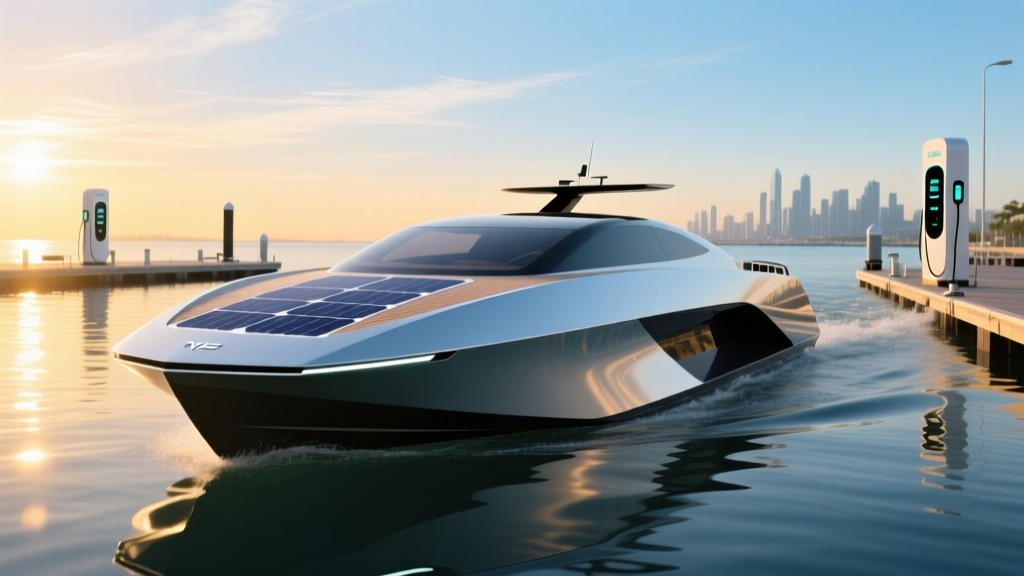
The Arc Sport is a premium 19-foot electric runabout built by Arc Boats (a Los Angeles startup) with a 226 kWh lithium-ion battery, roughly 50 miles of real-world range at cruising speeds, and a starting price around $300,000. It is not a direct EV-car equivalent — marine electrification has different range, charging, and usage dynamics. The Arc Sport makes sense if you boat primarily on lakes or coastal waters within 20-25 miles of your dock, have access to shore-power charging (Level 2 or DC fast), and value silent, emission-free operation over long-distance range. It does not qualify for the IRS §30D federal EV tax credit, which applies only to highway-capable four-wheeled vehicles.
Electric boats are carving out a niche in the marine world much like early EVs did in the auto industry: expensive upfront, limited in range compared to internal combustion, but offering a fundamentally different on-water experience. The Arc Sport is one of the most talked-about entries in this space. Here's what you actually need to know before considering one.
Arc Sport Specifications at a Glance
| Specification | Arc Sport (2026 Model Year) |
|---|---|
| Length | 19 feet |
| Battery Capacity | 226 kWh (lithium-ion, NMC chemistry) |
| Motor Output | ~500 HP equivalent |
| Top Speed | ~40+ mph (varies by load/conditions) |
| Estimated Range (cruising) | ~50 miles at moderate speeds; less at wide-open throttle |
| Charging (Shore Power Level 2) | ~10-15 kW AC; full charge in 15-20+ hours |
| DC Fast Charging | Supported; rates vary by station availability |
| Starting Price | ~$300,000+ (varies by configuration) |
| Warranty | Limited hull + battery warranty (confirm with manufacturer) |
| IRS §30D Tax Credit Eligible? | No — credit applies to highway motor vehicles only |
A 226 kWh battery is enormous by automotive standards — for context, a Tesla Model S uses roughly 100 kWh and a Ford F-150 Lightning around 131 kWh. But water creates far more resistance than rolling tires on pavement, so energy consumption per mile is drastically higher. Think of it like comparing MPGe across vehicle classes: the physics of hull drag simply demands more energy.
Range Reality: What 50 Miles on Water Actually Means
The Arc Sport's range is heavily dependent on speed, just as an EV's highway efficiency drops at 80 mph compared to 55 mph. At wide-open throttle, expect range to shrink dramatically — potentially to 20-25 miles. At a leisurely cruising pace of 15-20 mph, the 50-mile estimate holds more reliably.
EPA-equivalent range estimate: ~50 miles at cruising speed.
Real-world expectation: 35-50 miles depending on speed, passenger load, water conditions, and temperature. Cold water and headwinds reduce range further, similar to cold-weather range loss in EVs.
For most recreational boaters on inland lakes, reservoirs, or protected coastal bays, 35-50 miles is sufficient for a full day out. The average recreational boating trip in the U.S. covers well under 30 miles round-trip from the dock, according to industry surveys. But if you routinely run 40+ miles offshore or between distant marinas, the Arc Sport's range becomes a genuine constraint — not unlike early Nissan Leaf owners discovering 80 miles of range wasn't enough for their commute.
Charging the Arc Sport: What Dock Power Looks Like
Charging infrastructure for electric boats is far less mature than the EV charging network. Here's what you're working with:
| Charging Method | Power (kW) | Approximate Full-Charge Time | Availability |
|---|---|---|---|
| Standard 120V Shore Outlet | ~1.5 kW | 150+ hours (impractical) | Most docks |
| 240V Level 2 (Marine-Rated) | 10-19 kW | 12-22 hours | Requires installation |
| DC Fast Charging (Marine) | 50-150+ kW | ~1.5-4 hours (10-80%) | Limited; growing in select marinas |
The practical path for most Arc Sport owners is a dedicated 240V Level 2 marine charging setup at their dock or slip. This mirrors home EV charging — you plug in after your outing and the boat is ready the next morning. Installation costs for a marine-rated 240V circuit at a private dock typically range from $3,000 to $8,000+ depending on distance from your electrical panel, whether a subpanel is needed, and local permitting. Always hire a licensed electrician experienced with marine environments — saltwater corrosion and GFCI requirements add complexity beyond a standard home EV charger install.
DC fast charging on the water is still rare. A handful of marinas in California, Florida, and the Pacific Northwest have begun installing marine DC chargers, but you cannot rely on a public network the way EV drivers use Electrify America or Tesla Superchargers. Plan your trips around your dock's charging capability.
Arc Sport vs. Gas-Powered Boats: Cost and Experience Comparison
| Factor | Arc Sport (Electric) | Comparable 19-ft Gas Runabout |
|---|---|---|
| Purchase Price | ~$300,000+ | $60,000 - $120,000 |
| Fuel/Energy Cost per Hour (cruising) | ~$5-15 (electricity at $0.15-$0.30/kWh) | ~$30-60 (gasoline at $3.50-$5.00/gal) |
| Annual Maintenance | Minimal — no engine oil, impeller, exhaust, winterization of engine | $1,500-$4,000+ (oil, filters, impeller, winterization, fuel stabilizer) |
| Noise Level | Near-silent at cruising speed | 75-90+ dB at cruising speed |
| Emissions on Water | Zero tailpipe; no fuel/oil in water | Exhaust + potential fuel/oil leakage |
| Range | ~35-50 miles | 150-300+ miles |
| Refuel/Recharge Time | 12-22 hours (Level 2); faster with DC | 5-10 minutes at a marina fuel dock |
| Federal Tax Credit | Not eligible (§30D is for highway vehicles) | N/A |
The purchase price gap is stark. At $300,000+, the Arc Sport costs 3-5x what a well-equipped gas runabout commands. Where the electric boat wins is in ongoing costs: electricity is dramatically cheaper than marine gasoline (which often carries a premium over street gas at marina fuel docks), and the elimination of engine maintenance — no oil changes, no impeller replacements, no exhaust manifold corrosion, no winterization of a combustion engine — saves thousands annually.
Even so, simple payback math doesn't close the $180,000-$240,000 purchase gap through fuel and maintenance savings alone within a reasonable timeframe. The Arc Sport is a lifestyle and experience purchase, not a pure economic play — similar to how early Tesla Roadster buyers weren't motivated by fuel savings.
5-Year Ownership Cost Estimate
| Cost Category | Arc Sport (Electric) | Gas Runabout (~$90K) |
|---|---|---|
| Purchase Price | $300,000 | $90,000 |
| Dock Charging Install (one-time) | $5,000 | $0 |
| Annual Energy/Fuel (100 hrs/yr) | $1,500/yr ($7,500 total) | $4,500/yr ($22,500 total) |
| Annual Maintenance | $500/yr ($2,500 total) | $2,500/yr ($12,500 total) |
| Insurance (est. annual) | $4,000-$6,000/yr ($25,000 total) | $1,500-$2,500/yr ($10,000 total) |
| 5-Year Total Estimated Cost | ~$340,000 | ~$135,000 |
Insurance for the Arc Sport tends to run higher due to the replacement cost of the battery pack and the relative newness of electric marine technology — insurers have less actuarial data. Get quotes before purchasing.
Common Misconceptions About Electric Boats
| Myth | Fact |
|---|---|
| "Electric boats are slow." | The Arc Sport produces roughly 500 HP equivalent and hits 40+ mph. Electric motors deliver instant torque — acceleration is brisk. |
| "You can't go anywhere with 50 miles of range." | The average recreational boating trip is under 30 miles round-trip. Most lake and bay boating fits comfortably within the range. |
| "The battery will need expensive replacement in a few years." | Marine-grade NMC batteries are designed for thousands of charge cycles. Arc provides battery warranty coverage; confirm specific terms with the manufacturer. |
| "Electric boats qualify for the $7,500 EV tax credit." | They do not. The IRS §30D clean vehicle credit applies to highway-capable four-wheeled motor vehicles. Boats are excluded. |
| "You can charge from any dock outlet." | A standard 120V outlet would take over 150 hours for a full charge. You need a dedicated 240V circuit for practical overnight charging. |
Decision Framework: Should You Buy the Arc Sport?
Choose the Arc Sport if:
- You boat primarily on lakes, reservoirs, or protected coastal waters within 20-25 miles of your dock
- You have (or can install) 240V shore power at your dock or slip
- You value silent operation — no engine noise means conversation, music, and nature sounds dominate
- You want zero on-water emissions and no gasoline/oil in the water
- You have the budget for a $300,000+ premium watercraft and accept that economic payback vs. gas is long-term
- You're comfortable being an early adopter of marine EV technology
Stick with a gas or diesel boat if:
- You regularly boat 40+ miles from your dock or run offshore
- You need quick refueling for multi-day trips or tournament fishing
- Your dock lacks electrical infrastructure and installing it is prohibitively expensive
- Budget is a primary concern — the price gap over gas is $180,000+
- You boat in remote areas with no marine charging infrastructure
What First-Time Electric Boat Buyers Should Know
If you're coming from a gas boat or transitioning from EV cars to the water, keep these practical points in mind:
- Plan around your charger, not a fuel dock. Unlike gas boats that refuel in minutes at a marina, your "refueling" happens at your dock over 12-22 hours. Spontaneous multi-day trips require DC fast-charging marina access, which remains limited.
- Battery degradation is real but manageable. Like EVs, marine batteries lose capacity over time and charge cycles. Store the boat at partial charge (40-60% SoC) during off-seasons, and avoid routinely charging to 100% unless you need full range the next day.
- Cold water and cold air reduce range. Just as EV range drops 20-30% in freezing weather, expect reduced range in cold-water conditions. Battery chemistry is less efficient at low temperatures.
- Killowatt (kW) vs. kilowatt-hour (kWh): kW measures power output (how fast you can go or charge); kWh measures energy capacity (how far you can go). The Arc Sport's 226 kWh battery is its "fuel tank size." Its motor's kW rating determines acceleration and top speed.
- Check your dock's electrical capacity. A 240V/50A circuit delivers roughly 12 kW — sufficient for overnight charging but requires adequate panel capacity. If your dock shares a panel with your home or other structures, an electrician may need to upgrade service.
- Resale value is uncertain. Electric boats are a nascent market. Unlike established gas boat brands with decades of depreciation data, the Arc Sport's long-term resale value is unproven.
Does the Arc Sport electric boat qualify for any federal tax credits?
No. The IRS §30D New Clean Vehicle Credit applies exclusively to qualified highway motor vehicles with four wheels. Boats, including electric boats, are not eligible. Some states or local air-quality districts may offer separate incentives for zero-emission marine vessels — check your state's energy office or air quality management district for current programs.
How long does it take to charge the Arc Sport?
On a 240V Level 2 marine charger (10-19 kW), expect 12-22 hours for a full charge from empty. DC fast charging, where available, can replenish 10-80% in roughly 1.5-4 hours depending on the charger's power output and the battery's charge curve. As with EVs, charging slows significantly above 80% state of charge to protect battery health.
What is the real-world range of the Arc Sport?
Arc estimates roughly 50 miles at moderate cruising speeds. In real-world use — with varying speeds, passenger load, headwinds, and water conditions — expect 35-50 miles. Running at wide-open throttle dramatically reduces range, potentially to 20-25 miles, similar to how an EV's range plummets at sustained 85+ mph highway speeds.
How does the Arc Sport compare to other electric boats?
The Arc Sport competes with other premium electric runabouts like the X Shore Eelex 8000 and the Frauscher x Porsche 850 Fantom Air. The Arc Sport differentiates with its larger 226 kWh battery (most competitors offer 60-125 kWh) and its integration of over-the-air software updates, similar to Tesla's approach. Pricing across this segment clusters in the $250,000-$500,000 range.
Can I trailer the Arc Sport?
Yes, the Arc Sport is trailerable, though its weight (significantly heavier than gas equivalents due to the battery pack) requires a capable tow vehicle — think heavy-duty SUV or truck with appropriate towing capacity. Factor in a quality boat trailer ($5,000-$15,000) and confirm your vehicle's tow rating before committing.
What happens if I run out of charge on the water?
Unlike a gas boat where someone can bring you a jerry can, a depleted electric boat requires a tow back to a charger. Most Arc Sport owners treat range management like EV drivers treat their state of charge: plan conservatively, keep a 20% buffer, and know your charging point. Some marinas and on-water assistance services are beginning to offer mobile charging or tow services for electric vessels.