Important scope note: AutoEdgeView covers electric and smart automobiles — cars, trucks, and SUVs. The Arc One electric boat falls outside our core automotive beat. However, because many EV owners also consider electric marine craft and the underlying battery/charging technology overlaps significantly with the EV ecosystem, we've compiled this ownership-oriented analysis using publicly available specifications and marine-industry sources. For dedicated marine reviews, consult specialized boating publications.
Quick Answer: Is the Arc One Electric Boat Worth It?
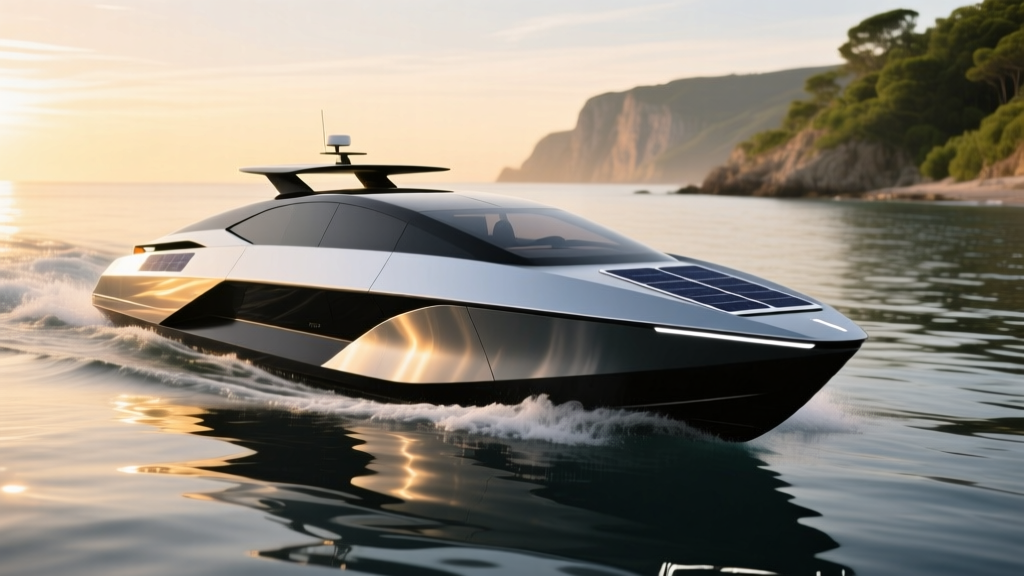
The Arc One is a 24-foot premium electric runabout built around a 223 kWh LFP (lithium iron phosphate) battery and dual electric motors producing roughly 500+ combined horsepower. Priced from approximately $300,000, it targets luxury day-boaters who want silent, emission-free operation with 3–5 hours of typical cruise time. Compared to a gas-powered 24-foot runabout (typically $80,000–$150,000), the Arc One costs roughly 2–3× more upfront but dramatically reduces fuel and maintenance expenses. It is best suited for lake and calm-water use with reliable dock charging access — it is not designed for long offshore passages.
Arc One Specifications at a Glance
| Specification | Arc One (2025–2026 Model Year) |
|---|---|
| Length Overall | 24 ft |
| Battery Capacity | 223 kWh (LFP chemistry) |
| Motor Output | Dual motors, ~500+ hp combined |
| Top Speed | ~45 mph (est.) |
| Cruise Run Time | 3–5 hours (load/speed dependent) |
| Charging (Level 2 equivalent) | ~10–15 hours on standard shore power |
| DC Fast Charge (where available) | Significantly reduced; marina DC infrastructure still limited |
| Starting Price | ~$300,000 |
| Hull Material | Aluminum |
| Passenger Capacity | Up to 10 |
Note: Marine specifications are manufacturer-estimated and vary with sea state, passenger load, and speed profile. Unlike EPA automotive ratings, there is no single standardized marine "range" figure.
Battery Chemistry: Why LFP Matters on the Water
Arc uses LFP (lithium iron phosphate) cells rather than the NMC (nickel manganese cobalt) chemistry common in many automotive EVs. This is a deliberate and sensible choice for marine applications:
- Thermal stability: LFP is significantly more resistant to thermal runaway — critical when a battery pack sits in an enclosed hull surrounded by water.
- Cycle life: LFP cells typically deliver 3,000–5,000+ cycles before meaningful degradation, compared to roughly 1,000–2,000 for NMC. For a boat used 50 days per year, that translates to decades of service life.
- Energy density trade-off: LFP is heavier and bulkier per kWh than NMC. The 223 kWh pack is massive — roughly equivalent to three Tesla Model Y Long Range battery packs — but in a 24-foot hull, the weight penalty is manageable as ballast.
For automotive buyers weighing LFP vs. NMC, the same calculus applies: Tesla's standard-range Model 3 and the Ford Mustang Mach-E Select both use LFP for longevity and safety, while long-range trims step up to NMC for density.
Charging the Arc One: Dock Power Reality
Charging infrastructure is the single biggest ownership variable for any electric vehicle, and the Arc One is no exception. Here's what prospective owners need to know:
| Charging Method | Power Level | Estimated 0–100% Time | Infrastructure Required |
|---|---|---|---|
| Standard Shore Power (50A/240V) | ~12 kW | ~18–20 hours | |
| Upgraded Marina Pedestal | ~19–22 kW | ~10–12 hours | |
| DC Fast Charge (marina DC) | 50–150 kW (where available) | ~1.5–4 hours |
The practical reality: most Arc One owners will need to plug in at their dock overnight and plan around the boat's duty cycle. A 223 kWh battery is enormous — roughly 3× the capacity of a Tesla Model S — so even at 19 kW, a full recharge takes half a day. DC fast-charging marinas exist but remain rare; Arc's own website notes that marina charging partnerships are expanding but are far from universal.
Home charging parallel: This mirrors the EV ownership experience. A Level 2 home charger (7.6–11.5 kW) handles daily needs for most car owners, but a 223 kWh marine battery at those rates would take 20+ hours. Boat owners with private docks should budget $2,000–$5,000 for a dedicated high-amperage circuit and marine-grade connector installation by a licensed electrician.
Arc One vs. Gas-Powered Runabout: Cost Breakdown
The most common buyer question is whether the electric premium pays for itself. Here's a 5-year ownership comparison against a typical gas-powered 24-foot runabout (e.g., a Malibu or Mastercraft at ~$120,000):
| Cost Category (5-Year) | Arc One (Electric) | Gas Runabout (~$120K) |
|---|---|---|
| Purchase Price | ~$300,000 | ~$120,000 |
| Fuel / Electricity (50 days/yr, 4 hr avg) | ~$3,000–$5,000 | ~$15,000–$25,000 |
| Engine Maintenance (oil, impeller, winterization) | $0–$500 | $5,000–$10,000 |
| Insurance (est.) | $4,000–$7,000 | $2,500–$4,500 |
| Dock Charging Install (one-time) | $2,000–$5,000 | $0 |
| 5-Year Total | ~$309,000–$317,500 | ~$142,500–$159,500 |
The verdict: The Arc One does not "pay for itself" vs. a gas boat in 5 years — the $180,000+ purchase premium is too large for fuel savings to close. The value proposition is experiential: silent operation, instant torque, zero exhaust fumes, no winterization, and dramatically simpler drivetrain maintenance. This is analogous to the early Tesla Model S vs. a BMW 5 Series — the electric option costs more but offers a fundamentally different ownership experience.
Real-World Ownership Considerations
Before purchasing, weigh these practical factors:
Charging Access Is Non-Negotiable
Unlike an EV where public charging networks (Tesla Supercharger, Electrify America, EVgo) can supplement home charging, marine DC fast-charging infrastructure is still in its infancy. You need reliable dock power — ideally a dedicated 50A/240V circuit or better. If your marina doesn't support high-amperage shore power, the Arc One is not practical.
Range Is Speed-Dependent
Just as an EV's highway range drops at 80 mph vs. 65 mph, the Arc One's run time collapses at wide-open throttle. Cruising at 15–20 mph yields the advertised 4–5 hours; sustained 40+ mph operation may cut that to under 2 hours. Plan your boating style accordingly.
Cold Water and Climate Effects
LFP batteries lose efficiency in cold temperatures — the same physics that reduces EV range by 20–30% in freezing weather. Northern-lake boaters (Michigan, Minnesota, New England) will see reduced run time in spring and fall. Battery preconditioning features help, but thermal losses are unavoidable.
Resale Value Uncertainty
The electric boat market is young. Unlike Tesla, which has established used-car valuation patterns, electric marine resale values are largely unknown. Early adopters should budget for potentially steeper depreciation than established gas brands.
Common Misconceptions About Electric Boats
| Myth | Fact |
|---|---|
| "Electric boats can't go fast." | The Arc One hits ~45 mph with 500+ hp — comparable to many gas V8 runabouts. Instant electric torque actually improves hole-shot acceleration. |
| "The battery won't last." | LFP chemistry is rated for 3,000–5,000+ cycles. At 50 outings/year, that's 60–100 years of cycle life. Calendar degradation is the real limit, not cycles. |
| "You'll get stranded on the water." | With 223 kWh, the Arc One has more energy than most EVs. The risk is real if you ignore the state-of-charge gauge — the same as running out of gas — but the capacity margin is substantial for day use. |
| "Electric boats are maintenance-free." | The drivetrain is nearly maintenance-free, but you still maintain the hull, upholstery, electronics, bilge systems, and trailer. Expect 70–80% less mechanical maintenance, not zero. |
| "You can charge from any dock outlet." | A standard 15A/120V household outlet would take 100+ hours to fill a 223 kWh battery. You need dedicated high-amperage shore power. |
Decision Framework: Should You Buy the Arc One?
Buy the Arc One if:
- You boat primarily on lakes, calm bays, or protected coastal waters for 3–5 hours at a time
- You have (or can install) dedicated 50A+ shore power at your dock
- You value silence, zero fumes, and instant acceleration over raw top speed
- Your budget accommodates a $300,000+ premium toy without requiring ROI justification
- You want to avoid winterization, oil changes, and impeller replacements
Stick with a gas runabout if:
- You regularly boat for 6+ hours or make long offshore passages
- Your marina has only basic 15A/30A shore power with no upgrade path
- You need a boat that can be refueled in 5 minutes at any marina
- Your budget tops out below $200,000
- Resale value predictability is a priority
Consider waiting if:
- You're interested but want DC fast-charging marina infrastructure to mature
- You're hoping for a more affordable Arc model (Arc has hinted at future, smaller platforms but has not announced pricing or availability)
Frequently Asked Questions
Does the Arc One qualify for any federal tax credits?
The IRS §30D clean vehicle credit applies to on-road vehicles with four wheels and a gross vehicle weight under 14,000 lbs. The Arc One is a marine vessel and does not qualify for the federal EV tax credit. Some states or local air-quality districts may offer marine electrification incentives — check with your state energy office or the Alternative Fuels Data Center.
How does 223 kWh compare to an electric car battery?
For context: a Tesla Model Y Long Range has an ~81 kWh battery; a Ford F-150 Lightning Extended Range has ~131 kWh. The Arc One's 223 kWh pack is roughly 2.7× the size of a Model Y — necessary to push a heavy hull through water, which is far more energy-intensive than rolling a car on pavement.
What happens if the battery degrades?
LFP degradation is typically 10–20% over 10–15 years of calendar aging, regardless of cycle count. Arc has not published a specific marine battery warranty comparable to automotive 8-year/100,000-mile mandates. Ask Arc directly for warranty terms before purchase — this is a critical ownership variable.
Can you tow the Arc One on a trailer?
Yes, but the combined weight of the aluminum hull and 223 kWh battery pack (likely 1,500+ lbs of cells alone) makes this a heavy tow requiring a capable truck — similar to towing a large travel trailer. An F-150 Lightning or Rivian R1T could handle it; a compact SUV cannot.
Is the Arc One the only premium electric boat?
No. Competitors include X Shore (Sweden), Candela (hydrofoiling electric), and Pure Watercraft. Each takes a different approach to hull design, battery size, and price point. The Arc One is notable for its large battery and American manufacturing but is not the only option in the $200K–$400K electric marine segment.
Sources: Specifications drawn from Arc Boats official site and marine industry reporting. Tax credit guidance per IRS.gov §30D. Alternative fuel incentive lookup via the U.S. DOE Alternative Fuels Data Center.