Beyond the Bumper Sticker: The 2026 Tesla Model 3
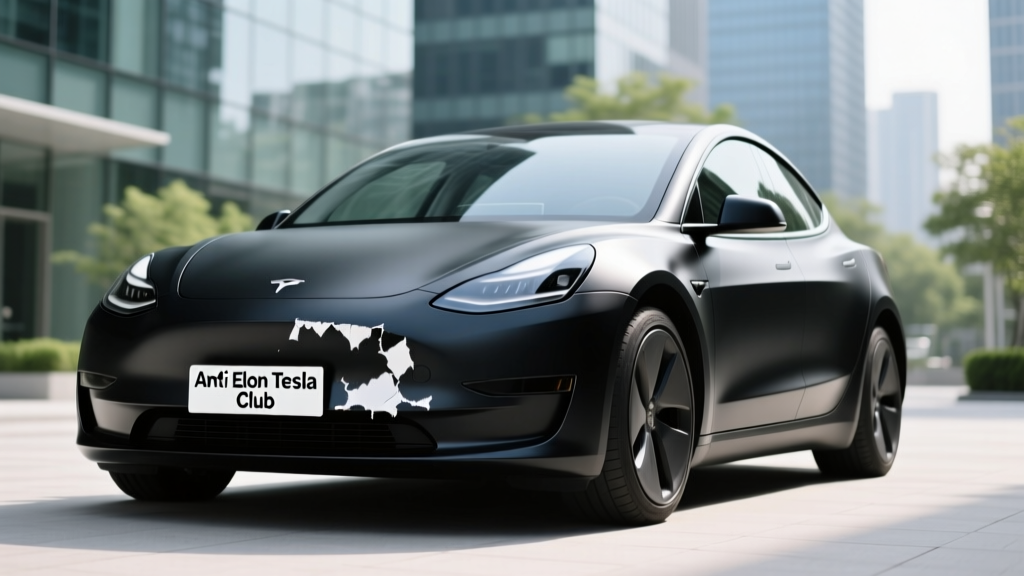
Drive through any EV-heavy neighborhood in 2026 and you'll spot it: the anti elon tesla club sticker plastered on the rear window of a Model 3 or Model Y. It's a cultural artifact unique to the EV era — owners who love the engineering but want distance from the brand's polarizing CEO. The sticker raises a genuinely useful buyer question: if you separate the car from the controversy, does the 2026 Tesla Model 3 still hold up as a segment leader?
We spent three months with a Long Range AWD and a base Rear-Wheel Drive variant, logging over 4,200 miles across highway commutes, mountain passes, and sub-freezing mornings. What follows is a spec-driven, ownership-reality review — no hype, no agenda, just the data you need to decide.
Range Reality: EPA Sticker vs. the Real World
EPA Estimated Range: 341 miles (Long Range AWD) / 272 miles (RWD)
Real-World Expectation: Plan for 270–300 miles on highway-heavy trips in the Long Range, and 215–240 in the RWD. In sustained cold weather (below 30°F), subtract another 15–25% due to cabin heating demands and increased battery resistance, even with the heat pump standard on all trims.
The 2026 Model 3 Long Range AWD carries a 75 kWh usable NMC (nickel-manganese-cobalt) battery pack, while the RWD uses a 57.5 kWh LFP (lithium iron phosphate) unit. The LFP chemistry trades energy density for longevity — Tesla officially recommends charging the RWD to 100% daily, a practice that would accelerate degradation in an NMC pack. That's a meaningful ownership advantage for commuters who want a full battery every morning without babysitting charge limits.
Efficiency on the Long Range AWD lands at 132 MPGe combined (25 kWh/100 mi) per EPA data on fueleconomy.gov. The RWD pushes slightly higher at 142 MPGe combined (24 kWh/100 mi) thanks to its lighter curb weight and single-motor drivetrain. These are best-in-class numbers for a sedan in this price bracket, beating the Hyundai Ioniq 6's 140 MPGe Long Range and the BMW i4 eDrive40's 109 MPGe.
Charging Speed: DC Fast, Level 2, and the Curve
Charging infrastructure remains the top concern for prospective EV buyers, and the Model 3's access to Tesla's Supercharger network — now increasingly open to other brands via NACS adapters — is still a tangible advantage.
| Charging Level | Power / Rate | Time / Miles Added |
|---|---|---|
| DC Fast Charge (V3/V4 Supercharger) | Peak 250 kW | 10–80% in ~25 min (Long Range); ~22 min (RWD) |
| DC Fast Charge (CCS via adapter) | Peak ~150 kW (site-dependent) | 10–80% in ~35 min |
| Level 2 (Tesla Wall Connector, 48A) | 11.5 kW | ~44 mi/hr of charging |
| Level 2 (standard 240V/32A outlet) | 7.7 kW | ~30 mi/hr of charging |
| Level 1 (120V household) | ~1.4 kW | ~4 mi/hr of charging |
A critical detail: the 250 kW peak on a V3 Supercharger is not sustained. The charge curve tapers noticeably past 60% state of charge, dropping below 100 kW around 80%. That's normal lithium-ion behavior driven by cell-protection protocols, but it means a 10–90% session takes closer to 40 minutes, not 25. Plan road-trip stops accordingly — charge to 80% and move on rather than waiting for those final slow percentage points.
At home, the Tesla Wall Connector on a 60-amp circuit delivers 11.5 kW, easily replenishing a full day's driving overnight. Most buyers will need a licensed electrician to install a NEMA 14-50 outlet or hardwire the Wall Connector. Budget $800–$2,000 for installation depending on panel proximity and local permit costs.
Performance and Driving Dynamics
| Specification | RWD | Long Range AWD | Performance (AWD) |
|---|---|---|---|
| 0–60 mph | 5.8 sec | 4.2 sec | 2.9 sec |
| Horsepower | 271 hp | 346 hp | 510 hp |
| Drivetrain | Rear-Wheel Drive | Dual-Motor AWD | Dual-Motor AWD |
| Top Speed | 125 mph | 125 mph | 163 mph |
| Battery (usable) | 57.5 kWh (LFP) | 75 kWh (NMC) | 75 kWh (NMC) |
| EPA Range | 272 mi | 341 mi | 315 mi |
| MPGe (combined) | 142 MPGe | 132 MPGe | 119 MPGe |
The Long Range AWD strikes the best balance. The dual-motor setup provides confident all-weather traction, and the 4.2-second 0–60 time is genuinely quick for a daily commuter. Ride quality in the refreshed "Highland" architecture (carried into the 2026 model year) is noticeably improved over the pre-2024 Model 3 — firmer damping and acoustic glass reduce highway noise and crash over expansion joints.
Regenerative braking remains one-pedal-driving capable, though Tesla removed the user-adjustable regen strength setting. You get one calibration, and it's moderately aggressive. Most owners adapt within a week, but if you're coming from a Hyundai or Ford EV with adjustable regen, expect a transition period.
Pricing, Tax Credits, and Total Cost
| Trim | Base MSRP | Federal Credit (§30D) | Effective Price* |
|---|---|---|---|
| RWD | $38,990 | Up to $7,500 | ~$31,490 |
| Long Range AWD | $45,490 | Up to $7,500 | ~$37,990 |
| Performance AWD | $52,990 | Up to $7,500 | ~$45,490 |
*Effective price assumes full §30D credit eligibility. Actual credit depends on your tax liability, income, and battery-sourcing compliance.
The federal EV tax credit under IRS §30D is not automatic. For 2026, the rules require:
- MSRP cap: Sedans must be priced at or below $55,000 (all three Model 3 trims qualify)
- Income cap: Modified AGI ≤ $150,000 (single) / $300,000 (joint) / $225,000 (head of household)
- Battery sourcing: Critical minerals and battery components must meet phased-in domestic/free-trade-partner thresholds — Tesla has generally maintained compliance, but verify the current VIN-eligible status on fueleconomy.gov before purchasing
- Point-of-sale transfer: You can apply the credit as an upfront discount at the dealer rather than waiting for tax-filing time
Always confirm eligibility with a tax professional. Rules shift annually, and a credit that applies today may change with new Treasury guidance on critical-mineral sourcing. See IRS.gov §30D guidance for the latest requirements.
Interior, Cargo, and Daily Livability
The minimalist cabin is either a selling point or a dealbreaker depending on your tolerance for screen-dependent controls. Nearly every function — climate, glovebox, mirror adjustment — routes through the 15.4-inch center touchscreen. The 2026 refresh added rear-seat ventilation controls and ambient lighting, addressing the most common complaints from the pre-Highland era.
Practical dimensions:
- Cargo (rear trunk): 21.0 cu ft (with rear seats up)
- Frunk (front trunk): 3.1 cu ft — fits a charging cable bag and a small backpack
- Rear legroom: 35.3 inches — adequate for adults under 6 feet; tighter than a Hyundai Ioniq 6 (36.1 in)
- Front headroom: 40.3 inches (without panoramic roof intrusion)
The glass roof creates an airy feel but does eat 1–2 inches of effective headroom for taller drivers. Seat comfort on long drives (3+ hours) is good but not class-leading — the bottom cushion is slightly short for drivers over 5'10".
Technology, Autopilot, and What It Can't Do
Every 2026 Model 3 comes with Tesla's basic Autopilot (SAE Level 2): adaptive cruise control and lane-centering on divided highways. Full Self-Driving (Supervised), a $8,000 add-on or $99/month subscription, adds city-street navigation, stop-light recognition, and automatic lane changes. Here's what buyers must understand:
SAE Level 2 — Not Self-Driving. Both Autopilot and FSD (Supervised) require continuous driver attention. Your hands must remain on the wheel, and you are legally responsible for all vehicle actions. True driverless operation (SAE Level 4) is currently only available through robotaxi services like Waymo in geofenced urban areas. No Tesla sold to consumers is autonomous.
Infotainment runs on Tesla's proprietary OS — no Apple CarPlay or Android Auto. Navigation, Spotify, and phone mirroring (via Bluetooth) are built in. The 8-inch rear touchscreen for passengers is a welcome addition for families. Over-the-air updates continue to add features post-purchase, though the pace of meaningful updates has slowed compared to the 2020–2023 era.
Warranty and Battery Longevity
Tesla's warranty coverage is competitive but not best-in-class:
- Battery & Drive Unit: 8 years / 100,000 miles (RWD) or 8 years / 120,000 miles (Long Range & Performance)
- Capacity retention threshold: 70% of original capacity during the warranty period
- Vehicle Limited Warranty: 4 years / 50,000 miles
Real-world degradation data from fleet aggregators like Recurrent Auto shows the Model 3 NMC packs retaining roughly 88–92% capacity at 100,000 miles under normal use. LFP packs in the RWD show even slower degradation curves — typically 90–95% retention at the same mileage — thanks to the chemistry's inherent stability and the acceptability of 100% daily charging.
Out-of-warranty battery replacement for a Model 3 currently runs $12,000–$16,000 at Tesla Service Centers, though third-party refurbishment options are emerging at lower price points.
Verdict: Who Should Buy the 2026 Model 3?
Pros
- Best-in-class efficiency (132–142 MPGe)
- Access to Supercharger network (most reliable DC fast-charge network in the US)
- LFP option on RWD enables worry-free 100% daily charging
- Strong resale value relative to other EVs
- 250 kW peak DC charging is competitive
- Over-the-air updates add post-purchase features
Cons
- No Apple CarPlay or Android Auto
- Rear-seat space tighter than Ioniq 6 and BMW i4
- Single regen calibration — not adjustable
- All controls routed through touchscreen (no physical buttons for climate/volume)
- FSD (Supervised) costs $8,000 extra and is still Level 2
- Insurance premiums 15–30% higher than comparable gas sedans in most states
Choose the Model 3 RWD if: You're a commuter who can charge at home, want the lowest entry price (~$31,490 after credit), and prefer LFP longevity over maximum range.
Choose the Model 3 Long Range AWD if: You take regular road trips, live in a cold-weather state, or need all-wheel drive. The 341-mile EPA rating gives a comfortable buffer for 250+ mile real-world highway legs.
Look at competitors if: You need physical buttons (BMW i4), maximum rear-seat room (Hyundai Ioniq 6), or a luxury badge (Mercedes EQB). The anti elon tesla club sticker crowd may also appreciate that the Ioniq 6 and i4 carry zero brand-politics baggage.
Frequently Asked Questions
What is the real-world range of the 2026 Tesla Model 3?
The Long Range AWD delivers roughly 270–300 miles on highway-heavy drives in mild weather, dropping to 220–260 miles in sustained sub-freezing temperatures. The RWD yields 215–240 miles in similar highway conditions. Both fall short of their EPA stickers (341 and 272 miles respectively) when driven at sustained 70–80 mph speeds — a universal EV reality driven by aerodynamic drag scaling with the square of velocity.
How fast does the Model 3 charge at home and on the road?
On a V3/V4 Supercharger, the Long Range peaks at 250 kW and charges from 10–80% in about 25 minutes. At home on a 48-amp Level 2 Wall Connector, you'll add roughly 44 miles of range per hour, meaning a full overnight session easily replenishes a day's driving.
Does the 2026 Model 3 qualify for the $7,500 federal EV tax credit?
All three trims fall under the $55,000 MSRP sedan cap. Eligibility then depends on your income (≤$150K single / ≤$300K joint), the vehicle's battery-sourcing compliance at time of purchase, and your federal tax liability. Confirm your specific VIN's eligibility on fueleconomy.gov and consult a tax professional. The credit can be transferred to the dealer as a point-of-sale discount.
Is the Model 3 still worth buying vs. the Hyundai Ioniq 6 or BMW i4?
For pure efficiency and charging-network access, the Model 3 still leads. The Ioniq 6 offers more rear-seat room and physical buttons; the BMW i4 provides a traditional luxury interior with CarPlay. If brand association is a concern — hence the anti elon tesla club sticker phenomenon — the Ioniq 6 and i4 are compelling alternatives at similar price points.
How long will the Model 3 battery last before replacement?
Fleet data suggests NMC packs retain 88–92% capacity at 100,000 miles. LFP packs in the RWD do even better, often retaining 90–95% at the same mileage. Tesla warrants the battery at 70% capacity for 8 years / 100,000–120,000 miles. Most owners will sell or trade the vehicle before out-of-warranty replacement becomes a concern.
What are the biggest drawbacks of owning a Model 3 in 2026?
The lack of Apple CarPlay/Android Auto is the most-cited frustration. Insurance costs remain elevated compared to gas sedans. The touchscreen-only control scheme demands a learning curve. And for buyers who want to avoid the cultural baggage — the reason the anti elon tesla club sticker exists in the first place — no software update fixes that.