The Short Answer on Amish Electric Bikes
Amish communities in the U.S. generally do not ride electric bikes in the conventional sense. Most Old Order Amish prohibit personal motorized vehicles, including e-bikes, as they conflict with rules against owning automobiles and grid-tied electricity. However, some more progressive Amish and Mennonite groups permit limited use of battery-powered devices — typically pedal-assist e-bikes or electric scooters — for specific work or errand purposes, charged via off-grid solar panels rather than household outlets. For EV shoppers, the real parallel isn't buying an "Amish electric bike" — it's understanding how ultra-low-speed, low-cost electric transport (e-bikes, Neighborhood Electric Vehicles, and compact EVs) compares to a full-size electric vehicle for daily commuting and local errands.
What "Amish Electric Bikes" Actually Means in Practice
When people search for Amish electric bikes, they're usually encountering one of three things: Amish-built or Amish-marketed pedal-assist bicycles sold by Mennonite or Amish-affiliated craftsmen in Lancaster County, PA, or the Midwest; a curiosity about whether Amish communities use any form of electrified transport; or a desire for a simple, low-tech electric two-wheeler that doesn't depend on modern infrastructure.
Here's what the data shows. The Old Order Amish — the largest Amish subgroup, with roughly 350,000 members across the U.S. — prohibit car ownership, grid electricity, and most motorized personal vehicles. Transportation is primarily by horse-drawn buggy or bicycle (non-electric). However, New Order Amish and certain Mennonite groups may allow:
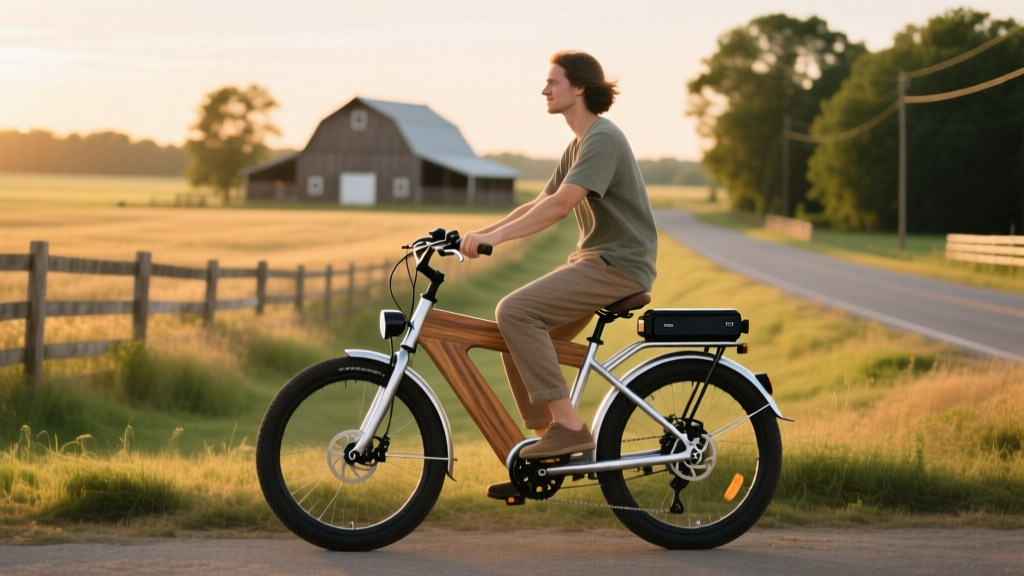
- Pedal-assist e-bikes (Class 1): Motor provides assistance only while pedaling, cuts off at 20 mph. Price range: $1,200–$3,500. Battery: 400–700 Wh (watt-hours). Real-world range: 25–60 miles per charge depending on assist level and terrain.
- Electric scooters and trikes: Used by some Amish craftsmen for short-distance material transport within a workshop campus. Typically 48V systems, 20–35 mile range.
- Solar-charged battery systems: Off-grid 12V or 48V battery banks charged by rooftop solar, used to power these devices without connecting to the electrical grid.
The key insight for EV shoppers: these setups prioritize extreme energy independence and minimal operating cost — a philosophy that maps directly onto why many buyers consider a full EV in the first place.
Low-Speed Electric Transport vs. a Full-Size EV: The Numbers
If you're weighing a compact electric solution against a full-size EV, the financial and practical trade-offs are significant. Below is a side-by-side comparison of three common options against a mainstream EV benchmark — the 2026 Chevrolet Equinox EV (EPA-estimated 319 miles range, ~$33,600 base MSRP before incentives).
| Metric | Class 1 E-Bike | Neighborhood EV (NEV) | 2026 Chevy Equinox EV (LT) | Gas Car Baseline (2026 Toyota Corolla LE) |
|---|---|---|---|---|
| Purchase Price | $1,500–$3,500 | $12,000–$18,000 | $33,600 (MSRP) | $23,500 (MSRP) |
| Range per Charge/Tank | 25–60 mi (battery) | 30–50 mi (battery) | 319 mi (EPA est.) | ~448 mi (13.2 gal × 34 mpg hwy) |
| Battery/Fuel Capacity | 0.4–0.7 kWh | 8–15 kWh (lead-acid or Li-ion) | 85 kWh usable (NMC) | 13.2 gal gasoline |
| Energy Cost per Mile | $0.002–$0.005 | $0.02–$0.04 | $0.04–$0.06 (home L2) | $0.11–$0.14 (at $3.50/gal) |
| Top Speed | 20 mph (assist cutoff) | 25 mph (federal limit) | 112 mph (governed) | ~115 mph |
| Max Speed Road Eligibility | Bike lanes/paths | Roads ≤35 mph | All roads | All roads |
| Charging Time (Full) | 3–5 hours (120V) | 6–8 hours (120V) | ~9.5 hours (L2, 11.5 kW) | ~5 minutes (gas station) |
| Federal Tax Credit (§30D) | None | None (NEV excluded) | Up to $7,500 (if eligible) | None |
| Annual Insurance (avg.) | $0–$150 (optional) | $400–$800 | $1,600–$2,400 | $1,300–$1,900 |
| Annual Maintenance | $50–$150 | $200–$500 | $300–$600 | $600–$1,200 |
Sources: fueleconomy.gov (EPA data), IRS §30D guidelines.
Real Costs and Savings: 5-Year Ownership Breakdown
The appeal of a simple electric bike or NEV is almost entirely financial — if your commute and lifestyle permit it. Here's a five-year total cost of ownership (TCO) comparison assuming 8,000 miles/year of local driving, home charging at $0.14/kWh (national average), and no major battery replacement.
| Cost Category (5 Years) | E-Bike (Class 1) | NEV (e.g., GEM e2) | 2026 Chevy Equinox EV | 2026 Toyota Corolla LE |
|---|---|---|---|---|
| Purchase Price | $2,500 | $15,000 | $33,600 | $23,500 |
| Federal Tax Credit | $0 | $0 | –$7,500 (if eligible) | $0 |
| Net Purchase | $2,500 | $15,000 | $26,100 | $23,500 |
| Energy/Fuel (40,000 mi) | $60 | $840 | $2,240 | $4,800 |
| Insurance (5 yrs) | $500 | $3,000 | $10,000 | $8,000 |
| Maintenance (5 yrs) | $500 | $1,500 | $2,000 | $4,500 |
| Total 5-Year Cost | $3,560 | $20,340 | $40,340 | $40,800 |
The e-bike is dramatically cheaper — but it only works if your commute is under ~15 miles each way, you don't need climate-controlled cabin comfort, and weather permits year-round cycling. The Equinox EV and the Corolla LE land in a similar 5-year TCO bracket, but the EV pulls ahead on per-mile energy cost and has fewer moving parts to maintain over years 6–10.
Real-World Ownership Considerations Most Guides Skip
Whether you're considering an e-bike, an NEV, or a full EV, these practical factors determine whether the math actually works for your household:
Home Charging Access
Not every buyer can charge at home. If you live in an apartment or condo without dedicated parking and a 120V or 240V outlet, an e-bike is trivially easy to charge indoors (standard wall outlet, 3–5 hours). A full EV requires either a Level 2 home installation ($800–$2,500 for equipment and electrician work, potentially $3,000–$5,000+ if your panel needs a 200-amp upgrade) or reliable access to public DC fast chargers and workplace charging. If you can't charge at home, the convenience advantage of an EV over gas shrinks considerably.
Climate and Range Impact
Cold weather reduces EV battery range by 20–40% at 20°F (–7°C) due to increased cabin heating demand and slower electrochemical reactions. An e-bike rider faces the same cold but without a heated cabin. NEVs typically have minimal or no climate control. In regions with harsh winters (Upper Midwest, Northeast), a full EV with a heat pump — like the Equinox EV or Hyundai Ioniq 5 — is far more practical than an open-air NEV or e-bike for daily commuting.
Driving Patterns
If 90%+ of your driving is within a 20-mile radius at speeds under 35 mph, an NEV or e-bike may genuinely cover your needs. If you regularly drive on highways, take road trips over 100 miles, or need to carry more than one passenger plus cargo, a full EV is the only electrified option that works.
Common Misconceptions — Fact vs. Fiction
| Myth | Fact |
|---|---|
| "The Amish widely use electric bikes." | Old Order Amish prohibit motorized personal vehicles. Some New Order and Mennonite groups permit limited Class 1 pedal-assist e-bikes. It's not a widespread practice. |
| "E-bikes and NEVs qualify for the $7,500 federal EV tax credit." | They do not. IRS §30D applies only to four-wheeled vehicles with a gross vehicle weight rating under 14,000 lbs, a battery of at least 7 kWh, and that meet critical-mineral and battery-component sourcing requirements. E-bikes and NEVs fall outside these criteria. |
| "An NEV can replace a car for most people." | NEVs are federally limited to 25 mph top speed and are only legal on roads with speed limits of 35 mph or less (varies by state). They lack crash protection comparable to a full vehicle and have 30–50 mile range. They work as secondary vehicles for local errands only. |
| "EV batteries need replacing every few years, like e-bike batteries." | E-bike batteries (400–700 Wh) typically last 500–1,000 full charge cycles — roughly 3–5 years of daily use. Full EV batteries (60–100+ kWh) use advanced thermal management and are warrantied for 8 years/100,000 miles with a capacity retention threshold of 70% or better. Real-world data from Recurrent Auto shows most EV batteries retain 90%+ capacity at 100,000 miles. |
| "Charging an EV costs as much as gas." | At the U.S. average electricity rate of ~$0.16/kWh and an efficiency of 3.0 mi/kWh, driving an EV costs roughly $0.05/mile. At $3.50/gallon and 30 MPG combined, a gas car costs ~$0.12/mile. EVs are roughly 60% cheaper per mile to fuel at home. |
Decision Framework: Which Electric Option Fits You?
If-Then Decision Guide
- IF your one-way commute is under 10 miles, on bike-friendly roads, in a mild climate, and you want the absolute lowest cost → Choose a Class 1 e-bike ($1,500–$3,000, ~$0.003/mile).
- IF you need a weather-protected vehicle for local errands within a 15-mile radius, only drive on roads ≤35 mph, and want a second household vehicle → Consider an NEV ($12,000–$18,000, but no federal tax credit).
- IF you commute on highways, take road trips, need to carry passengers/cargo, and can install a Level 2 home charger → Choose a full EV like the Equinox EV, Tesla Model Y, or Hyundai Ioniq 5. After the §30D credit (if eligible), effective price can drop $7,500, and per-mile fuel cost is ~$0.04–$0.06.
- IF you can't charge at home and have no workplace charging → Consider a PHEV (plug-in hybrid) like the Toyota RAV4 Prime (42 miles electric-only, then 38 MPG on gas) — it reduces range anxiety while you sort out charging access.
- IF you want the simplicity and independence of an Amish-style off-grid setup → Pair a Class 1 e-bike with a small solar panel (100–200W, ~$200–$500) to charge completely off-grid. This is genuinely practical for rural users with short commutes.
What First-Time EV Buyers Should Know Before Committing
Whether you land on an e-bike, a full EV, or something in between, these fundamentals separate informed buyers from regretful ones:
- kWh is energy, kW is power. Your battery capacity is measured in kilowatt-hours (kWh) — think of it as the size of the fuel tank. Your charger's speed is measured in kilowatts (kW) — think of it as the hose diameter. Never confuse the two. A 85 kWh battery charged at 11.5 kW (Level 2) takes roughly 85 ÷ 11.5 = ~7.4 hours from empty.
- EPA range is a ceiling, not a guarantee. Expect 15–25% less range at sustained highway speeds (70+ mph), and 20–40% less in freezing weather. A 319-mile EPA rating might deliver 250 miles on a 70°F highway day and 200 miles on a 20°F January morning.
- The §30D tax credit has strict eligibility rules. For 2026, the new clean vehicle credit of up to $7,500 requires: vehicle MSRP ≤$55,000 (sedans) or ≤$80,000 (SUVs/trucks/vans); buyer adjusted gross income ≤$150,000 (single) or ≤$300,000 (joint); battery components and critical minerals must meet phased-in domestic-sourcing thresholds that tighten each year. The credit can now be transferred to the dealer at point of sale as an immediate price reduction. Always verify current rules at irs.gov and consult a tax professional.
- DC fast charging slows above 80%. A vehicle that charges at a peak 190 kW from 10–30% may drop to 50 kW by 70% and 20 kW by 90%. The "10–80% in 20 minutes" spec is real, but topping off the final 20% can add another 20–30 minutes. Plan road-trip stops accordingly — charge to 80% and go.
- Insurance for EVs is typically 15–25% higher than equivalent gas vehicles, due to higher repair costs and parts pricing. Get quotes before purchasing. Some insurers (Geico, Progressive, State Farm) now offer specific EV discounts.
Do Amish communities manufacture electric bikes for sale?
Some Mennonite and progressive Amish-affiliated workshops in Pennsylvania and Ohio sell hand-built bicycles and, in limited cases, pedal-assist e-bikes. These are small-scale artisan products, not mass-market vehicles. They are not marketed under a single "Amish electric bike" brand and availability is extremely limited — typically direct from the workshop or at regional farm auctions.
Can I charge an e-bike with solar panels like some Amish households do?
Yes. A 400–700 Wh e-bike battery can be fully charged by a single 200W solar panel in about 3–5 hours of peak sunlight. A basic off-grid solar charging setup (panel, charge controller, inverter) costs $250–$600 and provides genuine energy independence — the same principle Amish households use to power devices without grid connection.
Is a Neighborhood Electric Vehicle (NEV) street-legal?
NEVs are federally classified as low-speed vehicles (LSVs) and are legal on roads with speed limits of 35 mph or less, though state and local rules vary. They must have headlights, turn signals, seat belts, and a VIN. They cannot be driven on highways. Check your state DMV for specific road-eligibility rules.
What's the cheapest way to go electric for a short commute?
A Class 1 pedal-assist e-bike at $1,200–$2,500 is the lowest-cost electric transportation option available. Energy cost is approximately $0.003 per mile. If you charge from a home solar panel, your marginal fuel cost drops to effectively zero. For comparison, even the most affordable full EVs (e.g., 2026 Nissan Leaf at ~$28,140 MSRP before credits) cost 10–20× more upfront.
Do full EVs make sense if I already own an e-bike?
They serve different purposes. An e-bike handles short solo commutes in fair weather. A full EV handles highway driving, passengers, cargo, bad weather, and trips beyond 60 miles. Many EV-owning households also keep an e-bike for quick neighborhood trips — the two are complementary, not competing purchases.