Quick Verdict: A Performance EV With a Luxury Price Tag
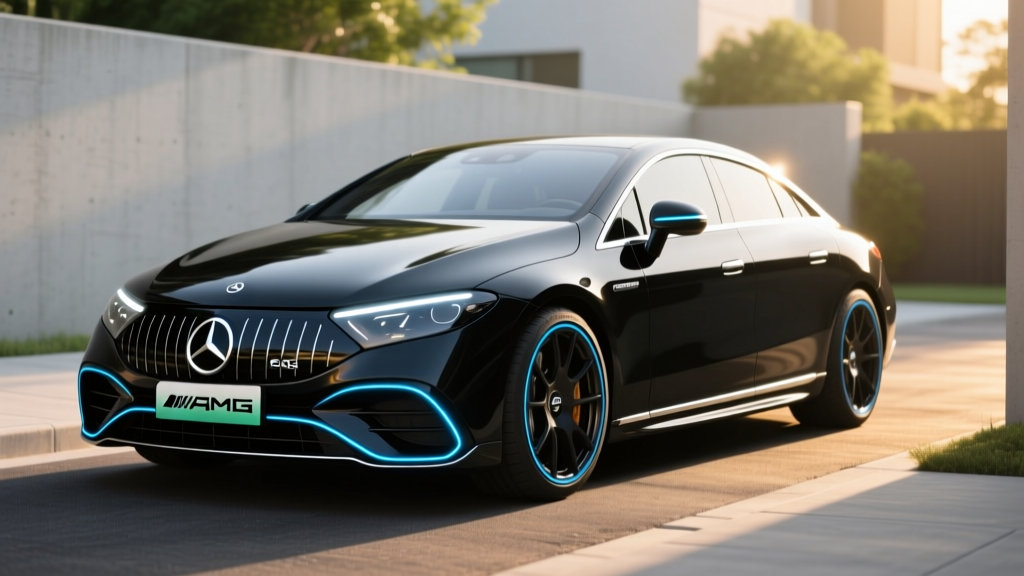
The 2026 Mercedes-AMG EQE Sedan occupies a narrow but compelling niche: a midsize luxury electric performance sedan that trades some efficiency for serious acceleration, a meticulously crafted interior, and Mercedes' most advanced driver-assistance suite. Built on the same EVA2 platform as the standard EQE, the AMG variant adds dual-motor all-wheel drive, sport-tuned air suspension, and aggressive styling cues that signal its performance intent.
But at a starting MSRP well above $100,000, the AMG EQE Sedan demands scrutiny beyond its 0-60 time. This review breaks down the real-world range you can actually expect, charging speeds across DC fast and Level 2 home setups, and whether the federal EV tax credit applies to this price bracket.
| Spec | AMG EQE 43 4MATIC | AMG EQE 53 4MATIC+ |
|---|---|---|
| EPA Range | 230 miles | 220 miles |
| Battery (Usable) | 90.6 kWh (NMC) | 90.6 kWh (NMC) |
| Horsepower | 469 hp | 617 hp (677 w/ AMG RACE START) |
| 0–60 mph | 4.0 sec | 3.2 sec |
| Drivetrain | Dual-motor AWD | Dual-motor AWD |
| Max DC Charge Rate | 170 kW | 170 kW |
| 10–80% DC Time | ~32 min | ~32 min |
| Level 2 Rate | 9.6 kW (~28 mi/hr) | 9.6 kW (~28 mi/hr) |
| MPGe (Combined) | 74 MPGe | 70 MPGe |
| Base MSRP | $106,900 | $124,900 |
Real-World Range: What the EPA Number Doesn't Tell You
The EPA rates the AMG EQE 43 at 230 miles and the hotter EQE 53 at 220 miles. Both figures trail the standard EQE 350+ (RWD, 225 kW motor) which achieves up to 305 miles on the same 90.6 kWh battery pack. The trade-off is straightforward: dual motors, more weight, stickier tires, and higher performance tuning all consume more energy per mile.
Real-World Range Expectation: On a 70°F day with mixed city/highway driving, expect roughly 210–225 miles from the EQE 43 and 195–215 miles from the EQE 53. At sustained 75+ mph highway speeds, range drops to approximately 185–200 miles (EQE 43) or 175–190 miles (EQE 53). In freezing temperatures (below 32°F), plan for a 20–30% reduction, bringing usable range to as low as 150–170 miles on the EQE 53. Source: fueleconomy.gov EV testing data.
The 90.6 kWh usable battery uses NMC (nickel manganese cobalt) chemistry, which offers higher energy density than LFP cells but is more sensitive to sustained 100% state-of-charge storage. For daily driving, Mercedes recommends an 80% charge limit, which effectively gives you about 184 miles (EQE 43) or 176 miles (EQE 53) of usable daily range — adequate for most commutes but tight for road trips without planning.
The AMG EQE's heat pump comes standard, which helps preserve range in cold weather by efficiently heating the cabin without relying solely on resistive heating. However, the performance-tuned suspension and wider 255/275-section tires generate more rolling resistance than the comfort-oriented EQE, which is the primary reason for the range gap.
Charging Speeds: DC Fast, Level 2, and the Curve Reality
Charging capability is where the AMG EQE shows its EVA2 platform roots. The 170 kW peak DC fast-charge rate is adequate but not class-leading — the Porsche Taycan peaks at 270 kW, and even the Hyundai Ioniq 5 can pull 240 kW.
| Charging Level | Power / Connector | Speed (Miles Added) | Notes |
|---|---|---|---|
| Level 1 (120V) | ~1.4 kW / NACS (2025+) | ~4 mi/hr | Emergency/top-up only; full charge takes 60+ hours |
| Level 2 (240V, 40A) | 9.6 kW / NACS | ~28 mi/hr | Full 0–100% in ~10 hours; ideal overnight charge |
| DC Fast Charge | 170 kW peak / NACS | ~150 mi in 15 min (at peak) | 10–80% in ~32 min; tapers significantly above 80% |
The charging curve matters more than peak kW. The AMG EQE holds close to its 170 kW peak from roughly 10% to 40% state of charge, then gradually tapers. By 60% SoC, you're looking at approximately 120 kW, and above 80%, the rate drops to under 50 kW to protect battery health. This means a 10–80% charge takes about 32 minutes at a capable 350 kW charger, but 80–100% adds another 25+ minutes. Plan your road-trip stops around the 10–80% window for efficiency.
Starting with the 2025 model year, Mercedes transitioned to the NACS (North American Charging Standard) connector for all US-market EVs, eliminating the need for a CCS-to-NACS adapter at Tesla Superchargers. The 2026 AMG EQE Sedan ships with a native NACS port, giving you access to Tesla's Supercharger network (now branded as part of the broader NACS ecosystem), Electrify America, EVgo, and ChargePoint stations without adapter hassle.
For home charging, a 40-amp Level 2 wallbox (like the ChargePoint Home Flex or Tesla Wall Connector) delivers 9.6 kW, adding roughly 28 miles of range per hour. A full overnight charge from 10% to 80% takes about 7 hours — well within a typical overnight window. Installation costs for a Level 2 home charger typically range from $800 to $2,500 depending on panel capacity and run length, per U.S. Department of Energy guidance.
Performance: Dual-Motor AWD With AMG Pedigree
The AMG EQE 53 4MATIC+ is the performance headline. With 617 horsepower (677 hp with AMG RACE START launch control engaged), it rockets from 0–60 mph in 3.2 seconds — firmly in sports-car territory. The EQE 43, at 469 hp and a 4.0-second 0–60, is hardly slow, but the 53's additional output is immediately noticeable in passing maneuvers and highway on-ramp acceleration.
Both models use AMG-tuned air suspension with adaptive dampers, rear-axle steering (up to 10 degrees), and AMG-specific drive modes (Slippery, Comfort, Sport, Sport+, and Individual). The Sport+ mode sharpens throttle response, firms the suspension, and adjusts the torque vectoring between front and rear motors for a rear-biased feel.
Regenerative braking offers three levels selectable via steering-wheel paddles: D+ (coasting), D (mild regen), and D- (strong regen approaching one-pedal driving). Unlike some competitors, the AMG EQE does not offer a true one-pedal mode that brings the car to a complete stop without touching the brake — D- slows to about 3 mph and then holds, but you'll still need the brake pedal for full stops.
At 5,600+ pounds, the AMG EQE's mass is felt during direction changes, but the rear-axle steering and low center of gravity (battery pack mounted under the floor) keep it composed through corners. It's a grand-touring performance sedan, not a track weapon — and it's better for it.
Interior, Tech, and Cargo: Luxury Meets the Hyperscreen
The cabin is where Mercedes justifies the six-figure price. The available MBUX Hyperscreen spans the entire dashboard — a 17.7-inch central OLED touchscreen flanked by a 12.3-inch driver cluster and a 12.3-inch passenger display. The system runs Mercedes' latest MBUX generation with wireless Apple CarPlay, Android Auto, over-the-air updates, and an AI-driven voice assistant.
The AMG EQE includes Mercedes' Driver Assistance Package with Distronic adaptive cruise control, Active Lane Keeping Assist, Active Blind Spot Assist, and the semi-autonomous Active Lane Change Assist. This is a Level 2 SAE driver-assistance system — the driver must keep hands on the wheel and eyes on the road at all times. It is not self-driving, despite marketing language that might suggest otherwise.
SAE Automation Level: Level 2. The AMG EQE's driver-assistance features require continuous driver supervision. Mercedes does not currently offer hands-free Level 3 driving in the US market for the EQE line (the DRIVE PILOT Level 3 system is limited to the S-Class and EQS in specific jurisdictions). You are always the driver.
Cargo and passenger space:
- Trunk volume: 15.2 cubic feet (no frunk — the EVA2 platform doesn't offer front cargo space)
- Front legroom: 41.7 inches
- Rear legroom: 37.8 inches — adequate for adults, though the sloping roofline reduces headroom for passengers over 6 feet
- No 60/40 split-folding rear seats in the standard configuration (a notable limitation for a sedan at this price point)
The lack of a frunk and limited trunk flexibility are genuine drawbacks for a vehicle in this segment. The Porsche Taycan offers a 2.9 cu-ft frunk plus 14.3 cu-ft rear trunk, and the Lucid Air provides 32 cu-ft total with a deeper trunk and available frunk.
Pricing, Trims, and Federal Tax Credit Eligibility
The 2026 AMG EQE Sedan is offered in two trims:
| Trim | Base MSRP | As-Tested (Typical Options) | §30D Federal Credit Eligible? |
|---|---|---|---|
| AMG EQE 43 4MATIC | $106,900 | $115,000–$122,000 | No (exceeds MSRP cap) |
| AMG EQE 53 4MATIC+ | $124,900 | $135,000–$148,000 | No (exceeds MSRP cap) |
Neither AMG EQE trim qualifies for the §30D federal EV tax credit. Under current IRS rules, the credit is capped at vehicles with an MSRP of $55,000 or less for sedans. The AMG EQE, starting at $106,900, exceeds this cap by a wide margin. Even the base standard EQE 350+ (MSRP ~$75,000) does not qualify.
Additionally, the §30D credit requires the buyer to meet income thresholds ($150,000 single / $300,000 joint AGI) and the vehicle must meet battery critical-mineral and component sourcing requirements. Since the AMG EQE exceeds the MSRP cap, none of these other criteria matter — it is categorically ineligible.
Some buyers may be eligible for state-level incentives or utility rebates for home charger installation. Check your state's energy office and local utility for programs that apply regardless of vehicle MSRP.
Efficiency, Warranty, and Ownership Costs
The AMG EQE 43 achieves 74 MPGe combined (city/highway), while the EQE 53 drops to 70 MPGe. In more practical terms, the EQE 43 consumes roughly 45 kWh per 100 miles, and the EQE 53 consumes approximately 48 kWh per 100 miles. Compare this to the standard EQE 350+ at 94 MPGe and 36 kWh/100 mi — the performance premium comes with a measurable efficiency cost.
Warranty coverage:
- New vehicle limited warranty: 4 years / 50,000 miles
- Battery warranty: 10 years / 155,000 miles (whichever comes first), covering capacity loss below 70% state of health
- Powertrain (e-motors, power electronics): covered under the 4-year/50,000-mile new vehicle warranty
- AMG-specific components (suspension, brakes): 4 years / 50,000 miles
The 10-year/155,000-mile battery warranty with a 70% capacity retention threshold is competitive with BMW and Audi but falls short of Hyundai/Kia's 10-year/100,000-mile coverage (which uses a higher retention threshold in practice). NMC batteries in the AMG EQE typically show 8–12% degradation over the first 100,000 miles based on industry fleet data, meaning most owners will remain well within warranty protection.
Insurance costs for the AMG EQE are significant. Expect annual premiums in the $3,500–$5,000 range depending on your location, driving record, and coverage level — roughly 40–60% higher than the standard EQE 350+ due to the higher repair costs associated with AMG-specific body panels and performance components.
Competitive Landscape: Is the AMG EQE Worth It?
The AMG EQE Sedan competes against a small but formidable group:
Pros
- Brutal acceleration (3.2s 0–60 in EQE 53) with composed grand-touring ride quality
- Class-leading interior materials and MBUX Hyperscreen technology
- Native NACS charging — full Supercharger network access without adapters
- AMG-tuned air suspension with rear-axle steering for surprising agility
- Strong 10-year/155,000-mile battery warranty
Cons
- Range trails competitors: 220–230 miles vs. Taycan's 246 mi and Lucid Air's 400+ mi
- 170 kW peak charge rate is slow for 2026 — Taycan hits 270 kW, Ioniq 5 hits 240 kW
- No frunk, limited trunk flexibility, no split-folding rear seats
- No federal tax credit eligibility (MSRP cap exceeded)
- High insurance premiums and AMG-specific maintenance costs
Choose the AMG EQE 53 if: You want a hand-built AMG performance sedan with a luxury interior, you charge primarily at home, your daily driving stays under 180 miles, and you value Mercedes' dealer network and build quality over maximum range.
Choose the Porsche Taycan 4S or Turbo instead if: Faster DC charging (270 kW), sharper handling dynamics, a frunk for extra cargo, and a slightly lower starting price matter to you. The Taycan sacrifices some interior tech sophistication but offers a more driver-focused experience.
Choose the Lucid Air Pure or Touring if: Range is your top priority. The Lucid Air Pure starts around $69,900 with 419 miles of EPA range, and the Touring offers 425 miles — nearly double the AMG EQE. The trade-off is a less established dealer/service network and fewer AMG-level performance features.
Choose the BMW i5 M60 if: You want a closer competitor in size and price (~$84,000 MSRP, 295 miles EPA range) with BMW's driving dynamics and a slightly more practical trunk. The i5 M60 also fails the §30D MSRP cap but costs $20,000+ less than the AMG EQE 43.
Frequently Asked Questions
What is the real-world range of the 2026 AMG EQE Sedan?
The EPA rates the AMG EQE 43 at 230 miles and the EQE 53 at 220 miles. In real-world mixed driving at moderate temperatures, expect 210–225 miles (EQE 43) and 195–215 miles (EQE 53). Highway driving at 75+ mph reduces this to approximately 185–200 miles, and cold weather below freezing can cut range by 20–30%.
How fast does the AMG EQE charge at home and on the road?
At home on a 9.6 kW Level 2 charger, the AMG EQE adds about 28 miles of range per hour, with a full 0–100% charge taking roughly 10 hours. On a DC fast charger, it peaks at 170 kW and charges from 10–80% in approximately 32 minutes. Above 80%, the charge rate tapers significantly to protect the NMC battery.
Does the AMG EQE Sedan qualify for the federal EV tax credit?
No. Under current IRS §30D rules, the federal clean vehicle credit is limited to sedans with an MSRP of $55,000 or less. The AMG EQE 43 starts at $106,900 and the EQE 53 at $124,900, making both categorically ineligible regardless of buyer income or battery sourcing. Always verify current rules at irs.gov.
Is the AMG EQE a self-driving car?
No. The AMG EQE's driver-assistance features (adaptive cruise, lane keeping, lane change assist) operate at SAE Level 2, meaning the driver must remain fully engaged with hands on the wheel and eyes on the road. Mercedes does not offer Level 3 hands-free driving in the US for the EQE line.
Does the AMG EQE have a frunk?
No. The EVA2 platform does not include a front trunk. All cargo space is in the rear trunk at 15.2 cubic feet. This is a notable omission compared to the Porsche Taycan (which offers a 2.9 cu-ft frunk) and the Lucid Air.
How long will the AMG EQE battery last?
Mercedes warranties the 90.6 kWh NMC battery for 10 years or 155,000 miles against capacity loss below 70% state of health. Based on industry NMC degradation data, most owners can expect 88–92% capacity retention at 100,000 miles with normal charging habits (avoiding frequent 100% charges and DC fast-charging exclusively).