Why AMD and Tesla Matter for EV Buyers in 2026
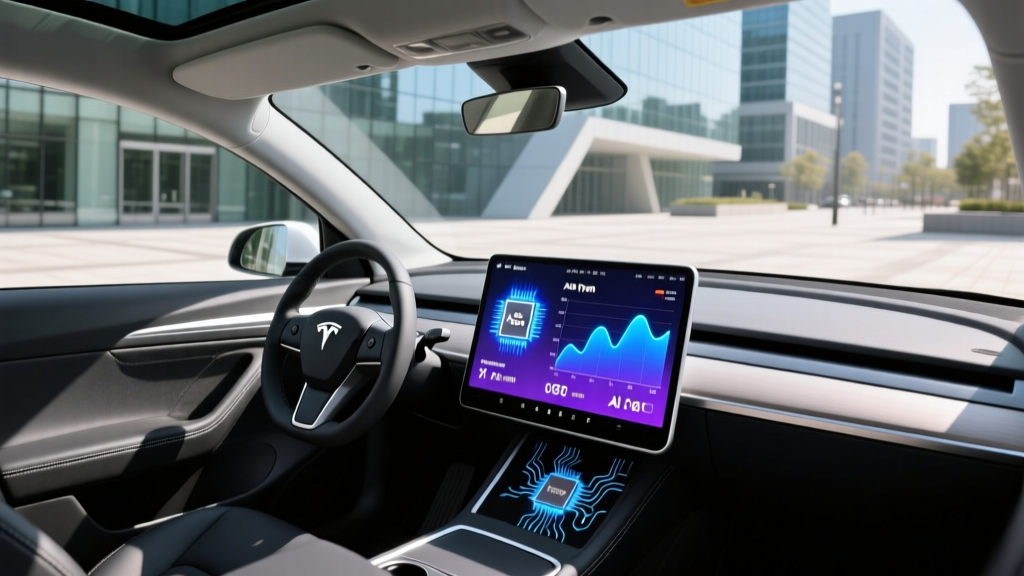
Most EV shoppers focus on battery size and range, but the silicon running the infotainment stack shapes daily ownership just as much. Since 2022, the partnership between AMD and Tesla has put a Ryzen-based APU and an RDNA GPU behind the Model Y's 15.4-inch center display, replacing the older Intel Atom setup. For the 2026 model year, that hardware decision influences everything from navigation responsiveness to in-car gaming, over-the-air update speed, and how smoothly the visualization layer renders Autopilot and FSD (Supervised) data in real time.
This review evaluates the 2026 Tesla Model Y Long Range AWD through the lens most buyers actually use — range, charging, cost, and practicality — while explaining where the AMD Ryzen platform tangibly improves the ownership experience compared to rivals still running Qualcomm Snapdragon cockpit chips.
2026 Tesla Model Y: Core EV Specifications
| Attribute | Value |
|---|---|
| EPA-estimated range | 320 miles |
| Battery (usable) | ~75 kWh, NMC (2170 cells) |
| Drivetrain | Dual-motor AWD |
| Horsepower | 384 hp (combined) |
| 0–60 mph | 4.8 seconds |
| Efficiency | 122 MPGe / 28 kWh/100 mi |
| Peak DC fast charge | 250 kW (CCS via NACS adapter or native NACS) |
| 10–80% DC charge time | ~27 minutes |
| Level 2 home charge | 11.5 kW (~44 mi/hr) |
| Cargo (behind 2nd row) | 30.2 cu ft; 72.0 cu ft folded |
| Rear legroom | 41.6 inches |
| Battery warranty | 8 years / 120,000 miles (≥70% retention) |
| Base MSRP | $44,990 (before destination) |
Source: fueleconomy.gov and Tesla's official 2026 spec sheet.
Real-World Range: What the EPA Sticker Doesn't Tell You
Tesla's trip planner tends to be optimistic by 5–8% on hilly interstate routes. On a flat 70-mph cruise at 65°F, owners consistently report 290–305 miles before hitting 10% State of Charge. If your commute is mostly stop-and-go city driving with heavy regen use, you'll actually approach or slightly beat the EPA figure thanks to regenerative braking recapturing energy that gas cars waste as heat.
Charging Speed at Home and on the Road
| Level | Power | Miles Added per Hour | Typical Use Case |
|---|---|---|---|
| Level 1 (120V) | ~1.4 kW | ~4–5 mi/hr | Emergency / overnight trickle |
| Level 2 (240V, 48A) | 11.5 kW | ~44 mi/hr | Home Wall Connector daily |
| DC Fast (Tesla Supercharger V3/V4) | Up to 250 kW peak | ~180 mi in 15 min (10–50%) | Road trips |
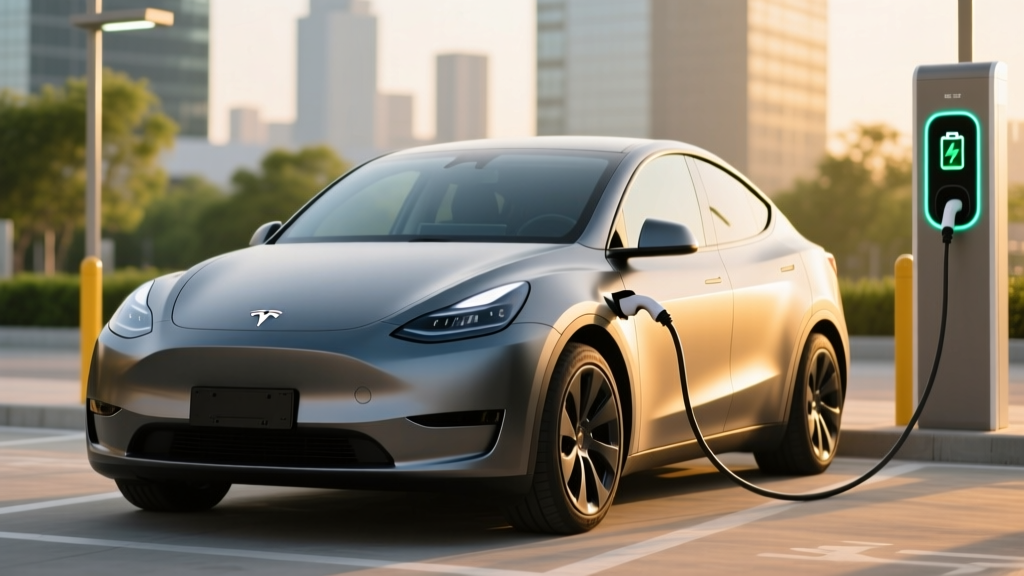
The 250 kW peak only sustains from roughly 10% to 35% SoC. Above 50%, the charge curve tapers aggressively — by 80% you're pulling under 60 kW. This is why Tesla and the EPA quote 10–80% times (~27 minutes) rather than 0–100%. Plan road-trip stops around 10–60% for the fastest throughput, then hop back on the road.
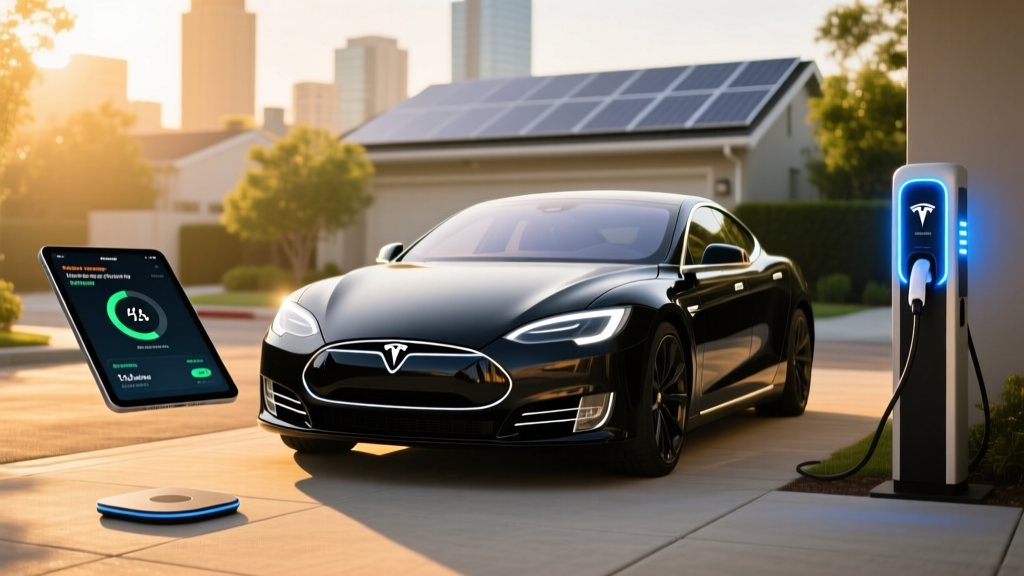
For home charging, a 60-amp circuit feeding the Tesla Wall Connector at 48A continuous is the sweet spot. Expect $600–$1,400 for a licensed electrician to install a NEMA 14-60 or hardwired Wall Connector, assuming your panel has headroom. Older 100-amp service panels may need a $1,500–$3,000 upgrade — confirm with an electrician before purchase.
Where AMD Ryzen Hardware Changes the Daily Drive
The AMD Ryzen Embedded APU paired with an RDNA 2 GPU (roughly equivalent to a desktop RX 6600 in compute capability) replaced the Intel E3950 Apollo Lake chip in Model Y builds starting early 2022. In the 2026 refresh, that gap matters in concrete ways:
- Navigation rendering: Satellite map tiles and 3D building visualization load in under a second, versus the 2–3 second lag on older Intel-based Teslas.
- FSD (Supervised) visualization: The AMD GPU renders surrounding vehicle models, lane markings, and pedestrian detection in real time at 60 fps — a noticeably smoother experience than the 30 fps output on pre-2022 units.
- Over-the-air updates: Download and install phases complete roughly 30% faster thanks to faster flash I/O and decompression throughput on the Ryzen platform.
- In-car gaming: Titles like Cyberpunk 2077 and Stardew Valley run natively; the RDNA GPU supports Steam integration for parked-car gaming sessions.
- App switching: Spotify, navigation, theater, and phone apps remain resident in memory — no reload delays when toggling.
For buyers cross-shopping the Hyundai Ioniq 5 or Ford Mustang Mach-E, this is a meaningful differentiator. Those competitors use Qualcomm Snapdragon SA8155P or SA8295P cockpit chips, which are capable but lack the discrete GPU horsepower Tesla gets from the AMD partnership.
Pricing, Trims, and Federal Tax Credit Eligibility
| Trim | MSRP | §30D Credit Potential | Effective Price |
|---|---|---|---|
| Long Range AWD | $44,990 | Up to $7,500* | ~$37,490 |
| Performance AWD | $48,990 | Up to $7,500* | ~$41,490 |
*Federal §30D credit eligibility depends on three moving targets: (1) buyer AGI under $150K single / $300K joint, (2) vehicle MSRP under the $80,000 SUV cap, and (3) battery critical-mineral and component sourcing thresholds that the IRS adjusts annually. The Model Y qualifies for the full $7,500 for most 2026 buyers, but always verify against the latest IRS guidance before signing. Point-of-sale transfer is available, reducing your out-of-pocket at the dealer.
Who Should Buy the 2026 Model Y (and Who Shouldn't)
- You want Supercharger network access (the most reliable U.S. DC network by uptime).
- You value OTA feature updates that add real capability years after purchase.
- Your daily drive is under 80 miles round-trip and you can charge at home.
- You want AMD Ryzen-class infotainment responsiveness and gaming.
- You need a dedicated instrument cluster or physical buttons (try Ioniq 5 or BMW iX).
- You tow more than 3,500 lbs (the Rivian R2 or F-150 Lightning are better suited).
- You live in a condo/apartment with zero home or workplace charging access — public-only charging adds cost and time.
Pros and Cons at a Glance
- 320-mi EPA range covers most road trips with one stop
- 250 kW peak charging, 10–80% in ~27 min
- AMD Ryzen + RDNA infotainment is the fastest in any mainstream EV
- Supercharger network reliability
- Spacious 30.2 cu ft cargo area + frunk
- Strong OTA update cadence
- No physical buttons — everything through the touchscreen
- Rear visibility compromised by coupe-like roofline
- FSD (Supervised) is a $8,000 upsell and still Level 2
- Cold-weather range loss remains ~20–25% below EPA
- Insurance premiums run 15–25% above segment average
Ownership Costs: 5-Year Snapshot
Assuming 12,000 miles/year, $0.14/kWh home electricity, and $7,500 federal credit applied:
- Fuel (electricity): ~$4,700 over 5 years (vs. ~$9,500 gasoline for a comparable AWD crossover at 25 mpg / $3.50/gal)
- Maintenance: ~$1,800 (no oil, plugs, or transmission fluid; cabin air filters, wipers, tires)
- Insurance: ~$11,000–$13,000 over 5 years (higher than segment norm)
- Depreciation: Moderate — Tesla resale softened in 2024–2025 but stabilized with the refreshed Model Y
Net 5-year cost of ownership lands roughly $3,000–$5,000 below a comparably equipped BMW X3 or Audi Q5, primarily on fuel savings.
Frequently Asked Questions
What is the real-world range of the 2026 Tesla Model Y?
Expect 260–290 miles on highway trips in mild weather, dropping to 220–250 miles in freezing conditions. City driving with regen often matches or exceeds the 320-mile EPA figure.
How fast does the Model Y charge at home and on DC fast chargers?
At home on a 240V/48A Wall Connector, you'll add ~44 miles per hour (11.5 kW). On a Tesla Supercharger V3/V4, peak rate is 250 kW with a 10–80% session taking about 27 minutes.
Does the 2026 Model Y qualify for the $7,500 federal EV tax credit?
Most buyers qualify, provided AGI is under $150K single / $300K joint, MSRP is under the $80K SUV cap (it is), and current-year battery sourcing rules are met. Verify on IRS.gov before purchase. Point-of-sale transfer is available.
Is the Model Y worth buying over the Hyundai Ioniq 5 or Ford Mustang Mach-E?
If Supercharger access and OTA updates matter most, yes. If you prefer physical buttons, 800V ultra-fast charging (Ioniq 5 peaks at 350 kW with 10–80% in ~18 min), or a more traditional cabin layout, the competitors make strong cases.
What's the biggest drawback of the AMD-powered Tesla infotainment?
Hardware capability isn't the issue — it's the all-touchscreen interface. Adjusting mirrors, glovebox, and climate requires screen taps with no redundant physical controls, which frustrates some first-time EV buyers.
How long is the battery warranty?
Tesla covers the battery and drive unit for 8 years or 120,000 miles, whichever comes first, with a minimum 70% capacity retention guarantee during that period.
Specs and pricing reflect the 2026 model year as published. Federal tax credit rules under §30D are subject to change; consult a tax professional and the IRS for your specific eligibility.