Quick Answer: Amazon's electric delivery van — the Rivian EDV (Electric Delivery Van) — is a purpose-built commercial BEV with an EPA-estimated 150-mile range, a 126 kWh NMC battery pack, and DC fast charging from 10–80% in approximately 45 minutes at up to 150 kW. As of 2026, Amazon has deployed over 10,000 EDVs across U.S. metro areas. While you can't buy one, the EDV's real-world fleet data reveals critical lessons about commercial EV total cost of ownership, battery degradation under heavy cycling, and the charging infrastructure demands that apply equally to consumer EV buyers.
What Is the Amazon Electric Van?
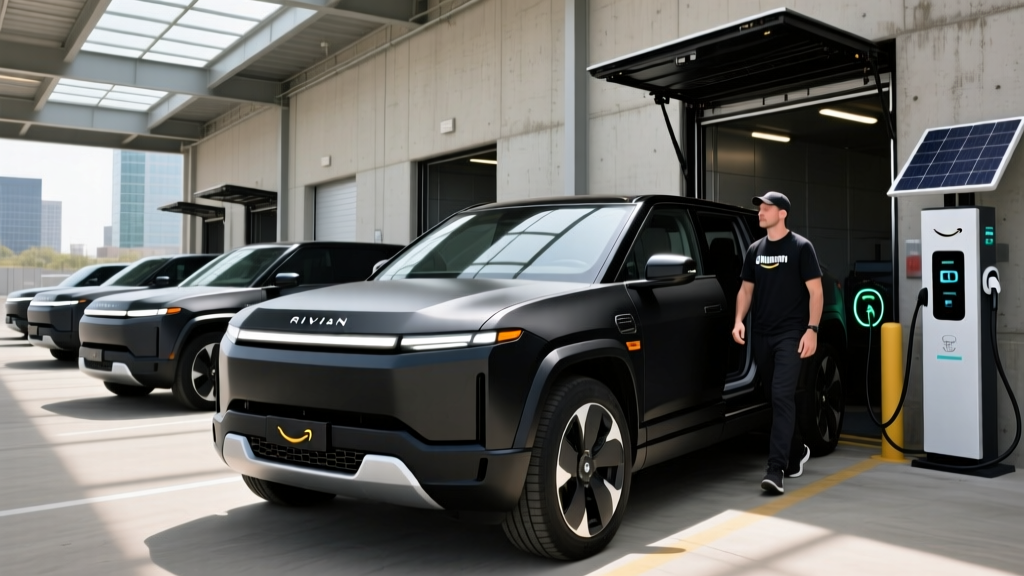
When Amazon committed to deploying 100,000 electric delivery vans by 2030, it didn't shop existing models — it co-developed one. The Rivian EDV (Electric Delivery Van) was designed from the ground up for last-mile delivery routes, built on a bespoke commercial skateboard platform that shares no body panels with the consumer R1T or R1S but leverages Rivian's core powertrain and battery architecture.
The EDV comes in two primary configurations: a smaller cargo variant with roughly 500 cubic feet of volume and a larger model pushing 700+ cubic feet. Both are Class 2b commercial vehicles, meaning they fall outside the consumer §30D federal tax credit framework — Amazon instead benefits from the §45W commercial clean vehicle credit (up to $40,000 per vehicle for vehicles over 14,000 lbs GVWR) and fleet-level depreciation advantages.
| Specification | Rivian EDV (Standard) | Rivian EDV (Large) |
|---|---|---|
| Battery Capacity | ~126 kWh (NMC) | ~126 kWh (NMC) |
| EPA-Est. Range | ~150 miles | ~120–140 miles |
| Peak DC Charge Rate | 150 kW | 150 kW |
| 10–80% DC Charge Time | ~45 min | ~45 min |
| Level 2 Charge Rate | ~19.2 kW | ~19.2 kW |
| Motor / Drivetrain | Single motor, FWD | Single motor, FWD |
| Payload Capacity | ~2,500 lbs | ~3,500 lbs |
| Cargo Volume | ~500 cu ft | ~700+ cu ft |
| Warranty (Battery/Powertrain) | 8 yr / 150,000 mi | 8 yr / 150,000 mi |
The 150-mile EPA range may sound modest compared to consumer EVs posting 300+ miles, but for a delivery van averaging 70–90 miles per route with nightly depot charging, it's precisely calibrated. Overbuilding range means carrying heavier batteries, which reduces payload and increases per-mile energy consumption — a trade-off every EV buyer should understand.
EDV vs. Gas Delivery Vans: The Real Cost Math
The business case for the Amazon electric van hinges on total cost of ownership (TCO), not sticker price. A gas-powered Mercedes-Benz Sprinter or Ford Transit costs $45,000–$55,000, while a commercial EV van like the EDV carries an estimated unit cost of $100,000–$120,000 before incentives. So why make the switch?
| Cost Factor | Rivian EDV (Electric) | Gas Sprinter / Transit |
|---|---|---|
| Estimated Unit Cost | $100,000–$120,000 | $45,000–$55,000 |
| Federal Incentive (§45W) | Up to $40,000 | $0 |
| Net Cost After Incentive | $60,000–$80,000 | $45,000–$55,000 |
| Energy/Fuel Cost per Mile | $0.08–$0.12 (electricity) | $0.22–$0.30 (gasoline) |
| Maintenance per Mile | $0.05–$0.08 | $0.12–$0.18 |
| Annual Miles (typical) | ~22,000 | ~22,000 |
| 5-Year Energy/Fuel Cost | $8,800–$13,200 | $24,200–$33,000 |
| 5-Year Maintenance Cost | $5,500–$8,800 | $13,200–$19,800 |
| 5-Year Total Operating Cost | $14,300–$22,000 | $37,400–$52,800 |
The per-mile operating savings — roughly $0.15–$0.25/mile — add up to $15,000–$30,000+ over five years of fleet use. That easily eclipses the residual price gap after incentives. This is the same fundamental math that makes consumer EVs compelling for high-mileage drivers, just amplified by commercial duty cycles.
For context, the U.S. Department of Energy's vehicle cost calculator consistently shows electricity costs at roughly one-third to one-half the per-mile cost of gasoline, depending on local utility rates and gas prices.
Battery Chemistry and Degradation: What Fleet Data Teaches Us
The EDV uses NMC (nickel manganese cobalt) lithium-ion cells — the same chemistry found in most long-range consumer EVs from Tesla, Hyundai, and Ford. NMC offers high energy density, which matters when you need to fit a large battery under a cargo floor without sacrificing payload height.
However, fleet duty cycles are brutal on batteries. An Amazon EDV may see:
- Daily depth-of-discharge cycles of 60–80% (far more stressful than a consumer EV charged to 80% and driven 30%)
- DC fast charging several times per week when depot Level 2 isn't sufficient
- Operation in extreme heat (Phoenix, Houston) and extreme cold (Chicago, Minneapolis) without the luxury of preconditioning at a personal charger
Rivian's 8-year/150,000-mile battery warranty — with a capacity retention threshold typically set at 70% — reflects confidence in the thermal management system. Active liquid cooling and heating keep cells in their optimal 20–35°C window, which is the single most important factor in long-term battery health.
Consumer takeaway: If an NMC battery can survive daily 70% DoD cycles in a delivery van for 8+ years, a consumer NMC battery charged to 80% daily and driven 40 miles should retain 85–90%+ capacity over the same period. The key variables are depth of discharge, charge rate frequency, and thermal management — not calendar age alone.
Common EV Misconceptions — Fleet Reality Check
| Myth | Fact (EDV Fleet Evidence) |
|---|---|
| "EV batteries need replacing every 5 years" | Rivian warranties the EDV battery for 8 years/150,000 mi; fleet data shows <10% degradation at 100k miles with proper thermal management. |
| "150 miles of range isn't enough" | Average delivery route is 70–90 miles. Right-sizing the battery reduces weight, cost, and energy consumption — a lesson for consumer buyers too. |
| "EVs cost more to insure" | Commercial fleet insurance for EDVs is comparable to gas vans on a per-mile basis. Consumer EV insurance premiums are 10–20% higher on average but narrowing as repair data matures. |
| "Cold weather kills EV range permanently" | Cold reduces range temporarily (15–30% at 20°F) due to cabin heating and slower electrochemistry. Range recovers fully when temperatures rise — no permanent damage. |
Charging Infrastructure: Depot Lessons for Home Buyers
Amazon's depot charging buildout is essentially a masterclass in what every EV homeowner needs to think about, just scaled 100x. Each Amazon delivery station installing EDVs needs:
- Electrical service upgrades — many depots required new transformers and switchgear, jumping from 400A to 2,000A+ three-phase service. The consumer equivalent is checking whether your home panel has 200A service before installing a Level 2 charger.
- Level 2 chargers at 19.2 kW — the EDV's onboard charger accepts up to 19.2 kW AC. At that rate, a depleted 126 kWh battery refills in roughly 7 hours. For a consumer EV with an 80 kWh battery on an 11.5 kW Level 2 charger (48A circuit), expect ~7–8 hours for a full charge.
- DC fast chargers at 150 kW — installed at select depots for mid-day top-ups or rapid turnarounds. The 10–80% charge in ~45 minutes reflects the EDV's charge curve, which peaks near 150 kW up to ~50% SoC, then tapers progressively. This taper is universal across NMC batteries — the "peak kW" number is never sustained across the full charge session.
| Charging Level | Power (kW) | Miles Added per Hour (EDV est.) | Consumer EV Equivalent |
|---|---|---|---|
| Level 1 (120V) | 1.4 kW | ~3 mi/hr | 3–5 mi/hr (sedan/SUV) |
| Level 2 (240V, 48A) | 11.5 kW | ~25 mi/hr | 25–40 mi/hr |
| Level 2 (240V, 80A) | 19.2 kW | ~42 mi/hr | 40–55 mi/hr |
| DC Fast (150 kW) | 150 kW | ~180 mi in 45 min (10–80%) | 150–250 mi in 20–30 min |
Home buyer lesson: Don't fixate on DC fast charging for daily needs. The EDV fleet proves that Level 2 depot charging (the commercial analog of home Level 2) handles 95%+ of daily energy needs. Fast charging is for exceptions — road trips for consumers, double-shift days for fleets.
What First-Time EV Buyers Can Learn from Amazon's Fleet Strategy
Amazon didn't buy 10,000 vans on faith. They analyzed route data, charging windows, energy costs, and maintenance projections before committing. Consumer buyers should apply the same framework:
Should You Buy an EV? The Fleet-Tested Decision Framework
- IF you drive under 100 miles/day AND have access to Level 2 home or workplace charging → EV is ideal. You'll charge overnight at $0.03–$0.12/kWh (depending on utility), never visit a gas station for daily driving, and the battery will last well beyond the warranty period.
- IF you drive 100–250 miles/day AND have home charging AND your routes pass reliable DC fast chargers → EV works well. Choose a model with 270+ EPA miles and 150+ kW DC charging. Budget 20–30 minutes for a mid-trip fast charge on longer days.
- IF you regularly drive 300+ miles in rural areas OR lack any home/workplace charging → Consider a PHEV. A plug-in hybrid like the Toyota RAV4 Prime (42 mi electric-only, 38 MPG gas) eliminates range risk while still delivering electric commuting.
- IF you live in extreme cold (sustained sub-0°F) AND have no garage → EV is viable but plan for 25–35% winter range loss. Choose a model with a heat pump (standard on most 2026 EVs) and add 30% to your range requirement.
Tax Credits and Incentives: Commercial vs. Consumer
The Amazon electric van benefits from the IRS §45W commercial clean vehicle credit, which covers up to $40,000 for qualifying commercial vehicles. This is entirely separate from the consumer §30D credit that individual buyers use.
For consumer EV buyers in 2026, the §30D new clean vehicle credit offers up to $7,500, but eligibility depends on:
- MSRP caps: Vans/SUVs/pickups ≤ $80,000; sedans ≤ $55,000
- Buyer income caps: AGI ≤ $150,000 (single), $225,000 (head of household), $300,000 (joint)
- Battery sourcing: Critical minerals and battery components must meet escalating domestic/free-trade sourcing thresholds that tighten annually
- Point-of-sale transfer: You can apply the credit as a down payment reduction at the dealer rather than waiting for tax filing
Always verify current-year eligibility on IRS.gov — battery sourcing requirements have disqualified several previously eligible models as of 2026.
The Bottom Line: What Amazon's $10B+ EV Bet Means for You
Amazon's electric van fleet is the largest real-world EV stress test in North American history. Over 10,000 EDVs accumulating millions of delivery miles generate data points that validate — and occasionally challenge — consumer EV assumptions:
- Batteries last. NMC cells with active thermal management are proving durable well beyond early pessimistic projections.
- Right-size your range. Carrying 400 miles of battery you never use is like hauling an empty cargo van — wasted weight and money.
- Level 2 is the backbone. Whether it's an Amazon depot or your garage, overnight Level 2 charging handles the vast majority of real-world energy needs.
- TCO wins the argument. Higher upfront cost + dramatically lower operating cost = net savings within 3–5 years for most drivers.
You don't need Amazon's budget to apply their logic. Map your daily miles, check your electrical panel, run the per-mile cost numbers, and choose the electrified vehicle that fits your actual driving pattern — not the one with the biggest number on the window sticker.
Can I buy the Amazon Rivian electric delivery van?
No. The Rivian EDV is built exclusively for Amazon under a commercial agreement. Rivian has indicated it may offer a commercial van to other fleet buyers in the future, but as of 2026 it is not available to individual consumers. The closest consumer alternative is the Ford E-Transit (126 mi EPA range, starting ~$55,000) or the Mercedes-Benz eSprinter (~200 mi range, starting ~$74,000).
How far can the Amazon electric van go on a charge?
The standard Rivian EDV achieves approximately 150 miles (EPA est.) on its 126 kWh NMC battery. In real-world delivery use — stop-and-go traffic, frequent door openings, varying payloads — Amazon reports effective range of 120–140 miles, which still comfortably covers the average 70–90 mile daily route.
How long does it take to charge the Amazon electric van?
On a Level 2 depot charger at 19.2 kW, a full charge takes approximately 7 hours (overnight). On a 150 kW DC fast charger, the EDV charges from 10% to 80% in roughly 45 minutes. The charge curve peaks near 150 kW at low SoC and tapers above 60%, which is standard behavior for NMC lithium-ion packs.
What does the Amazon electric van teach consumer EV buyers?
Three key lessons: (1) Right-size your battery for your actual daily miles — more range than you need just adds cost and weight. (2) Home Level 2 charging is the foundation; DC fast charging is supplemental. (3) Total cost of ownership — not purchase price — is the right metric. Lower fuel and maintenance costs typically offset higher upfront EV pricing within 3–5 years.
Are electric vans cheaper to run than gas vans?
Yes, significantly. Based on national average electricity and gasoline prices, an electric delivery van costs approximately $0.08–$0.12 per mile to fuel vs. $0.22–$0.30 for a gas equivalent. Combined with 30–50% lower maintenance costs (no oil changes, fewer brake replacements due to regenerative braking, no transmission service), the per-mile operating cost is roughly 40–60% lower for electric.