Quick Answer: What Are the New Amazon Electric Trucks?
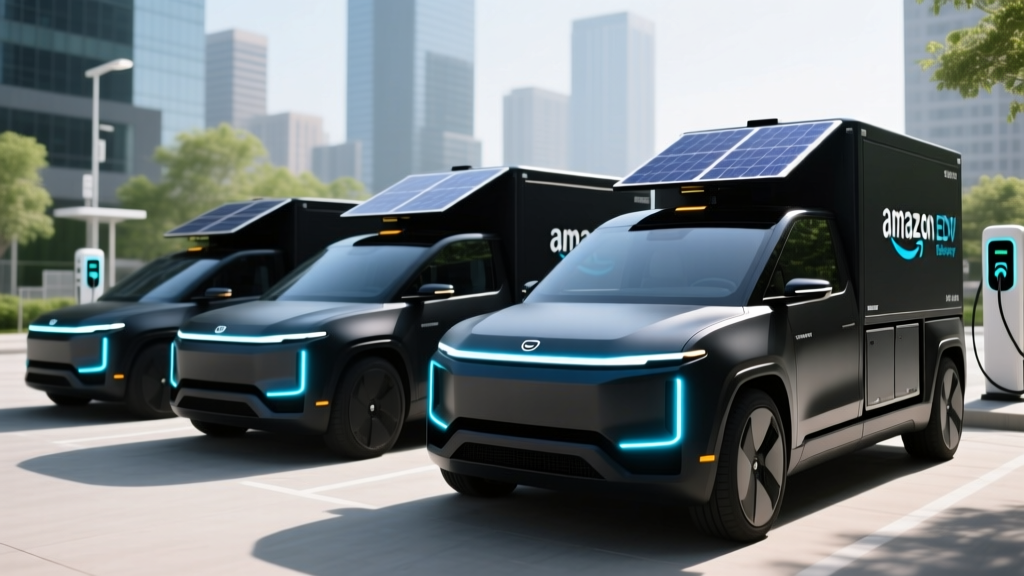
The "new Amazon trucks electric" refers to the Rivian Electric Delivery Van (EDV) fleet — a purpose-built commercial EV developed exclusively for Amazon's last-mile delivery network. As of early 2026, Amazon has deployed over 10,000 EDVs across the U.S., with the Rivian EDV-700 (the most common variant) offering an EPA-estimated 161 miles of range, a 150 kW peak DC fast-charge rate, and operating costs roughly 50% lower per mile than the gasoline Mercedes-Benz Sprinter vans they replace. These are not consumer vehicles — you cannot buy one — but their scale is reshaping commercial EV adoption and Rivian's manufacturing trajectory.
Why Amazon Bet Big on Electric Delivery Trucks
Amazon's Climate Pledge commits the company to net-zero carbon by 2040, and last-mile delivery — the final leg from a local fulfillment center to your door — was one of its most emissions-intensive operations. In 2020, Amazon ordered 100,000 custom electric vans from Rivian, the largest commercial EV order in history. By 2026, the fleet has scaled to five figures, operating in over 1,000 U.S. cities.
The business case goes beyond optics. Delivery vans are an ideal EV use case: predictable daily routes (typically 80–120 miles), overnight depot charging, and extreme stop-and-go duty cycles where regenerative braking recovers substantial energy. A gasoline delivery van idling and accelerating hundreds of times per day burns fuel at terrible efficiency; an electric van thrives in that exact pattern.
Rivian EDV-700: Specs, Range, and Charging
The EDV lineup includes three sizes — EDV-500, EDV-700, and EDV-900 — referring to cargo volume in cubic feet. The EDV-700 is the workhorse, comparable in footprint to a Ford Transit 250 or Mercedes Sprinter 2500. Here are the key specifications based on Rivian's fleet data and EPA estimates:
| Specification | Rivian EDV-700 |
|---|---|
| Battery Capacity | ~135 kWh usable (NMC chemistry) |
| EPA Range | 161 miles |
| Real-World Range (loaded, mixed) | ~130–145 miles |
| Peak DC Fast Charge | 150 kW |
| 10–80% DC Charge Time | ~45 minutes |
| Level 2 AC Charging | ~19.2 kW (depot chargers) |
| Motor / Drivetrain | Single rear motor, RWD |
| Horsepower | ~265 hp |
| 0–60 mph | Not officially published (~8 sec est.) |
| Cargo Volume | 694 cu ft |
| Payload Capacity | ~2,700 lbs |
| Battery Warranty | 8 years / 200,000 miles |
Real-World Range Reality
The 161-mile EPA figure assumes moderate temperatures and partial loads. In practice, Amazon's vans operate fully loaded in diverse climates. In Phoenix summer heat (110°F+), range drops roughly 8–12% due to cabin and battery cooling demands. In Chicago winter (below 20°F), expect a 20–30% reduction — dropping effective range to 110–130 miles. Amazon mitigates this with route optimization software that caps daily assignments within safe range margins and uses depot preconditioning to warm or cool batteries before departure.
Cost Comparison: Electric Van vs. Gas Van
The strongest argument for the new Amazon electric trucks is economics. Let's compare the Rivian EDV-700 against a typical gasoline delivery van like the Ford Transit 350 (3.5L EcoBoost V6) over a 5-year, 125,000-mile ownership horizon:
| Cost Category | Rivian EDV-700 (Electric) | Ford Transit Gas Van |
|---|---|---|
| Estimated Vehicle Cost | ~$70,000–$80,000 (fleet pricing) | ~$48,000–$55,000 MSRP |
| Fuel/Energy (125k mi) | ~$7,500 (depot electricity @ $0.10/kWh) | ~$21,875 (gas @ $3.50/gal, 14 MPG avg) |
| Maintenance (5 yr) | ~$3,000 (tires, cabin filter, brake inspection) | ~$9,500 (oil, transmission, belts, brakes) |
| Downtime Cost | Lower (fewer mechanical failures) | Higher (powertrain, exhaust, cooling system) |
| 5-Year Total Operating Cost | ~$10,500 | ~$31,375 |
The electric van costs roughly $20,000 less to operate over five years, largely recouping its higher purchase price. For a fleet of 10,000 vans, that's over $200 million in savings — before factoring in carbon credit value or brand benefit. Maintenance savings are particularly dramatic: electric powertrains eliminate oil changes, spark plugs, timing belts, exhaust systems, and the transmission failures that plague heavy-duty gas vans.
According to the U.S. Department of Energy, battery electric vehicles typically cost 40–60% less to maintain than internal combustion equivalents, and commercial duty cycles amplify this gap due to the high wear of stop-and-go driving on gas powertrains.
Charging Infrastructure: Depot-First Strategy
Unlike consumer EVs that rely on public charging networks, Amazon's electric fleet charges at purpose-built depots. This depot-first model solves the biggest pain point in EV adoption — charging access — by controlling the entire infrastructure stack.
| Charging Level | Power | Miles Added/Hour | Use Case |
|---|---|---|---|
| Level 2 (Depot AC) | 19.2 kW | ~50 mi/hr | Overnight charging (8–10 hr shift) |
| DC Fast Charge | 150 kW peak | ~350 mi/hr (peak) | Mid-day top-up if needed |
A typical Amazon delivery depot installs 50–100 Level 2 chargers, enough to replenish an entire fleet overnight. At 19.2 kW, an EDV-700 with a depleted 135 kWh battery reaches full charge in roughly 7 hours — perfectly aligned with a driver's shift schedule. DC fast chargers are installed at select depots for mid-day opportunity charging, though Amazon's route planning aims to minimize this need.
The depot charging model also sidesteps the charge-curve taper issue that frustrates consumer EV road-trippers. Since vans charge overnight at Level 2, they never hit the 80%+ SoC zone where DC charging slows dramatically. Batteries are also charged to ~90% rather than 100% on most days, extending long-term battery health.
What This Means for Consumer EV Buyers
You can't buy an Amazon EDV, so why should consumer EV shoppers care? Three reasons:
1. Rivian's financial health. The Amazon contract — reportedly worth billions — has been Rivian's revenue lifeline while its consumer vehicles (R1T pickup and R1S SUV) scale. A healthy Rivian means better parts availability, software updates, and resale support for R1T/R1S owners.
2. Battery supply chain scale. Manufacturing 10,000+ large-battery vans annually drives down per-kWh costs and secures supply agreements that benefit Rivian's consumer lineup. The EDV's NMC battery pack shares cell-level architecture with the R1 platform.
3. The commercial EV template. Amazon's success validates the electric-van business case for FedEx, UPS, and independent delivery contractors. As commercial EV adoption accelerates, expect more depot charging infrastructure, better fleet-oriented vehicles, and eventually used commercial EVs entering the secondary market at steep discounts.
Decision Framework: Should You Consider a Consumer Rivian?
Choose the Rivian R1T (Dual-Motor, ~$72,000) if: You need a 350-mile range electric pickup with genuine off-road capability, a ~11,000-lb tow rating, and want to support a brand with a massive commercial backbone.
Choose the Rivian R1S (Tri-Motor, ~$82,000) if: You need a 3-seat-row electric SUV with ~330 miles of range and premium interior quality rivaling BMW X5 or Mercedes GLE.
Look at the Ford E-Transit (~$55,000) if: You actually need a commercial electric van for your own business — it's the closest consumer-available equivalent to the Amazon EDV, with 126 miles of EPA range and 115 kW DC charging.
Wait if: You need more than 161 miles of range in a commercial van. The E-Transit and EDV are designed for predictable routes; long-haul commercial EVs (Tesla Semi, Freightliner eCascadia) serve a different niche.
Common Misconceptions About Amazon's Electric Fleet
| Myth | Fact |
|---|---|
| "Amazon electric trucks are self-driving." | The EDVs use SAE Level 2 driver-assist features (lane keeping, adaptive cruise) but require a human driver at all times. Amazon's autonomous delivery efforts (Zoox, internal R&D) are separate programs. |
| "Electric vans can't handle cold weather routes." | Range drops 20–30% in extreme cold, but Amazon's route software compensates by assigning shorter routes. Depot preconditioning also warms batteries before departure, mitigating loss. |
| "These trucks are made by Amazon." | The EDVs are designed and manufactured by Rivian at its Normal, Illinois factory. Amazon is the exclusive customer under a multi-year agreement, but Rivian engineers and builds the vehicles. |
| "You can buy an Amazon electric van." | The EDV is exclusive to Amazon until at least late 2026 under Rivian's exclusivity clause. After that, Rivian has signaled it may offer the platform to other fleet operators. |
| "Electric delivery vans are slower." | The EDV-700's electric motor delivers instant torque, making it quicker off the line than comparable gas vans — an advantage in stop-and-go urban delivery routes. |
The Bigger Picture: Commercial EVs in 2026
Amazon's fleet is the tip of the spear. FedEx has committed to all-electric parcel pickup by 2030, UPS has ordered 10,000 EVs from Arrival (though that company has faced financial headwinds), and the USPS is deploying Oshkosh's Next Generation Delivery Vehicle — available in both electric and gas variants — starting in 2026.
For the consumer EV market, the takeaway is infrastructure momentum. Every commercial depot charger installed normalizes EV charging in urban areas, and every fleet operator who reports lower total cost of ownership adds pressure for broader adoption. The new Amazon electric trucks aren't just a fleet story — they're proof that EVs win on economics when the duty cycle is right.
Can I buy a Rivian EDV for my delivery business?
Not yet. Amazon holds exclusivity on the EDV platform through at least late 2026. Rivian has indicated it will offer a commercial van to other fleet buyers afterward, but pricing and availability are not yet announced. The Ford E-Transit is currently available and is the closest alternative.
How much does it cost Amazon to charge an EDV per day?
At an average depot electricity rate of $0.10/kWh and daily consumption of roughly 100 kWh (for ~120 miles of driving), daily energy cost is approximately $10 per van. A comparable gas van burning 8–9 gallons at $3.50/gal costs $28–$32 per day in fuel alone — a 3x difference.
What happens if an EDV runs out of charge mid-route?
Amazon's route-optimization software plans each driver's daily assignments well within the van's effective range, accounting for cargo load, weather, and terrain. Mid-route depletion is rare, but select depots have DC fast chargers for emergency top-ups, and Rivian's fleet support includes roadside assistance.
Are Amazon's electric trucks better for the environment?
Yes, but with nuance. The EDV produces zero tailpipe emissions, reducing urban air pollution significantly. Total lifecycle emissions depend on the local electricity grid — in coal-heavy regions, the advantage narrows, but even on the average U.S. grid, the EDV produces roughly 50–60% fewer lifecycle emissions than a gas van over its operating life, per EPA analysis.
Will Rivian's Amazon contract affect R1T and R1S availability?
Rivian has expanded its Normal, Illinois factory with a second production line specifically for consumer vehicles, reducing EDV/R1 competition for factory resources. As of 2026, R1T and R1S build times have improved to 2–4 weeks for most configurations, down from multi-month waits in 2023–2024.