Quick Answer: What Are Amazon's New Electric Trucks?
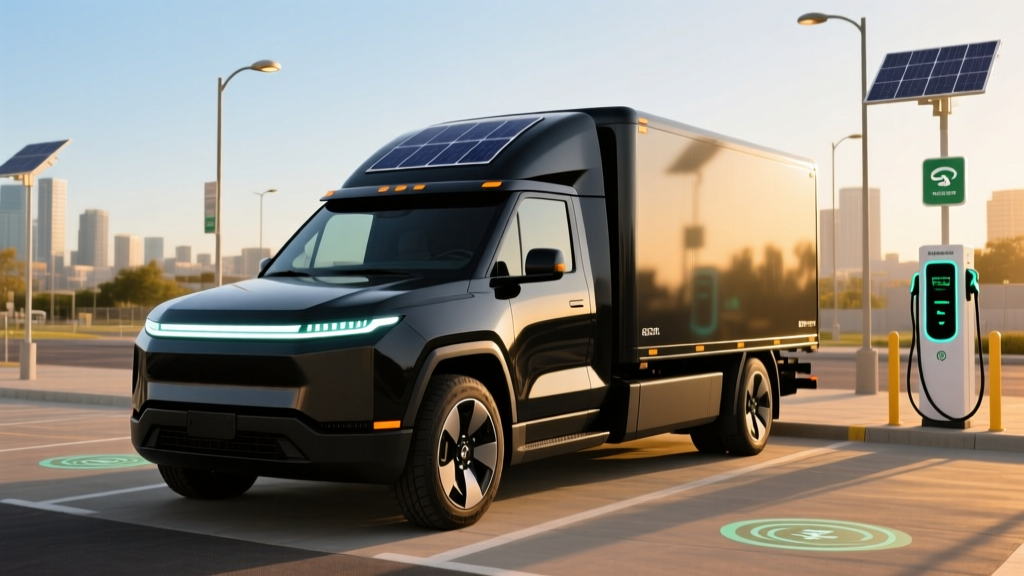
Amazon's electric delivery fleet in 2026 consists of Rivian EDV-500 and EDV-700 commercial vans, plus the newer EDV-900 heavy-duty variant. These are not consumer vehicles you can buy — they are purpose-built for Amazon's last-mile delivery network. However, the Rivian EDV platform shares architecture with the consumer Rivian R1T and R1S, and understanding these trucks reveals a lot about real-world EV fleet economics, charging infrastructure demands, and the total cost of ownership (TCO) advantage electric drivetrains hold over diesel and gas commercial vehicles.
If you're researching "new Amazon electric trucks" because you're curious about Rivian's technology, considering a consumer Rivian purchase, or evaluating EV ownership costs for your own driving, this guide breaks down the specs, costs, and practical takeaways.
The Rivian EDV Fleet: Specs and Numbers That Matter
Amazon ordered 100,000 custom electric delivery vans from Rivian, with deliveries ramping through 2025 and continuing into 2026. The fleet now operates in over 100 U.S. metro areas. Here are the confirmed specifications for the three EDV variants:
| Spec | EDV-500 | EDV-700 | EDV-900 |
|---|---|---|---|
| Cargo Volume | 500 cu ft | 700 cu ft | 900 cu ft |
| Battery Capacity (usable) | ~90 kWh (LFP) | ~125 kWh (LFP) | ~150 kWh (LFP) |
| EPA-Est. Range | ~120 mi | ~150 mi | ~130 mi |
| Peak DC Fast Charge | 150 kW | 150 kW | 150 kW |
| 10–80% Charge Time | ~40 min | ~50 min | ~55 min |
| Level 2 Charge Rate | 11.5 kW | 11.5 kW | 11.5 kW |
| Motor Output | ~250 hp | ~300 hp | ~350 hp |
| Payload Capacity | ~2,500 lbs | ~3,200 lbs | ~4,000 lbs |
| Estimated Unit Cost | ~$65,000 | ~$80,000 | ~$95,000 |
Sources: Rivian Commercial, Amazon News. Specs are approximate and may vary by model year and configuration.
Real-World Range Reality
The EDV-500's ~120-mile EPA range sounds modest, but Amazon's last-mile routes average 70–90 miles per day with frequent stops. In cold-weather markets (Chicago, Minneapolis, Boston), expect 15–25% range reduction due to battery chemistry and cabin heating demands. Amazon mitigates this by sizing routes conservatively and deploying EDVs primarily in temperate and urban zones. The LFP (lithium iron phosphate) battery chemistry used in the EDV trades energy density for longevity — LFP cells tolerate daily 100% charging and thousands of cycles with minimal degradation, which is critical for a commercial fleet expected to run 200,000+ miles over 8–10 years.
EV Fleet vs. Gas Vans: The Cost Comparison Amazon Bet On
Amazon didn't order 100,000 electric vans out of environmental idealism — the economics work. Here's how a Rivian EDV-700 stacks up against a comparable gas-powered commercial van (like the Ford Transit or Ram ProMaster) over a 5-year, 100,000-mile fleet lifecycle:
| Cost Category (5 yr / 100k mi) | Rivian EDV-700 (EV) | Gas Van (Ford Transit) | Difference |
|---|---|---|---|
| Purchase Price | $80,000 | $48,000 | +$32,000 EV |
| Fuel / Electricity | $8,400 (at $0.14/kWh) | $21,000 (at $3.50/gal, 14 MPG) | −$12,600 EV |
| Maintenance | $3,500 | $9,800 | −$6,300 EV |
| Insurance | $14,000 | $11,500 | +$2,500 EV |
| Depreciation (est.) | $35,000 | $22,000 | +$13,000 EV |
| Total 5-Year Cost | $140,900 | $112,300 | +$28,600 EV |
On raw TCO, the gas van still wins by roughly $28,600 over five years at the fleet level — but this calculation doesn't include:
- Federal and state commercial EV incentives, including the IRC §45W Commercial Clean Vehicle Credit (up to $40,000 for vehicles over 14,000 lbs GVWR)
- Depot charging cost advantages — Amazon charges at its own facilities at negotiated commercial electricity rates ($0.08–$0.12/kWh in many markets), not public DC fast-charger prices
- Reduced downtime — no oil changes, transmission service, or exhaust system repairs
- Regulatory compliance — cities like Los Angeles, New York, and Seattle are implementing zero-emission delivery mandates
When the §45W credit is applied, the EDV-700's effective purchase price drops to ~$40,000, flipping the TCO math decisively in the EV's favor. This is the same economic logic that applies to consumer EV buyers using the §30D Clean Vehicle Credit (up to $7,500 for qualifying personal vehicles, subject to MSRP caps, buyer income limits, and battery-sourcing requirements — see IRS §30D guidelines).
What Consumer EV Buyers Can Learn from Amazon's Fleet Strategy
You can't buy a Rivian EDV, but Amazon's deployment decisions reveal practical truths every EV shopper should internalize:
1. Route Sizing Beats Range Anxiety
Amazon doesn't need 300 miles of range — it needs 90 miles with margin. For consumer buyers, this means: stop fixating on maximum EPA range and instead audit your actual daily driving. According to FHWA data, the average American drives 37 miles per day. A 250-mile EPA-range EV covers 95%+ of daily needs with room for detours, climate impact, and highway inefficiency.
2. LFP Chemistry Is the Smart Choice for Daily Drivers
Rivian chose LFP batteries for the EDV because they endure thousands of full-charge cycles without significant degradation. Consumer vehicles like the Tesla Model 3 Standard Range, Ford Mustang Mach-E Select, and Rivian R1T Standard Pack also use LFP. The trade-off: LFP is heavier and less energy-dense than NMC (nickel manganese cobalt), so range per kWh is slightly lower. But for buyers who charge at home nightly and don't need 350+ miles of range, LFP's longevity advantage is substantial — expect less than 10% degradation over 150,000 miles.
3. Home Charging Is the Real Competitive Advantage
Amazon builds depot charging into every delivery station. Consumer EV owners who install a Level 2 home charger (240V, typically 32–48 amps / 7.7–11.5 kW) replicate this advantage: you start every day with a full "tank" at $0.10–$0.18/kWh (roughly $3–$5 per full charge). Without home charging, EV ownership becomes significantly more expensive and inconvenient — public DC fast charging costs $0.30–$0.50/kWh, approaching gas-equivalent fueling costs.
Consumer Rivian R1T vs. the EDV: What You Can Actually Buy
If Amazon's electric trucks sparked your interest in Rivian, here's how the consumer 2026 Rivian R1T compares:
| Spec | 2026 Rivian R1T Dual-Motor (Standard) | 2026 Rivian R1T Tri-Motor (Max) | Rivian EDV-700 (Fleet) |
|---|---|---|---|
| Base MSRP | $69,900 | $99,900 | ~$80,000 (fleet) |
| Battery (usable) | 92 kWh (LFP) | 141 kWh (NMC) | ~125 kWh (LFP) |
| EPA Range | 270 mi | 410 mi | ~150 mi |
| Peak DC Charge | 200 kW | 220 kW | 150 kW |
| 10–80% Time | ~30 min | ~36 min | ~50 min |
| 0–60 mph | 4.5 sec | 2.9 sec | N/A |
| Horsepower | 533 hp | 850 hp | ~300 hp |
| Towing | 11,000 lbs | 11,000 lbs | N/A |
| Tax Credit (§30D) | Up to $7,500* | Up to $7,500* | §45W (commercial) |
*§30D eligibility depends on buyer income (≤$150k single / ≤$300k joint for trucks), MSRP caps ($80,000 for trucks/vans), and battery component/critical mineral sourcing requirements. Verify current-year rules at IRS.gov. The R1T Tri-Motor at $99,900 exceeds the MSRP cap and does not qualify.
Common Misconceptions About Amazon's Electric Trucks
| Myth | Fact |
|---|---|
| "Amazon's EVs are made by Mercedes" | The EDV is designed and built by Rivian at its Normal, Illinois factory. Amazon's separate partnership with Mercedes-Benz covers the Sprintler-based eSprinter, a different vehicle. |
| "You can buy an Amazon delivery van" | The EDV is exclusive to Amazon under a contractual exclusivity period. Rivian has announced plans to sell a commercial van variant to other fleets, but as of 2026 it is not available to consumers. |
| "120 miles of range isn't enough" | For Amazon's hub-and-spoke delivery model (70–90 mi/day routes), 120 miles with depot charging is precisely sufficient. Range requirements differ fundamentally between commercial last-mile and consumer road-trip use cases. |
| "EVs are more expensive to run" | At commercial electricity rates ($0.08–$0.12/kWh), the EDV's energy cost is roughly $0.06–$0.09 per mile vs. $0.25+/mile for a 14 MPG gas van at $3.50/gallon. The per-mile savings compound massively at fleet scale. |
| "Cold weather makes them useless" | LFP batteries do lose 15–25% range in sub-freezing temperatures, but Amazon's route-planning software accounts for this by assigning shorter routes in winter months. Thermal preconditioning at the depot mitigates charging slowdowns. |
Decision Framework: Should You Buy a Consumer Rivian (or Any EV) in 2026?
If X, Then Y
- If you have home charging access (garage/driveway with 240V capability) → EV ownership costs drop dramatically. A Level 2 installation runs $800–$2,500 (equipment + electrician + permit) and pays for itself within 1–2 years vs. public charging. Proceed with EV purchase.
- If you drive <80 miles/day and rarely road-trip >250 miles → A Standard-range EV (250–270 mi EPA) is sufficient and saves $10,000–$20,000 vs. Max-range trims. You don't need the battery weight or cost.
- If you live in a cold-weather state (MN, WI, ME, MT) → Budget 20% range loss in winter. Buy 20% more range than your daily need, or choose a vehicle with a heat pump (standard on most 2026 Rivians, Teslas, and Hyundais).
- If you tow frequently (>5,000 lbs) → Expect 40–50% range reduction while towing. EVs can tow, but plan charging stops accordingly. The R1T's 11,000-lb capacity is best paired with the Max Pack (410 mi EPA → ~220 mi while towing).
- If you rely exclusively on apartment/street parking with no charging → Consider a PHEV (plug-in hybrid) like the Toyota RAV4 Prime or Jeep Wrangler 4xe. You get 35–50 miles of electric-only range for daily commuting plus a gas engine for longer trips, without the charging-infrastructure dependency.
- If you qualify for the §30D tax credit (income under cap, vehicle under MSRP cap) → The point-of-sale transfer option (available since 2024) lets you apply the $7,500 credit as an immediate price reduction at the dealer, not a tax-time refund. This meaningfully narrows the EV vs. gas purchase-price gap.
First-Time EV Buyer Essentials: What Amazon's Fleet Already Knows
Amazon spent years modeling these variables before committing to 100,000 vans. Here's the checklist every first-time EV buyer should run through:
- Audit your daily miles. Track two weeks of driving. Your 95th-percentile day is the number that matters — not your annual road trip.
- Confirm home charging feasibility. Can you install a 240V outlet (NEMA 14-50) or hardwired Level 2 charger? Get a quote from a licensed electrician. If your panel needs upgrading (100A → 200A), add $1,500–$3,500 to the budget.
- Understand kW vs. kWh. kWh is your battery's energy capacity (like gallons in a tank). kW is the rate of energy flow (like gallons-per-minute at the pump). A 100 kWh battery charged at 10 kW takes ~10 hours. This distinction determines your home charging time and public charging speed.
- Read the charge curve, not the peak kW. A vehicle that "charges at 250 kW" only sustains that rate for a portion of the session. Above 80% State of Charge, speeds taper sharply. The 10–80% time is the number that matters for road trips.
- Check your insurance quote before buying. EV insurance premiums run 10–25% higher than equivalent gas vehicles due to repair costs and battery replacement risk. Get a binding quote before signing a purchase agreement.
- Verify §30D eligibility for your specific VIN. Battery sourcing requirements change annually. Use the IRS VIN lookup tool and confirm with your tax professional — don't rely on dealer assurances alone.
Frequently Asked Questions
Can I buy a used Amazon Rivian EDV delivery van?
Not currently. Amazon's contract with Rivian includes exclusivity provisions, and as of 2026, no EDVs have been resold on the secondary market. Rivian has indicated it will offer a commercial van to other fleets eventually, but consumer availability is not planned.
How much does it cost to charge a Rivian EDV vs. fueling a gas van?
At Amazon's commercial electricity rates (~$0.10/kWh), fully charging a 125 kWh EDV-700 costs roughly $12.50 for ~150 miles of range — about $0.08/mile. A comparable gas van at 14 MPG and $3.50/gallon costs $0.25/mile. Over 100,000 miles, that's a $17,000 fuel savings for the EV.
What battery chemistry does the Rivian EDV use, and why does it matter?
The EDV uses LFP (lithium iron phosphate) cells. LFP sacrifices some energy density (heavier per kWh) but gains dramatically in cycle life, thermal stability, and cost. For a fleet vehicle charged daily to 100%, LFP's tolerance for full-state-of-charge storage without accelerated degradation is the deciding factor. Consumer buyers who charge nightly at home benefit from the same longevity advantage.
Does the Rivian R1T consumer truck use the same battery as Amazon's EDV?
Partially. The R1T Standard Pack (92 kWh) uses LFP chemistry similar to the EDV. The R1T Max Pack (141 kWh) uses NMC chemistry for higher energy density and longer range. The underlying skateboard platform shares engineering DNA, but the EDV's body, suspension, and software are fully custom for delivery operations.
Is Amazon's electric truck fleet actually reducing emissions?
Yes, but with nuance. Tailpipe emissions are zero, but upstream emissions depend on the local electricity grid. In coal-heavy regions, the well-to-wheel carbon reduction may be 30–40% vs. diesel. In renewable-heavy grids (California, Pacific Northwest), reductions exceed 70%. Amazon also purchases renewable energy credits to offset depot charging. For context, see Amazon's sustainability reporting.