Quick Answer: Are Amazon Delivery Trucks Electric?
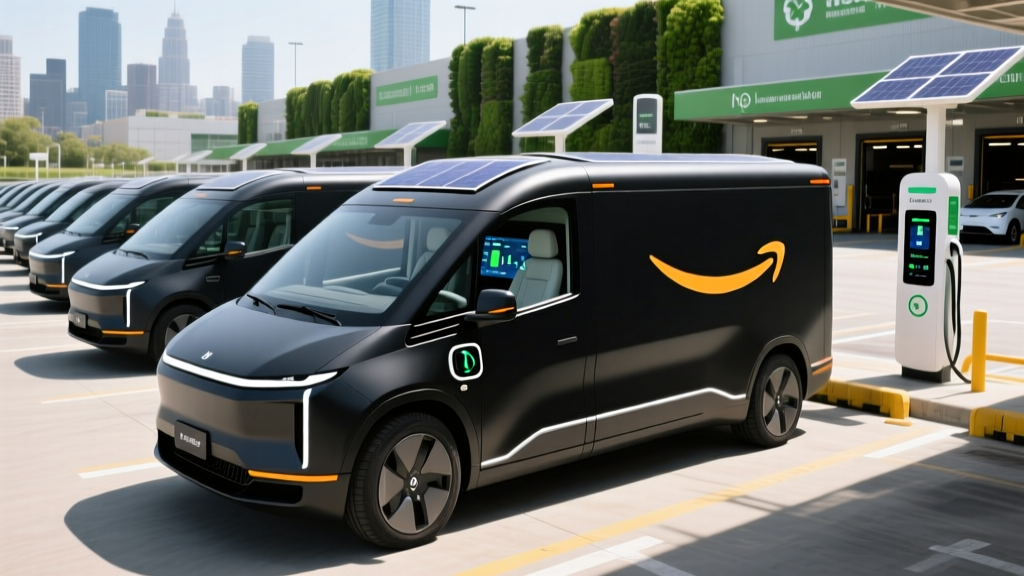
Yes. As of early 2026, Amazon has deployed more than 10,000 Rivian Electric Delivery Vans (EDVs) across the United States, with a contractual commitment for up to 100,000 vehicles by 2030. These purpose-built electric delivery trucks — designated EDV-500, EDV-700, and EDV-900 by cargo volume — replaced conventional gas-powered Mercedes-Benz Sprinter and Ram ProMaster vans on last-mile delivery routes. Amazon also operates a smaller fleet of electric box trucks from BYD and Lion Electric for middle-mile logistics, and has ordered electric semi-trucks from Tesla and Daimler Freightliner for long-haul freight.
Why Amazon Went Electric: The Business Case
Amazon's electrification push isn't driven by altruism — it's an operating-cost decision. Last-mile delivery vans idle frequently, average low speeds, and follow predictable urban routes with central depot returns. That usage profile is nearly ideal for battery-electric powertrains. According to Amazon's 2024 Sustainability Report, each electric van saves roughly $2,400 to $3,100 per year in fuel and maintenance compared to a gasoline Sprinter equivalent.
The math works like this: a gas delivery van averaging 14 MPG on stop-and-go routes burning $3.50/gallon fuel costs approximately $0.25 per mile in fuel alone. The Rivian EDV, consuming about 2.2 kWh per mile and charging at depot rates averaging $0.09/kWh, costs roughly $0.20 per mile in energy — before factoring in eliminated oil changes, reduced brake wear from regenerative braking, and fewer moving parts in the drivetrain.
Rivian EDV Specifications: Battery, Range, and Charging
The Rivian EDV shares its skateboard platform architecture with the consumer R1T truck and R1S SUV but is engineered for commercial duty cycles. Here are the confirmed specifications for the primary model in Amazon's fleet:
| Specification | Rivian EDV-700 |
|---|---|
| Battery Capacity (usable) | ~135 kWh (NMC lithium-ion) |
| EPA-Estimated Range | ~161 miles (fully loaded) |
| Real-World Route Range | ~120–150 miles (stop-and-go, HVAC, cold weather) |
| Peak DC Fast Charge Rate | ~150 kW |
| Level 2 Depot Charging | ~19.2 kW (10–100% in ~8 hours) |
| Motor Output | ~250 kW (335 hp) single rear motor |
| Cargo Volume | 700 cu ft (EDV-700 variant) |
| Payload Capacity | ~2,500 lbs |
| Drivetrain | Rear-wheel drive (AWD optional) |
Amazon depots predominantly use Level 2 (19.2 kW) overnight charging rather than DC fast charging. Since vans return to a central facility each evening and follow routes under 130 miles, depot L2 charging is sufficient and dramatically cheaper than installing DC fast-charger infrastructure. A 19.2 kW Level 2 charger can replenish the EDV's 135 kWh battery from 10% to full in roughly 7 to 8 hours — aligning perfectly with overnight downtime.
For mid-day top-ups or longer routes, the EDV supports DC fast charging at up to 150 kW, adding approximately 80 miles of range in 20 minutes. However, Amazon's route optimization software ensures most vans complete their daily routes without mid-shift charging.
Electric Delivery Truck vs. Gas Van: Cost Comparison
Understanding the total cost of ownership (TCO) is where the electric delivery truck argument becomes compelling. Below is a 5-year TCO comparison based on 25,000 miles per year of urban delivery driving:
| Cost Category (5 Years / 125,000 mi) | Rivian EDV-700 (Electric) | Mercedes Sprinter 2500 (Gas) |
|---|---|---|
| Purchase Price | ~$75,000–$85,000 (est.) | ~$48,000–$55,000 |
| Fuel / Energy | ~$24,750 (at $0.09/kWh) | ~$31,250 (at $3.50/gal, 14 MPG) |
| Maintenance | ~$4,500 | ~$9,200 |
| Brake Replacement | $0–$400 (regen extends life) | $1,800–$2,400 |
| Depot Charger Install (amortized) | ~$3,500 | N/A |
| Estimated 5-Year Total | ~$107,750–$118,150 | ~$90,250–$97,850 |
| Cost Per Mile (Total) | ~$0.86–$0.95 | ~$0.72–$0.78 |
The electric van carries a higher upfront purchase price — roughly $25,000 to $30,000 more than a gas equivalent. However, the annual fuel and maintenance savings of $2,400 to $3,100 narrow that gap each year. When factoring in federal commercial clean vehicle credits (up to $40,000 under IRS §45W for qualified commercial EVs), the purchase-price premium can be substantially reduced or eliminated entirely.
Common Misconceptions About Amazon's Electric Trucks
| Myth | Fact |
|---|---|
| "Electric vans can't handle real delivery routes." | Average Amazon last-mile routes are 80–130 miles — well within the EDV's ~150-mile real-world range. |
| "Cold weather kills the range." | Range drops 15–30% in sub-freezing temps, but depot-based routes with predictable mileage allow Amazon to adjust route lengths seasonally. |
| "They take too long to charge." | Overnight L2 depot charging (8 hours) aligns with off-shift hours. No mid-day charging needed for most routes. |
| "Amazon just does this for PR." | The operating-cost savings are real: $6,500+ less in fuel and maintenance annually per van at scale. |
| "The batteries won't last." | Rivian provides an 8-year/175,000-mile battery warranty. NMC chemistry at moderate SoC cycles (20–90%) projects 70–80% capacity retention at 200,000 miles. |
How Amazon Charges Its Electric Fleet
Amazon's depot-charging strategy is a masterclass in infrastructure planning. Rather than relying on public DC fast-charging networks, the company installs hundreds of Level 2 chargers at its Delivery Stations and Sortation Centers.
A typical Amazon delivery station with 200 vans might install 100 to 200 Level 2 chargers at 19.2 kW each, drawing a combined 2 to 4 megawatts of electrical capacity. This often requires a utility service upgrade to the facility — a significant capital investment, but one that Amazon amortizes over the 10+ year lifespan of the charging infrastructure.
Key charging characteristics of the Amazon EDV fleet operation:
- Charge window: 10:00 PM – 5:00 AM (off-peak utility rates)
- Smart charging: Software staggers charge start times to avoid peak demand charges from the utility
- Cost per kWh: Depot electricity averages $0.07–$0.12/kWh depending on region and time-of-use rates
- Energy per route: Most routes consume 60–100 kWh, well within the 135 kWh battery
This depot-charging model is fundamentally different from consumer EV ownership, where public-charging access and DC fast-charging speed are critical concerns. For fleet operators, the "charging problem" largely disappears when vehicles return to a known location every night.
Beyond Rivian: Amazon's Broader Electric Fleet
While the Rivian EDV is the most visible electric vehicle in Amazon's fleet, the company has diversified its electric truck investments across multiple segments:
Electric Box Trucks (Middle-Mile)
Amazon has ordered Class 6 and Class 8 electric box trucks from BYD and Lion Electric for middle-mile routes between fulfillment centers and sortation hubs. These larger trucks carry 150–250 kWh battery packs with ranges of 130–200 miles and are charged at regional hubs overnight.
Electric Semis (Long-Haul Pilots)
Amazon has taken delivery of Tesla Semi trucks and Daimler Freightliner eCascadia models for pilot long-haul routes. The Tesla Semi, with its claimed 500-mile range and ~900 kWh battery pack, represents the cutting edge of electric freight — though widespread long-haul electrification remains years away due to charging-infrastructure requirements and payload-weight trade-offs.
Autonomous Delivery (Sidewalk & Road)
Amazon's Zoox subsidiary (acquired in 2020) is developing a fully autonomous, Level 4 robotaxi and delivery vehicle. Additionally, Amazon previously tested the Scout sidewalk delivery robot, though that program was wound down in 2023. The company continues to invest in autonomous last-mile technology through Zoox and internal R&D.
What Amazon's EV Fleet Means for Consumer EV Buyers
Amazon's massive EV deployment provides valuable real-world data for everyday EV shoppers. Here's what consumer buyers can learn from the fleet-electric experiment:
Decision Framework: What Fleet EV Data Tells You
If you drive under 150 miles/day with home charging: Amazon's success with 135 kWh vans on 130-mile routes confirms that modern EVs handle daily driving with significant range buffer. A consumer EV with 250+ miles EPA range (like a Tesla Model Y, Hyundai Ioniq 5, or Ford Mustang Mach-E) provides even more margin for real-world conditions.
If you're concerned about battery longevity: Rivian EDVs are racking up 25,000+ miles/year in stop-and-go delivery duty — the harshest cycle pattern for a battery. Early fleet data shows NMC batteries retaining 90%+ capacity after 50,000 miles when managed with smart charging (avoiding 100% SoC holds and extreme temperatures). Consumer EVs, driven less aggressively and charged more conservatively, should see even better longevity.
If you're weighing EV vs. gas for a commercial or high-mileage use case: The break-even point for a commercial EV is roughly 3 to 4 years at 25,000 miles/year when factoring in fuel savings, maintenance reduction, and available tax credits. For consumer drivers doing 12,000–15,000 miles/year, the break-even is typically 5 to 7 years depending on local electricity and gas prices.
If you lack home or depot charging: Amazon's model only works because every van has a guaranteed overnight charger. For consumers without home-charging access (apartment dwellers, street parkers), EV ownership remains challenging. Prioritize finding reliable Level 2 charging within 0.25 miles of your home before purchasing.
The Limitations: What Amazon's Electric Trucks Can't Do (Yet)
Honest assessment requires acknowledging where electric delivery trucks fall short:
- Long-haul freight: Routes exceeding 300 miles remain impractical for current battery-electric trucks without multi-hour mid-route charging. Diesel dominates here.
- Extreme cold-weather routes: In regions like Minnesota or Montana, winter range loss of 25–35% can push the EDV close to its operational limits on longer routes.
- Heavy payload applications: Battery weight reduces available payload. For weight-sensitive cargo, the EDV's ~2,500 lb payload is less than some diesel alternatives.
- Rural delivery: Amazon's electric fleet is concentrated in urban and suburban delivery stations. Rural routes, with longer distances between stops and fewer depot-charging options, still rely primarily on gas and diesel vans.
- Upfront capital: Even with tax credits, the higher purchase price of electric vans requires fleet operators to have the capital or financing to absorb the initial premium.
Frequently Asked Questions
How many electric delivery vans does Amazon have?
As of early 2026, Amazon has deployed over 10,000 Rivian EDVs in the United States, with plans to reach 100,000 by 2030. The fleet is active in more than 100 U.S. cities.
What is the range of an Amazon Rivian delivery van?
The Rivian EDV-700 has an estimated range of approximately 161 miles (EPA equivalent). Real-world route range is typically 120–150 miles depending on payload, weather, and driving pattern. Amazon's route-optimization software ensures routes stay within this envelope.
How long does it take to charge an Amazon electric delivery truck?
Using Level 2 depot chargers (19.2 kW), a full charge takes approximately 7–8 hours — designed for overnight charging between shifts. DC fast charging at 150 kW can add ~80 miles in 20 minutes for mid-day top-ups.
Are Amazon's electric trucks made by Rivian?
Most of Amazon's last-mile electric vans are built by Rivian on a dedicated commercial platform. Amazon also uses electric box trucks from BYD and Lion Electric for middle-mile routes, and is piloting Tesla Semi and Freightliner eCascadia trucks for long-haul freight.
Do Amazon electric trucks work in cold weather?
Yes, but with reduced range. Battery-electric vehicles typically lose 15–35% of their range in sub-freezing temperatures due to cabin heating and reduced battery efficiency. Amazon manages this by adjusting route lengths seasonally in cold-climate markets like Chicago, Minneapolis, and Boston.
Does Amazon's EV fleet save money compared to gas vans?
On a per-mile operating basis, yes. The Rivian EDV saves approximately $2,400–$3,100 per year in fuel and maintenance compared to a gasoline van. However, the higher purchase price ($25,000–$30,000 premium) means the total cost of ownership breaks even around year 4–5, depending on mileage and local energy costs. Federal commercial vehicle tax credits (IRS §45W) can significantly reduce the upfront gap.
Can I buy a Rivian EDV for my own business?
Currently, the Rivian EDV is built exclusively for Amazon under an exclusivity agreement that runs through 2026 (with possible extensions). Rivian has signaled interest in offering commercial vans to other fleet buyers in the future, but no timeline has been announced. Businesses seeking electric delivery vans today can look at the Ford E-Transit (126 miles EPA range, ~$47,000 base) or the BrightDrop Zevo 600 as alternatives.