The Ioniq 9 Arrives With Big Batteries and an Even Bigger Amazon Connection
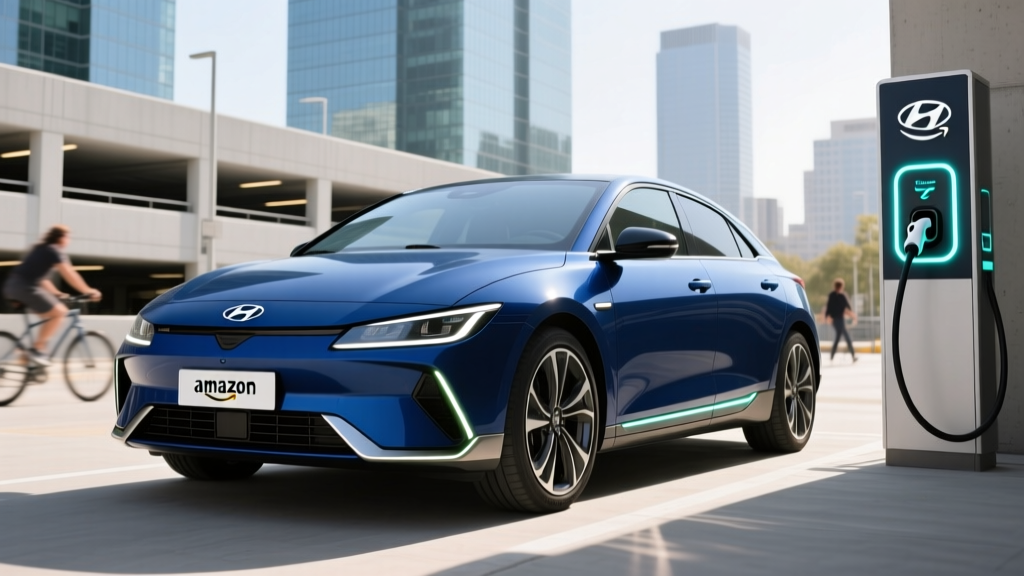
Hyundai's flagship electric SUV has finally landed in US showrooms, and the 2026 Ioniq 9 is generating search interest that often circles back to one phrase: amazon ioniq 9. That's because Hyundai and Amazon have partnered to feature the Ioniq lineup — including this three-row electric hauler — on Amazon Autos, making it one of the first full-size electric SUVs you can browse, configure, and initiate a purchase for directly through the retail giant's vehicle platform.
But the Amazon storefront is just the doorway. What matters is whether the Ioniq 9 delivers as a family EV. After reviewing the specs, running the charging math, and comparing it against the Kia EV9, Tesla Model X, and Rivian R1S, here's the full breakdown.
Core Specs at a Glance
| Spec | Value |
|---|---|
| EPA Range (Long Range RWD) | 311 miles |
| EPA Range (Long Range AWD) | 280 miles |
| Battery (usable) | 110.3 kWh (NMC lithium-ion, 4th-gen E-GMP) |
| Peak DC Fast Charge | ~240 kW (800V architecture) |
| 10–80% DC Charge Time | ~24 minutes (preconditioned) |
| Level 2 Home Charge Rate | 10.9 kW (adds ~30 mi/hr) |
| 0–60 mph (AWD Dual Motor) | 5.3 seconds |
| Horsepower (AWD) | 379 hp (combined) |
| Drivetrain | RWD single-motor or AWD dual-motor |
| Efficiency (RWD Long Range) | 89 MPGe / 36 kWh/100mi |
| Seating | 6-passenger (2nd-row captain's chairs) or 7-passenger |
| Cargo (behind 3rd row) | ~12.5 cu ft |
| Cargo (3rd row folded) | ~44 cu ft |
| Cargo (all rear seats folded) | ~87 cu ft |
| Base MSRP (SE Standard Range) | ~$59,400 |
| As-Tested (Calligraphy AWD) | ~$75,900 |
| Battery/Powertrain Warranty | 10 years / 100,000 miles |
Range and Efficiency: What the EPA Number Doesn't Tell You
The headline figure for the Ioniq 9 Long Range RWD is an EPA-estimated 311 miles. That's competitive with the Kia EV9 Long Range RWD (304 mi) and comfortably ahead of most three-row electric SUVs. The AWD variant drops to an EPA 280 miles due to the second motor's drag on efficiency.
EPA 311 mi (RWD) / 280 mi (AWD). In real-world highway driving at 70–75 mph, expect roughly 260–275 miles from the RWD and 235–250 miles from the AWD. In cold weather (below 30°F), plan for a 15–25% reduction, bringing effective range to ~220–240 miles for the RWD. The 110.3 kWh battery provides a large buffer, but physics still applies — heavy cabin heating and battery warming consume significant energy when temperatures drop.
Efficiency for the RWD Long Range lands at approximately 89 MPGe combined (36 kWh per 100 miles). That's respectable for a 5,000+ lb. three-row SUV, though the aerodynamically sleek Tesla Model X still edges it at 102 MPGe. The Ioniq 9's boxy, upright styling prioritizes interior headroom and third-row usability over slipperiness.
Charging Speed: The 800-Volt Advantage
Hyundai's fourth-generation E-GMP platform retains its signature 800-volt architecture, which allows the Ioniq 9 to accept up to roughly 240 kW at a compatible DC fast charger. That translates to a 10–80% charge in approximately 24 minutes when the battery is preconditioned — a genuine road-trip advantage over 400V competitors that typically need 35–40 minutes for the same session.
| Charging Level | Power | Speed (Approx.) |
|---|---|---|
| Level 1 (120V household) | 1.4 kW | ~4 miles per hour |
| Level 2 (240V home, 48A) | 10.9 kW | ~30 miles per hour |
| DC Fast Charge (peak) | ~240 kW | 10–80% in ~24 min |
Charging curve reality check: The 240 kW figure is a peak, not a sustained rate. Expect the Ioniq 9 to hold near peak rate from roughly 10–40% SoC, then progressively taper. From 80–100%, charging slows dramatically — this is normal for NMC chemistry and a reason road-trippers typically charge to 80% and move on. Hyundai's battery preconditioning feature warms the pack when you navigate to a charger, helping you hit peak rates faster in cool weather.
The Ioniq 9 ships with the NACS (Tesla-style) charge port in North America, giving it native access to Tesla's Supercharger network alongside Electrify America, EVgo, and other providers. No adapter is needed for NACS-equipped Superchargers.
Performance and Drivetrain
The single-motor RWD layout produces around 215 hp — adequate for daily driving but not thrilling for a vehicle this size. The dual-motor AWD bumps output to 379 hp and drops the 0–60 mph time to 5.3 seconds, which is genuinely quick for a three-row family hauler. For reference, the Kia EV9 GT-Line AWD runs 0–60 in about 5.0 seconds, while the Rivian R1S dual-motor hits it in roughly 4.5 seconds.
Ride quality leans toward comfort over sportiness. The adaptive suspension on upper trims absorbs highway imperfections well, and the low center of gravity (thanks to the floor-mounted battery) keeps body roll controlled in corners. Regenerative braking offers multiple levels via steering-wheel paddles, including a strong enough setting for one-pedal driving around town.
Interior, Cargo, and Technology
The Ioniq 9's cabin is where the "flagship" designation earns its keep. The flat floor (no transmission tunnel) creates an airy, spacious feel. Second-row captain's chairs slide, recline, and offer available ventilation and leg rests — a feature Hyundai calls "Relaxation Mode." Third-row space is genuinely usable for adults on shorter trips, with approximately 30 inches of legroom, which beats many competitors.
Infotainment: A curved panoramic display combines a 12.3-inch digital cluster and a 12.3-inch touchscreen running Hyundai's latest ccNC software. Wireless Apple CarPlay and Android Auto are standard. Over-the-air updates keep the system current.
Driver assistance: Hyundai SmartSense is standard across all trims and includes adaptive cruise control with stop-and-go, lane-keeping assist, blind-spot monitoring, rear cross-traffic collision avoidance, and highway driving assist. This is a SAE Level 2 driver-assist system — it does not drive the car autonomously and requires your hands on the wheel and eyes on the road at all times.
Standout features: Available digital side mirrors (camera-based), a center-side airbag between front passengers, vehicle-to-load (V2L) capability that lets you power appliances or charge another EV, and an available head-up display with augmented-reality navigation prompts.
Notable drawbacks: The front trunk (frunk) is small — roughly 1.6 cu ft — essentially a glorified cable-storage cubby rather than meaningful cargo space. The boxy exterior creates more wind noise at highway speeds than the Model X. And the base Standard Range trim (with a smaller ~76.1 kWh battery) sacrifices range for a lower entry price, landing around 240 miles EPA.
Pricing, Trims, and Federal Tax Credit Eligibility
| Trim | MSRP (approx.) | After Max §30D Credit |
|---|---|---|
| SE Standard Range (RWD) | $59,400 | ~$51,900 |
| SEL Long Range (RWD) | $65,900 | ~$58,400 |
| Limited Long Range (AWD) | $70,500 | ~$63,000 |
| Calligraphy Long Range (AWD) | $75,900 | ~$68,400 |
Federal tax credit (IRS §30D) caveats: The Ioniq 9 is an SUV for tax-credit purposes, meaning the MSRP cap is $80,000 (higher than the $55,000 sedan cap). All current trims fall under that threshold. However, full $7,500 credit eligibility depends on:
- Buyer income caps: Modified AGI ≤ $300,000 (joint), $225,000 (head of household), $150,000 (single).
- Battery sourcing: Critical minerals and battery components must meet phased-in percentages from US or FTA-partner sources. Hyundai has been working to shift battery supply chains, but specific eligibility can change by model year and production batch.
- Point-of-sale transfer: As of 2024, you can transfer the credit to the dealer at purchase for an immediate price reduction rather than waiting to claim it on your tax return.
Always verify current eligibility on IRS.gov before purchasing, as sourcing requirements tighten annually. Check the fueleconomy.gov tax credit tracker for model-specific confirmation.
How It Compares: Ioniq 9 vs. the Competition
The three-row EV market in 2026 is no longer a one-horse race. Here's how the Ioniq 9 stacks up against its most direct rivals:
| Hyundai Ioniq 9 LR AWD | Kia EV9 LR AWD | Tesla Model X LR | Rivian R1S Dual-Motor | |
|---|---|---|---|---|
| EPA Range | 280 mi | 270 mi | 335 mi | 270 mi |
| Battery | 110.3 kWh (NMC) | 100.0 kWh (NMC) | ~100 kWh | 106 kWh (NMC) |
| Peak DC Charge | ~240 kW | ~236 kW | ~250 kW | ~220 kW |
| 10–80% Time | ~24 min | ~24 min | ~25 min | ~27 min |
| 0–60 mph | 5.3 sec | 5.0 sec | 3.8 sec | 4.5 sec |
| Base MSRP (AWD) | ~$65,900 | ~$63,900 | ~$81,630 | ~$79,900 |
| 3rd Row Usability | Good | Good | Tight | Tight |
Choose the Ioniq 9 if: You want the best combination of charging speed, genuine third-row space, and flagship comfort features at a sub-$70K starting price (AWD). The 800V charging architecture is a real road-trip advantage, and the 10-year/100,000-mile battery warranty is the best in the segment.
Choose the Kia EV9 if: You want a similar platform at a slightly lower price and don't mind a marginally smaller battery. The EV9 and Ioniq 9 share the E-GMP architecture — the EV9 is the value play, the Ioniq 9 is the luxury play.
Choose the Tesla Model X if: Range is your top priority (335 mi EPA is hard to beat) and you want the Supercharger ecosystem. But the Model X starts significantly higher, its third row is cramped, and its interior quality doesn't match the Ioniq 9 at this price point.
Choose the Rivian R1S if: Off-road capability and adventure use cases matter to you. The R1S offers available air suspension, a more rugged build, and a quad-motor option — but at a much higher price.
Pros and Cons
- Class-leading 800V DC fast charging (~24 min, 10–80%)
- Genuine adult-usable third row with strong cargo versatility
- 10-year/100,000-mile battery and powertrain warranty
- NACS port for native Supercharger access
- V2L capability for camping and emergency power
- Comfortable ride with premium interior materials on upper trims
- AWD range drops to 280 mi EPA; real-world highway is ~240 mi
- Tiny frunk (1.6 cu ft) — not useful for real cargo
- Standard Range base trim sacrifices meaningful range for price
- More highway wind noise than sleeker competitors (Model X)
- No NHTSA or IIHS crash-test ratings published yet at launch
- Federal tax credit eligibility depends on evolving sourcing rules
Who Should Buy the Ioniq 9?
The Ioniq 9 is built for families who need three rows and want to go electric without compromise on road-trip charging. If you regularly carry kids, gear, and grandparents, the usable third row and strong cargo flexibility set it apart. The 800V charging architecture means you'll spend less time at DC fast chargers on highway trips than most competitors — a real quality-of-life advantage on 300+ mile drives.
It's less ideal for single commuters who don't need the space (the Ioniq 5 or a Tesla Model Y is more efficient and cheaper) or for buyers who prioritize maximum range above all else (the Model X still wins there). And if you tow frequently, note that Hyundai has not yet published a max tow rating competitive with the Rivian R1S's 7,700 lb capacity.
Frequently Asked Questions
What is the real-world range of the Ioniq 9?
The EPA rates the Long Range RWD at 311 miles and the AWD at 280 miles. Real-world highway driving at sustained speeds typically yields 260–275 miles (RWD) or 235–250 miles (AWD). Cold weather can reduce range by 15–25%.
How fast does the Ioniq 9 charge at home and on the road?
At home on a 240V Level 2 charger (48A), the Ioniq 9 charges at 10.9 kW, adding roughly 30 miles per hour — a full overnight charge from empty. On a DC fast charger, it peaks at ~240 kW and can go from 10–80% in about 24 minutes when preconditioned.
Does the Ioniq 9 qualify for the $7,500 federal EV tax credit?
It can, but eligibility depends on your income (capped at $300K joint / $150K single), the specific vehicle's battery sourcing compliance with §30D rules, and its MSRP falling under the $80,000 SUV cap — which all current trims do. Verify on IRS.gov and at fueleconomy.gov before purchasing.
What does the "Amazon Ioniq 9" connection mean?
Hyundai partnered with Amazon Autos to allow customers to browse, configure, and begin the purchase process for Ioniq models through Amazon's online vehicle platform. It's a digital retail channel — you still pick up the vehicle at a local Hyundai dealer. It does not affect the vehicle's specs, pricing, or warranty.
Is the Ioniq 9 worth buying over the Kia EV9?
If you prioritize a more premium interior, additional comfort features (relaxation seats, digital mirrors), and Hyundai's slightly larger battery, yes — the Ioniq 9 justifies its price premium. If budget is the primary concern, the EV9 shares the same platform and offers similar performance for less money.
What is the battery warranty?
Hyundai covers the Ioniq 9's battery and powertrain for 10 years or 100,000 miles, whichever comes first. The warranty guarantees the battery will retain a minimum percentage of its original capacity (typically 70%) over that period. This is among the best battery warranties in the EV market.