The Quick Answer on Amazon EV Vans
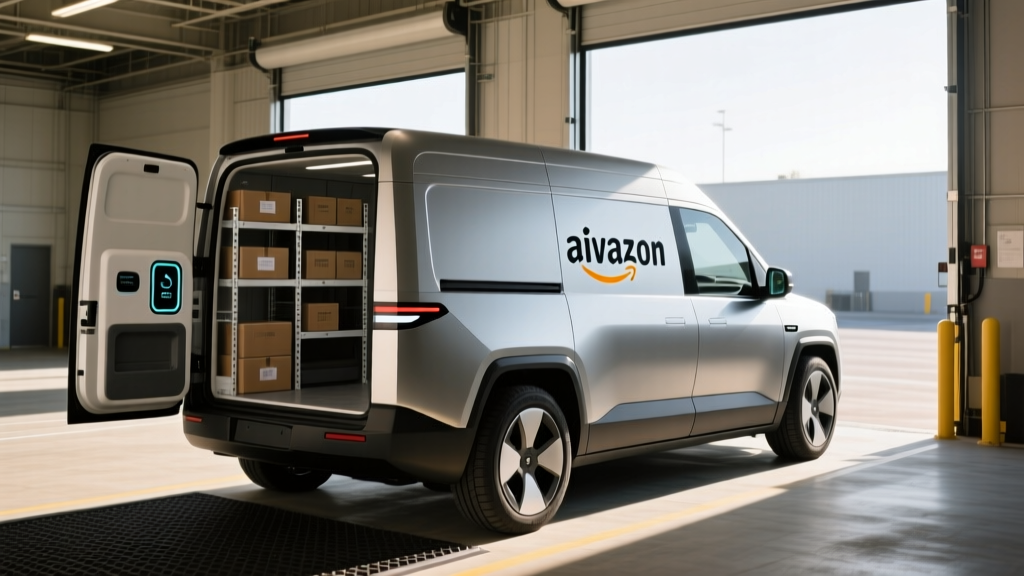
Amazon's EV vans are the Rivian EDV (Electric Delivery Van), custom-built in three sizes (EDV-500, EDV-700, EDV-900) on Rivian's commercial skateboard platform. They carry a ~140 kWh NMC battery, deliver an estimated 120–150 miles of real-world range depending on payload and climate, and DC fast-charge from 10–80% in roughly 45 minutes at 150 kW. Amazon does not sell these vans to consumers — they are fleet-exclusive. However, the EDV program has shaped Rivian's consumer vehicles (R1T, R1S, R2) and signals where commercial EV adoption is headed. If you're researching Amazon EV vans for purchase, you're likely looking at Rivian's consumer lineup or competing commercial EVs like the Ford E-Transit or BrightDrop Zevo.
What Are Amazon EV Vans? The Rivian EDV Explained
In 2019, Amazon ordered 100,000 custom electric delivery vans from Rivian — the largest EV fleet order in history at the time. Deliveries began in 2022, and by early 2026, Amazon has deployed over 15,000 EDVs across more than 100 U.S. metro areas, with plans to reach the full 100,000-unit order by 2030. Amazon's Climate Pledge (net-zero carbon by 2040) is the strategic driver behind the rollout.
The EDV is built on Rivian's commercial variant of its skateboard platform — the same basic architecture underpinning the R1T truck and R1S SUV, but stretched and reconfigured for cargo. Three cargo-volume variants exist:
- EDV-500: ~500 cu ft of cargo space, shortest wheelbase
- EDV-700: ~700 cu ft, mid-length (most common in suburban routes)
- EDV-900: ~900 cu ft, longest wheelbase (high-volume urban hubs)
All three share the same battery pack, motor configuration (dual-motor AWD standard), and charging hardware. The differentiation is purely in body length and cargo capacity.
EDV Specifications: Battery, Range, and Charging Numbers
Rivian has not published a consumer-facing spec sheet for the EDV the way it does for the R1 series — these are fleet vehicles, and exact specs shift with production iterations. But based on fleet teardowns, regulatory filings, and Rivian's own disclosures, here are the working numbers:
| Spec | EDV-500 / 700 / 900 (shared) |
|---|---|
| Battery capacity | ~140 kWh (usable), NMC chemistry |
| EPA range estimate | ~150 miles (EDV-500); ~120 miles (EDV-900, fully loaded) |
| Real-world range (loaded, mixed driving) | 110–140 miles depending on payload, climate, stop frequency |
| Motor configuration | Dual-motor AWD, ~300 hp combined |
| DC fast charge peak | ~150 kW |
| 10–80% DC fast charge time | ~45 minutes |
| Level 2 onboard charger | ~11.5 kW (~30 miles/hr) |
| Payload capacity | Up to ~2,500 lbs (varies by variant) |
| Cargo volume | 500 / 700 / 900 cu ft |
Real-World Range Reality
The EDV's ~150-mile EPA estimate applies to the smallest variant under ideal conditions. In practice, delivery vans operate under worst-case EV efficiency scenarios: frequent stops (regenerative braking helps here), heavy payloads (adding 1,500+ lbs reduces range by 10–15%), and cold-weather operation (battery performance drops 15–30% below freezing without preconditioning). Amazon's route-planning software accounts for this — most EDV routes are designed at 90–110 miles to leave a buffer for traffic, detours, and climate load.
How the EDV Compares to Gas Delivery Vans
The EDV doesn't exist in a vacuum. Amazon's fleet historically relied on gas-powered vehicles like the Ram ProMaster and Mercedes-Benz Sprinter. Here's how the economics stack up in a delivery-van context:
| Metric | Rivian EDV-700 (EV) | Ram ProMaster 2500 (Gas) |
|---|---|---|
| Energy/fuel cost per mile | ~$0.10–0.14 (commercial electricity at $0.12/kWh, ~2 kWh/mi) | ~$0.22–0.28 (gas at $3.50/gal, ~14 MPG city) |
| Annual fuel/energy (25,000 mi/yr) | ~$2,500–3,500 | ~$5,500–7,000 |
| Maintenance cost (annual est.) | ~$800–1,200 (no oil, fewer brake replacements due to regen) | ~$2,000–3,000 (oil, transmission, exhaust, brakes) |
| Upfront vehicle cost (fleet est.) | ~$70,000–85,000 per unit (custom contract pricing) | ~$42,000–52,000 MSRP |
| Estimated 5-year total operating cost | ~$20,000–28,000 (energy + maintenance) | ~$40,000–55,000 (fuel + maintenance) |
| CO₂ tailpipe emissions | Zero (grid-dependent upstream) | ~400+ g/mi |
The math is clear at fleet scale: the EDV's higher upfront cost is recovered within 3–4 years through fuel and maintenance savings. For a fleet of 15,000+ vehicles, that's hundreds of millions in operational savings — which is exactly Amazon's calculus.
What Amazon's EV Van Strategy Means for Consumer Buyers
You can't buy an EDV. But Amazon's investment in Rivian has had direct, measurable effects on the consumer EV market:
Rivian's Financial Stability
Amazon's 100,000-unit order and equity stake (Amazon held ~17% of Rivian as of late 2025) gave Rivian the revenue floor needed to survive the capital-intensive EV startup phase. Without the EDV contract, Rivian's R1T/R1S production and the upcoming R2 platform would have faced far greater financial risk. When you buy a Rivian R1S or R1T, you're buying from a company whose balance sheet is partially underwritten by Amazon's fleet commitment.
Technology Transfer
The EDV's battery thermal management system, dual-motor drivetrain, and software-defined vehicle architecture share DNA with Rivian's consumer platforms. Lessons from millions of fleet miles — particularly battery degradation data from high-cycle delivery use — feed back into consumer vehicle engineering. Rivian's battery warranty structure (8 years / 175,000 miles on the R1 series) reflects confidence built partly on EDV fleet data.
Commercial EV Competition Accelerated
Amazon's EDV commitment forced competitors to accelerate their own commercial EV programs:
- Ford E-Transit: 126-mile EPA range, 68 kWh battery, ~$55,000 base — available to businesses now
- BrightDrop Zevo 600: ~250-mile range, 165 kWh battery, GM-backed — in production for FedEx and other fleets
- Mercedes-Benz eSprinter: ~200-mile range (WLTP), ~115 kWh battery — available in the U.S.
If you're a small business owner considering a commercial EV van, the EDV's existence has made the entire segment more viable and competitive, driving prices down and charging infrastructure investment up.
Commercial EV Van Alternatives You Can Actually Buy
Since the EDV is Amazon-exclusive, here's what's available in 2026 for businesses or owner-operators looking at electric cargo vans:
| Model | Battery (kWh) | EPA Range | Peak DC Charge (kW) | 10–80% Time | Base Price (est.) |
|---|---|---|---|---|---|
| Ford E-Transit (2026) | 68 kWh (NMC) | 126 mi | 115 kW | ~45 min | $55,000 |
| BrightDrop Zevo 600 | 165 kWh (NMC) | ~250 mi | ~150 kW | ~55 min | $75,000+ |
| Mercedes-Benz eSprinter | 115 kWh (NMC) | ~200 mi (WLTP) | 115 kW | ~42 min | $72,000+ |
For context, the Ford E-Transit is the most accessible option for small fleets, with the lowest entry price and widespread dealer service support. The BrightDrop Zevo 600 offers the best range but requires a larger investment and is currently prioritized for major fleet contracts.
Real-World Ownership Considerations for Commercial EV Vans
Whether you're evaluating the E-Transit, eSprinter, or watching Rivian's consumer lineup, commercial EV ownership has specific practical challenges that differ from passenger EVs:
Depot Charging Is Mandatory
Commercial vans need depot-based Level 2 or DC charging. A single Level 2 charger (11.5 kW / 48A) adds roughly 30 miles of range per hour — meaning a fully depleted E-Transit (126 mi range) needs ~4.5 hours on a Level 2 to recharge. Most fleet operators install multiple 40–80A Level 2 stations or shared DC fast chargers (50–150 kW) at their depot. Installation costs for commercial-grade charging range from $5,000–$15,000 per Level 2 station (including panel upgrades, conduit, and permitting) and $40,000–$100,000+ per DC fast charger.
Route Planning Must Account for Range Variance
Delivery routes are not highway commutes. Stop-and-go driving actually helps EVs (regenerative braking recaptures energy), but payload weight, HVAC use, and cold weather are range killers. Fleet software like Amazon's must plan routes at 60–70% of rated range to maintain a safe buffer. Small businesses adopting EV vans need similar route-planning discipline.
Cold-Weather Operations
In northern U.S. climates, expect 15–30% range reduction in winter. The EDV and its competitors use battery thermal management systems (liquid heating/cooling), but preconditioning — warming the battery while still plugged in — is critical for preserving range and charge speed. Fleets in Minneapolis or Chicago typically plan winter routes 25% shorter than summer routes.
Federal Tax Credits for Commercial EVs
The §30D consumer credit (up to $7,500) does NOT apply to fleet purchases. Instead, businesses use the §45W Commercial Clean Vehicle Credit, which provides up to $7,500 for vehicles under 14,000 lbs GVWR and up to $40,000 for heavier vehicles. Eligibility depends on battery sourcing requirements and MSRP caps — consult the IRS §45W guidance and a tax professional for your specific situation.
Decision Framework: Should You Go Electric for Commercial Use?
If / Then Guide for Commercial EV Van Buyers
- IF your routes are under 100 miles daily and you return to a central depot each night → THEN a commercial EV van (E-Transit or eSprinter) is a strong fit. Energy savings of $3,000–5,000/year per vehicle offset the higher purchase price within 3–5 years.
- IF your routes regularly exceed 150 miles or require highway-heavy driving → THEN a gas or diesel van (Ram ProMaster, Sprinter) remains more practical until DC fast-charging infrastructure along commercial corridors improves.
- IF you operate in a cold-weather region (sustained sub-30°F winters) → THEN plan routes at 65–70% of EPA range, invest in depot preconditioning infrastructure, and consider a larger battery option if available.
- IF your business qualifies for §45W credits and your state offers commercial EV incentives → THEN the effective purchase price drops significantly — potentially below a comparably equipped gas van.
- IF you're a consumer (not a business) looking for an EV van for personal use → THEN look at the Rivian R1S, Ford E-Transit (available to retail buyers), or wait for the Rivian R2 (expected late 2026/2027, starting ~$45,000).
Common Misconceptions About Amazon EV Vans
| Myth | Fact |
|---|---|
| "Amazon's EV vans are made by Amazon" | They're designed and built by Rivian at its Normal, Illinois factory. Amazon is the exclusive customer and a major investor. |
| "You can buy an Amazon delivery van" | The EDV is fleet-exclusive. Rivian has not announced a consumer version of the EDV. |
| "EV vans can't handle real delivery routes" | Amazon's 15,000+ EDVs complete millions of deliveries annually across extreme climates (Phoenix heat, Minnesota winters). Range is managed through route software, not avoided. |
| "Electric vans cost more to operate" | At commercial electricity rates ($0.08–0.15/kWh), the EDV costs roughly $0.10–0.14/mile in energy vs. $0.22–0.28/mile in gasoline for a comparable gas van. Maintenance savings add another $1,000–2,000/year. |
| "The batteries won't last" | Rivian warranties its battery packs for 8 years / 175,000 miles (consumer vehicles). Fleet data from early EDVs shows manageable degradation — NMC packs at this size retain ~85–90% capacity after 100,000 miles of high-cycle use. |
The Bottom Line: Amazon's EV Vans Are a Fleet Story, Not a Consumer Story — Yet
Amazon's EDV fleet is the largest commercial EV deployment in North America, and it has reshaped both Rivian's trajectory and the broader commercial EV market. For consumers, the takeaway is indirect but real: Rivian's financial viability, battery engineering, and platform technology are stronger because of the EDV program. For small businesses, the competitive landscape the EDV created means better commercial EV options from Ford, GM/BrightDrop, and Mercedes-Benz than would exist otherwise.
If you're a consumer researching "Amazon EV vans" because you want a Rivian, the R1S and R1T are available now, and the R2 platform is approaching production. If you're a fleet manager, the E-Transit and eSprinter are orderable today with established dealer service networks. Either way, the EDV has already done its most important job: proving that electric commercial vehicles work at scale.
Can I buy an Amazon Rivian delivery van?
No. The Rivian EDV is built exclusively for Amazon under a 100,000-unit contract. Rivian has not announced plans to sell the EDV to other fleets or individual consumers. If you want a Rivian, the consumer R1T (truck), R1S (SUV), and upcoming R2 are your options.
What battery does the Amazon EDV use?
The EDV uses a ~140 kWh NMC (nickel manganese cobalt) lithium-ion battery pack. This is larger than most consumer EVs (for comparison, the Rivian R1T Large pack is 149 kWh) because delivery vans need sustained energy for heavy payloads and all-day operation.
How far can Amazon's EV vans drive on a charge?
The estimated EPA range is approximately 150 miles for the smallest variant (EDV-500) under ideal conditions. In real-world delivery operation with full payload, expect 110–140 miles. Amazon plans routes conservatively at 90–110 miles to maintain a safety buffer.
How long does it take to charge an Amazon EV van?
At a DC fast charger rated at 150 kW, the EDV charges from 10% to 80% in approximately 45 minutes. On a Level 2 charger (11.5 kW), a full charge takes roughly 12–14 hours — which is why Amazon charges vans overnight at its delivery stations.
What commercial EV van can I buy instead?
The Ford E-Transit (126 mi EPA range, ~$55,000) is the most accessible option for small businesses and is available through Ford's commercial dealer network. The Mercedes-Benz eSprinter (~200 mi range, ~$72,000) offers more range at a higher price. GM's BrightDrop Zevo 600 (~250 mi range) targets larger fleet contracts.
Do Amazon EV vans work in cold weather?
Yes, but with range reduction. Like all EVs, the EDV loses 15–30% of its rated range in sustained freezing temperatures. Amazon's fleet management software adjusts route lengths seasonally, and the vans' thermal management systems precondition the battery to mitigate cold-weather performance loss.