Quick Answer: Can You Buy an Amazon EV Car?
No — you cannot buy the Amazon EV car as a consumer in 2026. The electric delivery vans you see dropping off packages are the Rivian EDV (Electric Delivery Van), a commercial fleet vehicle built exclusively for Amazon under an exclusive agreement. Amazon ordered 100,000 of these vans, and they are not sold to the public. However, if you're searching for an "Amazon EV car" because you want an electric vehicle suited for frequent deliveries, cargo hauling, or the kind of practical utility Amazon demands from its fleet, several consumer EVs on the market today deliver exactly that — and many qualify for the federal §30D tax credit of up to $7,500.
What Is the Amazon EV Delivery Van (Rivian EDV)?
The Rivian EDV is a purpose-built, battery-electric commercial delivery van developed through a partnership announced in 2019 between Amazon and Rivian. By 2026, thousands of these vans are active across U.S. delivery routes. Here's what makes them notable:
- Battery capacity: ~135 kWh usable (NMC chemistry)
- EPA-estimated range: ~150 miles (fully loaded, urban stop-and-go route)
- Cargo volume: Three body sizes — 500, 700, and 900 cubic feet
- DC fast charging: Peak ~125 kW; 10–80% in approximately 45 minutes
- Features: 360-degree cameras, automated emergency braking, driver-facing camera for safety monitoring, large touchscreen with Amazon logistics software
The EDV was designed around a delivery driver's workflow: easy step-in height, a sliding curbside door, and a bulkhead separating the cargo area from the driver. It's a commercial tool, not a consumer product. Amazon's exclusive agreement with Rivian has limited the EDV's availability to Amazon's fleet and a small number of third-party fleet trials, but retail consumers cannot purchase one through any channel.
Consumer EVs That Match the Amazon Van's Practicality
If your interest in an "Amazon EV car" stems from wanting cargo space, delivery-friendly utility, or a work-oriented electric vehicle, these 2026 consumer models are worth serious consideration. Each offers substantial cargo volume, competitive range, and DC fast charging suited to busy schedules:
| Vehicle | EPA Range | Cargo (cu ft, seats folded) | Peak DC Charge | 10–80% Time | Base MSRP |
|---|---|---|---|---|---|
| 2026 Ford E-Transit (Cutaway/Cargo) | 126 mi | 487.3 (cargo van) | 115 kW | ~45 min | $46,895 |
| 2026 Rivian R1S (Dual-Motor Max Pack) | 410 mi | 104.7 | 220 kW | ~21 min | $83,900 |
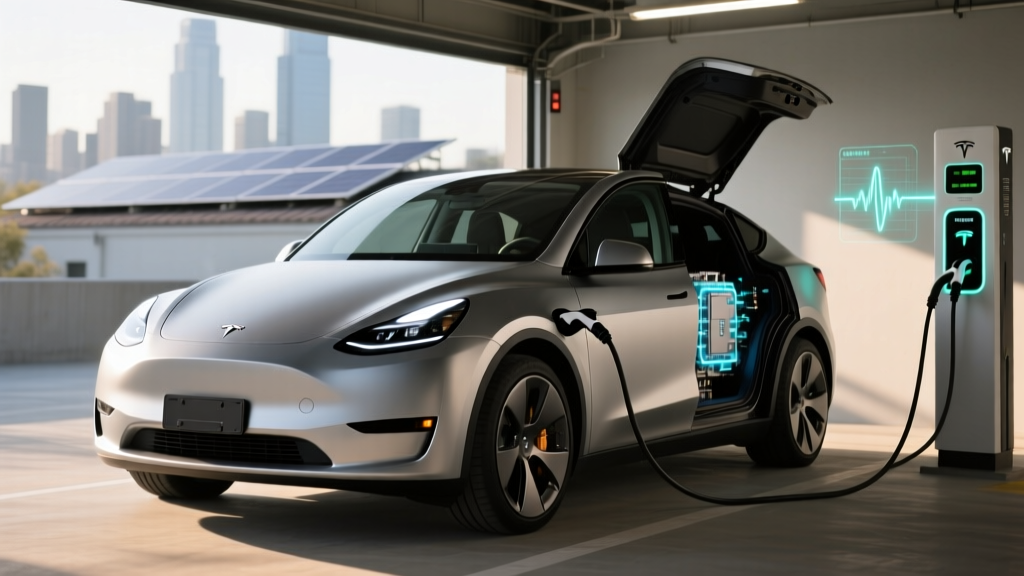
| 2026 Tesla Model Y (Long Range AWD) | 320 mi | 72.1 | 250 kW | ~18 min | $44,990 |
| 2026 Hyundai Ioniq 5 (Long Range AWD) | 290 mi | 59.3 | 240 kW | ~18 min | $47,600 |
| 2026 Chevrolet Silverado EV (4WT) | 460 mi | Bed + frunk | 350 kW | ~20 min | $55,900 |
Sources: fueleconomy.gov, manufacturer press sites. Real-world highway range is typically 10–15% below EPA estimates; cold-weather (below 25°F) range can drop 20–30% depending on heat pump availability and cabin preconditioning.
Cost Breakdown: EV vs Gas for Delivery-Style Driving
One reason Amazon invested heavily in electric vans is operating cost. High-mileage delivery routes amplify the fuel savings of an EV. Here's how a comparable consumer EV stacks up against a gas-powered equivalent over a typical year of 15,000 miles:
| Cost Category | 2026 Tesla Model Y LR AWD | 2026 Toyota RAV4 Gas AWD (Baseline) |
|---|---|---|
| Purchase Price (MSRP) | $44,990 | $32,675 |
| Federal Tax Credit (§30D) | Up to $7,500 (if eligible) | $0 |
| Effective Purchase Price | $37,490 | $32,675 |
| Annual Fuel/Energy (15k mi) | $612 (home L2, $0.14/kWh avg) | $1,875 (28 MPG avg, $3.50/gal) |
| Annual Maintenance | ~$300 | ~$650 |
| Annual Insurance (avg) | ~$2,100 | ~$1,600 |
| 5-Year Total Cost of Ownership | ~$53,090 | ~$55,600 |
Electricity cost assumes 80% home Level 2 charging at a national average of $0.14/kWh and 20% public DC fast charging at $0.35/kWh. The Model Y consumes roughly 29 kWh/100 mi. Gas cost assumes $3.50/gal. Insurance premiums for EVs are typically 15–25% higher due to repair costs and parts pricing. Individual results vary by state, utility rate, and driving pattern. See IRS §30D guidelines for current tax credit eligibility.
Real-World Ownership: What a First-Time EV Buyer Must Know
Buying an EV in 2026 is more straightforward than it was even two years ago, thanks to expanded charging networks (especially the Tesla Supercharger network opening to NACS-equipped vehicles from Ford, GM, Rivian, and others). But real-world ownership involves considerations that spec sheets don't capture:
Home Charging Is the Foundation
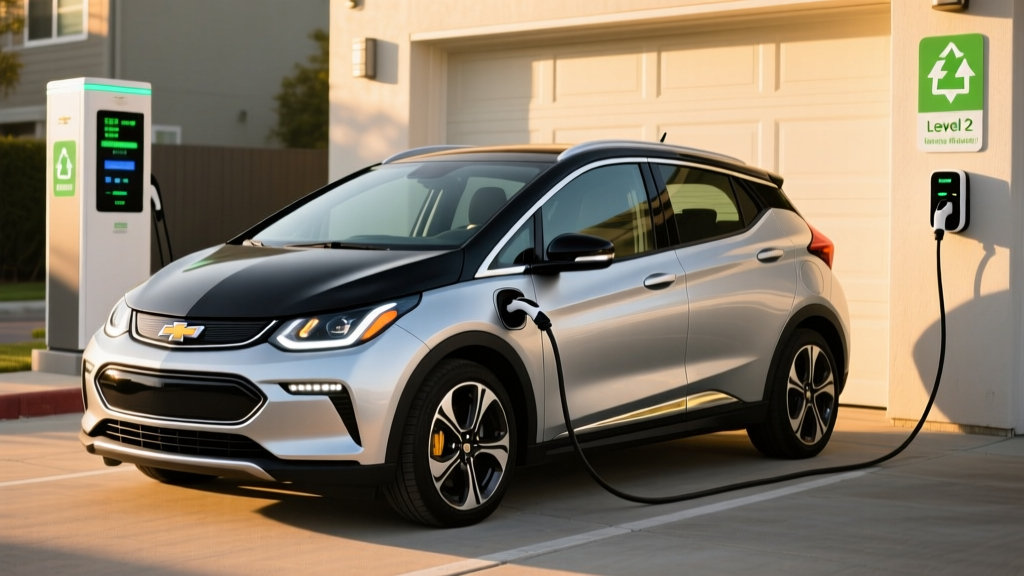
Approximately 80% of EV charging happens at home. A Level 2 home charger (240V, 32–48 amps) adds 25–44 miles of range per hour of charging — more than enough to replenish a daily commute overnight. Installation costs typically range from $800 to $2,500 for a straightforward setup (existing 200-amp panel, short conduit run). If your home needs a panel upgrade to 200 amps, budget an additional $1,500–$3,500. Always get a quote from a licensed electrician before purchasing equipment.
Public Charging Realities
DC fast chargers (Level 3) are essential for road trips but should not be your primary charging method — frequent DC fast charging can accelerate battery degradation slightly over time, and public charging costs 2–3x more per kWh than home charging. In 2026, the U.S. has over 50,000 public DC fast-charging ports, but reliability varies. Networks like Electrify America and EVgo have improved uptime, but plan for occasional out-of-service stalls on long trips.
Climate and Range
If you live in a region with harsh winters, expect a 20–30% range reduction in sustained sub-freezing temperatures. EVs with heat pumps (standard on the Tesla Model Y, Hyundai Ioniq 5, and most 2026 models) mitigate this loss significantly compared to resistive cabin heaters. Preconditioning your battery while plugged in — warming it to optimal temperature before driving — preserves range and improves regenerative braking performance in cold weather.
Battery Longevity
Modern EV batteries (NMC and LFP chemistries) are designed to retain 70–80% of original capacity after 8 years or 100,000+ miles. Federal law mandates that EV batteries carry a warranty of at least 8 years/100,000 miles (10 years/150,000 miles in CARB states). LFP batteries, found in standard-range Tesla models and some other vehicles, offer longer cycle life and tolerate 100% state-of-charge storage better than NMC, though they have lower energy density.
Common Misconceptions About EVs — Fact-Checked
| Myth | Fact |
|---|---|
| "EV batteries need replacing every few years." | Most EV batteries outlast 150,000+ miles with less than 15% degradation. Replacement is rare and covered under the 8-year/100,000-mile federal warranty minimum. Full replacement costs $8,000–$20,000 depending on pack size, but is seldom needed. |
| "There aren't enough chargers for road trips." | The U.S. has 50,000+ DC fast-charging ports in 2026, with Tesla's Supercharger network (20,000+ stalls) now accessible to NACS-equipped non-Tesla EVs. Route planning apps like A Better Routeplanner make multi-state trips straightforward. |
| "EVs are more expensive to own than gas cars." | Higher upfront MSRP is offset by the §30D tax credit (up to $7,500), dramatically lower fueling costs ($600/yr vs $1,800+/yr), and reduced maintenance. Most EVs reach cost parity with gas equivalents within 3–5 years for average drivers. |
| "EVs are slow to charge." | Modern EVs with 800V architectures (Hyundai Ioniq 5, Kia EV6, Porsche Taycan) charge from 10–80% in 18 minutes at a 250+ kW DC fast charger. That's a bathroom break and a coffee. Level 2 home charging replenishes overnight while you sleep. |
| "The Amazon EV van proves EVs are only for fleets." | Amazon chose EVs for fleets because the economics work at scale — lower per-mile energy cost and less maintenance. Those same economics apply to individual owners who charge at home. |
Federal Tax Credit (§30D): What You Actually Qualify For
The federal clean vehicle tax credit under IRS §30D can reduce your effective purchase price by up to $7,500, but eligibility depends on multiple criteria that change periodically:
- Vehicle MSRP cap: Vans, SUVs, and pickups must be under $80,000 MSRP; sedans under $55,000.
- Buyer income cap: Modified adjusted gross income must not exceed $300,000 (joint), $225,000 (head of household), or $150,000 (single).
- Battery sourcing: Increasing percentages of battery critical minerals and components must be sourced from the U.S. or free-trade-agreement countries. This requirement tightens annually.
- Point-of-sale transfer: As of 2024, you can transfer the credit to the dealer at purchase, applying it as an immediate down-payment reduction rather than waiting to claim it on your tax return.
- Final assembly: The vehicle must undergo final assembly in North America.
Always verify current-year eligibility on the IRS website and consult a tax professional. Manufacturers' credit eligibility can change mid-year as battery supply chains shift.
Decision Framework: Is an EV Right for Your Needs?
If You Want a Delivery-Style Work EV...
Choose the Ford E-Transit if you need a commercial cargo van with up to 487 cu ft of space and your daily route is under 100 miles. It charges on CCS at up to 115 kW and qualifies for commercial EV incentives.
If You Want Maximum Cargo + Long Range for Personal Use...
Choose the Rivian R1S (Max Pack) if you need 410 miles of EPA range, three rows of seating, serious off-road capability, and 104.7 cu ft of cargo. It charges at 220 kW peak on NACS and accesses the Tesla Supercharger network. At $83,900 base, it exceeds the §30D SUV MSRP cap of $80,000, so the federal credit does not apply.
If You Want the Best Value All-Rounder...
Choose the Tesla Model Y Long Range AWD if you want 320 miles of range, 72 cu ft of cargo, 250 kW Supercharger access, and a $44,990 MSRP that qualifies for the full $7,500 §30D credit (income permitting). Effective price: ~$37,490. This is the closest consumer analog to what makes the Amazon EDV economical — low per-mile cost, high utility, and fast infrastructure.
If You Want Fast Charging + Value...
Choose the Hyundai Ioniq 5 if 800V ultra-fast charging (10–80% in 18 min) is a priority and you prefer non-Tesla styling. Its 290-mile range and $47,600 MSRP keep it within §30D eligibility.
If You Live in an Apartment Without Home Charging...
Consider a plug-in hybrid (PHEV) like the Toyota RAV4 Prime (42 mi electric-only range, 38 MPG combined after battery depletion) instead. You can charge on a standard 120V outlet overnight and use gas for longer trips, eliminating range anxiety and dependency on public chargers.
Frequently Asked Questions
Can I buy the Amazon Rivian delivery van for personal use?
No. The Rivian EDV is built exclusively for Amazon's fleet under a contractual agreement. It is not available for retail purchase in 2026. Rivian does sell the consumer R1T pickup and R1S SUV, which share the same underlying skateboard platform but are entirely different vehicles in body, features, and pricing.
Does Amazon sell electric cars through its website?
Amazon does not sell new or used electric vehicles directly through amazon.com as of 2026. You can purchase EV charging equipment, accessories, and parts on Amazon, but the vehicles themselves must be purchased through authorized dealerships or direct-from-manufacturer channels (e.g., Tesla.com, Rivian.com).
What EV has the most cargo space for consumers in 2026?
Among consumer SUVs and wagons, the Rivian R1S leads with 104.7 cu ft (seats folded). For pure cargo volume, the Ford E-Transit commercial van offers up to 487.3 cu ft, though it is a fleet-oriented vehicle with a spartan interior. The Tesla Model Y provides 72.1 cu ft — ample for most families and small-business delivery needs.
How much does it cost to charge an EV at home vs. gas?
At a national average electricity rate of $0.14/kWh and a typical EV efficiency of 30 kWh/100 miles, home charging costs roughly $4.20 per 100 miles. A gas car averaging 28 MPG at $3.50/gallon costs $12.50 per 100 miles. Over 15,000 miles per year, that's $630 in electricity vs. $1,875 in gasoline — a savings of $1,245 annually with an EV.
Do EVs hold their resale value?
EV depreciation has been steeper than gas cars in recent years, driven by aggressive price cuts (notably by Tesla), rapid technology improvements, and buyer uncertainty about battery longevity. However, vehicles with strong demand, competitive range, and established charging networks (Model Y, Ioniq 5) have stabilized. Expect 45–55% value retention after 3 years for mainstream EVs, compared to 50–60% for popular gas crossovers. Leasing can mitigate depreciation risk.
Is it worth buying an EV if I can't charge at home?
It depends on your access to reliable public or workplace charging. If you have a Level 2 charger at work or a dependable DC fast-charging station near your routine, an EV can still work. However, exclusive reliance on public DC fast charging is more expensive ($0.30–$0.48/kWh) and less convenient. If home charging is impossible and workplace charging isn't available, a plug-in hybrid (PHEV) or conventional hybrid (HEV) may be a more practical choice in 2026.