The Short Answer on Amazon's Electric Trucks
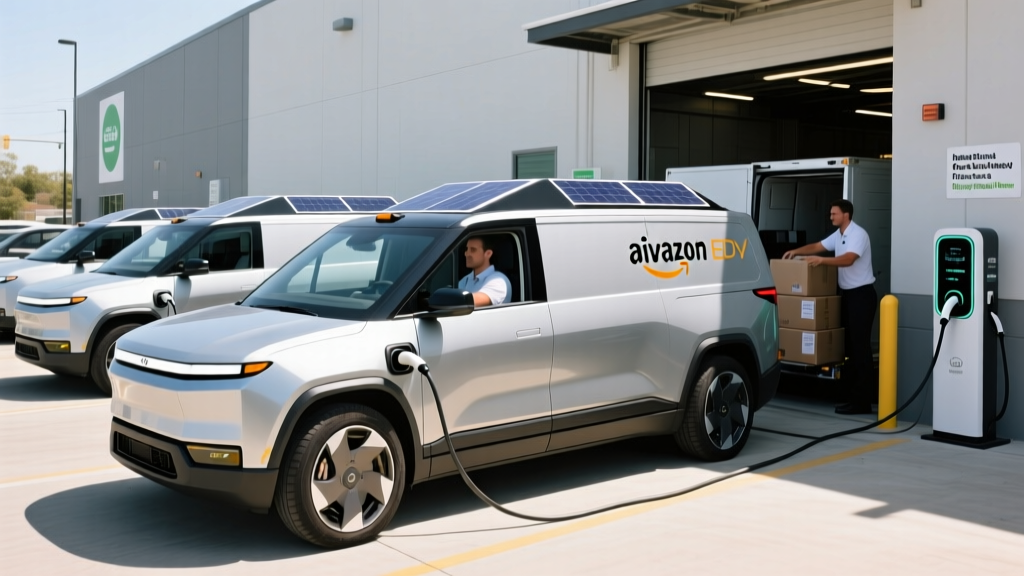
Amazon's electric delivery trucks are the Rivian EDV (Electric Delivery Van), built exclusively for Amazon by Rivian. As of early 2026, Amazon has deployed over 15,000 EDVs across the U.S., targeting 100,000 by 2030. These are not consumer vehicles you can buy — they are purpose-built commercial fleet vans. However, the technology, battery platform, and charging infrastructure behind them directly inform Rivian's consumer lineup (R1T, R1S) and offer a real-world stress test of commercial EV ownership at scale. If you're researching "Amazon trucks electric" to understand fleet viability, Rivian's commercial prospects, or how this affects consumer EV buying, this guide breaks down exact specs, costs, and ownership realities.
What Are Amazon's Electric Trucks? The Rivian EDV Explained
Amazon ordered 100,000 electric delivery vans from Rivian in 2019 — the largest commercial EV order in history. The vehicle, called the EDV, was co-developed with Amazon's logistics team and is built on a dedicated commercial platform at Rivian's Normal, Illinois factory. There are three body configurations optimized for different delivery densities.
| Spec | EDV-500 (Small) | EDV-700 (Medium) | EDV-900 (Large) |
|---|---|---|---|
| Cargo Volume | ~500 cu ft | ~700 cu ft | ~900 cu ft |
| Battery Capacity (usable) | ~89 kWh (LFP) | ~112 kWh (LFP) | ~149 kWh (LFP) |
| EPA-Est. Range | ~150 mi | ~161 mi | ~120 mi |
| Peak DC Fast Charge | ~125 kW | ~150 kW | ~150 kW |
| 10-80% Charge Time | ~35 min | ~40 min | ~50 min |
| Level 2 Charging | 11.5 kW | 11.5 kW | 11.5 kW |
| Drivetrain | RWD, single motor | RWD, single motor | RWD, single motor |
| Horsepower | ~250 HP | ~250 HP | ~250 HP |
| Payload Capacity | ~1,800 lbs | ~2,500 lbs | ~3,200 lbs |
The EDV uses LFP (lithium iron phosphate) battery chemistry — a deliberate choice for fleet vehicles. LFP offers lower energy density than NMC but provides superior cycle life (3,000+ cycles before significant degradation), better thermal stability, and no cobalt or nickel in the cathode. For a delivery van running 6 days a week, 100+ miles daily, cycle longevity matters far more than maximizing range per charge.
Amazon EDV vs. Gas Delivery Vans: The Real Cost Comparison
The core question for fleet operators — and the reason Amazon committed to 100,000 vans — is total cost of ownership. Here's how the EDV stacks up against a conventional gas delivery van (modeled on a Ford Transit 350 or Mercedes-Benz Sprinter) over a 5-year, 150,000-mile ownership cycle.
| Cost Category | Rivian EDV-700 (EV) | Ford Transit 350 (Gas) |
|---|---|---|
| Purchase Price (est.) | ~$75,000–$85,000 | ~$48,000–$55,000 |
| Fuel/Energy (150k mi) | ~$12,000 (avg $0.14/kWh depot) | ~$30,000 (avg $3.50/gal, 14 MPG) |
| Maintenance (5 yr) | ~$3,500 | ~$12,000 |
| Insurance (5 yr) | ~$18,000 | ~$14,000 |
| Depot Charging Install (amortized) | ~$8,000 | $0 |
| Estimated 5-Year Total | ~$116,500–$126,500 | ~$104,000–$111,000 |
The EV van has a higher upfront cost and requires depot charging infrastructure, but the fuel and maintenance savings are substantial. The EDV has no engine oil, no transmission fluid, no exhaust system, and regenerative braking dramatically extends brake pad life. Fleet operators typically see the EV break even around year 4-5 depending on local electricity rates and diesel/gas prices. According to the U.S. Department of Energy's Alternative Fuels Data Center, EVs cost roughly 6.1 cents per mile to maintain versus 10.1 cents for ICE vehicles.
What Amazon's EV Fleet Means for Consumer Buyers
You cannot buy a Rivian EDV. It is an Amazon-exclusive vehicle, and Rivian's contract with Amazon included exclusivity terms through 2026. However, the Amazon partnership has shaped Rivian's consumer vehicles in concrete ways:
- Battery durability data: Over 15,000 EDVs accumulating millions of fleet miles provide degradation data that validates Rivian's LFP and NMC battery platforms used in the R1T and R1S.
- Manufacturing scale: The Amazon order funded the expansion of Rivian's Normal, Illinois factory and the development of the Georgia plant, which will produce consumer vehicles on the R2 platform starting in 2026.
- Charging infrastructure: Amazon has installed thousands of depot chargers across the U.S., and the operational data informs Rivian's consumer charging network partnerships and preconditioning algorithms.
- Software maturity: Fleet telematics, route optimization, and battery thermal management software developed for the EDV program flows into Rivian's consumer OTA updates.
For buyers considering a Rivian R1T (truck) or R1S (SUV), the Amazon EDV program is a positive signal: Rivian has proven it can manufacture, deploy, and support electric vehicles at commercial scale — something several EV startups failed to do.
Rivian Consumer Lineup (2026): What You Can Actually Buy
If the Amazon connection drew you to Rivian, here's what's available to consumers in 2026:
| Spec | Rivian R1T (Dual-Motor) | Rivian R1S (Dual-Motor) | Ford F-150 Lariat (Gas) | Toyota Sequoia (Hybrid) |
|---|---|---|---|---|
| Powertrain | Dual-motor AWD, BEV | Dual-motor AWD, BEV | 3.5L EcoBoost V6 | 3.5L V6 Hybrid |
| Horsepower | 533 HP | 533 HP | 400 HP | 437 HP |
| 0-60 mph | ~4.5 sec | ~4.5 sec | ~5.8 sec | ~6.0 sec |
| EPA Range / MPG | ~352 mi (Max Pack) | ~321 mi (Max Pack) | 19 MPG combined | 22 MPG combined |
| Battery / Tank | ~149 kWh (NMC) | ~149 kWh (NMC) | 26 gal | 22.5 gal |
| Towing Capacity | 11,000 lbs | 7,700 lbs | 12,700 lbs | 9,520 lbs |
| Base MSRP | ~$79,900 | ~$84,900 | ~$62,000 | ~$64,000 |
| Fed. Tax Credit (§30D) | Up to $7,500* | Up to $7,500* | N/A | N/A |
*Federal EV tax credit eligibility under IRS §30D depends on buyer income caps ($150K single / $300K joint), MSRP caps ($80K for trucks/SUVs), and battery critical-mineral sourcing requirements. As of 2026, Rivian's eligibility varies by battery pack configuration and sourcing. The credit can be transferred to the dealer at point-of-sale for an immediate price reduction. Consult a tax professional for your specific situation.
Common Misconceptions About Amazon's Electric Trucks
| Myth | Fact |
|---|---|
| "I can buy an Amazon electric van for personal use." | The EDV is Amazon-exclusive. Rivian plans a commercial van for broader fleet sales post-2026, but no consumer version exists. |
| "Amazon's electric trucks are self-driving." | EDVs are SAE Level 1-2 — they have driver-assist features (lane-keeping, adaptive cruise, 360° cameras) but require a human driver at all times. No autonomous delivery. |
| "Electric vans can't handle cold weather routes." | EDVs operate in Chicago, Boston, and Minneapolis winters. LFP batteries experience ~15-25% range loss in freezing temps, but Amazon's route software adjusts for this. Fleet vans return to depots nightly, so depot charging eliminates range-anxiety concerns. |
| "The whole 100,000-van order will be delivered on time." | Amazon's 100,000-van target by 2030 has faced production pacing challenges. As of early 2026, ~15,000+ are deployed. Rivian's Georgia factory expansion is expected to accelerate production. |
| "Electric delivery vans cost more to operate." | Per-mile energy cost is ~$0.08/mi (electricity) vs. ~$0.25/mi (gas at 14 MPG). Maintenance savings add another ~$0.04/mi advantage. The higher purchase price is the main barrier, not operating cost. |
What First-Time EV Buyers Can Learn From Fleet Operations
Amazon's EDV program reveals practical EV ownership truths that apply directly to consumer buyers:
1. Home charging (or depot charging) is non-negotiable. Amazon solved this by installing depot chargers at every delivery station. For consumers, a Level 2 home charger (240V, 30-48 amp) is the single most important ownership prerequisite. Installation costs range from $800-$2,500 depending on panel capacity and run length. Without home charging, EV ownership becomes significantly less convenient.
2. Real-world range is less than the sticker. The EDV-700's ~161-mile EPA range translates to roughly 120-130 miles in mixed urban/highway driving with a full cargo load and HVAC running. Consumer EVs see similar 15-25% reductions on highway trips at 70+ mph. Always plan routes using 75-80% of EPA range as your working number.
3. Charging speed matters more than peak numbers suggest. The EDV peaks at ~150 kW but sustains that rate only from roughly 10-50% SoC, then tapers. A "150 kW" van might average 90-100 kW over a full 10-80% session. The same curve taper affects consumer EVs — a truck advertising "200 kW peak" may average 130 kW. Always look for 10-80% charge time, not just peak kW.
4. Battery chemistry is a real choice. LFP (used in the EDV) sacrifices range for longevity and safety. NMC (used in the R1T/R1S) offers more range per kWh but degrades faster under daily 100% charging. If you charge at home nightly and drive under 200 miles daily, LFP is ideal. If you need 300+ mile road-trip range, NMC is better. Rivian offers both chemistries across its lineup.
Decision Framework: Should the Amazon-Rivian Connection Influence Your Purchase?
Choose Rivian (R1T/R1S) if:
- You want a premium electric truck/SUV with proven manufacturing scale behind it
- You value over-the-air updates and a software platform validated across 15,000+ fleet vehicles
- You need towing capability (11,000 lbs R1T) with electric instant torque
- You have home charging access and a budget of $75,000-$100,000+
- You prefer a brand with a commercial revenue stream reducing bankruptcy risk
Look elsewhere if:
- You're searching for a commercial delivery van to buy — the EDV isn't available, and Rivian's broader commercial van isn't yet on sale
- Your budget is under $50,000 — consider the Ford F-150 Lightning (starting ~$55K), Chevrolet Silverado EV, or Hyundai Ioniq 5 for SUV needs
- You lack home charging and your area has limited public DC fast-charging infrastructure
- You need 400+ mile range for frequent long-haul trips — no current Rivian offers this; consider a Lucid Air sedan or wait for next-gen battery packs
Frequently Asked Questions
Can I buy an Amazon electric delivery van?
No. The Rivian EDV is built exclusively for Amazon under a contract that included exclusivity terms through at least 2026. Rivian has signaled plans to sell commercial vans to other fleet operators in the future, but no timeline or pricing has been announced.
Who manufactures Amazon's electric trucks?
Rivian Automotive, based in Irvine, California, manufactures the EDV at its factory in Normal, Illinois. Amazon holds a significant equity stake in Rivian and was an early investor, but Rivian operates as an independent public company (NASDAQ: RIVN).
What is the range of Amazon's electric delivery vans?
The mid-size EDV-700 has an EPA-estimated range of approximately 161 miles. The smaller EDV-500 achieves around 150 miles, while the larger EDV-900 manages roughly 120 miles due to its heavier cargo capacity and larger frontal area. Real-world range with full cargo and HVAC use is typically 15-25% lower.
Does Amazon use Tesla Semi trucks?
Amazon has tested Tesla Semis for longer-haul routes, but the core last-mile delivery fleet is built on the Rivian EDV. The Tesla Semi targets Class 8 long-haul trucking (500-mile range), while the EDV is a Class 2-3 last-mile van. These serve different logistics segments.
How does Amazon charge its electric fleet?
Amazon charges EDVs primarily at delivery station depots using a mix of Level 2 (overnight) and DC fast chargers (opportunity charging during shifts). Depot installations often require utility upgrades and can include 50-200+ chargers per location. According to Amazon's Climate Pledge reporting, the company has invested heavily in depot electrification across its U.S. network.
Will Rivian's Amazon partnership affect R1T/R1S availability?
The EDV and consumer vehicles share Rivian's Normal, Illinois production capacity, which created allocation tension in 2023-2024. With the Georgia factory coming online for R2-platform vehicles in 2026, Rivian is expected to have more capacity for both commercial and consumer production, improving R1T/R1S availability and delivery times.