Alpha Wolf Electric Truck: Quick Verdict for Buyers
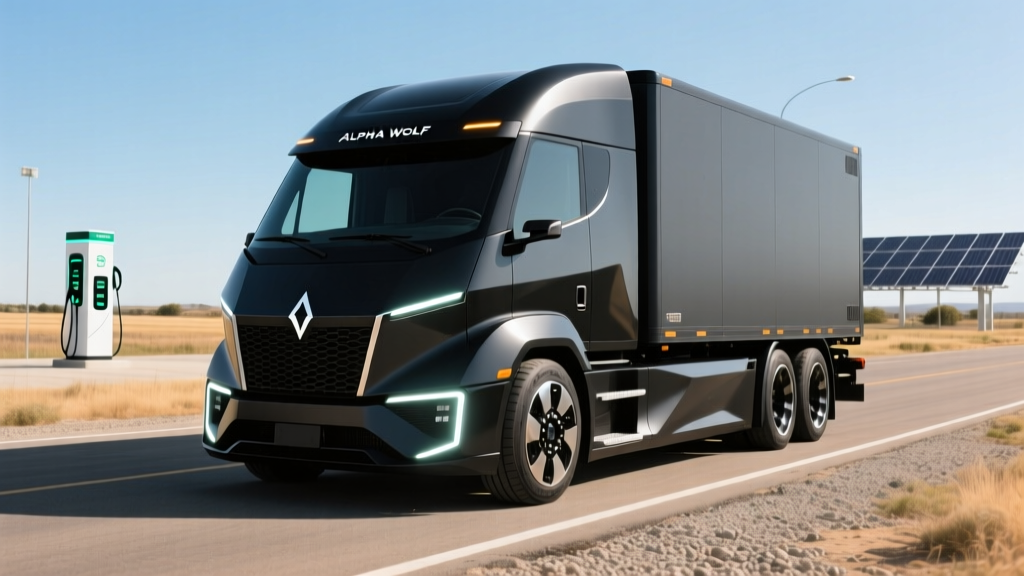
The Alpha Wolf is a compact, retro-styled electric pickup targeting urban buyers and light-duty users who want EV efficiency without the footprint (or price) of a Ford F-150 Lightning or Rivian R1T. Based on Alpha Motor Corporation's latest announced specifications, the Wolf is expected to offer an EPA-estimated range of approximately 250 miles from a ~75 kWh battery pack, with DC fast charging capable of reaching 80% in roughly 30 minutes. Pricing is targeted to start around $38,000 before incentives, positioning it as one of the most affordable electric trucks if it reaches production. However, the Alpha Wolf remains in pre-production as of early 2026 — reservations are open, but no customer deliveries have been confirmed. Buyers should weigh Alpha's ambitious specs against the company's limited track record and the absence of independent EPA or NHTSA testing data.
Alpha Wolf Specs: Range, Battery, and Performance Targets
Alpha Motor has published preliminary specifications for the Wolf, though these remain subject to change prior to production and EPA certification. Here is what the company has disclosed:
| Specification | Alpha Wolf (Announced) |
|---|---|
| EPA Range (Estimated) | ~250 miles |
| Battery Capacity | ~75 kWh (NMC chemistry expected) |
| Drivetrain | RWD standard; AWD available (Wolf+ variant) |
| Horsepower | ~200 hp (est., single motor RWD) |
| 0-60 mph | ~6.2 seconds (est.) |
| Max DC Fast Charge Rate | ~120 kW (announced) |
| 10-80% DC Charge Time | ~30 minutes (est.) |
| Level 2 AC Charging | ~7.7 kW onboard charger |
| Towing Capacity | ~3,000 lbs (est.) |
| Payload Capacity | ~1,500 lbs (est.) |
| Bed Length | ~5 ft (standard); longer on Wolf+ crew cab |
| Starting MSRP (Target) | ~$38,000 |
| Battery/Powertrain Warranty | Not yet confirmed |
Real-World Range Expectations
The ~250-mile EPA estimate is a target, not a certified figure. In real-world conditions, expect:
- Highway driving (70-75 mph): ~200-220 miles, as aerodynamic drag significantly impacts pickup trucks
- Cold weather (below 32°F): ~160-190 miles, a 25-35% reduction typical for EVs without a confirmed heat pump
- Loaded/towing: ~130-170 miles depending on payload and terrain — towing is the biggest range killer for electric trucks
- City/regenerative driving: ~240-260 miles, where regen braking recaptures energy
Alpha has not confirmed whether the Wolf will include a heat pump, which is critical for cold-climate efficiency. Without one, winter range loss could exceed 35%.
How the Alpha Wolf Compares to Gas Trucks and Rivals
The Wolf occupies a unique niche: it's smaller than midsize trucks like the Toyota Tacoma or Ford Ranger, and far less expensive than the Rivian R1T or F-150 Lightning. Here's how it stacks up against both gas and electric alternatives:
| Metric | Alpha Wolf (Est.) | Ford Maverick Hybrid | Toyota Tacoma (Gas) | Rivian R1T Dual-Motor |
|---|---|---|---|---|
| Powertrain | BEV | PHEV/HEV | Gas (turbo I-4) | BEV |
| Starting Price | ~$38,000 | ~$28,000 | ~$33,000 | ~$71,700 |
| Range / Tank | ~250 mi | ~500+ mi (combined) | ~400 mi | ~352 mi (Max Pack: ~420 mi) |
| Fuel/Energy Cost per Mile | ~$0.04-$0.06 | ~$0.08-$0.10 | ~$0.14-$0.18 | ~$0.04-$0.06 |
| Towing Capacity | ~3,000 lbs | 2,000 lbs | 6,500 lbs | 11,000 lbs |
| 0-60 mph | ~6.2s | ~7.8s | ~7.0s | ~4.5s |
| Production Status | Pre-production | Available now | Available now | Available now |
The Maverick Hybrid remains the practical benchmark for compact truck buyers who need range certainty and immediate availability. The Wolf's advantage, if delivered at its target price, is near-zero fuel cost, instant torque, and lower maintenance — but only for buyers with home charging and moderate daily mileage.
Ownership Cost Breakdown: What Will the Wolf Really Cost?
Assuming the Wolf reaches production at ~$38,000, here is a five-year total cost of ownership estimate compared to a gas-powered compact truck:
| Cost Category (5 Years) | Alpha Wolf (Est.) | Gas Compact Truck (~25 MPG) |
|---|---|---|
| Purchase Price (Base) | $38,000 | $33,000 |
| Federal Tax Credit (§30D) | Up to $7,500 (if eligible*) | $0 |
| Net Purchase After Credit | ~$30,500 | $33,000 |
| Fuel/Energy (60,000 mi total) | ~$2,700 (home charging avg.) | ~$9,000 ($3.50/gal avg.) |
| Maintenance | ~$800 (no oil, fewer brakes) | ~$3,200 |
| Insurance (avg.) | ~$7,500 (EV premium est.) | ~$5,500 |
| Estimated 5-Year Total | ~$41,500 | ~$50,700 |
*The §30D federal tax credit has strict eligibility requirements. For 2026, the credit requires: vehicle MSRP under $80,000 (trucks/vans/SUVs), buyer AGI below $300,000 (joint) / $150,000 (single), and compliance with critical mineral and battery component sourcing rules. The credit can now be transferred to the dealer at point of sale as an upfront discount. See IRS §30D guidelines for current rules. Alpha Motor, as a startup, may face additional scrutiny regarding battery sourcing compliance.
Charging the Alpha Wolf: Home Setup and Public Networks
With a ~75 kWh battery and an announced ~120 kW peak DC charge rate, the Wolf's charging profile looks adequate but not class-leading. Here is what different charging levels would deliver:
| Charging Level | Power | Miles Added per Hour | Full Charge Time (0-100%) |
|---|---|---|---|
| Level 1 (120V outlet) | ~1.4 kW | ~5 mi/hr | ~54 hours |
| Level 2 (240V, 32A home) | ~7.7 kW | ~28 mi/hr | ~10 hours |
| DC Fast Charge | Up to ~120 kW peak | N/A (burst rate) | ~30 min (10-80%) |
Home charging is essential. A Level 2 home charger (240V) is practically mandatory for daily EV truck ownership. Expect to spend $500-$1,200 on a quality Level 2 station (like a ChargePoint Home Flex or Wallbox Pulsar Plus) plus $800-$2,500 for professional electrical installation — potentially more if your home needs a panel upgrade to support a dedicated 40A or 50A circuit.
Public charging reality: At ~120 kW peak, the Wolf will charge slower than competitors like the Hyundai Ioniq 5 (which peaks at ~240 kW). On a road trip, plan for 30-35 minute stops every 200 miles. Also note that Alpha has not confirmed which charging connector the Wolf will use — NACS (Tesla standard) or CCS. As of 2025-2026, NACS adoption has become the industry standard, and a CCS-only vehicle would face growing infrastructure limitations. This is a critical question Alpha must answer before buyers commit reservations.
Common Misconceptions About the Alpha Wolf
| Myth | Fact |
|---|---|
| "It's a $38K truck — I'll save money immediately." | Only if you qualify for the §30D credit, have home charging, and drive moderate daily miles. Insurance premiums for EVs can be 20-40% higher, and the upfront price still exceeds gas alternatives like the Maverick. |
| "250 miles of range is enough for anything." | 250 miles is the EPA target under ideal conditions. Highway driving, cold weather, and towing can cut that by 25-45%. Real-world usable range for road trips is closer to 170-200 miles between charges. |
| "Alpha is a proven company." | Alpha Motor Corporation is a startup founded in 2020. As of early 2026, it has not delivered production vehicles to retail customers. Reservation holders face execution risk — compare this to established automakers with dealer networks and proven supply chains. |
| "I can charge anywhere with any EV charger." | Connector compatibility matters. If the Wolf ships with CCS only, access to Tesla Superchargers (the most reliable network) may require an adapter — or be unavailable. Confirm connector type before reserving. |
| "Electric trucks need no maintenance." | EVs eliminate oil changes, spark plugs, and transmission fluid, but tires wear faster due to instant torque and heavier weight. Cabin air filters, brake fluid, wiper fluid, and suspension components still need service. |
Who Should Buy the Alpha Wolf — and Who Shouldn't
Actionable Decision Framework
Consider the Alpha Wolf if:
- You have reliable Level 2 home charging and a daily commute under 80 miles round-trip
- You want an EV truck for light-duty use (groceries, gear, weekend projects) — not heavy towing
- You're drawn to the compact size for urban parking and prefer a retro design over mainstream offerings
- You're comfortable with startup risk and willing to wait for production timelines that may shift
- You qualify for the §30D tax credit, bringing effective cost closer to $30,500
Look elsewhere if:
- You need a truck for regular towing over 3,000 lbs or commercial work duty — consider the F-150 Lightning or Rivian R1T
- You live in a cold climate and cannot confirm whether the Wolf includes a heat pump
- You rely exclusively on public charging and need fast, reliable road-trip capability
- You need a vehicle now — the Ford Maverick Hybrid is available today with 500+ mile combined range and proven reliability
- You want NACS/Supercharger access confirmed before committing
First-Time EV Buyer Checklist for the Alpha Wolf
If the Wolf is your first EV, work through these practical considerations before placing a reservation:
- Confirm your home electrical capacity. A Level 2 charger needs a 240V circuit (like a dryer outlet). Have a licensed electrician assess your panel — a 200A service is ideal; older 100A panels may need a $1,500-$3,000 upgrade.
- Calculate your real energy cost. The national average residential electricity rate is ~$0.16/kWh (per EIA data). Charging a 75 kWh battery from 10-80% (~52.5 kWh) costs roughly $8.40 at home — vs. $35-$50 to fill a gas truck tank.
- Research your state and utility incentives. Beyond the federal §30D credit, many states and utilities offer rebates for EV purchases and home charger installation. Check AFDC's incentive database for your zip code.
- Verify insurance costs. Get a quote before committing. EV insurance premiums are typically 20-40% higher than comparable gas vehicles due to repair costs and battery replacement risk.
- Understand the reservation terms. Alpha Motor reservations typically require a refundable deposit. Confirm the refund policy, expected delivery window, and whether the deposit locks in the advertised price.
Frequently Asked Questions
Is the Alpha Wolf actually available to buy in 2026?
No. As of early 2026, the Alpha Wolf is in pre-production. Alpha Motor has accepted reservations, but no confirmed customer deliveries have occurred. The company has faced production timeline delays common among EV startups. Treat all specs and pricing as preliminary until EPA certification and production begin.
Will the Alpha Wolf qualify for the $7,500 federal tax credit?
It's too early to confirm. The §30D credit requires compliance with North American battery component and critical mineral sourcing rules that are difficult for startups without established supply chains. Alpha has not published detailed battery sourcing information. Check IRS guidelines and wait for Alpha's official credit eligibility confirmation before assuming you'll receive the full credit.
How does the Alpha Wolf compare to the Ford Maverick Hybrid for daily use?
The Maverick Hybrid offers 500+ miles of combined range, immediate availability, a proven dealer network, and a starting price around $28,000 — roughly $10,000 less than the Wolf's target. The Wolf's advantages are lower per-mile energy cost (~$0.05/mi vs. ~$0.09/mi), instant torque, and zero tailpipe emissions. For buyers with home charging and short commutes, the Wolf's running costs are lower — but the Maverick eliminates range anxiety entirely and costs less upfront.
What charging connector will the Alpha Wolf use?
Alpha has not officially confirmed whether the Wolf will ship with NACS (Tesla's standard, now adopted by most major automakers) or CCS. This is a critical detail — NACS provides access to Tesla's Supercharger network, the most reliable DC fast-charging infrastructure in the U.S. Buyers should demand clarity on this before committing to a reservation.
Can I tow with the Alpha Wolf?
Alpha targets ~3,000 lbs of towing capacity — adequate for a small utility trailer, jet ski, or lightweight camper. However, towing dramatically reduces EV range. Expect a 35-50% range reduction when towing near max capacity, bringing real-world range down to roughly 130-160 miles. If you tow frequently, a larger-battery truck like the F-150 Lightning (extended range) or a hybrid truck is a more practical choice.
What battery chemistry will the Wolf use, and how long will it last?
Alpha has not confirmed battery chemistry, though NMC (nickel manganese cobalt) is expected based on the energy density needed for 250 miles in a compact package. NMC batteries typically retain 80-90% capacity after 150,000-200,000 miles. Alpha has not published a battery warranty — established EV makers offer 8 years/100,000 miles with a 70% capacity retention guarantee. This is another detail buyers should demand before production begins.