Quick Answer: Is There an All Electric Wagoneer in 2026?
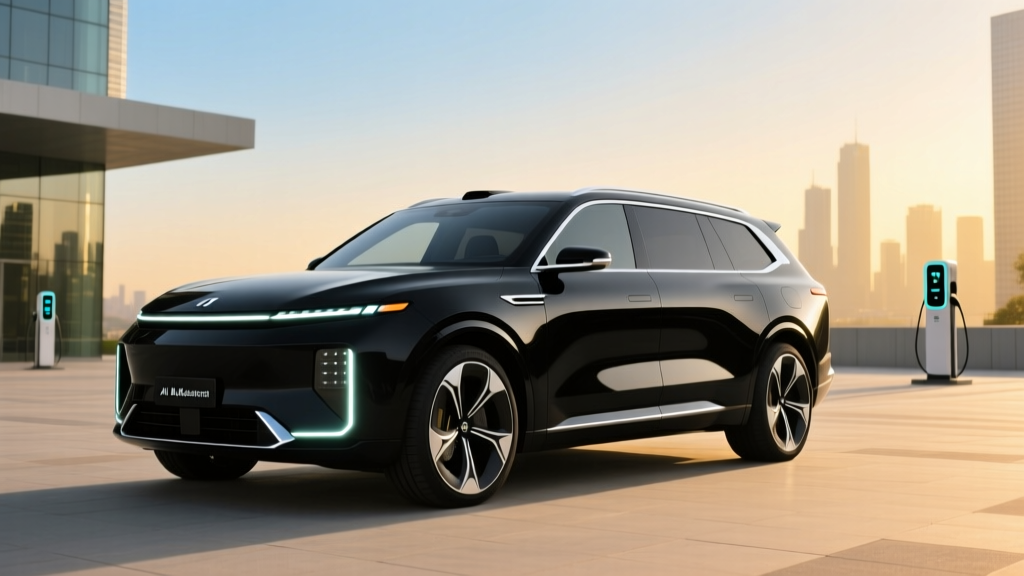
As of early 2026, Stellantis has not yet released a fully electric Wagoneer for the U.S. market. The current Wagoneer and Grand Wagoneer lineup is powered exclusively by the twin-turbocharged 3.0L Hurricane inline-six engine (mild-hybrid eTorque on select trims). However, Stellantis has confirmed that an all-electric Wagoneer is in development on the STLA Large platform, with production anticipated to begin in late 2026 or 2027. Until then, buyers seeking an electrified full-size SUV from Stellantis must look at alternatives or wait. Below, we break down what we know about the upcoming all electric Wagoneer, how it's expected to compare to the current gas model, and what ownership will realistically cost.
What We Know About the Upcoming All Electric Wagoneer
Stellantis has been vocal about electrifying its premium brands. The Wagoneer nameplate — revived in 2022 as a full-size luxury SUV competing with the Cadillac Escalade, Lincoln Navigator, and Tesla Model X — is a prime candidate for battery-electric conversion. Here's what has been confirmed or strongly signaled:
- Platform: STLA Large, the same architecture underpinning the upcoming electric Jeep Recon and other large Stellantis EVs. This platform supports battery packs from approximately 85 kWh to 118 kWh.
- Drivetrain: Dual-motor all-wheel drive is expected as standard, consistent with the Wagoneer's premium positioning and towing requirements.
- Target EPA range: Stellantis has stated STLA Large vehicles will target up to 400 miles of range. Realistically, a heavy, boxy full-size SUV will land closer to 300–350 miles EPA, with real-world highway driving yielding approximately 250–290 miles.
- Charging architecture: STLA Large supports 800-volt systems, enabling peak DC fast-charging rates potentially above 250 kW. Expect 10–80% charge times in the 20–28 minute range, depending on pack size and thermal management.
- Connector: NACS (Tesla-style) is expected, as Stellantis has committed to adopting the North American Charging Standard across its EV lineup.
- Towing: Current gas Wagoneers tow up to 10,000 lbs. EV towing typically reduces range by 30–50%, so expect real-world towing range of 140–200 miles — a critical ownership consideration.
Note: All specs above are preliminary and based on manufacturer announcements and platform capabilities. Final EPA ratings, pricing, and trim details will be confirmed closer to launch. We will update this guide as official data becomes available.
Current Gas Wagoneer: The Baseline for Comparison
Until the all electric Wagoneer arrives, the 2025/2026 gas Wagoneer is what you can actually buy. Understanding its specs and costs provides the benchmark the EV will need to beat.
| Specification | Gas Wagoneer (2026) | All Electric Wagoneer (Projected) |
|---|---|---|
| Powertrain | 3.0L Twin-Turbo I6 (Hurricane) | Dual-motor AWD (STLA Large) |
| Horsepower | 420 hp | ~450–600 hp (est.) |
| 0–60 mph | ~6.0 sec | ~4.5–5.5 sec (est.) |
| EPA Range / Fuel Economy | 17 city / 24 hwy / 20 combined MPG | ~300–350 mi EPA (est.) |
| Real-World Highway Range | ~440 mi (24-gal tank) | ~250–290 mi (est.) |
| Energy/Fuel Tank | 24-gallon fuel tank | ~100–118 kWh battery (est.) |
| Max Towing | 10,000 lbs | ~8,000–10,000 lbs (est.) |
| Base MSRP | ~$65,000 | ~$75,000–$85,000 (est.) |
| Federal Tax Credit (§30D) | Not eligible | Up to $7,500 (eligibility TBD) |
The gas Wagoneer's combined 20 MPG means owners filling up at $3.50/gallon spend roughly $0.175 per mile on fuel alone. An electric Wagoneer charging at home at the U.S. average electricity rate of $0.16/kWh and consuming approximately 2.0 kWh/mile (typical for a heavy SUV) would cost roughly $0.05–0.07 per mile — a significant per-mile savings, though the upfront price premium must be factored in.
Real Ownership Costs: Electric vs. Gas Wagoneer
Specs are one thing; five-year ownership costs are what actually determine whether an EV makes financial sense. Below is a projected comparison assuming 15,000 miles/year, 75% home charging, and 25% public DC fast charging for the EV.
| Cost Category | Gas Wagoneer (5 yr) | All Electric Wagoneer (5 yr, est.) |
|---|---|---|
| Purchase Price (base MSRP) | $65,000 | $80,000 (est.) |
| Federal Tax Credit (§30D) | $0 | Up to –$7,500* |
| Fuel / Electricity | $13,125 ($2.625/yr at 20 MPG, $3.50/gal) | $3,750–$5,250 ($750–$1,050/yr) |
| Maintenance | $3,500–$4,500 (oil, filters, brakes) | $1,500–$2,000 (tires, cabin filter, fluid top-off) |
| Insurance (avg.) | $9,000–$11,000 | $10,500–$13,000 (EVs typically 15–20% higher) |
| Estimated Depreciation | $28,000–$32,000 | $35,000–$42,000 (EV depreciation still higher) |
| Total 5-Year Cost (approx.) | $118,625–$125,625 | $122,750–$140,250 |
*§30D credit eligibility depends on battery sourcing, critical-mineral requirements, buyer income caps ($150K single / $300K joint), and MSRP caps ($80K for SUVs). Verify current rules at IRS.gov. The credit can be transferred to the dealer at point of sale as of 2024 onward.
Key takeaway: The all electric Wagoneer will likely save $7,000–$10,000 on fuel and maintenance over five years, but the higher purchase price, insurance premiums, and steeper depreciation may erase much of that advantage. Buyers who drive more than 15,000 miles/year, charge primarily at home, and plan to keep the vehicle beyond five years will see the economics tilt in the EV's favor.
Real-World Ownership Considerations Before You Wait
Before committing to waiting for the all electric Wagoneer, honestly assess your situation against these practical factors:
Home Charging Access
A full-size SUV with a ~100+ kWh battery needs Level 2 home charging to be practical. On a standard 120V outlet (Level 1), you'd add only about 3–4 miles of range per hour — effectively unusable for a vehicle this size. A 48-amp Level 2 home charger (11.5 kW) adds roughly 30–35 miles per hour, meaning a full overnight charge is achievable. Installation costs range from $800–$2,500 for a straightforward setup, but can exceed $4,000 if your electrical panel needs a 200-amp upgrade.
Climate and Range Loss
Lithium-ion batteries lose efficiency in cold weather. Expect 15–30% range reduction at temperatures below 30°F, depending on whether the vehicle includes a heat pump. If you live in the upper Midwest or Northeast and need 300 miles of real winter range, the electric Wagoneer may need a very large battery pack to deliver that.
Driving Patterns
If your typical week involves a 40-mile round-trip commute with weekend errands, an EV is ideal — you'll charge at home and rarely touch a public charger. If you regularly drive 300+ miles in a single day, tow a trailer, or live in a charging desert (rural Great Plains, parts of the Mountain West), the gas Wagoneer's 440-mile real-world range and 5-minute refueling remain compelling advantages.
Public Charging Reality
With NACS adoption, the electric Wagoneer should access Tesla Supercharger stations (the most reliable public network) via native connector or adapter. However, full-size SUVs can be difficult to position at some stalls, and towing while charging requires pull-through sites, which remain scarce.
Common Misconceptions About an Electric Wagoneer
| Myth | Fact |
|---|---|
| "It will get 400 miles of real-world range." | 400 miles is the STLA Large platform target for optimized sedans/crossovers. A heavy, aerodynamically challenged SUV will likely achieve 300–350 EPA, and 250–290 real-world highway miles. |
| "I'll save $7,500 automatically." | The §30D credit requires meeting battery-sourcing, critical-mineral, MSRP ($80K SUV cap), and buyer-income thresholds. Not every buyer or trim will qualify. Check IRS rules before assuming. |
| "EVs don't need maintenance." | Tires wear faster on heavy EVs due to torque and weight. Cabin filters, brake fluid, coolant, and wiper blades still need service. Expect 40–50% less maintenance cost than gas, not zero. |
| "Towing won't be a problem." | EV towing range drops 30–50%. A 330-mile EPA range becomes 165–230 miles while towing 7,000+ lbs. Plan routes around charging infrastructure carefully. |
| "The battery will need replacing soon." | Modern NMC and LFP batteries are warrantied for 8 years/100,000 miles (federally mandated minimum) and typically retain 85–90% capacity after 100K miles. Replacement is rare before 150K+ miles. |
Federal Tax Credit Eligibility: What to Expect
The IRS §30D Clean Vehicle Credit offers up to $7,500 for qualifying new EVs, but eligibility is complex and changes periodically. Key requirements for the all electric Wagoneer when it launches:
- MSRP cap: SUVs must have an MSRP at or below $80,000. Higher Grand Wagoneer trims (expected $90K+) may not qualify.
- Buyer income cap: Adjusted gross income must not exceed $150,000 (single), $225,000 (head of household), or $300,000 (joint filers).
- Battery sourcing: A percentage of critical minerals and battery components must be sourced from the U.S. or free-trade-agreement countries. These thresholds increase annually.
- Point-of-sale transfer: As of 2024, you can transfer the credit to the dealer for an immediate price reduction, rather than waiting to claim it on your tax return.
- VIN registration: The vehicle must be registered for personal use in the U.S.
Consult a tax professional and verify on IRS.gov before making a purchase decision based on credit eligibility.
Decision Framework: Should You Wait or Buy Now?
Choose the Current Gas Wagoneer If:
- You need a full-size three-row SUV now and can't wait 12–18+ months.
- You regularly tow heavy trailers (boats, campers) over 200+ miles.
- You lack reliable home charging access (apartment, street parking, older wiring).
- You live in a region with sparse DC fast-charging infrastructure.
- Your budget tops out around $65,000–$75,000 and you need the cargo/towing capacity today.
Wait for the All Electric Wagoneer If:
- You have home Level 2 charging (or can install it) and drive under 250 miles/day.
- You want lower per-mile fuel costs and reduced maintenance.
- You value instant torque, quiet operation, and the latest EV tech.
- You plan to own the vehicle 7+ years, amortizing the higher upfront cost.
- You want access to HOV lanes and potential state/local EV incentives in your area.
Consider Alternatives If:
- Tesla Model X: Available now, 320–348 miles EPA, ~$80K–$100K, NACS native, Supercharger access, but polarizing styling and no traditional dealer service network.
- Rivian R1S: Available now, 321–410 miles EPA (depending on pack), ~$75K–$100K, excellent off-road capability, but smaller third row and limited service centers.
- Cadillac Escalade IQ: Announced/launching, ~450 miles GM-estimated range, ~$130K+, ultra-luxury positioning, Ultium platform.
Frequently Asked Questions
When will the all electric Wagoneer be available to buy?
Stellantis has not announced an exact on-sale date. Based on STLA Large platform production timelines and industry reporting, late 2026 or 2027 is the most likely window. We will update this article when an official date is confirmed.
Will the electric Wagoneer have three rows of seating?
Yes. The Wagoneer nameplate is defined by its full-size, three-row layout. The EV version is expected to retain this configuration, though battery packaging under the floor may slightly affect floor height and third-row legroom compared to the gas model.
How much will the all electric Wagoneer cost?
No official pricing has been released. Based on the current gas Wagoneer starting around $65,000 and the typical EV premium for large SUVs, expect a base MSRP in the $75,000–$85,000 range, with Grand Wagoneer EV variants potentially exceeding $100,000. The $80,000 MSRP cap for the §30D tax credit means some trims may not qualify.
Will it use NACS or CCS for charging?
Stellantis has committed to NACS (the Tesla-style connector) for its North American EVs. Expect native NACS on the electric Wagoneer, with access to Tesla Supercharger stations and other NACS-equipped networks.
Can I reserve one now?
No. Stellantis has not opened reservations for the electric Wagoneer as of early 2026. Be cautious of third-party sites claiming to take deposits — only use official Wagoneer.com channels when reservations open.
What battery chemistry will it use — LFP or NMC?
Stellantis has not confirmed chemistry for the Wagoneer specifically. The STLA Large platform supports both NMC (nickel manganese cobalt) and LFP (lithium iron phosphate). NMC offers higher energy density (more range in a smaller pack) but is costlier and has slightly faster degradation. LFP is cheaper, longer-lasting, and can be charged to 100% daily without degradation concerns, but is heavier — a trade-off that matters for a heavy SUV. Expect NMC for longer-range trims and potentially LFP for base models.
What is the warranty on the battery?
Federal law mandates a minimum of 8 years / 100,000 miles for EV battery warranties. Stellantis currently offers 8 years / 100,000 miles on its electrified vehicle batteries. The warranty typically guarantees the battery will retain at least 70% of original capacity during the coverage period. Specific terms for the electric Wagoneer will be confirmed at launch.
Sources: EPA Fuel Economy for current Wagoneer MPG data; IRS.gov for §30D credit rules; Stellantis for STLA Large platform announcements. Projected specs for the all electric Wagoneer are estimates based on manufacturer platform data and industry analysis — final figures will be confirmed by Stellantis prior to launch.