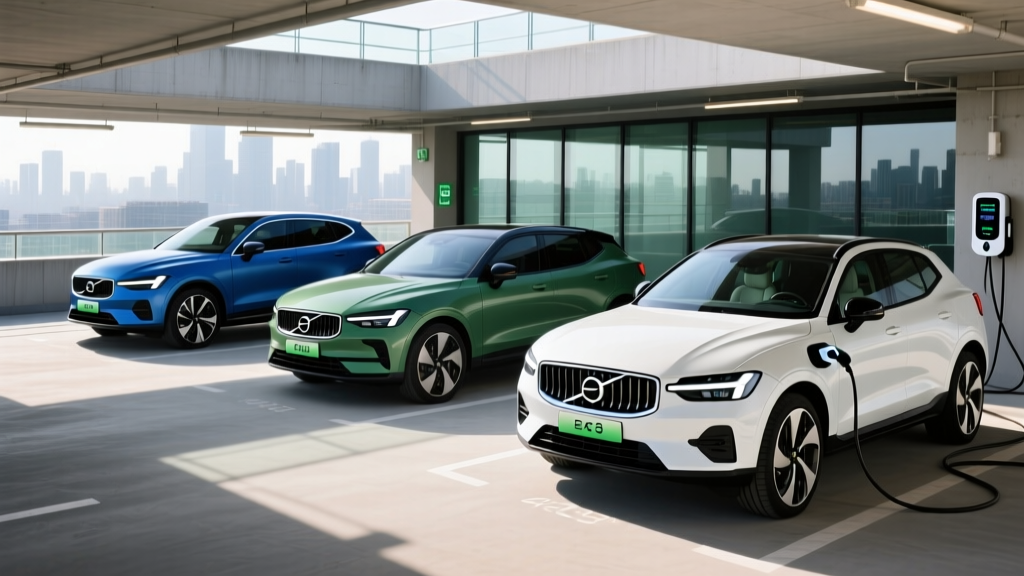
Quick Answer: Volvo's all electric lineup for the 2026 model year includes three core models: the compact EX30 (265 miles EPA, starting ~$36,950), the midsize EX40 (293 miles EPA, starting ~$54,550), and the flagship three-row EX90 (300 miles EPA, starting ~$78,150). All three use an 800-volt architecture (EX90) or 400-volt system (EX30/EX40) with DC fast charging from 10–80% in roughly 24–30 minutes depending on the model. Federal §30D tax credit eligibility varies by model and battery sourcing — check current IRS rules before assuming you qualify.
Volvo's Electric Lineup at a Glance
Volvo committed to full electrification years ahead of most legacy automakers. As of 2026, the brand sells three battery electric vehicles in the U.S. market, each targeting a distinct buyer segment. Here's how they stack up on the numbers that matter:
| Spec | EX30 | EX40 (Twin Motor) | EX90 (Twin Motor) |
|---|---|---|---|
| EPA Range | 265 mi | 293 mi | ~300 mi |
| Real-World Range (highway/cold) | ~210–230 mi | ~240–260 mi | ~245–270 mi |
| Battery (usable, kWh) | 69 kWh (NMC) | 82 kWh (NMC) | 111 kWh (NMC) |
| Max DC Fast Charge | 153 kW | 200 kW | 250 kW |
| 10–80% DC Charge Time | ~26 min | ~24 min | ~30 min |
| Level 2 Charge Rate | 11 kW | 11 kW | 11 kW |
| Horsepower | 272 hp (RWD) / 422 hp (Twin) | 408 hp | 496 hp |
| 0–60 mph | 3.4s (Twin Motor) | 4.5s | 4.7s |
| MPGe (combined) | ~104 MPGe | ~95 MPGe | ~82 MPGe |
| Base MSRP | $36,950 | $54,550 | $78,150 |
| Battery/Powertrain Warranty | 8 yr / 100,000 mi | 8 yr / 100,000 mi | 8 yr / 100,000 mi |
Real-World Range Reality: EPA estimates assume mixed driving at moderate temperatures. Expect 15–20% range reduction in sustained highway driving at 75+ mph, and 20–30% loss in sub-freezing winter conditions. The EX90's large 111 kWh pack gives it more absolute buffer, but its higher weight and drag coefficient mean efficiency drops are proportionally similar. If your commute is 60+ miles round trip in cold weather, factor in charging every other day rather than every third.
Charging Speed and Infrastructure Reality
Charging speed is where the 800-volt architecture of the EX90 separates itself. While the EX30 and EX40 use conventional 400-volt systems, the EX90's higher-voltage platform enables sustained charging closer to its 250 kW peak for longer portions of the charge curve.
| Charging Level | Power (kW) | Miles Added Per Hour | Best Use Case |
|---|---|---|---|
| Level 1 (120V) | ~1.4 kW | ~4–5 mi/hr | Overnight top-off only |
| Level 2 (240V, home) | 11 kW | ~33–40 mi/hr | Daily charging at home |
| DC Fast (EX30 peak) | 153 kW | ~350+ mi/hr (peak) | Road trips, 10–80% in ~26 min |
| DC Fast (EX90 peak) | 250 kW | ~500+ mi/hr (peak) | Road trips, 10–80% in ~30 min |
Charge curve taper matters: All three models hit peak charge rate only between roughly 10–40% state of charge. Above 80%, charging slows dramatically to protect battery health — plan to unplug at 80% on road trips rather than waiting for 100%. A Level 2 home charger (240V, 48A circuit) will replenish any of these overnight in 7–10 hours, making daily driving effortless if you have home charging access.
For public charging, Volvo uses the CCS1 connector on current models, though the brand has announced future NACS (Tesla Supercharger) compatibility. As of 2026, Volvo EVs can access Tesla Superchargers via an included adapter. Verify adapter availability with your dealer at purchase.
Cost Breakdown: All Electric Volvo vs. Gas Equivalent
The upfront price of an all electric Volvo is higher than a comparable gas-powered XC40, XC60, or XC90 — but the five-year ownership picture tells a different story when you factor in fuel, maintenance, and incentives.
| Cost Factor (5 Years) | EX40 (Electric) | XC60 B5 (Gas) |
|---|---|---|
| Purchase Price (base MSRP) | $54,550 | $48,150 |
| Federal Tax Credit (§30D) | Up to $7,500* | $0 |
| Effective Purchase Price | ~$47,050* | $48,150 |
| Fuel/Energy (15,000 mi/yr × 5) | ~$4,500** | ~$9,750*** |
| Maintenance (5 yr est.) | ~$1,200 | ~$3,800 |
| Insurance (5 yr est.) | ~$12,500 | ~$10,000 |
| Estimated 5-Year Total | ~$65,250 | ~$71,700 |
*§30D credit eligibility depends on buyer income (AGI ≤$150K single / $300K joint), vehicle MSRP caps ($55K for SUVs), battery sourcing, and critical minerals requirements. The EX40's MSRP may exceed the SUV cap on higher trims — consult IRS §30D guidelines and a tax professional. Point-of-sale transfer is available if eligible.
**Based on $0.14/kWh national average home charging and mixed public charging.
***Based on $3.50/gal and 25 MPG combined for the XC60 B5.
The EX40 narrows the gap with the gas XC60 almost entirely through the tax credit and fuel savings. Without the credit, the break-even point extends to roughly year six. Insurance premiums run 15–25% higher on EVs across the industry — get a quote before committing.
Federal Tax Credit: What You Actually Qualify For
The §30D Clean Vehicle Credit is not a blanket $7,500 off any all electric Volvo. Current IRS rules impose several gates:
- Buyer income cap: Modified AGI ≤$150,000 (single), $225,000 (head of household), or $300,000 (married filing jointly)
- MSRP cap: ≤$80,000 for SUVs (EX90 qualifies on base trims); ≤$55,000 for sedans/other (EX40 trims may exceed this)
- Battery sourcing: Battery components and critical minerals must meet escalating domestic-content thresholds that tighten annually through 2032
- Assembly: Final assembly must occur in North America — verify the VIN on fueleconomy.gov
- Transfer option: Eligible buyers can transfer the credit to the dealer at point of sale for an instant price reduction
The EX30 at $36,950 falls well under the MSRP cap but was initially built in China, which has complicated §30D eligibility. Volvo shifted some EX30 production to Ghent, Belgium — however, North American assembly is required for the new-vehicle credit. Check the specific VIN's assembly plant. A current IRS source sheet will confirm eligibility before you sign.
Real Ownership Considerations Most Reviews Skip
Home Charging Access Is Make-or-Break
If you can install a Level 2 charger at home, an all electric Volvo becomes dramatically easier to live with. Budget $800–$2,500 for a quality Level 2 unit (ChargePoint Home Flex, Emporia Vue, or Wallbox Pulsar Plus) plus $500–$2,000 for electrician installation depending on panel proximity. If your electrical panel needs a 200A upgrade, add $1,500–$4,000. Without home charging, you're dependent on public infrastructure — feasible but less convenient and more expensive per kWh.
Cold Climate Buyers: Expect Real Range Loss
Volvo's NMC battery chemistry performs adequately in cold weather but isn't immune. Owners in northern states (Minnesota, Michigan, New England) should expect 20–30% range reduction in sustained sub-30°F temperatures. The EX90's heat pump helps, but preconditioning while plugged in is essential — it warms the battery using grid power rather than battery energy. Plan for an effective winter range of ~185 miles (EX30), ~210 miles (EX40), or ~220 miles (EX90).
Driving Patterns That Favor (or Hurt) EV Ownership
City and suburban driving with regenerative braking maximizes EV efficiency — you'll often exceed EPA range in stop-and-go traffic. Sustained 80 mph highway driving, mountain passes, and towing are where range drops fastest. None of Volvo's current EVs are rated for heavy towing (the EX90 maxes at 5,000 lbs), so if you regularly tow, a PHEV or gas vehicle remains more practical.
Common Misconceptions About All Electric Volvo Models
| Myth | Fact |
|---|---|
| "The battery will need replacing in 5 years" | Volvo warranties the battery for 8 years/100,000 miles with a capacity retention threshold (typically 70%). Real-world NMC degradation averages 8–12% over 100K miles based on fleet data. |
| "You can't take an EV on road trips" | With 250 kW DC fast charging (EX90), you add ~180 miles in 15 minutes. Route planning via the Volvo app or A Better Routeplanner makes 500-mile trips practical with one or two stops. |
| "EVs cost more to insure" | Partially true — premiums run 15–25% higher on average due to repair costs and parts pricing. Get quotes from multiple carriers; some offer EV-specific discounts. |
| "The EX90 is fully self-driving" | The EX90 features LiDAR-equipped Pilot Assist, which is an SAE Level 2 driver-assist system. You must remain attentive and keep hands on the wheel at all times. |
| "All electric Volvos qualify for $7,500 tax credit" | Eligibility depends on MSRP caps, buyer income, battery sourcing, and assembly location. Not all trims or models qualify — verify before purchasing. |
ADAS Clarification: Volvo's Pilot Assist and the EX90's LiDAR-enhanced system are SAE Level 2 driver-assist features. This means the vehicle can handle steering and acceleration simultaneously under certain conditions, but the driver must remain fully engaged. This is not autonomous driving — it's an advanced cruise control and lane-centering system. Only Level 4 robotaxi services (Waymo, Zoox) operate without a driver.
Decision Framework: Which All Electric Volvo Is Right for You?
Choose the EX30 if: You're a single or couple with a sub-40-mile daily commute, want the lowest entry price (~$37K), have reliable home charging, and don't need back-seat space for adults. It's a strong urban EV with punchy acceleration (3.4s 0–60 in Twin Motor) but limited cargo room.
Choose the EX40 if: You want a practical compact SUV with proven Volvo safety credentials, ~293 miles of range for occasional road trips, and the performance of a 408 hp twin-motor AWD system. Best for families of 2–4 who want one-vehicle versatility. This is the volume seller and the most balanced option.
Choose the EX90 if: You need three rows, want the most advanced safety tech Volvo offers (including LiDAR), value 800V fast charging for frequent road trips, and can absorb the ~$78K+ price. Best for larger families or those replacing a gas XC90 who want maximum range and tech.
Consider a Volvo PHEV (Recharge) instead if: You lack home charging, regularly drive 300+ miles in rural areas with sparse DC fast charging, frequently tow, or live in extreme cold where range loss compounds. The XC60 Recharge and XC90 Recharge offer 18–35 miles of electric-only range for daily errands with a gas engine for longer trips.
FAQ: All Electric Volvo Ownership
How long does an all electric Volvo battery last?
Volvo's NMC lithium-ion batteries are warrantied for 8 years or 100,000 miles, whichever comes first, with a guaranteed minimum capacity retention (typically 70% of original). Industry data from fueleconomy.gov and fleet operators suggests most NMC packs retain 85–90% capacity at 100,000 miles with normal charging habits. Avoid routinely charging to 100% or letting the pack sit at 0% for extended periods to maximize longevity.
Can I charge an all electric Volvo at a Tesla Supercharger?
Yes. Volvo provides a CCS-to-NACS adapter for Supercharger access. The car's navigation system routes through compatible chargers. Charging speeds at Superchargers (typically 150–250 kW) match or approach the vehicle's peak rate.
What does it cost to charge at home vs. public stations?
At the national average residential electricity rate of ~$0.14/kWh, fully charging the EX40's 82 kWh battery costs roughly $11.50 for 293 miles — about $0.04 per mile. Public DC fast charging averages $0.30–$0.48/kWh, bringing costs to $0.10–$0.16 per mile. For comparison, a 25 MPG gas vehicle at $3.50/gallon costs $0.14 per mile. Home charging is the economic advantage; exclusive public charging erodes savings.
Is the all electric Volvo EX90 safe?
The EX90 includes Volvo's most advanced safety suite with LiDAR, multiple cameras, and radar sensors. While final NHTSA and IIHS ratings for the 2026 model year should be verified at nhtsa.gov and iihs.org, Volvo has historically earned top marks across its lineup. The structural battery pack also contributes to a low center of gravity and strong crash performance.
How does an all electric Volvo compare to a Tesla Model Y or BMW iX?
The EX40 competes with the Tesla Model Y Long Range ($44,990, 320 mi EPA) and BMW iX xDrive50 ($87,250, 307 mi EPA). The Model Y offers more range and Supercharger-native access at a lower price but lacks Volvo's build quality and safety reputation. The iX delivers more luxury and power but at a steep premium. The EX40 occupies a middle ground — strong safety, competitive range, and a premium interior without the six-figure price.