The Short Answer: Toyota's All-Electric Lineup in 2026
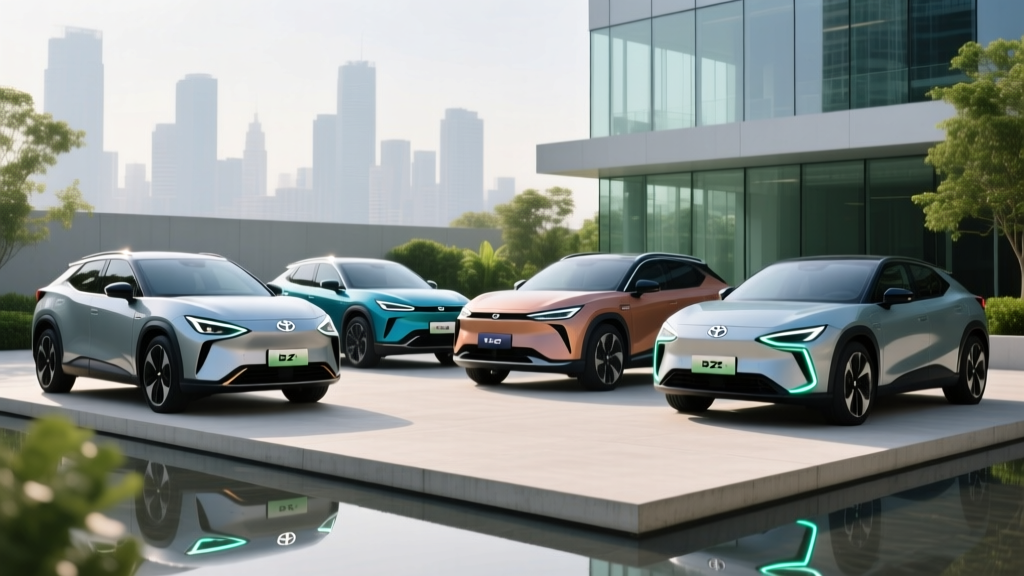
As of the 2026 model year, Toyota sells two fully electric vehicles in the United States: the bZ4X compact SUV and the bZ (a midsize SUV introduced for 2025). Toyota's broader electrified lineup includes over a dozen hybrids and plug-in hybrids, but if you're searching for all electric Toyota cars with zero tailpipe emissions and no gasoline engine, these two bZ models are your options. The bZ4X starts around $37,070 with up to 252 miles of EPA range, while the larger bZ starts near $43,000 with up to 300 miles EPA. Neither currently qualifies for the full $7,500 federal §30D tax credit due to battery-sourcing requirements, though point-of-sale lease incentives may apply.
Why Toyota's EV Lineup Is Smaller Than You'd Expect
Toyota has been the undisputed king of hybrids since the original Prius debuted in 1997, but its battery-electric vehicle (BEV) strategy has been deliberately cautious. While competitors like Hyundai, Kia, Ford, and Tesla flooded the market with long-range EVs, Toyota invested heavily in hybrid and plug-in hybrid technology, arguing that a diversified approach—HEVs, PHEVs, BEVs, and hydrogen—served more buyers globally.
That philosophy means Toyota's all-electric catalog is compact compared to rivals. But for loyal Toyota buyers ready to go fully electric, the bZ series represents the brand's serious entry into the BEV space. Both models ride on Toyota's e-TNGA platform, offer all-wheel-drive options, and come with Toyota Safety Sense 3.0 as standard.
2026 Toyota bZ4X: Specs, Range, and Pricing
The bZ4X is Toyota's first mass-market electric SUV and remains the more affordable entry point into the all electric Toyota cars lineup. After a rocky 2023 launch that included a recall for wheel-hub bolt issues, the 2026 model is a mature, refined product.
| Spec | FWD | AWD |
|---|---|---|
| EPA Range | 252 miles | 228 miles |
| Battery (usable) | 71.4 kWh (NMC) | 71.4 kWh (NMC) |
| Horsepower | 201 hp | 214 hp |
| 0–60 mph | 7.1 sec | 5.8 sec |
| Peak DC Fast Charge | 150 kW | 150 kW |
| 10–80% DC Charge Time | ~30 min | ~30 min |
| Level 2 Charge Rate | 7.2 kW | 7.2 kW |
| MPGe (combined) | 119 MPGe | 104 MPGe |
| Base MSRP | $37,070 | $40,070 |
| Battery Warranty | 8 years / 100,000 miles (70% capacity retention) | |
Real-World Range Reality Check
The EPA rates the bZ4X FWD at 252 miles, but expect ~200–220 miles on sustained highway driving at 70+ mph. In cold weather (below 32°F), range can drop to 160–180 miles due to battery chemistry limitations and cabin heating demands. The AWD model's 228-mile EPA rating translates to roughly 180–195 miles highway in moderate temperatures. Plan road trips around 180-mile legs for comfort.
2026 Toyota bZ (Midsize SUV): The Larger Option
Introduced for the 2025 model year, the Toyota bZ midsize SUV slots above the bZ4X and competes with the Hyundai Ioniq 5, Kia EV6, and Tesla Model Y. It offers more cargo space, a longer wheelbase, and improved charging speeds.
| Spec | FWD | AWD |
|---|---|---|
| EPA Range | 300 miles | 270 miles |
| Battery (usable) | 84.0 kWh (NMC) | 84.0 kWh (NMC) |
| Horsepower | 228 hp | 338 hp |
| 0–60 mph | 6.8 sec | 4.6 sec |
| Peak DC Fast Charge | 175 kW | 175 kW |
| 10–80% DC Charge Time | ~27 min | ~27 min |
| Level 2 Charge Rate | 11.0 kW | 11.0 kW |
| MPGe (combined) | 114 MPGe | 102 MPGe |
| Base MSRP | $43,000 | $47,000 |
| Battery Warranty | 8 years / 100,000 miles (70% capacity retention) | |
The larger bZ uses a higher-capacity NMC (nickel manganese cobalt) battery pack and supports faster Level 2 charging at 11.0 kW, meaning a full overnight charge from a 48-amp home station takes about 8 hours versus 10 hours for the bZ4X. The AWD variant's 338 hp delivers genuinely quick acceleration that outpaces the bZ4X by a wide margin.
Toyota EV vs. Toyota Hybrid: Cost and Efficiency Compared
Toyota's hybrid dominance makes the EV-vs-hybrid question essential for any buyer considering all electric Toyota cars. Here's how the bZ4X stacks up against the similarly sized Toyota RAV4 Hybrid and RAV4 Prime PHEV:
| Metric | bZ4X FWD | RAV4 Hybrid AWD | RAV4 Prime PHEV |
|---|---|---|---|
| Base MSRP | $37,070 | $33,425 | $44,590 |
| EPA Range / MPG | 252 mi / 119 MPGe | 594 mi / 39 MPG | 42 mi EV + 530 mi / 94 MPGe + 38 MPG |
| Fuel/Energy Cost (5 yr, 15k mi/yr) | ~$4,200 (electric) | ~$8,100 (gasoline) | ~$5,400 (mixed) |
| Maintenance (5 yr est.) | ~$1,800 | ~$3,200 | ~$2,800 |
| Federal Tax Credit | $0–$3,750* | $0 | $0–$7,500* |
| Est. 5-Year Total Cost | ~$54,500 | ~$58,000 | ~$59,700 |
*Tax credit eligibility depends on battery-sourcing compliance, buyer income caps, and MSRP limits under IRS §30D. Verify current rules at irs.gov. Figures are estimates based on national averages — your actual costs depend on local electricity rates, driving habits, and state incentives.
The bZ4X can save roughly $3,500–$4,000 over five years compared to the RAV4 Hybrid on fuel and maintenance alone, but the RAV4 Hybrid costs less upfront and carries zero range anxiety on long road trips. The RAV4 Prime PHEV is the best of both worlds if you can charge at home: 42 miles of electric-only range covers most daily commutes, with a gas engine for longer trips.
Real Costs of Owning a Toyota EV
Charging Costs: Home vs. Public
Electricity costs vary dramatically by region. At the U.S. residential average of $0.17/kWh (EIA data), fully charging the bZ4X's 71.4 kWh battery costs about $12.14—equivalent to roughly $0.048 per mile. Compare that to the RAV4 Hybrid at 39 MPG and $3.30/gallon gas: $0.085 per mile.
Public DC fast charging is significantly more expensive. Networks like Electrify America and EVgo charge $0.35–$0.55/kWh depending on location and time of day, pushing per-mile costs to $0.12–$0.18—sometimes more than gasoline. Home charging is where EV economics win.
Home Charging Installation
If you have a garage or dedicated parking space with access to a 240V circuit, a Level 2 home charger is the single most important investment for EV ownership. Expect to pay:
| Item | Cost Range |
|---|---|
| Level 2 Charger (40–48 amp) | $400–$700 |
| Electrician Labor (240V circuit run) | $600–$2,000 |
| Permit & Inspection | $100–$300 |
| Electrical Panel Upgrade (if needed) | $1,500–$3,500 |
| Total (no panel upgrade) | $1,100–$3,000 |
| Total (with panel upgrade) | $2,600–$6,500 |
Homes with older 100-amp electrical panels may require an upgrade to 200 amps before adding a 48-amp EV circuit. Always have a licensed electrician evaluate your panel capacity before purchasing equipment.
Insurance and Maintenance
EV insurance premiums run 10–20% higher than comparable gas vehicles due to battery replacement costs and specialized repair requirements. For a bZ4X, expect annual premiums of $1,800–$2,400 depending on your state and driving record.
Maintenance savings are genuine: no oil changes, no spark plugs, no transmission fluid, and regenerative braking extends brake pad life to 80,000+ miles. Budget for cabin air filters, tire rotations, windshield washer fluid, and eventual tire replacement (EVs wear tires 15–20% faster due to instant torque and heavier curb weight).
Federal Tax Credit: What Toyota EV Buyers Need to Know
IRS §30D Clean Vehicle Credit Requirements (2026)
- Credit amount: Up to $7,500 ($3,750 for critical minerals + $3,750 for battery components)
- Buyer income caps: AGI ≤ $150,000 (single), $225,000 (head of household), $300,000 (joint)
- MSRP caps: ≤ $80,000 for SUVs/pickups/vans; ≤ $55,000 for sedans
- Battery sourcing: Critical minerals and battery components must meet escalating domestic/free-trade-partner thresholds
- Point-of-sale transfer: Eligible buyers can transfer the credit to the dealer for an upfront price reduction
- Toyota bZ status: As of early 2026, Toyota bZ models face partial or full credit disqualification due to battery-component sourcing from entities of concern — always verify the latest list at fueleconomy.gov
Don't assume the full $7,500 applies. The IRS updates qualifying-vehicle lists regularly as automakers shift supply chains. Leasing a bZ through a Toyota dealership may unlock a $7,500 commercial clean vehicle credit (passed through as a lease incentive) regardless of sourcing rules—a workaround many buyers use.
Common Misconceptions About Toyota's Electric Cars
| Myth | Fact |
|---|---|
| "Toyota doesn't make electric cars" | Toyota sells two BEVs (bZ4X and bZ midsize SUV) and has announced additional bZ models through 2028. |
| "Toyota EV batteries degrade quickly" | Toyota warranties the bZ battery for 8 years/100,000 miles at 70% capacity retention. Real-world NMC degradation data from similar platforms shows ~8–12% loss over 100,000 miles. |
| "The bZ4X can't road-trip" | It can, but requires planning. With 150 kW DC fast charging, a 10–80% session takes ~30 minutes. Pair with Electrify America or EVgo route planning for 200-mile legs. |
| "I need a Tesla to get good charging" | Toyota bZ models use the CCS1 connector, compatible with Electrify America, EVgo, ChargePoint, and the expanding Tesla Supercharger network (with adapter). NACS adoption is coming to future Toyota models. |
| "EVs are worse in cold weather" | Range drops 20–35% in sub-freezing temps, but the bZ models include a heat pump (AWD trims) that mitigates cabin-heating energy draw. Preconditioning while plugged in preserves range. |
Decision Framework: Which Toyota Electrified Vehicle Is Right for You?
Choose Based on Your Situation
Choose the bZ4X if: You want Toyota's most affordable EV, drive under 200 miles daily, have reliable home charging access, and primarily commute in moderate climates.
Choose the bZ midsize SUV if: You need more cargo room and passenger space, want 300 miles of EPA range for road trips, value faster 175 kW DC charging, and can budget $43,000+.
Choose a Toyota RAV4 Hybrid if: You can't charge at home, frequently drive 400+ miles between stops, live in a region with sparse public charging infrastructure, or want the lowest upfront cost.
Choose a RAV4 Prime PHEV if: You want electric commuting (42 miles EV range) with gas-engine freedom for road trips, have access to home Level 2 charging, and don't mind paying a premium ($44,590 base) for the best of both worlds.
First-Time Toyota EV Buyer Checklist
If you've never owned an electric vehicle, here's what to prepare before taking delivery:
- Confirm home charging access: Do you have a garage, carport, or dedicated parking spot near a 240V outlet or panel? If not, investigate workplace charging or nearby public Level 2 stations.
- Get an electrician quote: Before buying the car, have a licensed electrician assess your panel and quote a 240V/48-amp circuit installation. Budget $1,100–$3,000 (or more if a panel upgrade is needed).
- Download charging apps: Install PlugShare, ChargePoint, EVgo, and Electrify America apps. Map the chargers along your regular routes and road-trip corridors.
- Understand the charge curve: DC fast charging peaks at the advertised kW rate only between ~10–50% state of charge. Above 80%, charging slows dramatically to protect the battery. Plan to charge to 80% on road trips and move on.
- Verify tax-credit eligibility: Check fueleconomy.gov and consult a tax professional before assuming you'll receive the §30D credit.
- Adjust range expectations: EPA range is a laboratory estimate. Budget 15–25% less for highway driving and 25–35% less in freezing weather.
Frequently Asked Questions
How many all electric Toyota cars are available in 2026?
Toyota sells two fully electric models in the U.S. for 2026: the bZ4X compact SUV and the bZ midsize SUV. Toyota has announced plans for additional bZ models, including a three-row SUV, through 2028, but these are not yet available for purchase.
Does the Toyota bZ4X qualify for the $7,500 federal tax credit?
As of early 2026, the bZ4X does not qualify for the full $7,500 §30D credit due to battery-sourcing requirements. It may qualify for a partial $3,750 credit depending on the current IRS sourcing list. Leasing may unlock the full incentive through the commercial credit loophole. Always verify at irs.gov before purchasing.
How long does it take to charge a Toyota bZ4X at home?
On a 7.2 kW Level 2 home charger (240V, 30 amps), the bZ4X charges from empty to full in approximately 10 hours. Most owners plug in overnight and wake up to a full battery every morning. A 48-amp circuit provides the full 7.2 kW rate; lower-amperage circuits charge more slowly.
Is the Toyota bZ4X good in snow and cold weather?
The AWD bZ4X provides competent traction in snow, and its standard heat pump (on select trims) reduces cabin-heating energy consumption. However, expect 20–35% range loss in sustained sub-freezing temperatures. Preconditioning the battery while plugged in helps recover some of that range and improves DC fast-charge speeds in cold weather.
Should I buy a Toyota EV or a Toyota hybrid?
If you have reliable home charging, drive under 250 miles daily, and want the lowest per-mile fuel cost, a Toyota EV (bZ4X or bZ) saves money long-term. If you lack home charging, take frequent 400+ mile road trips, or live in a charging-desert region, a Toyota hybrid (RAV4 Hybrid, Camry Hybrid) or PHEV (RAV4 Prime) is the more practical choice in 2026.
What connector do Toyota electric cars use?
The 2026 bZ4X and bZ midsize SUV use the CCS1 (Combined Charging System) connector for DC fast charging and the J1772 connector for Level 1/Level 2 AC charging. Toyota has committed to adopting the NACS (Tesla-style) connector on future models, and current bZ owners can access Tesla Superchargers using a CCS-to-NACS adapter where supported.