The Quick Answer: Is an All Electric Subaru Worth It?
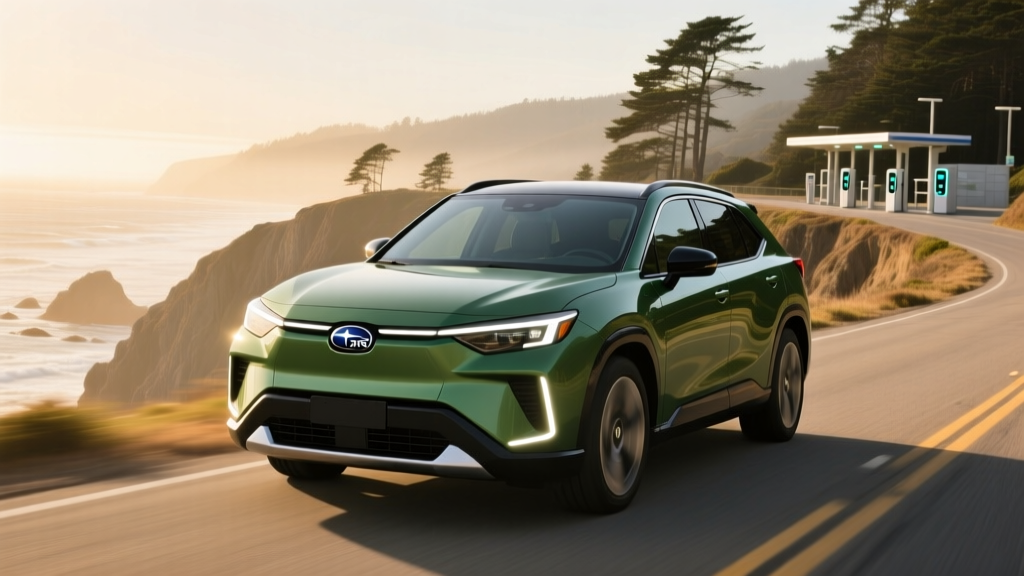
Subaru's only all-electric vehicle for 2026 is the Solterra, a compact electric SUV co-developed with Toyota (its twin is the bZ4X). The Solterra delivers an EPA-estimated 227 miles of range (Limited trim with 18-inch wheels), a 72.8 kWh usable battery, and standard symmetrical all-wheel drive starting at approximately $39,995. It qualifies for partial or full federal tax credit depending on your income, battery sourcing, and point-of-sale election under IRS §30D rules. The Solterra is a solid pick for Subaru loyalists who want AWD capability and daily electric commuting under 180 miles, but its modest DC fast-charging speed (~150 kW peak) and real-world highway range closer to 190–200 miles mean it falls behind rivals like the Hyundai Ioniq 5 and Tesla Model Y for road-trip practicality.
2026 Subaru Solterra: Range, Battery, and Charging Specs
Before evaluating whether the Solterra fits your life, let's ground the conversation in hard numbers. Subaru uses an NMC (nickel-manganese-cobalt) lithium-ion battery pack with 72.8 kWh of usable capacity. Here is the full spec breakdown by trim:
| Specification | Premium (20" wheels) | Limited (18" wheels) | Touring (20" wheels) |
|---|---|---|---|
| EPA Range | ~222 mi | ~227 mi | ~222 mi |
| Battery (usable) | 72.8 kWh NMC | ||
| MPGe (combined) | 102 MPGe | 104 MPGe | 102 MPGe |
| Horsepower | 215 hp (dual motor AWD) | ||
| 0–60 mph | ~6.5 seconds | ||
| Peak DC Fast Charge | ~150 kW (CCS1) | ||
| 10–80% DC Charge Time | ~35 minutes | ||
| Level 2 Charge Rate | ~6.6 kW (~9.5 hours 0–100%) | ||
| Base MSRP (2026 est.) | ~$39,995 | ~$43,495 | ~$47,195 |
| Battery Warranty | 8 years / 100,000 miles | ||
Real-World Range: What to Actually Expect
The EPA sticker says 227 miles, but real-world results vary. On a 70-mph highway drive in moderate temperatures (65–75°F), expect 195–205 miles. In cold weather (below 32°F), range drops to 155–175 miles due to battery resistance and cabin heating demands. Subaru does not include a heat pump on base trims in all markets, which worsens cold-weather efficiency. If your daily round-trip commute exceeds 150 miles or you road-trip frequently, this range envelope requires planning.
Solterra vs Gas Outback: Real Cost Comparison
Many Subaru shoppers cross-shop the Solterra against the gasoline Outback. Let's compare a 2026 Solterra Limited (~$43,495 MSRP) against a 2026 Outback Premium (~$34,500 MSRP) over five years and 60,000 miles of mixed driving.
| Cost Factor | Solterra Limited (EV) | Outback Premium (Gas) |
|---|---|---|
| MSRP | $43,495 | $34,500 |
| Federal Tax Credit (§30D)* | Up to $7,500 | $0 |
| Effective Purchase Price | ~$35,995 | $34,500 |
| Fuel / Energy (60k mi) | ~$3,600 (home charging at $0.14/kWh) | ~$7,200 (28 MPG avg, $3.50/gal) |
| Maintenance (60k mi) | ~$600 (tire rotation, cabin filter, fluid top-off) | ~$2,800 (oil changes, brakes, filters) |
| Insurance (5-yr est. avg) | ~$9,500 | ~$7,500 |
| 5-Year Total Cost | ~$49,695 | ~$52,000 |
*Federal EV tax credit eligibility under IRS §30D depends on your modified adjusted gross income, the vehicle's MSRP cap (SUVs capped at $80,000 — Solterra qualifies), battery critical-mineral sourcing, and final assembly in North America or a free-trade-agreement country. Rules are subject to change. Consult a tax professional and verify current-year eligibility before purchase. The credit can now be transferred to the dealer at point of sale, reducing your out-of-pocket cost immediately.
The Solterra can break even with the Outback within five years if you qualify for the full credit and charge primarily at home. However, insurance premiums run 15–25% higher on the Solterra in most states due to repair costs and battery replacement risk. If you cannot charge at home and rely on public DC fast charging at $0.35–$0.50/kWh, your 60,000-mile energy cost rises to $6,000–$8,500, erasing much of the savings.
Home Charging Reality: What First-Time Buyers Must Know
The single biggest ownership variable for any all electric Subaru — or any EV — is whether you can charge at home. Here is the practical breakdown:
Level 1 (120V Standard Outlet)
Plugging into a standard household outlet adds roughly 3–4 miles of range per hour. A full charge from empty takes over 24 hours. This works only if you drive under 40 miles per day and can leave the car plugged in overnight consistently.
Level 2 (240V — Recommended)
A Level 2 home charger (like a ChargePoint Home Flex or Emporia V2) delivers 6.6 kW to the Solterra, adding roughly 22–25 miles of range per hour. A full charge takes about 9–10 hours — perfect for overnight replenishment. Expect to pay $500–$800 for the charger hardware and $800–$2,500 for professional electrical installation depending on whether your panel needs an upgrade (200-amp service is typical; older homes may need a panel upgrade adding $1,500–$3,000).
Public DC Fast Charging
The Solterra's CCS1 connector works with Electrify America, EVgo, and other major networks. At peak rate (~150 kW), a 10–80% session takes about 35 minutes. However, the charge curve tapers significantly above 80%, so a full 10–100% session can stretch past 55 minutes. This is slower than the Hyundai Ioniq 5 (which peaks at ~240 kW and does 10–80% in ~18 minutes), making the Solterra a less ideal road-trip companion.
| Charging Level | Power | Miles Added/Hour | Full Charge Time |
|---|---|---|---|
| Level 1 (120V) | ~1.4 kW | ~3–4 mi/hr | ~24+ hours |
| Level 2 (240V) | 6.6 kW | ~22–25 mi/hr | ~9.5 hours |
| DC Fast (CCS1) | Up to ~150 kW | N/A | 10–80% in ~35 min |
Common Misconceptions About the All Electric Subaru
| Myth | Fact |
|---|---|
| "The Solterra can go 227 miles no matter what." | 227 miles is the EPA estimate under ideal conditions. Highway driving at 75 mph, cold weather, and mountain terrain reduce range by 15–30%. |
| "I'll save $7,500 automatically." | The §30D credit has income caps ($150k single / $300k joint), battery sourcing requirements, and must be claimed properly. It can be transferred at point of sale, but eligibility is not universal. |
| "EVs need no maintenance at all." | Tires wear faster on EVs due to instant torque and heavier weight. Cabin air filters, brake fluid, coolant, and wiper blades still require service. Expect ~$120/year in basic upkeep. |
| "The battery will need expensive replacement soon." | Subaru warranties the battery for 8 years/100,000 miles with a capacity retention threshold of 70%. Real-world NMC degradation data from similar platforms shows ~8–12% loss over 100,000 miles. Full replacement cost is estimated at $12,000–$18,000 out of warranty, but most packs outlast the vehicle. |
| "All-wheel drive means it's as off-road capable as a gas Subaru." | The Solterra has 8.3 inches of ground clearance and X-MODE for light trails, but its 4,400+ lb curb weight and low-range limitations make it less suited for serious off-roading than a gas Outback or Forester. |
How the Solterra Compares to Key Rivals
| Attribute | 2026 Subaru Solterra | 2026 Hyundai Ioniq 5 (AWD) | 2026 Tesla Model Y (LR AWD) |
|---|---|---|---|
| EPA Range | 227 mi | 290 mi | 320 mi |
| Battery | 72.8 kWh NMC | 77.4 kWh NMC | ~78 kWh NMC |
| Peak DC Charge | ~150 kW | ~240 kW | ~250 kW |
| 10–80% DC Time | ~35 min | ~18 min | ~20 min |
| AWD Standard? | Yes | Optional | Yes (LR AWD) |
| Starting MSRP | ~$39,995 | ~$46,500 | ~$44,990 |
| Charging Network | CCS1 (EA, EVgo) | CCS1/NACS (Tesla access via adapter) | NACS (Tesla Supercharger native) |
The Solterra's advantage is price and standard AWD — it undercuts the Ioniq 5 AWD by roughly $6,500. But for road trips, the Ioniq 5 and Model Y are meaningfully faster to charge and go farther per session. If 90% of your driving is local and you value Subaru's brand reputation for durability and safety, the Solterra makes sense. If you regularly drive 300+ miles in a day, the charging speed gap becomes a real frustration.
Decision Framework: Should You Buy an All Electric Subaru?
Choose the Solterra If:
- Your daily round-trip commute is under 150 miles and you can charge at home overnight.
- You live in a moderate or cold climate and want standard AWD without paying a premium.
- You qualify for the federal §30D tax credit (check IRS guidelines) and can bring the effective price under $36,000.
- You are a current Subaru owner who values the brand's safety focus (IIHS Top Safety Pick ratings) and EyeSight driver-assist system.
- You rarely road-trip more than 200 miles in a single day.
Look Elsewhere If:
- You cannot install a Level 2 charger at home and your area has sparse public DC charging infrastructure.
- You regularly drive 250+ miles in a day — the 35-minute charge time and 227-mile ceiling will frustrate you.
- You live in extreme cold (below 0°F regularly) and need 200+ miles of usable winter range.
- You want access to the Tesla Supercharger network natively (consider Model Y or a Ford Mustang Mach-E with NACS).
- Cargo space is critical — the Solterra's 23.8 cu ft behind the rear seats trails the Model Y's ~30 cu ft.
Frequently Asked Questions
Is the Subaru Solterra the only all electric Subaru available?
Yes, as of 2026 the Solterra is Subaru's sole battery-electric vehicle. Subaru has announced plans for additional EV models later in the decade, including a potential three-row electric SUV, but none are currently available or open for order.
Does the Solterra qualify for the $7,500 federal tax credit?
It may, but eligibility depends on several factors under IRS §30D: your income must fall below caps ($150,000 single filer / $300,000 joint), the vehicle must meet critical-mineral and battery-component sourcing requirements, and the MSRP must be under $80,000 (the Solterra qualifies as an SUV). The credit can be transferred to the dealer at point of sale for an immediate price reduction. Rules change — always verify current-year eligibility with your dealer and tax professional.
How much does it cost to charge a Solterra at home?
At the US average residential rate of ~$0.14/kWh, a full 72.8 kWh charge costs roughly $10.20, yielding about 227 miles of range. That's approximately $0.045 per mile. By comparison, a gas Outback averaging 28 MPG at $3.50/gallon costs $0.125 per mile — nearly three times more per mile.
Is the Solterra good in snow and winter weather?
The dual-motor AWD system and X-MODE traction management provide confident grip in snow and light off-pavement conditions. However, expect range to drop to 155–175 miles in sub-freezing temperatures due to battery chemistry limitations and cabin heating demand. Preconditioning the battery while plugged in helps preserve range and improves regenerative braking performance in cold weather.
What is the Solterra's charging connector — will I need an adapter?
The Solterra uses the CCS1 connector for DC fast charging and J1772 for Level 2. As the industry shifts toward NACS (the Tesla connector), some networks now require adapters. Subaru has not announced a native NACS port for the current-generation Solterra, so a CCS-to-NACS adapter may be needed for Tesla Supercharger access as that network opens to non-Tesla vehicles.
How long will the Solterra battery last?
Subaru warranties the high-voltage battery for 8 years or 100,000 miles, guaranteeing at least 70% capacity retention. Based on data from similar NMC packs in the Toyota bZ4X and Hyundai Ioniq 5 platform, expect roughly 8–12% degradation over 100,000 miles. To maximize longevity, avoid routinely charging to 100% or letting the battery sit below 10% for extended periods. Daily charging to 80% is optimal for NMC chemistry.