The Straight Answer on All Electric RVs
As of 2026, fully electric Class A, B, and C motorhomes remain extremely limited in availability. The only production all electric RVs you can actually order and take delivery of in the U.S. are the Winnebago e-RV (Class B, ~108-mile EPA-estimated range, ~$125,000) and the Thor Vision Vehicle (Class B concept entering limited production, ~150-mile targeted range, pricing TBD). Several startups — including Lightship (aerodynamic travel trailer with its own drive axle) and Harbinger (electric chassis upfitted by specialty coachbuilders) — are taking deposits but have not yet reached volume deliveries. If you need a 300+ mile range motorhome for cross-country boondocking today, an all-electric RV will not meet that need. If your trips are regional (under 200 miles round-trip), you have reliable Level 2 or DC fast charging access at home or campgrounds, and you value silent operation with zero tailpipe emissions at the campsite, the current options may work — with significant caveats outlined below.
What "All Electric RV" Actually Means in 2026
The term "all electric RV" covers two distinct vehicle architectures, and conflating them causes most buyer confusion:
1. Battery Electric Motorhomes (BEV): The entire vehicle — propulsion and house systems — runs on a large traction battery (typically 80–120 kWh) and one or more electric motors. There is no internal combustion engine. Examples: Winnebago e-RV (built on the Ford E-Transit chassis), Thor Vision Vehicle (Mercedes-Benz eSprinter platform).
2. Electric Tow Vehicles + Travel Trailers: A battery-electric truck (Ford F-150 Lightning, Rivian R1T, Chevy Silverado EV) towing a conventional or next-gen travel trailer. Lightship's L1 trailer (announced, deposits open) adds its own electric drive axle so the tow vehicle doesn't sacrifice range — a genuinely novel approach, but not yet in customer hands.
3. Electric Chassis + Upfitted Coach: Harbinger Motors produces a purpose-built electric chassis (skateboard platform with ~150 kWh battery, ~200-mile targeted range) that specialty RV manufacturers then build motorhome bodies onto. As of early 2026, Harbinger has begun fleet deliveries; consumer RV upfits are in early production stages.
Common Misconceptions About Electric RVs
| Myth | Fact |
|---|---|
| "Electric RVs can tow just as much as diesel pushers." | Current BEV motorhomes (e-RV, Vision) are Class B vans. They don't tow heavy loads. Diesel Class A pushers still dominate for 10,000+ lb towing. |
| "I can charge an electric RV at any campground." | Most campgrounds offer 30A or 50A shore power (3.6–12 kW) — enough for overnight Level 2-style charging, but a full 80–120 kWh battery can take 10–30+ hours at those rates. DC fast chargers are almost nonexistent inside campgrounds. |
| "The $7,500 federal EV tax credit applies to all electric RVs." | The §30D credit has a vehicle MSRP cap of $80,000 for vans/pickups/SUVs (per IRS guidelines). Most all electric RVs exceed this cap, making them ineligible for the full credit. Consult a tax professional. |
| "Range is the same whether I'm driving or parked using appliances." | Running the A/C, microwave, induction cooktop, and house systems draws from the same traction battery (in most designs), directly reducing drive range. Budget 5–15 kWh/day for house loads in moderate weather, more in extreme heat/cold. |
Current All Electric RV Models: Specs and Pricing
| Spec | Winnebago e-RV (2025/2026) | Thor Vision Vehicle | Lightship L1 (Announced) | Harbinger Chassis + Upfit |
|---|---|---|---|---|
| Type | Class B Motorhome | Class B Motorhome | Travel Trailer (w/ drive axle) | Class A/C (varies by upfitter) |
| Platform | Ford E-Transit | Mercedes eSprinter | Proprietary trailer chassis | Harbinger skateboard |
| Battery (usable) | 68 kWh (NMC) | ~110 kWh (NMC, est.) | ~80 kWh (LFP, targeted) | ~150 kWh (NMC) |
| Range (EPA/target) | ~108 mi (EPA est.) | ~150 mi (targeted) | 150 mi (w/o reducing tow range) | ~200 mi (targeted) |
| Peak DC Charge | 115 kW | ~150 kW (est.) | TBD | ~150 kW (est.) |
| 10–80% DC Charge | ~45 min | ~45–55 min (est.) | TBD | ~50–60 min (est.) |
| Level 2 Rate | 10.5 kW (max) | ~11 kW (est.) | TBD | ~19.2 kW (targeted) |
| Motor Power | 266 hp / 317 lb-ft | ~201 hp / 332 lb-ft | N/A (trailer axle assist) | ~300+ hp (dual motor) |
| Sleeping Capacity | 2 | 2–3 | 4–6 | 4–8 (varies) |
| Base MSRP | ~$125,000 | TBD (est. $130K–$160K) | ~$125,000 (deposit open) | Chassis ~$80K + upfit |
| Status (Early 2026) | Available (limited) | Limited production | Pre-production / deposits | Fleet deliveries begun |
Real-World Range Reality Check
The Winnebago e-RV's ~108-mile EPA-estimated range is measured under ideal conditions with minimal house-load draw. In real-world RV use — highway speeds of 65–70 mph, A/C running, added cargo weight, and headwinds — expect 75–95 miles of usable driving range before needing to charge. In cold weather (below 40°F), range can drop an additional 15–25%, putting realistic winter range at roughly 60–80 miles. This is adequate for regional trips between campgrounds with shore power, but it eliminates spontaneous long-distance travel without careful DC fast-charger route planning.
Charging an Electric RV: What Owners Actually Face
Charging logistics are the single biggest ownership challenge for all electric RVs. Here's what the infrastructure looks like in practice:
| Charging Method | Power (kW) | Miles Added/Hour | Full Charge Time (68 kWh Battery) |
|---|---|---|---|
| Standard 120V Outlet (Level 1) | 1.2–1.4 kW | ~3–4 mi/hr | 50–60 hours |
| Campground 30A Shore Power | 3.6 kW | ~10–12 mi/hr | 18–20 hours |
| Campground 50A Shore Power | ~11.5 kW | ~30–35 mi/hr | 6–7 hours |
| Home Level 2 (48A hardwired) | 10.5–11.5 kW | ~30–35 mi/hr | 6–7 hours |
| DC Fast Charger (115 kW peak) | 115 kW (tapers above 80%) | ~250+ mi/hr (to 80%) | ~45 min (10–80%) |
Key charging realities:
- DC fast chargers for large vehicles are scarce. Most public DCFC stations (Electrify America, EVgo, Tesla Superchargers) are designed for passenger cars. Pulling a 24-foot Class B van into a standard charging stall often means blocking adjacent stalls or being unable to reach the cable. The National Renewable Energy Laboratory (NREL) has documented the infrastructure gap for medium- and heavy-duty EV charging.
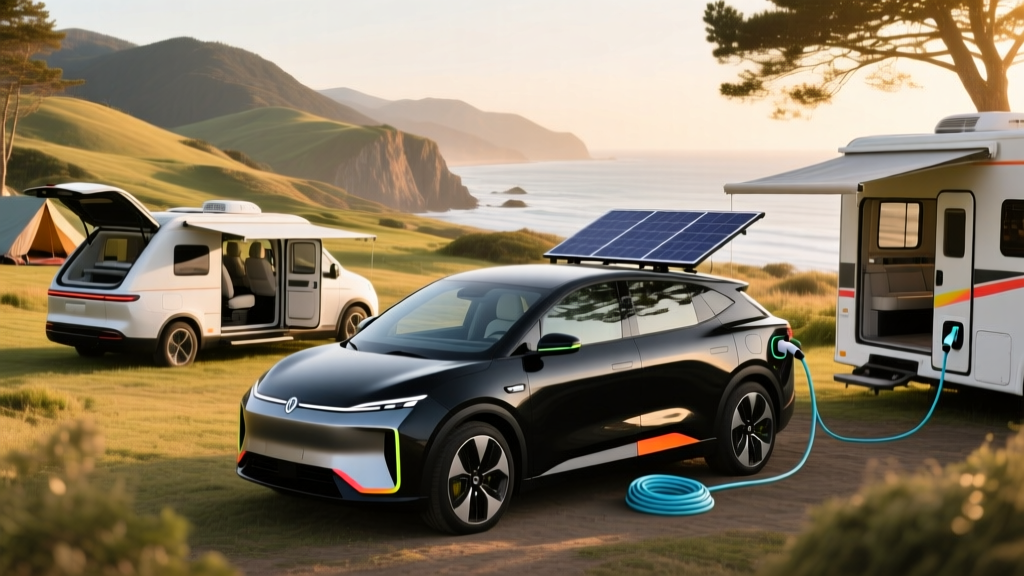
- Campground shore power is slow. Even a 50A hookup (the best most RV parks offer) delivers roughly 11.5 kW — enough to fully recharge overnight, but only if you're parked for 7+ hours. Boondocking without shore power means solar panels (typically 200–600W on RV roofs) adding perhaps 1–3 kWh per sunny day — a trickle against a 68–120 kWh battery.
- Home charging requires a 240V/50A circuit. Installing a dedicated Level 2 charger in your garage or driveway typically costs $1,200–$3,500 (equipment + licensed electrician + permit). If your home's electrical panel is already near capacity, a panel upgrade to 200A can add $2,000–$4,000. Always get a licensed electrician's assessment before purchasing.
Electric RV vs. Gas/Diesel RV: Cost and Practicality Comparison
| Factor | All Electric Class B RV | Gas/Diesel Class B RV (e.g., Winnebago Revel, Airstream Interstate) |
|---|---|---|
| Purchase Price | $125,000–$160,000+ | $95,000–$170,000 |
| Range | 75–150 mi (real-world) | 300–500+ mi (diesel) |
| Fuel/Energy Cost per Mile | ~$0.06–$0.12/mi (home charging, varies by electricity rate) | ~$0.25–$0.40/mi (diesel at $3.80–$4.50/gal, 15–18 MPG) |
| "Fuel" Stops per 300-mi Trip | 3–4 DC fast-charge stops (45 min each) | 1–2 fuel stops (10–15 min each) |
| Maintenance | Minimal: no oil changes, no transmission fluid, fewer moving parts. Brake wear reduced via regen. | Regular: oil changes, fuel filters, DEF fluid (diesel), transmission service |
| Annual Maintenance Cost (est.) | $200–$500 | $800–$1,800 |
| Campsite Generator Noise | None — silent operation | Diesel genset: 50–70 dB, many parks restrict generator hours |
| Cold Weather Performance | 15–25% range loss below 40°F; battery preconditioning helps | Minimal range loss; block heater for extreme cold |
| Boondocking Duration | Limited by battery; solar trickle-charge only | Days to weeks with diesel genset + solar |
| Federal Tax Credit (§30D) | Mostly ineligible — MSRP exceeds $80K van cap | Not applicable |
5-Year Estimated Ownership Cost: Electric vs. Diesel Class B RV
Assumption: 6,000 miles/year, home charging at $0.14/kWh (national average), diesel at $4.10/gal.
| Cost Category | Electric RV (5 Years) | Diesel RV (5 Years) |
|---|---|---|
| Purchase Price | $125,000 | $130,000 |
| Fuel/Energy (30,000 mi total) | $2,520 (at ~3 mi/kWh) | $7,380 (at ~16 MPG) |
| Maintenance | $1,500 | $6,000 |
| Insurance (avg.) | $9,000 ($1,800/yr) | $7,500 ($1,500/yr) |
| Estimated Depreciation (5 yr) | $50,000–$62,500 (40–50%) | $45,500–$58,500 (35–45%) |
| Total 5-Year Cost (est.) | $188,020–$200,520 | $189,380–$201,880 |
Source: Estimates based on fueleconomy.gov data and industry averages. Actual costs vary significantly by usage, region, and insurance provider. Electric RV depreciation is harder to predict due to limited resale history.
Who Should (and Shouldn't) Buy an All Electric RV
Decision Framework: Is an Electric RV Right for You?
Choose an all electric RV if:
- Your trips are regional — typically under 150 miles one-way, with overnight stops at campgrounds offering 50A shore power.
- You have a home garage or driveway where you can install a 240V/50A Level 2 charger (budget $1,500–$3,500 for installation).
- You prioritize silent, zero-emission campsite operation (no generator noise, no exhaust — critical in national parks and eco-sensitive areas).
- You use your RV 2–4 weekends per month rather than full-time or for cross-country treks.
- You're comfortable planning routes around DC fast-charger locations using tools like A Better Routeplanner (ABRP) or PlugShare.
Stick with a gas/diesel RV (or wait) if:
- You regularly drive 300+ miles between stops or travel in regions with sparse DC fast-charging infrastructure (rural Mountain West, parts of the Great Plains).
- You boondock for extended periods (3+ days) without shore power and need a diesel generator for house systems.
- You tow a heavy trailer (boat, car, horse trailer) — current electric Class B RVs have minimal or no tow ratings.
- You live in an apartment or condo without access to overnight Level 2 charging.
- You need proven resale value and long-term parts/service availability — the electric RV market is still too new to guarantee either.
First-Time Electric RV Buyer Essentials
If you're seriously considering an all electric RV, here's what you need to verify before signing a purchase agreement:
- Test the route, not the brochure. Map your three most common trips on PlugShare or ABRP. If any leg exceeds the vehicle's real-world range (75–100 mi for current models) without a DC fast charger along the route, that trip will require significant planning or simply won't work.
- Get an electrical panel assessment. Before purchasing, hire a licensed electrician to evaluate whether your home panel can support a dedicated 240V/50A circuit. A 200A panel is typically sufficient; older 100A panels may need upgrading ($2,000–$4,000).
- Understand the battery warranty. The Ford E-Transit platform (Winnebago e-RV) includes an 8-year/100,000-mile battery warranty covering capacity retention above 70% (per Ford's commercial EV warranty). Verify what the RV upfitter covers separately for house-system electrical components.
- Calculate your true energy cost. At a national average of $0.14/kWh and an efficiency of roughly 2.5–3.0 miles per kWh (real-world RV driving), your energy cost is approximately $0.05–$0.06 per mile on home charging. Public DC fast charging at $0.35–$0.50/kWh pushes that to $0.12–$0.17/mile — still cheaper than diesel, but not negligible over thousands of miles.
- Check insurance quotes early. Electric RVs often carry higher insurance premiums ($1,600–$2,400/year vs. $1,200–$1,800 for diesel equivalents) due to higher repair costs for battery and powertrain damage. Get actual quotes from RV-specialty insurers (Progressive, Good Sam, Foremost) before budgeting.
- Don't count on the federal tax credit. The IRS §30D clean vehicle credit has an MSRP cap of $80,000 for vans — and every current all electric RV exceeds this threshold. State-level incentives (California's CVRP, Colorado's EV tax credit) may offer partial relief, but rules vary by jurisdiction. Consult a tax professional and check your state's official energy office for current programs.
What's Coming: Electric RVs to Watch (2026–2028)
The electric RV pipeline is more promising than the current showroom floor:
- Lightship L1 Travel Trailer: The most innovative design in the pipeline — an aerodynamic travel trailer with its own electric drive axle that preserves the tow vehicle's range. Solar roof adds up to ~3 kWh/day. Targeted at ~$125,000, deposits open, deliveries expected late 2026 or 2027.
- Harbinger Motors chassis upfits: As more specialty coachbuilders (e.g., Forest River, Thor subsidiaries) build on Harbinger's ~150 kWh electric chassis, expect Class A and Class C options with 175–200+ mile targeted range. Pricing will depend on the upfitter.
- Thor Vision Vehicle: Built on the Mercedes eSprinter platform, targeting ~150 miles of range with a larger battery than the e-RV. Limited production underway; broader availability expected through 2026.
- Electric Class A motorhomes: No manufacturer has announced a production-ready all-electric Class A (the large bus-style motorhomes popular with full-timers). The weight, battery cost, and range requirements (300+ mi expected by buyers) make this segment 3–5 years out at minimum.
Bottom line: All electric RVs in 2026 are a niche product for a specific use case — regional travel, home-charging access, campsite silence. They are not yet viable replacements for diesel pushers or gas Class C motorhomes for long-distance, off-grid, or full-time RV living. If that use case matches yours, the Winnebago e-RV is the most proven option available today. If you need more range or space, waiting 12–24 months for Lightship and Harbinger-based products is the prudent move.
Frequently Asked Questions
Can I tow a car behind an all electric RV?
Current all electric Class B motorhomes (Winnebago e-RV, Thor Vision) have minimal or no tow ratings. The Ford E-Transit chassis is not rated for dinghy towing a vehicle. If flat-towing a car is essential to your RV lifestyle, you'll need a gas or diesel Class A or Class C motorhome.
How long does it take to charge an electric RV at a campground?
On a 50A campground hookup (~11.5 kW), expect 6–7 hours to fully charge a 68 kWh battery (e-RV) or 10–14 hours for a larger 110–150 kWh pack. On a 30A hookup (~3.6 kW), add 18–30+ hours. Plan overnight stops accordingly.
Do electric RVs qualify for the $7,500 federal tax credit?
Almost certainly not. The IRS §30D credit caps eligible van MSRP at $80,000, and all current all electric RVs are priced well above that threshold. State incentives may apply — check your state's energy office and consult a tax professional for your specific situation.
What happens to an electric RV battery in extreme cold?
Lithium-ion batteries lose 15–25% of their usable capacity in temperatures below 40°F, and charging speeds are severely restricted below freezing (to protect cell health). The Ford E-Transit platform includes battery thermal management, but range loss is unavoidable. If you primarily camp in cold climates (Pacific Northwest winters, Mountain states), budget for significantly reduced range.
Are electric RVs good for boondocking?
For short boondocking trips (1–2 nights), yes — the large traction battery can power house systems (lights, fridge, A/C) without a noisy generator. For extended off-grid stays (4+ days), current electric RVs are limited. Solar panels on an RV roof (typically 200–600W) add only 1–3 kWh per sunny day against a 68–120 kWh battery. A diesel RV with a generator remains the practical choice for week-long boondocking.
What's the resale value outlook for electric RVs?
Too early to say with confidence. The limited production volumes mean almost no resale data exists. EV depreciation in passenger cars has been steep in 2024–2025 due to price wars and rapid tech advancement. Electric RVs may face similar headwinds, though their scarcity could also support values. Factor in 40–50% depreciation over five years as a conservative estimate.