Quick Answer: Does a True All-Electric RV Trailer Exist?
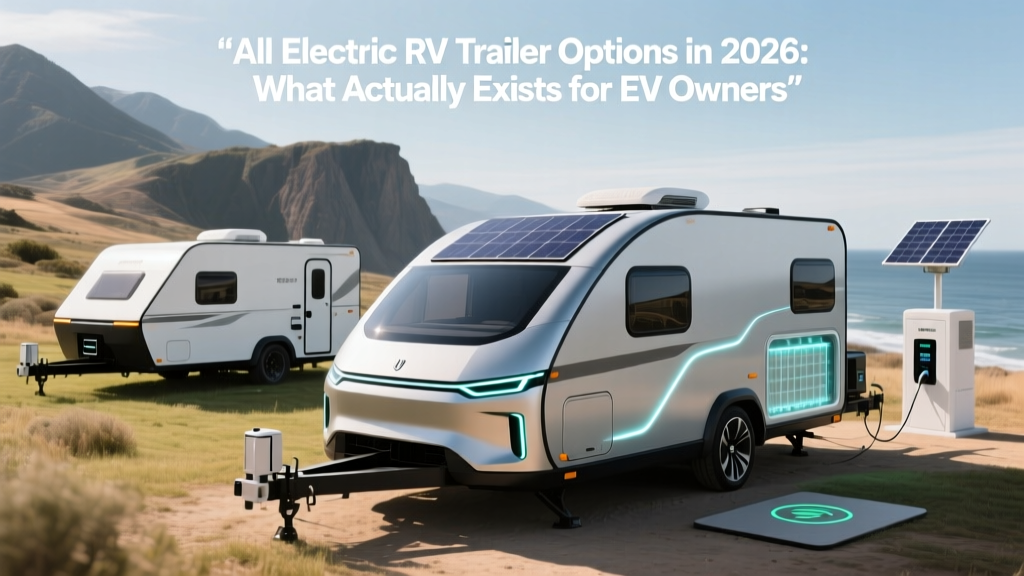
As of early 2026, there is no mass-produced, fully self-propelled all electric RV trailer you can buy from a mainstream dealer. What does exist falls into two categories: (1) electric-assist trailers with an integrated e-axle battery system (like the Lightship L1 and Airstream e-Trailer concept) that extends tow-vehicle range by providing its own propulsion assist, and (2) conventional lightweight travel trailers paired with high-range EVs like the Ford F-150 Lightning, Rivian R1T, or Chevrolet Silverado EV. The Lightship L1 — the closest product to a true "all electric RV trailer" — began limited deliveries in late 2025 at a base MSRP of approximately $125,000, featuring a ~80 kWh battery pack and integrated solar. For most EV owners, towing a conventional lightweight trailer (2,500–4,500 lbs) remains the practical path, but expect 40–60% range reduction versus unloaded driving.
The Electric RV Trailer Landscape: What's Real in 2026
The phrase "all electric RV trailer" gets thrown around in EV forums and YouTube comments, but precision matters here. A trailer, by definition, is towed — it doesn't drive itself. So when buyers search for an all electric RV trailer, they're usually looking for one of three things:
- A trailer with its own electric drivetrain that assists the tow vehicle (e-axle propulsion)
- A fully electric motorhome (self-propelled, no tow vehicle needed)
- A lightweight, aerodynamic conventional trailer optimized for EV towing
Let's address each with current data.
Electric-Assist Trailers: The E-Axle Revolution
The Lightship L1 is the first production trailer with an integrated electric axle system designed specifically for EV towing. Its specs represent the closest thing to an "all electric RV trailer" currently purchasable:
| Spec | Lightship L1 (2026 Production) |
|---|---|
| Trailer Battery Capacity | ~80 kWh (NMC chemistry) |
| Integrated Solar | ~3 kW rooftop array |
| E-Axle Propulsion | Dual motor, assists tow vehicle at highway speeds |
| Range Impact on Tow Vehicle | Claimed near-zero range loss (trailer self-propels on flats) |
| Dry Weight | ~7,500 lbs |
| Sleeping Capacity | 4–6 adults |
| Base MSRP | ~$125,000 |
| Availability | Limited production, late 2025 deliveries began |
The e-axle concept works by using the trailer's battery to power its own wheels during highway cruising, effectively neutralizing the aerodynamic and rolling-resistance drag that normally devastates an EV's range while towing. On descents, the e-axle can regenerate energy back into the trailer battery. This is a genuine engineering breakthrough — but at $125,000, it's firmly in luxury territory.
Airstream's e-Trailer concept (announced with Thor Industries) demonstrated similar e-axle technology but remains in the prototype/pre-production stage as of 2026. No firm MSRP or delivery timeline has been confirmed. We flag it as announced/preliminary — not currently buyable.
Fully Electric Motorhomes (Class B/C RVs)
If you're open to a motorhome instead of a trailer, the Winnebago e-RV (based on the Ford E-Transit chassis) was announced as a concept with a ~68 kWh usable battery and an EPA-estimated range of roughly 108 miles unloaded. That range makes it viable only for campground-to-campground trips with DC fast charging en route. It has not entered full production as of 2026. The Grounded G1 (formerly the G1 electric camper van) targets a ~150-mile range with a ~110 kWh pack, priced around $125,000+, but remains in limited/pre-order status.
Bottom line: no mass-market electric motorhome with 200+ mile range exists today.
Towing With an EV: Range Impact and Real-World Numbers
For the vast majority of EV owners researching "all electric RV trailer," the practical question is: can my EV tow a conventional travel trailer, and how much range will I lose?
The answer depends on trailer weight, aerodynamics, terrain, and temperature. Here's what real-world testing and owner data show:
| Scenario | EV (Ford F-150 Lightning Ext. Range) | Gas (Ford F-150 3.5L EcoBoost) |
|---|---|---|
| EPA Range / Tank Range (unloaded) | ~320 miles (EPA) | ~510 miles (36-gal tank, ~14 mpg combined) |
| Loaded Range (5,000-lb trailer, flat highway, 65 mph) | ~140–170 miles | ~280–330 miles (~7–9 mpg towing) |
| Loaded Range (5,000-lb trailer, mountainous) | ~100–130 miles | ~220–270 miles |
| Loaded Range (cold weather, 30°F, 5,000-lb trailer) | ~90–120 miles | ~250–300 miles |
| Refuel / Recharge Time (10–80% or full tank) | ~41 min (150 kW DC, 10–80%) | ~8 min (gas station) |
| Energy/Fuel Cost per Mile (towing) | ~$0.18–$0.28/mi (public DC) | ~$0.35–$0.48/mi ($3.50/gal gas) |
The range penalty is severe. A 320-mile EPA-rated F-150 Lightning drops to roughly 140–170 miles on a flat highway at 65 mph with a 5,000-pound trailer. In cold weather or mountains, that drops further to under 130 miles. This is the single biggest limitation of EV towing in 2026, and no amount of marketing softens it.
Compare this to a gas F-150 EcoBoost, which loses fuel economy (from ~20 mpg to ~8 mpg) but still delivers 250+ miles of towing range thanks to its 36-gallon tank, and refuels in under 10 minutes at any station.
Cost Breakdown: Electric RV Trailer Ownership vs. Gas Towing
If you already own a capable EV tow vehicle, the economics of towing a trailer shift in interesting ways. Here's a 5-year ownership cost comparison for a weekend-towing household (approximately 3,000 towing miles/year + 9,000 non-towing miles/year):
| Cost Category | EV Towing (F-150 Lightning + Conventional Trailer) | Gas Towing (F-150 EcoBoost + Same Trailer) |
|---|---|---|
| Vehicle MSRP (comparable trim) | ~$72,000 (Lariat Ext. Range) | ~$62,000 (Lariat 3.5L) |
| Federal Tax Credit (§30D, if eligible) | Up to $7,500 (subject to income/MSRP/sourcing rules — see IRS §30D) | $0 |
| Trailer Cost (lightweight 24-ft) | ~$30,000 | ~$30,000 |
| 5-Year Fuel/Energy (towing miles) | ~$2,700 (9,000 towing mi × ~$0.25/mi avg, mix of home/public) | ~$5,850 (9,000 towing mi × ~$0.43/mi at 8 mpg) |
| 5-Year Fuel/Energy (non-towing miles) | ~$2,250 (45,000 mi × ~$0.05/mi home charging) | ~$6,750 (45,000 mi × ~$0.15/mi at 20 mpg) |
| 5-Year Maintenance | ~$1,200 (no oil changes, fewer brake jobs due to regen) | ~$3,500 (oil, transmission, brakes, spark plugs) |
| 5-Year Insurance (est.) | ~$12,000 (EV premiums run 15–25% higher) | ~$9,500 |
| 5-Year Total (vehicle + trailer + energy + maintenance + insurance) | ~$120,150 | ~$117,600 |
The EV towing setup costs roughly $2,500 more over five years in this scenario, primarily due to the higher vehicle MSRP and insurance premiums. However, if you charge primarily at home (Level 2, ~$0.05/mi) and qualify for the full $7,500 federal tax credit, the gap narrows to near parity — and the EV wins on daily-driver comfort, instant torque for merging with a trailer, and zero tailpipe emissions at campgrounds.
The §30D federal tax credit eligibility is not guaranteed. For 2026, the credit requires:
- Vehicle MSRP under $80,000 (vans, SUVs, trucks) or $55,000 (sedans)
- Buyer AGI under $150,000 (single) / $300,000 (joint)
- Battery critical minerals and components must meet phased-in sourcing thresholds
- Credit can be transferred to the dealer at point of sale as a purchase-price reduction
Always verify current eligibility on irs.gov or consult a tax professional before counting the credit in your budget.
Best EVs for Towing a Trailer in 2026
If you're committed to the EV-towing lifestyle, here are the current top contenders ranked by towing capability and range:
| Vehicle | Max Tow Rating | EPA Range (best trim) | Battery (usable kWh) | Peak DC Charge kW | Est. Towing Range (5,000-lb trailer) | Starting MSRP |
|---|---|---|---|---|---|---|
| Chevrolet Silverado EV 4WT | 10,000 lbs | ~440 mi | ~200 kWh (NMC) | ~350 kW | ~190–220 mi | ~$75,000 |
| Ford F-150 Lightning (Ext. Range) | 10,000 lbs | ~320 mi | ~131 kWh (NMC) | ~150 kW | ~140–170 mi | ~$72,000 |
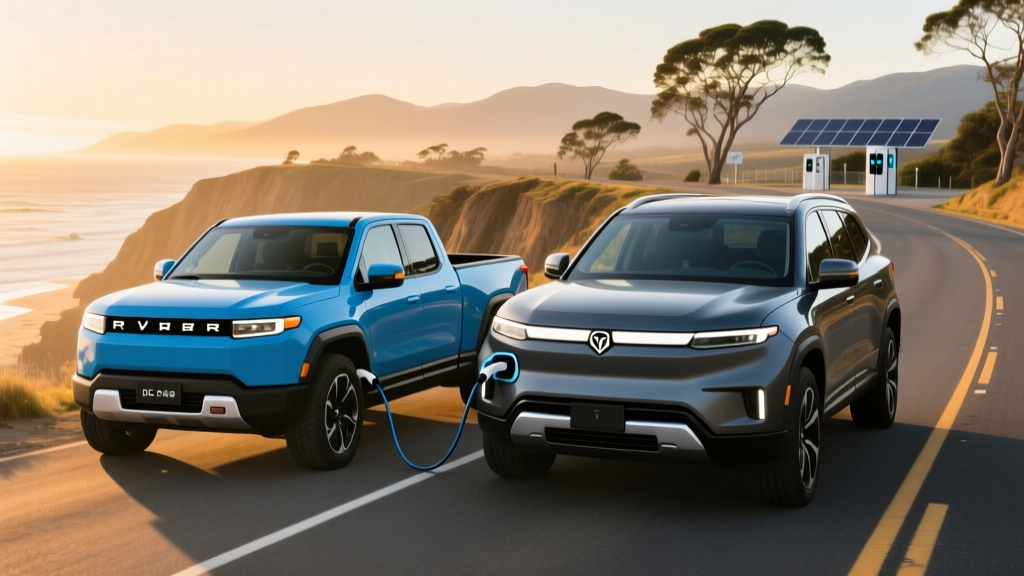
| Rivian R1T (Dual Max) | 11,000 lbs | ~410 mi | ~149 kWh (NMC) | ~220 kW | ~180–210 mi | ~$87,000 |
| Tesla Cybertruck (AWD) | 11,000 lbs | ~340 mi | ~123 kWh (NMC) | ~250 kW | ~150–180 mi | ~$80,000 |
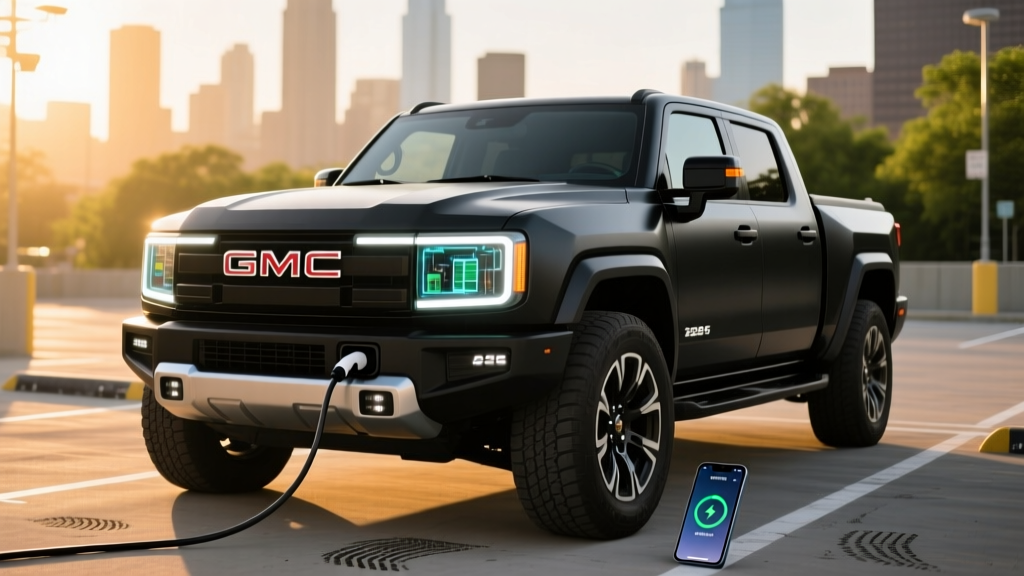
| GMC Hummer EV Pickup | 7,500 lbs | ~329 mi | ~212 kWh (NMC) | ~350 kW | ~150–175 mi | ~$98,000 |
The Chevrolet Silverado EV with its massive 200 kWh pack offers the best raw towing range in 2026, but at a premium price. The Rivian R1T Max Pack balances range, charge speed, and genuine off-road capability for overlanding campers. The F-150 Lightning remains the value leader with Pro Power Onboard — a built-in 9.6 kW generator that can power your entire campsite (lights, fridge, AC, induction cooktop) directly from the truck's battery, eliminating the need for a noisy gas generator.
Common Misconceptions About Electric RV Trailers
| Myth | Fact |
|---|---|
| "You can't tow anything with an EV." | Modern EV trucks tow 7,500–11,000 lbs. The limitation is range, not capability. A 5,000-lb trailer is well within spec for all current EV trucks. |
| "An all electric RV trailer will solve range problems." | Electric-assist trailers (e-axle) help, but they add weight, cost, and complexity. The Lightship L1 costs $125K. For most buyers, route planning with DC fast charging is the practical solution. |
| "Public chargers can't handle trucks with trailers." | Many Electrify America and Tesla Supercharger stations now have pull-through lanes designed for trucks with trailers. But coverage is still limited — plan routes using PlugShare or A Better Routeplanner (ABRP) and filter for pull-through sites. |
| "EV batteries can't handle the load of towing." | Towing draws high current, but modern thermal management systems (liquid cooling) protect the battery. Expect slightly accelerated degradation if you tow frequently at high SoC in extreme heat — but no catastrophic risk. Most packs carry 8-year/100,000-mile warranties with a 70% capacity retention guarantee. |
| "You'll save a fortune on fuel towing with an EV." | Home charging saves money. Public DC fast charging at $0.35–$0.55/kWh can approach or exceed gas costs per mile when towing, because efficiency drops to 1.5–2.5 kWh/mile with a heavy trailer. Savings depend heavily on your charging mix. |
Decision Framework: Should You Go Electric for RV Towing?
Choose an EV tow vehicle + conventional trailer IF:
- You have reliable Level 2 home charging (240V, 40–80A circuit)
- Your typical towing trips are under 150 miles one-way, or you're willing to plan DC fast-charge stops
- You value Pro Power Onboard or V2L capability to run campsite appliances without a generator
- You daily-drive the truck and want EV efficiency for the 90% of miles you're not towing
- You qualify for the §30D tax credit, narrowing the upfront cost gap
Choose a gas/diesel tow vehicle IF:
- Your trips regularly exceed 250+ miles through areas with sparse DC fast-charging infrastructure (rural West, remote national parks)
- You tow in extreme cold (below 20°F) where range loss compounds to 50–60%
- You need maximum payload flexibility and don't want to budget around charging logistics
- You tow heavy (8,000+ lbs) where EV range drops below 100 miles between charges
- Your budget can't absorb the EV price premium and higher insurance costs
Wait for an electric-assist trailer (Lightship L1 or similar) IF:
- You have a $125,000+ trailer budget and want to preserve your EV's full range while towing
- You want integrated solar and off-grid power without a generator
- You're willing to accept first-generation product risk (limited service network, potential software issues)
What a First-Time EV Buyer Should Know Before Towing
If you're new to EVs and considering towing, here are the ownership realities that spec sheets don't highlight:
1. Install a Level 2 home charger before your first trip. Towing depletes the battery fast. You need overnight replenishment at home. A 48A Level 2 charger on a 60A circuit adds roughly 25–35 miles of range per hour — enough to fully recharge overnight. Budget $500–$2,000 for equipment and electrician installation (more if your panel needs a 200A upgrade).
2. Precondition the battery before every DC fast charge. Most EVs automatically precondition when you navigate to a charger, warming the battery to its optimal charging temperature (~85–95°F internally). Skip this step in cold weather and your peak charge rate may drop from 150 kW to under 50 kW, doubling your stop time.
3. The charge curve matters more than peak kW. A truck that peaks at 350 kW but sustains it for only 5 minutes before tapering may charge slower overall than one peaking at 220 kW with a flat curve. Look at 10–80% charge times, not peak kW numbers.
4. Trailer aerodynamics matter more than weight for range. A tall, boxy 4,000-lb trailer can hurt range more than a sleek, low-profile 5,500-lb model. The teardrop and low-profile camper segment is the most EV-friendly category.
5. Plan routes with ABRP or PlugShare — not your vehicle's native nav. Third-party tools like A Better Routeplanner let you input trailer weight, drag coefficient, and terrain to estimate real towing range far more accurately than built-in route planners.
Frequently Asked Questions
Can I tow a 5,000-pound travel trailer with a Tesla Model Y or other EV SUV?
The Tesla Model Y has a 3,500-pound max tow rating in the U.S. — insufficient for a 5,000-pound trailer. Most EV SUVs (Hyundai Ioniq 5, Kia EV6, Ford Mustang Mach-E) are rated between 1,600 and 3,500 pounds. For 5,000+ pound trailers, you need an EV truck: F-150 Lightning, Rivian R1T, Silverado EV, or Cybertruck.
Will towing void my EV battery warranty?
No. Towing within the manufacturer's rated capacity is a normal use case covered under the standard battery warranty (typically 8 years/100,000 miles with a 70% capacity retention floor). However, consistently towing at max capacity in extreme heat may accelerate degradation — you just won't be denied a warranty claim for it.
Is it safe to charge an EV at a Supercharger or DC fast station with a trailer attached?
Yes, but logistics vary. Standard Supercharger stalls require you to unhitch or occupy two spots (not recommended). Tesla and Electrify America have been adding pull-through stalls at high-traffic locations. Always check PlugShare comments for trailer-friendly station layouts before relying on a stop.
What's the cheapest way to camp with an EV in 2026?
A lightweight teardrop or pop-up camper (1,200–2,500 lbs) paired with an EV SUV like the Rivian R1S or Tesla Model X (both rated for 5,000+ lbs) gives you minimal range penalty (~20–30% loss) and access to campground Level 2 charging. Total setup: vehicle (~$70K–$85K) + teardrop (~$15K–$25K).
Are there any federal tax credits for electric RV trailers?
No. The §30D federal tax credit applies to new clean vehicles (cars, trucks, SUVs, vans) — not trailers. The Lightship L1, despite having its own e-axle and battery, is classified as a trailer and does not qualify. However, your EV tow vehicle may qualify for up to $7,500 if it meets all IRS requirements including MSRP caps, buyer income limits, and battery sourcing rules.
How does cold weather affect EV towing range?
Cold weather (below 35°F) reduces battery efficiency by 15–30% on its own, and combined with towing drag, expect total range to drop to 30–40% of your EPA sticker. A 320-mile EPA truck towing in 25°F weather may deliver only 90–120 real miles. Preconditioning helps, but the physics of cold electrolyte and cabin/trailer heating demands are unavoidable.