Quick Answer: Is the All Electric Mustang Worth It?
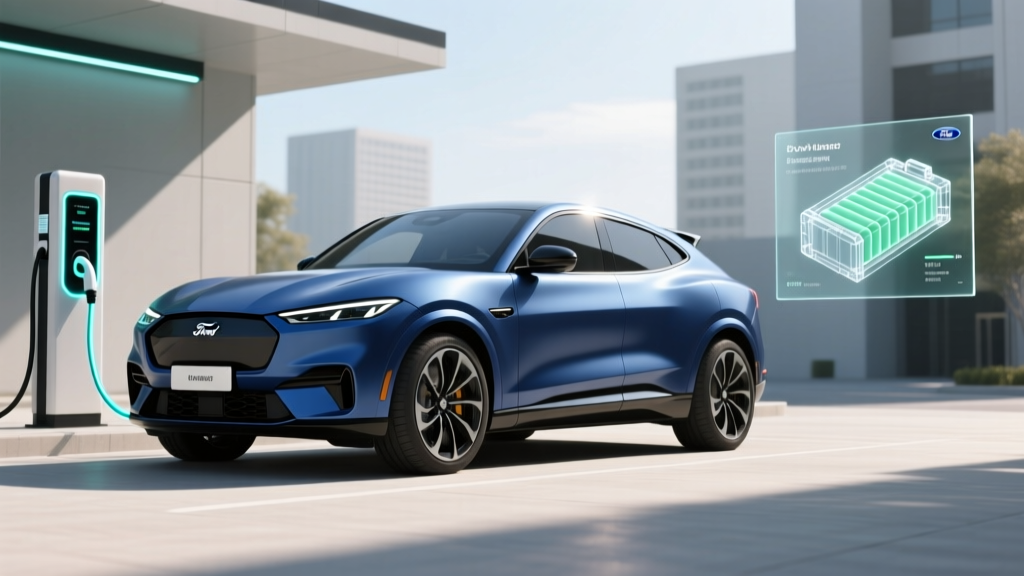
The all electric Mustang — officially the Ford Mustang Mach-E — is a compelling EV crossover starting around $39,995 for the 2026 Select trim. With up to 320 miles of EPA-estimated range (Extended RWD), DC fast charging up to 150 kW (10–80% in ~35 minutes), and eligibility for the full $7,500 federal tax credit under current IRS §30D rules, the Mach-E can cost as little as ~$32,495 after incentives. Compared to a gas Mustang EcoBoost, the Mach-E costs roughly $1,200–$1,800 less per year to fuel and maintain, though insurance runs 10–15% higher. The biggest ownership variable: reliable home Level 2 charging access.
Real-World Range vs. EPA Estimates
Ford publishes EPA range figures that look strong on paper, but real-world driving introduces variables every buyer should understand before signing.
| 2026 Mach-E Trim | Battery (kWh usable) | Drivetrain | EPA Range | Real-World Expectation |
|---|---|---|---|---|
| Select SR RWD | 70 kWh (LFP) | RWD | 250 mi | ~210–230 mi |
| Select ER RWD | 91 kWh (NMC) | RWD | 320 mi | ~265–290 mi |
| Premium ER AWD | 91 kWh (NMC) | AWD | 290 mi | ~240–265 mi |
| GT ER AWD | 91 kWh (NMC) | AWD | 280 mi | ~230–255 mi |
What "real-world" means: Highway driving at 75+ mph reduces range 10–15% below EPA. Cold weather (below 30°F) can cut range 20–30% due to battery heating demands and cabin climate use. The Mach-E's heat pump (standard on ER trims) mitigates some of this loss, but plan for ~200 miles of usable range in winter if you're on the SR battery.
The Extended Range battery uses NMC (nickel manganese cobalt) chemistry, which offers higher energy density but degrades slightly faster over 10+ years compared to the LFP (lithium iron phosphate) cells in the Standard Range model. LFP batteries tolerate daily 100% charging better, making them practical for commuters who need every mile.
Charging Speed and Infrastructure
The Mach-E charges at up to 150 kW on DC fast chargers via its native CCS1 port (Ford began adding NACS ports for Supercharger access on 2025+ models, and the 2026 lineup includes a NACS option or adapter depending on trim). Here's what charging actually looks like:
| Level | Power | Miles Added/Hour | Typical Use Case |
|---|---|---|---|
| Level 1 (120V) | 1.4 kW | ~3–4 mi/hr | Overnight top-off, emergencies |
| Level 2 (240V, 48A) | 11.5 kW | ~30–33 mi/hr | Home daily charging (~10 hrs for full ER) |
| DC Fast Charge | 150 kW peak | ~150 mi in 20 min | Road trips; 10–80% in ~35 min |
Charging curve reality: The Mach-E peaks at 150 kW only between roughly 10–40% state of charge. Above 60%, the rate tapers significantly — from ~150 kW down to ~50 kW by 80%, and below 20 kW above 90%. This is why manufacturers quote 10–80% times; the final 20% can take as long as the first 70%.
For home charging, a Level 2 installation typically costs $800–$2,000 total (charger + electrician + permit), assuming your electrical panel has capacity. A 200-amp panel upgrade adds $1,500–$3,000. According to fueleconomy.gov, charging at home at $0.16/kWh (national average) costs roughly $0.045 per mile in the Mach-E ER — compared to $0.14–$0.17 per mile in a gas Mustang EcoBoost at 26 MPG combined and $3.50/gallon.
All Electric Mustang vs. Gas Mustang: Cost Comparison
Buyers cross-shopping the Mach-E against the traditional gas Mustang EcoBoost should understand the full financial picture beyond sticker price.
| Factor | 2026 Mach-E Select ER RWD | 2026 Mustang EcoBoost Coupe |
|---|---|---|
| Base MSRP | $42,995 | $32,515 |
| Fed. Tax Credit (§30D) | Up to $7,500* | $0 |
| Effective Price | ~$35,495 | $32,515 |
| Annual Fuel/Energy (15k mi) | ~$680 (home charging) | ~$2,020 (gas) |
| Annual Maintenance | ~$300 | ~$650 |
| Annual Insurance (avg) | ~$2,100 | ~$1,850 |
| 5-Year Total Cost** | ~$50,795 | ~$55,265 |
*§30D eligibility requires buyer income ≤$150k single/$300k joint, vehicle MSRP ≤$80k (SUVs/crossovers), and battery critical-mineral/sourcing compliance per current IRS rules. Point-of-sale transfer available at participating dealers. Always verify with a tax professional.
**5-year cost includes purchase (after credit), fuel/energy, maintenance, insurance. Excludes depreciation, registration, financing.
The Mach-E crosses the cost-equivalence line around year 3–4 for most owners who charge primarily at home. Public DC fast charging at $0.35–$0.50/kWh narrows the savings considerably — frequent road-trippers relying on Electrify America or EVgo will see annual fuel costs closer to $1,200–$1,500.
Performance and Driving Dynamics
The all electric Mustang delivers acceleration that embarrasses most gas Mustangs off the line, even if it can't match a GT's track manners.
| Trim | Horsepower | Torque (lb-ft) | 0–60 mph |
|---|---|---|---|
| Select SR RWD | 266 hp | 317 | 6.1 sec |
| Premium ER AWD | 346 hp | 428 | 5.1 sec |
| GT ER AWD | 480 hp | 634 | 3.5 sec |
The GT's 3.5-second 0–60 rivals a Mustang GT with a V8, and electric torque delivery means instant thrust without waiting for downshifts. Regenerative braking with one-pedal driving reduces brake wear substantially — many Mach-E owners report 60,000+ miles on original brake pads.
The Mach-E carries its battery weight low, giving it competent handling, but at ~4,800 lbs (GT), it's roughly 1,000 lbs heavier than a gas Mustang EcoBoost. That mass shows on tight canyon roads and in tire wear — expect to replace tires every 30,000–40,000 miles, sooner than a gas equivalent.
Ownership Practicalities: What First-Time EV Buyers Need to Know
| Myth | Fact |
|---|---|
| "The battery will need replacing in 5 years" | Ford warranties the battery for 8 years/100,000 miles with a 70% capacity retention threshold. Real-world data from Recurrent shows most Mach-E batteries lose only 5–8% capacity over the first 3 years. |
| "I can't take road trips" | The ER model's 320-mile EPA range plus 150 kW DC charging means a 600-mile trip requires roughly two 30-minute stops — manageable with planning via the FordPass app or PlugShare. |
| "EVs are worse in winter" | Range drops 20–30% in sub-freezing temps, but the Mach-E's heat pump and battery preconditioning (activate via app before departure) recover much of this. Preconditioning while plugged in uses grid power, not battery. |
| "Charging takes too long" | Home Level 2 charging adds ~30 miles per hour — plug in when you arrive home, wake up full. You spend zero minutes "fueling" during a typical week. |
Battery Warranty and Longevity
Ford covers the high-voltage battery for 8 years or 100,000 miles (whichever comes first) against defects and capacity loss below 70%. The powertrain (motors, reduction gear) carries the same coverage. A full out-of-warranty battery replacement currently runs $15,000–$22,000 depending on capacity, though prices continue to decline as cell costs fall.
Insurance Considerations
EV insurance premiums run 10–15% higher than gas equivalents, driven by higher repair costs (specialized body shops, battery safety protocols) and higher initial vehicle values. Shop quotes from EV-friendly insurers like GEICO, Progressive, and Liberty Mutual — some offer green-vehicle discounts that partially offset the premium.
Decision Framework: Is the All Electric Mustang Right for You?
Choose the Mach-E if:
- You have (or can install) Level 2 home charging — this is the single biggest factor in EV satisfaction
- Your daily commute is under 100 miles round-trip (covers ~90% of American drivers)
- You qualify for the §30D tax credit (check income caps and MSRP limits)
- You want Mustang-brand performance with crossover practicality (29.7 cu-ft cargo behind rear seats)
- You drive 12,000+ miles/year, making fuel savings meaningful
Look elsewhere if:
- You live in an apartment without charging access and your area has sparse public DC infrastructure
- You regularly tow more than 3,500 lbs (Mach-E max towing: 3,500 lbs with tow package)
- You take frequent 500+ mile road trips through charging-desert regions (rural Great Plains, parts of the Southwest)
- You need a true sports car for track days — the Mach-E is a fast crossover, not a corner-carver
- Your budget is firmly under $30,000 — consider a used Mach-E (eligible for the $4,000 used-EV credit) or a PHEV like the Ford Escape PHEV
Frequently Asked Questions
Does the all electric Mustang qualify for the $7,500 federal tax credit?
The 2026 Mach-E currently qualifies for the full $7,500 under §30D, as it meets MSRP caps (under $80,000 for SUVs/crossovers), is assembled in North America, and meets battery sourcing requirements. However, buyer income must not exceed $150,000 (single) or $300,000 (joint), and critical-mineral sourcing rules tighten periodically. Verify eligibility on irs.gov before purchase, and ask your dealer about point-of-sale transfer to apply the credit as a down-payment reduction.
Can I charge the Mach-E at Tesla Superchargers?
Ford began equipping 2025+ Mach-E models with the NACS charge port, granting native access to Tesla's Supercharger network (now 25,000+ stalls in North America). If your 2026 model has a CCS1 port, Ford offers an approved adapter. Always confirm your specific trim's port configuration with the dealer — this changed mid-cycle.
How much does it cost to charge a Mach-E at home per month?
At the national average of $0.16/kWh and 1,250 miles/month, expect to spend roughly $55–$65/month on electricity for a Mach-E ER (consuming ~34 kWh/100 mi). This replaces $165–$190/month in gasoline for a comparable Mustang EcoBoost. Install a smart Level 2 charger (like the Emporia Vue or ChargePoint Home Flex) and schedule charging during off-peak utility hours to save an additional 20–40%.
What's the Mach-E's safety rating?
The Mach-E earned a 5-star overall safety rating from NHTSA and Top Safety Pick status from IIHS. Standard driver-assist features include Ford Co-Pilot360 2.0 with automatic emergency braking, lane-keeping, and adaptive cruise. BlueCruise (available on Premium and GT trims) is a Level 2 hands-free system for divided highways — you must remain attentive and it is not autonomous driving.
How does the Mach-E compare to a Tesla Model Y?
The Model Y Long Range AWD offers slightly more range (330 mi EPA) and faster DC charging (250 kW peak, 10–80% in ~22 min) at a similar price point (~$44,990). The Mach-E counters with a more conventional interior layout, Apple CarPlay/Android Auto (Tesla doesn't support either), and Ford dealer service accessibility. Both qualify for the §30D credit. If Supercharger reliability is your top priority, the Model Y's native network advantage is real — though Ford's NACS integration is closing that gap.