Can You Buy an All Electric Motorhome in 2026?
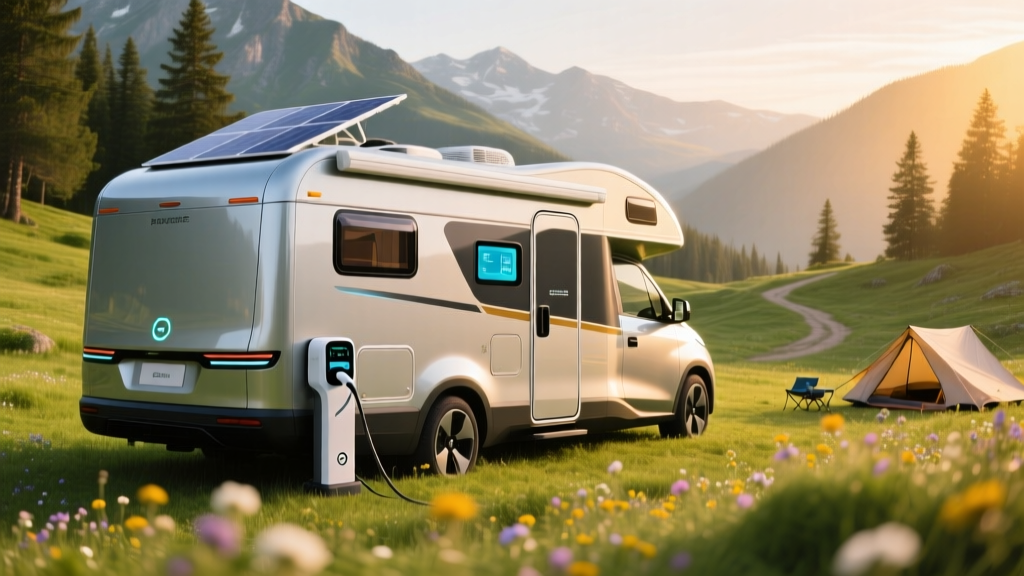
Yes, but options are limited and expensive. The current crop of all electric motorhomes — from brands like Winnebago (e-RV), Thor (eDelano), and Lightship (L1) — offer real-world ranges of 60 to 200 miles on batteries ranging from 80 kWh to 150+ kWh. Base prices start around $90,000 and climb past $200,000. These rigs are best suited for regional travel with planned overnight stops, not cross-country boondocking. If you need 500-mile days in remote areas, a diesel pusher or gas Class C remains the practical choice for now.
The Current All Electric Motorhome Landscape
The electric RV market in 2026 is where electric cars were around 2012: a handful of serious options, lots of concept-stage promises, and real trade-offs that buyers need to understand before writing a check. Unlike passenger EVs — where the EPA-rated range often exceeds 300 miles and DC fast charging can add 200 miles in 20 minutes — electric motorhomes fight a physics battle against weight, aerodynamics, and auxiliary power demands.
A typical Class C motorhome weighs 12,000–14,000 lbs loaded. Push that mass down the highway at 65 mph and energy consumption can hit 2.5–4.0 kWh per mile — roughly 8 to 13 times what a Tesla Model Y uses. That's why battery sizes in the 100–150 kWh range yield only 60–150 miles of real-world highway range.
| Model | Type | Battery (kWh) | EPA Est. Range | Real-World Range | Peak DC Charge | Base MSRP |
|---|---|---|---|---|---|---|
| Winnebago e-RV | Class C (Transit chassis) | ~86 kWh (NMC) | ~108 mi | 70–90 mi (highway) | ~115 kW | ~$120,000 |
| Thor eDelano | Class C | ~80 kWh (NMC) | ~125 mi | 80–110 mi (highway) | ~100 kW | ~$95,000 |
| Lightship L1 | Aero travel trailer (towable) | ~80 kWh (LFP) | ~300 mi (assisted) | 200–250 mi (assisted) | N/A (regens) | ~$125,000 |
| Grounded G1 (announced) | Class B camper van | ~110 kWh (est.) | TBD | 150–180 mi (est.) | ~150 kW (est.) | ~$145,000 (est.) |
Key distinction: The Lightship L1 is a towable travel trailer with an integrated battery and dual-motor axle that assists the tow vehicle — it preserves the tow vehicle's range rather than being a self-propelled motorhome. It's the most range-efficient option but requires a capable EV tow vehicle like a Ford F-150 Lightning or Rivian R1T.
Electric Motorhome vs. Gas/Diesel: Cost & Capability Compared
Let's put an all electric motorhome head-to-head with a conventional gas Class C on a realistic 5-year ownership model. We'll compare the Thor eDelano (~$95,000) against a similarly equipped Thor Four Winds gas Class C (~$85,000).
| Cost Category | Electric (Thor eDelano) | Gas (Thor Four Winds) |
|---|---|---|
| Purchase Price | $95,000 | $85,000 |
| Federal Tax Credit (§30D) | Up to $7,500 (if eligible) | $0 |
| Fuel/Energy (5 years) | $4,500 (home L2 @ $0.14/kWh) | $17,500 (gas @ $3.50/gal, 8 MPG) |
| Maintenance (5 years) | $1,500 | $4,000 |
| Insurance (5 years) | $9,000 | $7,500 |
| Estimated Depreciation | $35,000 | $25,000 |
| 5-Year Total | ~$132,500 | ~$139,000 |
The electric motorhome can break even or save modestly over five years, but only if you charge primarily at home on residential electricity rates. If you rely heavily on public DC fast charging at $0.40–$0.60/kWh, your energy costs nearly triple, erasing the savings. Insurance premiums run 15–25% higher for electric RVs due to higher replacement costs and specialized repair requirements.
Depreciation is the wildcard. Early-adopter electric RVs face steeper depreciation curves as battery technology improves and newer models with better range enter the market. A gas Class C from an established brand like Thor or Winnebago has decades of resale-value data behind it.
Real-World Charging: What You Actually Need to Know
Charging an electric motorhome is the single biggest ownership reality check. Here's the breakdown by charging level:
| Level | Power (kW) | Miles Added/Hour | Full Charge Time | Practical Use |
|---|---|---|---|---|
| Level 1 (120V household) | ~1.4 kW | ~0.5 mi/hr | ~70 hours | Emergency trickle only |
| Level 2 (240V, 48A home) | ~11.5 kW | ~4 mi/hr | ~9 hours | Overnight at home or campground |
| Level 2 (240V, campground 30A) | ~7.2 kW | ~2.5 mi/hr | ~14 hours | Overnight at RV parks with EV hookups |
| DC Fast (100–150 kW peak) | ~100 kW avg | ~35 mi/15 min | 10–80% in ~50 min | Road-trip stops; limited availability for large vehicles |
Critical real-world note: Most DC fast charging stations are designed for passenger cars. Pulling a 25-foot, 14,000-lb motorhome into a tight Electrify America or Tesla Supercharger stall is often physically impossible — the pull-through space isn't there, and the cable may not reach your charge port. Some RV parks are beginning to install DC fast chargers with pull-through lanes, but as of 2026, these are rare.
Your primary charging strategy with an electric motorhome will be overnight Level 2 charging — at home, at campgrounds with 240V RV pedestals, or at destinations where you're parked for 8+ hours. This fundamentally shapes how you travel: plan 100–150 mile hops between overnight stops, not 400-mile driving days.
Home Charging Setup for an Electric Motorhome
Most electric motorhomes benefit from a dedicated 240V/60A circuit with a hardwired Level 2 EVSE delivering up to 14 kW (48A continuous). Expect to pay:
| Item | Cost Range |
|---|---|
| Level 2 EVSE (48A, NEMA 14-50 or hardwired) | $500–$1,200 |
| Electrical panel upgrade (if needed, 200A service) | $1,500–$3,500 |
| Wiring & conduit (50–100 ft run) | $800–$2,000 |
| Permit & inspection | $100–$300 |
| Total (typical) | $1,500–$4,000 |
Many motorhome owners park in a garage or driveway, so plan your charger location for where the RV actually sits — not where your sedan parks. You may need a longer cable (25 ft recommended) or a second EVSE installed near your RV parking spot. Always consult a licensed electrician for final specifications; your panel capacity and local code requirements will dictate what's possible.
Battery Chemistry, Degradation & Warranty
Electric motorhomes use large, expensive battery packs — and replacing one could cost $20,000–$40,000. Understanding what's under the floor matters.
| Attribute | LFP (Lithium Iron Phosphate) | NMC (Nickel Manganese Cobalt) |
|---|---|---|
| Energy Density | Lower (~150 Wh/kg) | Higher (~250 Wh/kg) |
| Cycle Life | 3,000–5,000 cycles | 1,500–2,500 cycles |
| Cold-Weather Performance | Weaker (more range loss below 32°F) | Better (moderate cold tolerance) |
| Thermal Stability | Excellent (lower fire risk) | Good (requires robust BMS) |
| Cost | Lower per kWh | Higher per kWh |
| Typical Degradation (8 yr) | ~10–15% | ~15–20% |
For motorhomes that may sit unused for weeks between trips, LFP chemistry offers a meaningful advantage: it tolerates sitting at 100% state of charge better than NMC, and its longer cycle life means the pack should outlast the vehicle. Lightship's L1 trailer uses LFP for this reason. However, NMC's higher energy density means more range in a given physical space — important when packaging batteries into a motorhome chassis.
Warranties on electric motorhome batteries are typically 8 years / 100,000 miles with a capacity retention threshold of 70% (consistent with the IRS §30D battery-capacity standards used for credit eligibility). Read the fine print: some manufacturers exclude "lifestyle use" patterns like frequent deep discharges below 10% SoC.
Common Misconceptions About Electric Motorhomes
| Myth | Fact |
|---|---|
| "I can drive 300 miles like my gas RV." | Current self-propelled electric motorhomes deliver 70–150 real-world highway miles. Plan shorter hops. |
| "I'll save a fortune on fuel." | At home charging rates (~$0.14/kWh), yes — roughly $0.35/mi vs. $0.44/mi for gas at 8 MPG. But public DC fast charging at $0.50/kWh pushes costs to $1.25/mi. |
| "I can use any DC fast charger on the road." | Most fast-charger stalls lack pull-through space for a 25-foot motorhome. You need RV-friendly charging locations, which are still scarce. |
| "The battery will need replacement in 5 years." | Modern EV battery packs are warrantied for 8 years/100K miles and typically retain 80–90% capacity at that point. RV use (low annual mileage) means the pack should last 15+ years. |
| "Solar panels on the roof will keep it charged." | Typical RV roof solar (400–800W) generates 2–4 kWh/day in good sun — enough to run house systems (lights, fridge) but only 2–4 miles of driving range. |
Federal Tax Credit & Incentive Eligibility
Electric motorhomes may qualify for the federal §30D clean vehicle tax credit of up to $7,500, but eligibility depends on several factors that change annually. For 2026:
- Vehicle MSRP cap: Vans and "other vehicles" (which includes motorhomes) — $80,000 MSRP cap. Many electric motorhomes exceed this, disqualifying them.
- Buyer income cap: AGI must not exceed $300,000 (joint), $225,000 (head of household), or $150,000 (single).
- Battery sourcing: Critical minerals and battery components must meet phased-in domestic/free-trade sourcing thresholds. Verify with the manufacturer.
- Point-of-sale transfer: Eligible buyers can transfer the credit to the dealer for an immediate price reduction at purchase.
The $80,000 MSRP cap is the biggest hurdle. A Thor eDelano at ~$95,000 base likely does not qualify unless a specific trim falls under the cap. Always confirm with the dealer and consult a tax professional before counting on the credit. Some states offer additional incentives — check your state energy office for details.
Decision Framework: Is an All Electric Motorhome Right for You?
Choose an All Electric Motorhome If:
- Your typical trips are 60–120 miles to a campground where you stay 2+ nights
- You have reliable home Level 2 charging where the RV is parked
- You travel primarily in moderate climates (avoiding extreme cold below 20°F regularly)
- You value quiet operation, zero tailpipe emissions at camp, and the ability to run house systems off the traction battery
- You're comfortable planning routes around overnight charging rather than fuel stops
- You accept higher upfront cost and steeper depreciation as early-adopter trade-offs
Stick With Gas/Diesel (or Wait) If:
- You regularly drive 300+ miles in a day to reach remote destinations
- You boondock off-grid for days without electrical hookups
- You tow a vehicle behind your motorhome (adding weight and range loss)
- You lack home charging access or your RV is stored at a lot without 240V power
- You need proven resale value and a nationwide service network
- Your budget is under $80,000
Frequently Asked Questions
Can I tow a car behind an electric motorhome?
Technically yes, but towing a 3,000–4,000 lb dinghy vehicle will cut your already-limited range by 25–40%. A gas motorhome that gets 8 MPG while towing drops to 6 MPG — annoying but manageable. An electric motorhome dropping from 100 miles to 60 miles of range becomes impractical for most trips.
How long does it take to charge an electric motorhome at a campground?
On a standard 30A/240V RV pedestal (~7.2 kW), expect to add roughly 25–30 miles of range overnight (8 hours). On a dedicated 50A/240V connection (~11.5 kW), you can add 40–50 miles overnight. This is sufficient to "refill" after a day trip from your campsite, but not enough for rapid travel-day turnover.
Do electric motorhomes have generators?
No. The large traction battery serves as the energy source for both driving and house systems. Many electric motorhomes include V2L (vehicle-to-load) capability, letting you power external devices or even a home during outages — effectively replacing the generator function. However, running the A/C, microwave, and induction cooktop simultaneously will draw from your driving range, so monitor your state of charge.
What happens to range in cold weather?
Expect 25–40% range loss at temperatures below 32°F, depending on whether the motorhome has a heat pump for cabin heating. NMC batteries handle cold better than LFP, but both suffer. If you camp primarily in southern states or during summer, this is less of a concern. For winter camping in the Rockies or Northeast, plan for significantly shorter range.
Are there electric Class A motorhomes?
As of early 2026, no production electric Class A motorhome is available for retail purchase. Several concepts have been shown, but the size, weight, and battery cost of a 35–45 foot Class A make it economically unfeasible with current battery energy densities. Solid-state batteries (expected late this decade) could change this equation by offering 2–3x the energy density of current NMC cells.