Quick Answer: Is an All Electric Lexus Worth It in 2026?
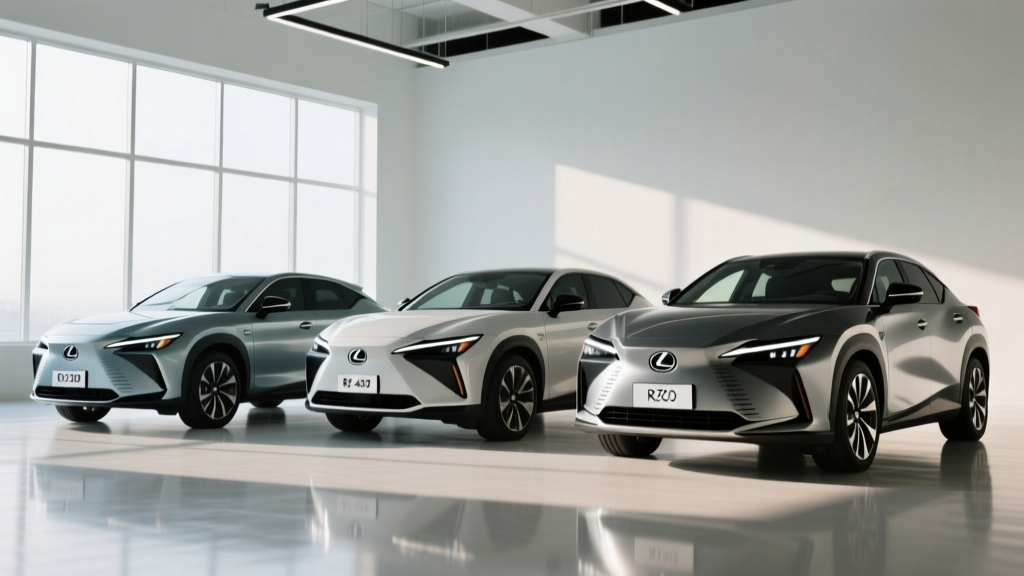
The 2026 Lexus RZ lineup — the RZ 300e (FWD) and RZ 450e (AWD) — offers EPA-estimated range between 220 and 271 miles, starting at roughly $44,000 before incentives. For buyers with Level 2 home charging and daily commutes under 150 miles, the RZ delivers genuine Lexus refinement with significantly lower fuel and maintenance costs than a gas Lexus NX. However, the RZ's range is modest for the class, DC fast-charging peaks at a conservative 150 kW, and the federal §30D tax credit eligibility depends on your income, the vehicle's MSRP, and battery-sourcing rules that shift yearly. If you regularly drive over 300 miles between stops or live in an apartment without charging access, a Lexus NX Hybrid may serve you better.
The 2026 All Electric Lexus Lineup: RZ 300e and RZ 450e at a Glance
Lexus entered the battery-electric market with the RZ, a compact luxury crossover built on Toyota's dedicated e-TNGA BEV platform. For 2026, the lineup consists of two models with distinct personalities. The RZ 300e runs a single front motor and prioritizes efficiency, while the RZ 450e adds a rear motor for all-wheel drive and more power. Both share a 72.8 kWh lithium-ion battery pack (approximately 64.8 kWh usable) using NMC (nickel-manganese-cobalt) chemistry, which trades some cycle longevity for higher energy density compared to LFP packs.
| Specification | 2026 RZ 300e (FWD) | 2026 RZ 450e (AWD) |
|---|---|---|
| EPA Range (est.) | 271 miles | 220 miles (21" wheels) / 237 miles (18" wheels) |
| Battery (Usable) | ~64.8 kWh (NMC) | ~64.8 kWh (NMC) |
| Horsepower | 201 hp | 308 hp |
| 0–60 mph | ~7.4 sec | ~5.0 sec |
| Max DC Fast Charge | 150 kW | 150 kW |
| 10–80% DCFC Time | ~30 min | ~30 min |
| Level 2 Charging (240V) | ~9.5 hours (0–100%) | ~9.5 hours (0–100%) |
| Combined MPGe | ~118 MPGe | ~102 MPGe |
| Starting MSRP | ~$44,000 | ~$52,000 |
| Battery/Powertrain Warranty | 8 yr / 100,000 mi | 8 yr / 100,000 mi |
Real-World Range Reality Check
The EPA sticker says 271 miles for the RZ 300e, but plan for 220–245 miles in mixed highway driving at 70–75 mph. In cold weather (below 30°F), expect a further 15–25% reduction, putting the RZ 300e closer to 180–200 miles on a winter road trip. The RZ 450e with 21-inch wheels and an EPA rating of 220 miles may deliver as little as 170–185 miles in freezing highway conditions. This is adequate for daily commuting and regional travel, but it trails competitors like the Genesis GV60 (248–282 mi EPA) and BMW iX (324 mi EPA).
All Electric Lexus vs. Gas Lexus NX: Cost & Efficiency Compared
Many RZ shoppers cross-shop the Lexus NX — particularly the NX 350 (gas) and NX 350h (hybrid). Here's how the numbers stack up over five years and 75,000 miles of ownership.
| Cost Factor | RZ 450e (AWD) | NX 350 (Gas AWD) | NX 350h (Hybrid AWD) |
|---|---|---|---|
| Base MSRP | ~$52,000 | ~$41,000 | ~$44,000 |
| Fuel / Energy (5 yr / 75k mi) | ~$3,800 (electricity) | ~$10,500 (gas) | ~$6,200 (gas) |
| Maintenance (5 yr) | ~$1,200 | ~$3,500 | ~$3,000 |
| Estimated Insurance (5 yr) | ~$11,500 | ~$9,800 | ~$10,200 |
| Federal Tax Credit (§30D) | Up to $7,500* | $0 | $0 |
| Est. 5-Year Total Cost | ~$61,000 | ~$64,800 | ~$63,400 |
*Federal §30D credit eligibility depends on buyer income caps ($150k single / $300k joint), vehicle MSRP caps ($80k for SUVs), and battery critical-mineral and component sourcing requirements that change annually. Verify current eligibility at IRS.gov and consult a tax professional. The credit may be transferred to the dealer as a point-of-sale discount.
The RZ's higher sticker price is offset by dramatically lower energy and maintenance costs. Electricity at the national average of ~$0.16/kWh costs roughly $0.05 per mile in the RZ 300e, compared to $0.14 per mile for gas in the NX 350 at $3.50/gallon. Maintenance savings come from eliminating oil changes, spark plugs, and transmission fluid — EVs primarily need tire rotations, cabin air filter replacements, and brake inspections (regenerative braking drastically reduces pad wear).
Charging the RZ: Speeds, Infrastructure, and Home Setup
Lexus equips the RZ with a CCS1 connector for DC fast charging (adapters are widely available for Tesla Supercharger NACS stations as the network transition accelerates). The 150 kW peak DC rate is the RZ's most debated spec — it's conservative compared to the Hyundai Ioniq 5's 240 kW or the Porsche Macan EV's 270 kW. In practice, the RZ sustains roughly 100–130 kW through the bulk of the 10–80% window before tapering, yielding approximately 30-minute charging sessions.
| Charging Level | Power (kW) | Miles Added Per Hour | Use Case |
|---|---|---|---|
| Level 1 (120V household) | ~1.4 kW | ~4–5 miles | Emergency / overnight trickle |
| Level 2 (240V home) | ~7.2 kW | ~22–25 miles | Daily home charging |
| DC Fast Charge | Up to 150 kW | ~150+ miles in 15 min | Road trips, quick top-ups |
Home charging installation is where most first-time EV buyers encounter surprises. A Level 2 home charger (240V, 32–48 amp) requires a dedicated circuit. If your electrical panel has capacity, expect to pay $600–$1,500 for electrician labor plus $400–$700 for a quality Level 2 unit (ChargePoint Home Flex, Emporia Level 2, or similar). If your panel needs upgrading from 100A to 200A service, add $1,500–$3,500. Most RZ owners charge overnight at home, waking to a full battery every morning — effectively eliminating "range anxiety" for daily driving.
Preconditioning matters: use the Lexus app to warm the battery while plugged in before a DC fast-charge stop. A cold battery charges significantly slower, and preconditioning can shave 5–10 minutes off your 10–80% session.
Federal Tax Credits, Incentives, and the Fine Print
The §30D federal tax credit can reduce the RZ's effective price by up to $7,500, but eligibility is not guaranteed. Current requirements include:
- Buyer income cap: Modified AGI must not exceed $150,000 (single), $225,000 (head of household), or $300,000 (joint filers)
- MSRP cap: Vehicle MSRP must not exceed $80,000 for SUVs/trucks/vans (the RZ qualifies)
- Battery sourcing: Critical minerals and battery components must meet escalating domestic/free-trade-partner percentages — these thresholds tighten each year
- Point-of-sale transfer: Eligible buyers can transfer the credit to the dealer for an immediate price reduction at purchase
State and utility incentives can stack on top. Check fueleconomy.gov and your local utility for rebates on home charger installation, off-peak electricity rates, and state-specific EV credits. These vary widely — California's CVRP, Colorado's state credit, and various utility rebates can collectively add $2,000–$5,000 in additional savings.
Common Misconceptions About the All Electric Lexus RZ
| Myth | Fact |
|---|---|
| "The RZ battery will need expensive replacement in a few years." | Lexus warrants the battery for 8 years/100,000 miles against degradation below 70% capacity. NMC batteries in modern thermal-managed systems typically lose 10–15% capacity over 100,000 miles based on industry data. |
| "I can't take road trips — the range is too short." | With DC fast charging adding ~150 miles in 15 minutes, road trips are practical with planned stops. Apps like A Better Routeplanner integrate charging into navigation. The limitation is trip time, not feasibility. |
| "EVs are worse in cold weather." | Range drops 15–25% in freezing temps — real, but manageable with preconditioning and seat/steering wheel heaters (which use far less energy than cabin air heating). The RZ includes a heat pump to improve winter efficiency. |
| "Charging is more expensive than gas." | At national average electricity rates, the RZ costs roughly $0.05/mile to fuel vs. $0.14/mile for a comparable gas SUV. Public DC fast charging is more expensive (~$0.30–$0.48/kWh) but still typically cheaper per mile than premium gasoline. |
| "The RZ is self-driving with its safety tech." | Lexus Safety System+ 3.0 is an SAE Level 2 driver-assistance system. It provides adaptive cruise, lane centering, and emergency braking — but requires continuous driver attention and hands on the wheel. It is not autonomous. |
Decision Framework: Should You Buy the All Electric Lexus RZ?
Choose the RZ 300e if:
- You have Level 2 home charging (garage or driveway with 240V access)
- Your daily round-trip commute is under 120 miles
- You prioritize efficiency and want the maximum 271-mile EPA range
- You value low running costs over rapid acceleration
- You want a luxury EV under $50,000 MSRP (before incentives)
Choose the RZ 450e if:
- You need AWD for snow, rain, or light off-pavement driving
- You want 308 hp and a 5.0-second 0–60 time
- You're willing to trade ~50 miles of range for performance and traction
- You live in a region with four distinct seasons
Choose the Lexus NX 350h (Hybrid) Instead if:
- You live in an apartment or street-park with no home charging access
- You regularly drive 400+ miles between stops in rural areas with sparse charging
- You frequently tow (the NX 350 offers higher towing capacity)
- Your budget is firm below $45,000 and you don't qualify for the §30D credit
First-Time EV Buyer Essentials for the RZ
If this is your first battery-electric vehicle, here's what the dealership won't necessarily emphasize:
Plan your home charging before you buy. Contact a licensed electrician to assess your panel capacity. A 200A panel with open slots is ideal; a 100A panel may require an upgrade. Factor $1,000–$4,000 for installation into your total budget. Most RZ owners do 90%+ of their charging at home.
Understand the charge curve. The RZ's 150 kW peak rate only applies at low state-of-charge (roughly 10–40%). Above 60%, charging slows to protect battery health. Plan DC fast-charge stops to arrive at ~10–15% and leave at 80% — charging from 80–100% at a public station is painfully slow and unnecessary for most trips.
Insurance costs more. EV insurance premiums run 15–25% higher than comparable gas vehicles due to repair complexity and battery replacement costs. Get quotes before purchasing. According to IIHS, the RZ earns strong safety ratings, which helps moderate premiums.
Tires wear faster. EVs are heavier and deliver instant torque, accelerating tire wear by 20–30% compared to gas vehicles. Budget for replacement tires every 30,000–40,000 miles. The RZ 450e with 21-inch wheels will cost more per tire set than the 300e with 18-inch wheels.
Frequently Asked Questions
Does the all electric Lexus RZ qualify for the $7,500 federal tax credit?
It may, but eligibility depends on your income (capped at $150k single / $300k joint), the vehicle's MSRP (the RZ is under the $80k SUV cap), and whether the battery meets current-year critical-mineral and component sourcing requirements. These sourcing thresholds tighten annually. Check the latest qualified vehicle list at IRS.gov and confirm with your dealer and tax advisor before purchasing.
How long does it take to charge the Lexus RZ at home?
On a Level 2 home charger (240V, ~7.2 kW), a full 0–100% charge takes approximately 9.5 hours. In practice, most owners plug in nightly and top up from 30–40% to 80–90%, which takes 4–5 hours — easily accomplished overnight. Level 1 (120V) charging adds only ~4–5 miles per hour and is not practical as a primary charging method.
Is the Lexus RZ good for long road trips?
It's capable but not class-leading. With 220–271 miles of EPA range and 150 kW peak DC charging, you'll stop every 2.5–3.5 hours on the highway and charge for roughly 25–30 minutes per stop. Compare that to a Hyundai Ioniq 5 (300+ mi range, 18-minute 10–80% charging) or simply plan around the RZ's rhythm. The Lexus ride comfort and quiet cabin make those stops pleasant.
What happens if the RZ battery degrades?
Lexus warrants the high-voltage battery for 8 years or 100,000 miles against capacity loss below 70%. Industry data on NMC packs with active thermal management suggests 10–15% degradation over 100,000 miles is typical. If the battery falls below the warranty threshold, Lexus will repair or replace it at no cost. Out-of-warranty replacement would be expensive ($15,000–$25,000+), but this scenario is rare within the vehicle's typical lifespan.
Can I use Tesla Superchargers with the Lexus RZ?
Yes. As the NACS (North American Charging Standard) transition progresses, Tesla has opened many Supercharger stalls to non-Tesla EVs via the Tesla app, using a built-in CCS-to-NACS adapter or native NACS port on newer models. Confirm your specific RZ model year's connector and Tesla's current access policies. Networks like Electrify America, EVgo, and ChargePoint remain primary options for CCS-equipped RZ models.
Sources: fueleconomy.gov for EPA range and MPGe data; IRS.gov for §30D clean vehicle credit rules; Lexus USA official specifications for MSRP, battery, and warranty data.