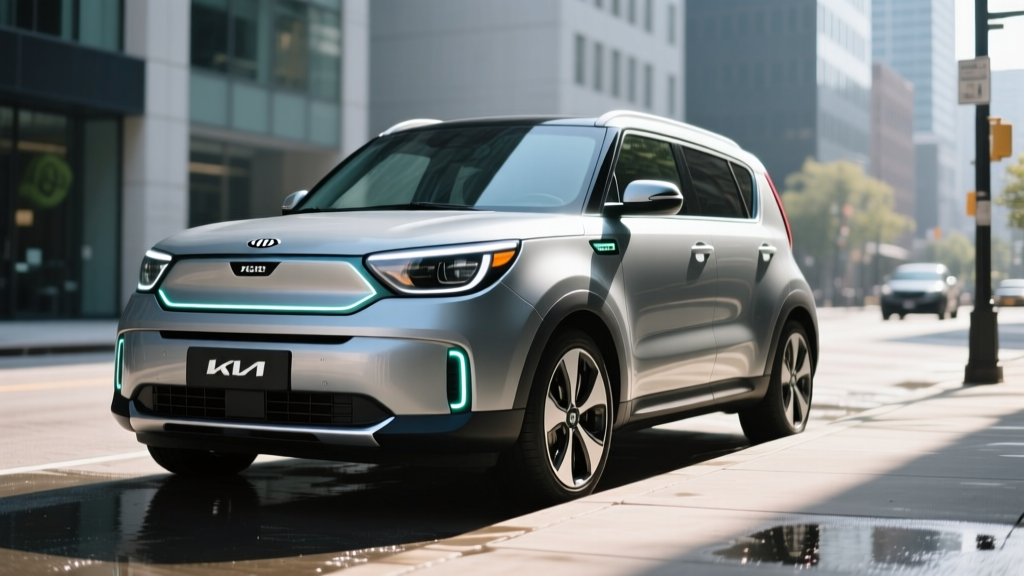
If you're searching for an all electric Kia Soul, you're likely looking at the Kia Soul EV (badged as the Kia e-Soul in some markets) — a compact electric crossover that pairs the Soul's iconic boxy practicality with a battery-electric powertrain. For 2026, the Soul EV remains a niche but compelling option for urban and suburban drivers who prioritize interior space, upright seating, and daily-commute efficiency over highway road-trip performance.
Quick Answer: Is the All Electric Kia Soul Worth It?
The Kia Soul EV delivers an EPA-estimated 243 miles of range from its 64 kWh battery, peaks at 77 kW DC fast charging (10–80% in roughly 54 minutes), and starts near $35,000 MSRP before incentives. It excels as a city and suburban commuter with outstanding cargo versatility, but its modest DC charge rate and limited long-distance practicality make it best suited for drivers with reliable home Level 2 charging and mostly sub-200-mile daily routes. If you frequently road-trip or live in extreme cold without a garage, a PHEV or longer-range EV may serve you better.
Real-World Range: What the EPA Sticker Doesn't Tell You
The Kia Soul EV's 64 kWh lithium-ion polymer battery (NMC chemistry) yields an EPA-estimated 243 miles in the EX Premium trim with the larger pack. The smaller 39.2 kWh base battery variant — where still available — drops to approximately 149 miles EPA. Here's what those numbers look like once you leave the test cycle behind:
EPA vs. Real-World Range Expectations
- EPA sticker: 243 miles (64 kWh pack)
- Mixed suburban driving (55–65 mph, mild weather): ~220–235 miles
- Sustained highway (70–75 mph): ~185–205 miles
- Cold weather (below 30°F, cabin heat active): ~155–180 miles
The Soul EV's tall, boxy profile creates more aerodynamic drag than sleeker crossovers, which hits efficiency noticeably at highway speeds. In winter, expect 25–35% range reduction — a reality for all EVs, but amplified here by the Soul's relatively modest battery capacity.
Efficiency lands around 120 MPGe combined (roughly 28 kWh/100 miles) per fueleconomy.gov. That's competitive for the segment but trails the Hyundai Kona Electric's slightly more aerodynamic tuning.
Charging Speeds: The Soul EV's Biggest Limitation
This is where the all electric Kia Soul shows its age relative to newer EVs on 800-volt architectures. The Soul EV maxes out at 77 kW on DC fast charging via its CCS1 connector — adequate for occasional road trips but a bottleneck if you rely on public fast charging regularly.
| Charging Level | Power / Voltage | Time (10–80% or Full) | Miles Added per Hour |
|---|---|---|---|
| Level 1 (120V household) | ~1.4 kW | ~45+ hours (full) | ~5 mi/hr |
| Level 2 (240V, 32A home) | ~7.2 kW | ~9 hours (full) | ~25 mi/hr |
| Level 2 (240V, 48A) | ~10.5 kW | ~6.5 hours (full) | ~36 mi/hr |
| DC Fast Charge (CCS1) | Peak 77 kW | ~54 min (10–80%) | ~160 mi/hr (peak) |
Charging curve reality check: The Soul EV holds near peak rate up to roughly 55–60% state of charge, then tapers significantly. That 10–80% time of ~54 minutes assumes ideal battery preconditioning and ambient temperatures above 60°F. In cold weather without preconditioning, expect 70+ minutes. Compared to the Hyundai Ioniq 5's 18-minute 10–80% time on a 350 kW charger, the Soul EV is firmly a generation behind.
For daily ownership, this matters less than it seems — if you have Level 2 home charging. Plugging in overnight at 7.2 kW fully replenishes the battery every morning. The DC fast-charge limitation only stings on road trips exceeding 180 miles.
Cost Breakdown: Purchase, Charging, and Ownership
Understanding the total cost of the all electric Kia Soul requires looking beyond the sticker price. Let's compare a 5-year ownership scenario against the gasoline Kia Soul (which starts around $22,000 MSRP) and a comparable compact crossover.
| Cost Category | Kia Soul EV (64 kWh) | Gas Kia Soul (2.0L) |
|---|---|---|
| Base MSRP | $35,000 | $22,000 |
| Federal Tax Credit (§30D)* | –$3,750 to $7,500 | $0 |
| Effective Purchase Price | ~$27,500–$31,250 | $22,000 |
| Fuel/Energy (5 years, 75K mi) | $2,800–$3,900 | $8,200–$9,500 |
| Maintenance (5 years) | $1,200–$1,800 | $3,000–$4,200 |
| Insurance (5-year avg.) | $7,500–$9,000 | $6,000–$7,500 |
| Estimated 5-Year Total | $39,000–$45,950 | $39,200–$43,200 |
*Federal tax credit eligibility under IRS §30D depends on your modified adjusted gross income, the vehicle's MSRP cap compliance, battery critical-mineral sourcing, and whether you elect point-of-sale transfer. The Soul EV's credit amount varies by model year and battery sourcing — verify current eligibility with a tax professional before purchase.
The Soul EV's fuel savings are substantial — roughly $5,000–$6,000 over 5 years if you charge primarily at home on residential electricity rates ($0.13–$0.18/kWh national average). Public DC fast charging at $0.35–$0.50/kWh narrows that gap significantly. Maintenance savings come from eliminating oil changes, transmission fluid, spark plugs, and reducing brake wear through regenerative braking.
Insurance premiums tend to run 15–25% higher for EVs due to repair costs and battery replacement considerations. Get quotes before committing.
How the All Electric Kia Soul Compares to Gas and Hybrid Alternatives
| Metric | Kia Soul EV (64 kWh) | Gas Kia Soul (2.0L) | Compact PHEV Crossover |
|---|---|---|---|
| EPA Range / MPG | 243 mi / 120 MPGe | ~29 MPG combined | ~32 mi electric + 48 MPG gas |
| Starting MSRP | $35,000 | $22,000 | $33,000–$38,000 |
| Home Refueling | Level 2 overnight | Gas station | Level 2 overnight (partial) |
| Road-Trip Practicality | Limited (77 kW DC) | Excellent | Good (gas backup) |
| Cold-Weather Impact | 25–35% range loss | Minimal | Minimal (gas engine heat) |
| Cargo (rear seats up) | ~18.9 cu ft | 24.2 cu ft | ~18–22 cu ft |
| 0–60 mph | ~7.0 sec (201 HP) | ~9.0 sec (147 HP) | ~7.5–8.5 sec |
The gas Kia Soul wins on upfront cost, cargo volume (no battery packaging compromise), and road-trip flexibility. The Soul EV wins on acceleration smoothness, daily operating cost, and zero tailpipe emissions. A PHEV splits the difference — ideal if you can charge at home for short commutes but need gas-engine range for longer drives.
First-Time EV Buyer: What You Must Know Before Purchasing
If the all electric Kia Soul is your first EV, several ownership realities deserve your attention before signing:
Home Charging Is Non-Negotiable for Most Owners
Without Level 2 home charging, EV ownership becomes a chore. A 240V/32A home charger installation typically costs $800–$2,500 (equipment plus licensed electrician), more if your electrical panel needs a 200-amp upgrade ($1,500–$3,500 additional). Budget for this upfront. Relying solely on public charging adds time, cost, and unpredictability.
Battery Warranty and Degradation
Kia covers the Soul EV battery with a 10-year/100,000-mile warranty against capacity loss below 70% of original. Real-world NMC degradation data from similar Kia/Hyundai platforms suggests 8–12% capacity loss over 5 years under normal use — meaning your 243-mile EV might deliver ~215–220 miles by year five. Avoid habitual DC fast charging and routine 100% charges to minimize degradation.
Cold Climate Considerations
The Soul EV lacks a heat pump in most trims (resistive cabin heating draws heavily from the battery). If you live where winters regularly drop below freezing, plan for 160–180 miles of usable cold-weather range and precondition the battery while still plugged in to preserve range.
| Myth | Fact |
|---|---|
| "243 miles means I can road-trip anywhere." | Highway driving at 70+ mph reduces range to ~190 miles; DC charging at 77 kW means 50+ minute stops. |
| "EVs need no maintenance." | Tires, cabin filters, brake fluid, wipers, and 12V battery still require service — just less than gas cars. |
| "The $7,500 tax credit applies to everyone." | §30D has income caps ($150K single/$300K joint), MSRP caps, and battery-sourcing requirements that change annually. |
| "I can charge from any public station." | The Soul EV uses CCS1; Tesla Superchargers require an adapter (where supported), and CHAdeMO stations won't work. |
| "The battery will need expensive replacement." | Modern NMC batteries typically outlast 150K+ miles before significant degradation; Kia's 10-year warranty provides backup. |
Decision Framework: Is the All Electric Kia Soul Right for You?
Choose the Kia Soul EV If:
- You have Level 2 home charging (or can install it)
- Your daily commute and errands total under 120 miles round-trip
- You value upright seating, easy entry, and hatchback cargo versatility
- You rarely drive more than 180 miles in a single day without overnight stops
- You live in a mild-to-moderate climate, or have garage parking in winter
- You qualify for federal and/or state EV incentives that close the price gap with gas alternatives
Look Elsewhere If:
- You rely on apartment/curbside parking with no charging access
- You regularly road-trip 250+ miles and can't tolerate 50-minute charge stops
- You live in extreme cold (sub-15°F winters) and need maximum range reliability
- You need maximum cargo volume — the gas Soul offers 24.2 cu ft vs. the EV's ~18.9 cu ft
- Fast DC charging matters — consider the Hyundai Kona Electric or Ioniq 5 for 150–350 kW capability
Battery, Powertrain, and Warranty at a Glance
The Soul EV's electric motor produces 201 horsepower and 291 lb-ft of torque, routed to the front wheels. Acceleration is brisk and linear — the 0–60 mph time of approximately 7.0 seconds outpaces the gas Soul by a comfortable margin. The single-speed reduction gear eliminates any shift lag.
Driver-assistance features include Kia's Highway Driving Assist (SAE Level 2 — you must keep hands on the wheel and eyes on the road at all times), forward collision-avoidance assist, lane-keeping assist, and blind-spot monitoring. This is not autonomous driving; it is driver support that reduces fatigue on longer highway stretches.
Kia's warranty coverage is a standout: 5-year/60,000-mile basic, 10-year/100,000-mile powertrain, and 10-year/100,000-mile battery coverage (retaining above 70% capacity). This ranks among the strongest EV warranties in the segment and provides meaningful peace of mind for used buyers as well.
Frequently Asked Questions
Is the Kia Soul EV still sold in the United States for 2026?
Availability varies by market and model year. Kia has intermittently offered the Soul EV in the U.S. while focusing EV investment on the EV6 and EV9. Check with your local Kia dealer for current 2026 inventory and trim availability, as Kia's EV lineup is evolving rapidly. In some markets, the Soul EV continues under the e-Soul badge.
How much does it cost to charge the Kia Soul EV at home?
At the national average residential electricity rate of ~$0.15/kWh, a full 64 kWh charge costs approximately $9.60 — yielding 243 EPA miles for less than $10. That's roughly $0.04 per mile, compared to $0.12–$0.14/mile for the gas Soul at $3.50/gallon. Your actual cost depends on your local utility rate and whether you have access to time-of-use plans with off-peak discounts.
Can I use Tesla Superchargers with the Kia Soul EV?
The Soul EV uses the CCS1 connector. Tesla has begun opening select Supercharger stations to non-Tesla EVs via the Magic Dock adapter or through the Tesla app, but availability is station-dependent and not universal. Check the Tesla app or Tesla's Supercharger page for compatible stations near you. For broader coverage, the Electrify America and EVgo networks support CCS1 natively.
What happens if the battery degrades significantly?
If your Soul EV battery drops below 70% of its original capacity within 10 years or 100,000 miles, Kia's battery warranty covers repair or replacement. Out-of-warranty battery replacement for a 64 kWh pack typically costs $8,000–$14,000 including labor, though most NMC batteries retain 85–90%+ capacity well past 100,000 miles based on fleet data from similar Hyundai/Kia platforms.
Does the Kia Soul EV qualify for the federal tax credit?
Eligibility for the §30D Clean Vehicle Credit (up to $7,500) depends on multiple factors that change periodically: your income must fall below IRS thresholds ($150,000 single / $300,000 joint filers), the vehicle must meet battery critical-mineral and component sourcing requirements, and the MSRP must be within caps ($55,000 for SUVs/crossovers). Some buyers may also qualify for the used EV credit (up to $4,000 or 30% of sale price) on pre-owned Soul EVs. Verify current eligibility on IRS.gov and consult a tax professional before purchase.
How does the Soul EV handle in snow and ice?
Front-wheel drive with instant electric torque provides reasonable traction, and the Soul EV's weight distribution (battery low in the chassis) helps stability. Winter tires make a significant difference. Range drops 25–35% in freezing temperatures, so plan shorter routes or precondition while plugged in to minimize losses.