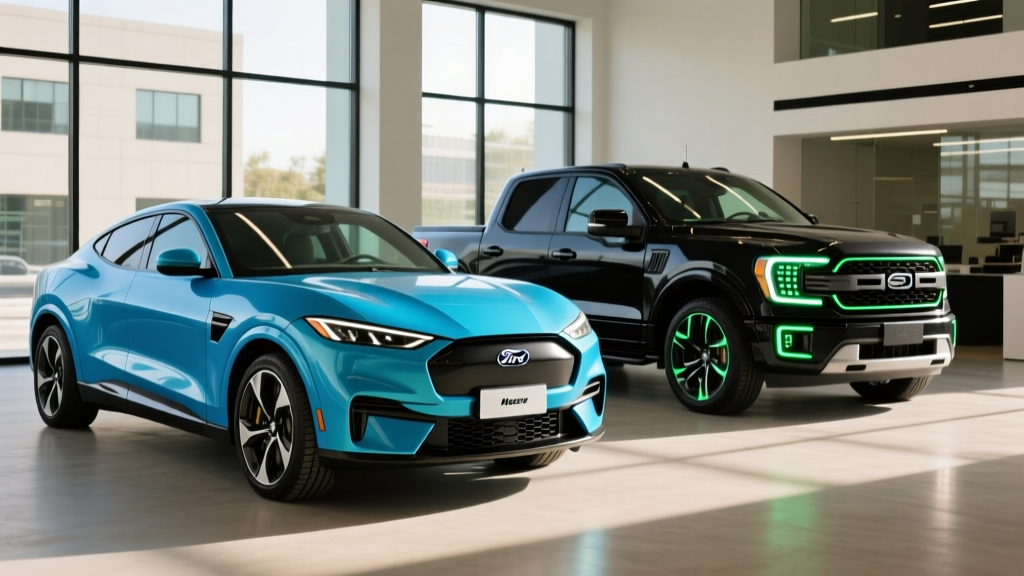
Quick Answer: Ford's all electric lineup for 2026 centers on two models: the Mustang Mach-E (compact SUV, 250–320 miles EPA range, starting ~$37,995) and the F-150 Lightning (full-size pickup, 240–320 miles EPA range, starting ~$54,995). Both qualify for varying levels of the federal §30D tax credit depending on battery sourcing and your income. The Mach-E suits commuters and road-trippers who want efficiency; the Lightning targets truck buyers who need towing, payload, and on-site power. Real-world range drops 15–25% in cold weather or at sustained highway speeds, and home Level 2 charging is strongly recommended for daily ownership satisfaction.
Ford's All-Electric Lineup at a Glance
Ford has committed more heavily to battery-electric vehicles than most legacy American automakers. As of the 2026 model year, the all electric Ford portfolio available to US consumers includes two primary vehicles, each spanning multiple trims and battery configurations. Ford discontinued the Focus Electric years ago and has consolidated its EV efforts into vehicles built on dedicated or heavily modified electric platforms.
| Spec | Mustang Mach-E (Select RWD) | Mustang Mach-E (GT AWD) | F-150 Lightning (XLT Std Range) | F-150 Lightning (Lariat Ext Range) |
|---|---|---|---|---|
| EPA Range | 250 mi | 280 mi | 240 mi | 320 mi |
| Battery (usable kWh) | 70 kWh (LFP) | 91 kWh (NMC) | 98 kWh (NMC) | 131 kWh (NMC) |
| Horsepower | 266 hp | 480 hp | 452 hp | 580 hp |
| 0-60 mph | 6.3 sec | 3.5 sec | 5.5 sec | 4.0 sec |
| Peak DC Fast Charge | 150 kW | 150 kW | 150 kW | 150 kW |
| 10-80% DC Time | ~33 min | ~38 min | ~41 min | ~45 min |
| Level 2 Rate | 10.5 kW | 10.5 kW | 11.3 kW (std) / 19.2 kW (opt) | 19.2 kW |
| MPGe (Combined) | 101 MPGe | 84 MPGe | 68 MPGe | 70 MPGe |
| Base MSRP | $37,995 | $59,995 | $54,995 | $69,995 |
| Battery Warranty | 8 yr / 100,000 mi | 8 yr / 100,000 mi | 8 yr / 100,000 mi | 8 yr / 100,000 mi |
Sources: fueleconomy.gov, Ford.com EV specifications. Specs reflect 2026 model year estimates. Confirm final figures with Ford before purchase.
Mustang Mach-E: The Commuter's Electric Crossover
The Mustang Mach-E remains Ford's volume electric vehicle and the most accessible entry point into the all electric Ford ecosystem. Built on Ford's Global Electrified Platform (GE1), it's a unibody crossover with seating for five, a rear frunk (4.7 cu ft), and up to 59.7 cu ft of cargo space with rear seats folded.
Range and Efficiency Reality Check
EPA Sticker: 250 miles (Select RWD, 70 kWh LFP) up to 320 miles (California Route 1 RWD, 91 kWh NMC).
Real-World Expectation: In mild weather at mixed city/highway speeds, expect 230–290 miles depending on trim. Sustained 75+ mph highway driving drops range by roughly 15%. In freezing temperatures (below 25°F), plan for a 20–25% reduction — meaning a 250-mile EPA Select could deliver ~190 miles of usable range on a cold winter day.
The LFP (lithium iron phosphate) battery in the Select trim is a notable choice. LFP chemistry offers longer cycle life, less degradation over time, and no ethical cobalt concerns. The trade-off: lower energy density (heavier pack for fewer miles) and slower charging in extreme cold. Ford recommends you can charge LFP to 100% daily without the degradation concerns that NMC packs carry at high state of charge.
Charging the Mach-E
The Mach-E accepts up to 150 kW on DC fast chargers via its CCS1 port (Ford has announced NACS adapter support for Tesla Supercharger access). On a 150 kW station, the 70 kWh pack charges from 10–80% in approximately 33 minutes. The charge curve tapers significantly above 80% — a full 10–100% session takes closer to 55 minutes, which matters for road-trip planning.
At home on a Level 2 charger (240V, 48A circuit), the Mach-E's onboard charger accepts up to 10.5 kW. That translates to roughly 30–33 miles of range per hour of charging, or a full overnight replenishment from near-empty in about 7–9 hours depending on pack size.
F-150 Lightning: The Electric Work Truck
The F-150 Lightning applies Ford's EV technology to America's best-selling vehicle nameplate. It rides on a modified F-150 frame with a floor-mounted battery pack, dual motors standard on most trims, and independent rear suspension (a departure from the solid rear axle on gas F-150s).
Capability and Towing
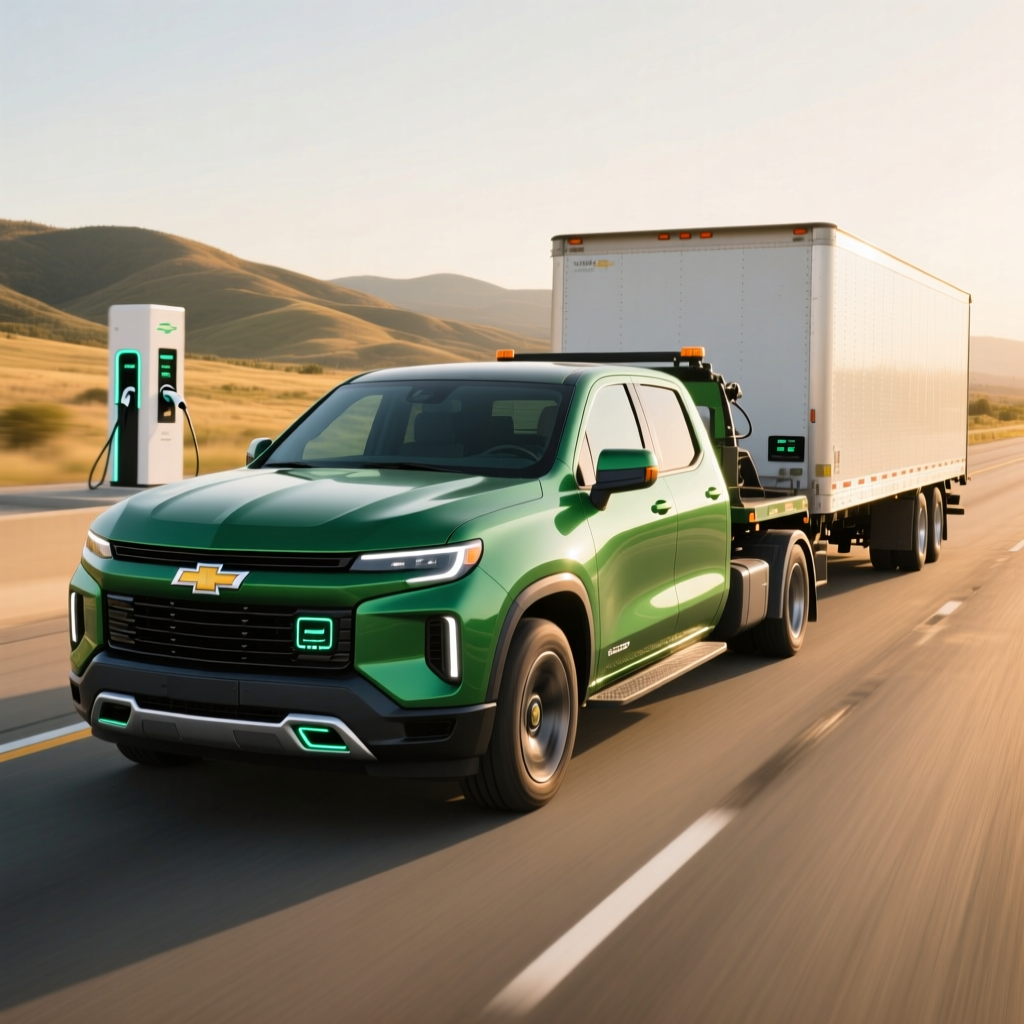
Maximum towing capacity reaches 10,000 lbs on the XLT 312A and Lariat trims with the Max Trailer Tow Package and extended-range battery. Payload peaks at 2,235 lbs on the standard-range XLT. These are meaningful numbers, but towing at capacity will cut range roughly in half — a 320-mile extended-range Lightning towing 8,000 lbs on a flat highway may deliver only 150–170 miles before needing a charge. This is the most critical ownership reality for truck buyers.
Pro Power Onboard: The Killer Feature
The Lightning's Pro Power Onboard system provides up to 9.6 kW of exportable 240V/120V AC power through bed and cabin outlets. This is genuinely transformative for job sites, tailgating, or emergency home backup (with the optional Home Integration System and a compatible transfer switch, the truck can power essential circuits during an outage).
Charging the Lightning
The extended-range 131 kWh pack is one of the largest in any consumer EV, which means charging times are longer despite similar peak kW rates. On a 150 kW DC fast charger, 10–80% takes approximately 45 minutes. The larger pack also means the charge curve taper hits harder above 80% — budget 70+ minutes for a 10–100% session.
At home, the available 19.2 kW onboard charger (80A circuit, requiring a 100A breaker) is among the fastest Level 2 options in any consumer EV. At 19.2 kW, the Lightning gains roughly 40 miles of range per hour — a near-empty extended-range pack can refill overnight in about 7 hours. The standard 11.3 kW charger requires a 60A circuit and adds roughly 25 miles per hour.
| Charging Level | Power | Mach-E Miles/Hour | Lightning Miles/Hour | Typical Use Case |
|---|---|---|---|---|
| Level 1 (120V) | ~1.4 kW | ~3 mi/hr | ~2 mi/hr | Emergency trickle only |
| Level 2 (240V, 48A) | 10.5–11.5 kW | ~30 mi/hr | ~25 mi/hr | Daily home charging |
| Level 2 (240V, 80A) | 19.2 kW | N/A | ~40 mi/hr | Lightning high-speed home |
| DC Fast Charge | 150 kW peak | ~180 mi in 30 min | ~150 mi in 30 min | Road trips, public stations |
EV vs. Gas: Total Cost of Ownership for Ford Buyers
The purchase price of an all electric Ford is higher than a comparable gas model, but operating costs tell a different story over time. Below is a 5-year total cost comparison for the Mach-E Select RWD versus a gas Ford Escape AWD (a reasonable cross-shop), assuming 15,000 miles/year, $0.14/kWh home electricity, $3.50/gallon gas, and average insurance premiums.
| Cost Category | Mach-E Select RWD (EV) | Ford Escape AWD (Gas) | 5-Year Difference |
|---|---|---|---|
| Base MSRP | $37,995 | $33,500 | +$4,495 (EV) |
| Federal Tax Credit (§30D) | Up to -$3,750* | $0 | -$3,750 (EV savings) |
| Fuel/Energy (5 yrs) | $5,250 | $10,500 | -$5,250 (EV savings) |
| Maintenance (5 yrs) | $1,500 | $3,500 | -$2,000 (EV savings) |
| Insurance (5 yrs) | $9,500 | $7,500 | +$2,000 (EV cost) |
| Estimated Depreciation | $16,000 | $13,000 | +$3,000 (EV cost) |
| 5-Year Total Cost | $54,245 | $55,000 | ~$755 EV savings |
*§30D credit amount depends on battery component and critical-mineral sourcing requirements per IRS guidelines. Income caps apply ($150K single / $300K joint). Consult a tax professional.
The break-even point shifts significantly if you have access to free or subsidized workplace charging, if your state offers additional rebates, or if electricity rates in your area are lower than $0.14/kWh. Conversely, heavy reliance on public DC fast charging (often $0.35–$0.50/kWh) erodes the fuel savings substantially.
Federal Tax Credits and Incentives for Ford EVs
The §30D federal clean vehicle credit offers up to $7,500 for qualifying new EVs, but the actual amount depends on two independent components: battery components ($3,750) and critical minerals ($3,750). As of 2026, Ford's battery sourcing means the Mach-E and Lightning qualify for partial credit — typically $3,750 — though this shifts as supply chains evolve.
§30D Eligibility Checklist (2026 Rules):
- Vehicle MSRP Cap: SUVs/pickups (Mach-E, Lightning) must be under $80,000. ✓ Both qualify in most trims.
- Buyer Income Cap: AGI must not exceed $150,000 (single), $225,000 (head of household), or $300,000 (joint). Verified at point of sale.
- Battery Sourcing: Battery components and critical minerals must meet phased percentage thresholds from US or FTA-partner countries. This determines whether you get $3,750 or $7,500.
- Point-of-Sale Transfer: You can transfer the credit to the dealer at purchase, reducing the purchase price directly — no need to wait for tax filing.
- Final Assembly: Vehicle must undergo final assembly in North America. ✓ Both Mach-E (Cuautitlán, Mexico) and Lightning (Dearborn, MI) qualify.
Rules change frequently. Always verify current eligibility at irs.gov before purchasing.
Real-World Ownership: What First-Time Ford EV Buyers Need to Know
Home Charging Is Non-Negotiable for Most Owners
If you cannot install a Level 2 charger at home (240V, 48A minimum), EV ownership becomes significantly less convenient. Relying on public charging for daily needs adds time, cost, and unpredictability. A Level 2 home installation typically costs $800–$2,500 total (charger unit plus electrician labor and permit), assuming your electrical panel has capacity. A panel upgrade to 200A service adds $1,500–$4,000.
Cold Weather Is the Range Killer
EV batteries operate less efficiently in cold temperatures, and cabin heating draws directly from the traction battery. The Mach-E includes a heat pump on higher trims, which mitigates some loss, but any all electric Ford owner in Minnesota, Colorado, or New England should plan for 20–25% winter range reduction. Preconditioning the battery and cabin while plugged in at home recovers some of this loss.
Public Charging: Progress, but Plan Ahead
Ford EVs with NACS adapters gain access to Tesla Supercharger stalls (now numbering over 25,000 in North America), which significantly improves road-trip viability. However, CCS-only Electrify America and EVgo stations remain important in many corridors. Use apps like PlugShare or A Better Routeplanner to verify charger availability and status before long trips — downtime at public chargers remains a real frustration in 2026.
Myths vs. Facts About the All Electric Ford Lineup
| Myth | Fact |
|---|---|
| "EV batteries need replacing every 5 years." | Ford warrants the battery for 8 years/100,000 miles against dropping below 70% capacity. Real-world degradation data from similar packs shows ~10-12% loss over 150,000 miles. |
| "The Lightning can't tow anything useful." | Max towing is 10,000 lbs — competitive with gas F-150s. Range while towing is the real limitation (~50% reduction), not capability. |
| "EVs are worse in winter." | EVs start reliably in any temperature (no cold cranking amps), and preconditioning while plugged in means a warm cabin and battery every morning. Range drops, but daily usability remains strong with home charging. |
| "Charging takes too long." | Home Level 2 charging means you start every morning with a full "tank." Road-trip DC fast stops (30-45 min) are longer than gas fill-ups, but pair them with meal or rest breaks. |
| "The Mach-E isn't a real Mustang." | It's a 4-door crossover, not a sports coupe — but the GT trim does 0-60 in 3.5 seconds with 480 hp. The badge is marketing; the performance is real. |
Decision Framework: Which All Electric Ford Is Right for You?
Choose the Mustang Mach-E if:
- Your daily commute is under 80 miles round-trip and you have home Level 2 charging
- You want an efficient crossover with strong acceleration and modern tech
- Road trips are occasional (2-4 per year) and typically under 400 miles between stops
- You value lower running costs and minimal maintenance over cargo/hauling capacity
- Budget is $38,000–$60,000 depending on trim and options
Choose the F-150 Lightning if:
- You need a full-size truck for work, towing, or hauling but want to eliminate fuel costs for daily driving
- You can benefit from Pro Power Onboard for job sites, camping, or home backup power
- Your typical daily driving is under 100 miles and you can charge at home (ideally with the 19.2 kW option)
- You understand that towing heavy loads will cut range roughly in half and plan accordingly
- Budget is $55,000–$80,000+ and you can absorb higher insurance and tire costs
Choose neither and consider a PHEV or gas vehicle if:
- You cannot install home charging and have no reliable workplace charging
- You regularly drive 400+ miles in a single day through areas with sparse DC fast-charging infrastructure
- You live in an apartment or condo without charging access and your landlord won't install it
- Your budget is strictly under $35,000 and you need a new vehicle
Frequently Asked Questions
Does the all electric Ford lineup include a minivan or sedan?
Not as of 2026. Ford's US electric passenger lineup is the Mach-E crossover and the F-150 Lightning pickup. Ford has announced an affordable next-generation electric platform expected around 2027, but no sedan or minivan has been confirmed. If you need three rows, the Mach-E does not offer them — consider the Kia EV9 or Rivian R1S instead.
Can I use Tesla Superchargers with a Ford EV?
Yes. Ford provides a NACS adapter that allows Mach-E and Lightning owners to charge at Tesla Supercharger V3 and V4 stalls (150–250 kW capable, though the Ford vehicles cap at 150 kW). This dramatically expands the available fast-charging network, particularly in rural areas where Tesla has broader coverage than Electrify America or EVgo.
What does it cost to charge a Ford EV at home vs. public stations?
At the US average residential rate of ~$0.14/kWh, fully charging a Mach-E Select (70 kWh) costs about $9.80 for 250 miles — roughly $0.04 per mile. Public DC fast charging averages $0.35–$0.50/kWh, making it $0.10–$0.14 per mile — still cheaper than gas at $3.50/gallon for a 25 MPG vehicle ($0.14/mile), but the gap narrows considerably. Charge at home whenever possible to maximize savings.
How long will the Ford EV battery last before needing replacement?
Ford warranties the high-voltage battery for 8 years or 100,000 miles against dropping below 70% of original capacity. Industry data from similar NMC and LFP packs suggests 10–15% degradation over 150,000 miles is typical. A full battery replacement out of warranty costs $12,000–$22,000 depending on pack size, but most packs outlast the vehicle's useful economic life. LFP packs in the Mach-E Select are expected to degrade even more slowly.
Is the F-150 Lightning good for off-road use?
The Lightning has 8.9 inches of ground clearance and available all-wheel drive with terrain modes. It handles fire roads, camping trails, and moderate off-road conditions competently. However, the battery pack sits low on the frame, and the independent rear suspension is tuned more for on-road comfort and load-leveling than rock crawling. For serious off-roading, a gas F-150 Raptor or a Rivian R1T remain better choices. The Lightning's weight (~6,500 lbs) also means it sinks more in sand and mud than lighter vehicles.
What happens if I run out of charge on the road?
The same thing that happens if you run out of gas: you call roadside assistance. Ford includes complimentary roadside assistance for 5 years/60,000 miles. AAA and other services now offer mobile EV charging trucks in major metro areas that can add 20–40 miles of range to get you to the nearest station. The FordPass app and built-in navigation actively route you through available chargers and warn you if range is insufficient to reach your destination.
Bottom Line
The all electric Ford lineup in 2026 offers two genuinely competitive vehicles for distinct buyer profiles. The Mach-E is a well-rounded electric crossover with strong efficiency, a usable LFP battery option, and expanding Supercharger access. The Lightning proves that electric trucks can deliver real capability — with the caveat that towing and heavy payloads demand careful range planning.
Neither vehicle is perfect. Both are capped at 150 kW DC fast charging (behind Hyundai/Kia's 800V architecture at 240+ kW). Insurance costs run 15–25% higher than gas equivalents. And real-world range, especially in cold climates or at highway speeds, will fall short of the EPA sticker.
But for buyers with home charging access, moderate daily mileage, and a willingness to plan road trips around charging stops, Ford's electric vehicles deliver lower operating costs, instant torque, and a dramatically quieter driving experience. The decision isn't whether EVs are ready — it's whether your specific driving patterns and living situation make one the right choice today.