The Short Answer on the All Electric Bronco
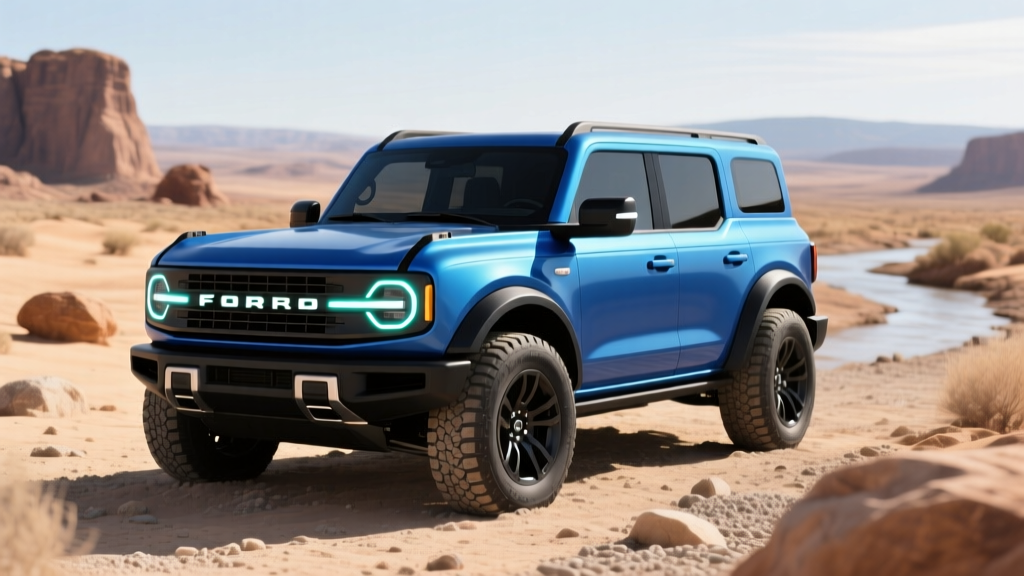
As of early 2026, Ford has not yet released a production all electric Bronco. The company has confirmed an electric Bronco is in development, widely expected to ride on a dedicated EV platform (likely a body-on-frame architecture shared with the next-gen electric F-150). Based on Ford's current EV powertrain technology and competitive positioning against the Jeep Wrangler 4xe and upcoming electric off-roaders, industry analysts project an EPA range between 250–320 miles, a starting MSRP near $55,000–$60,000, and DC fast charging up to 150–200 kW. Until Ford publishes official specs, every figure below is an informed estimate grounded in Ford's existing EV lineup and platform signals.
What Is the All Electric Bronco — and When Can You Buy One?
Ford CEO Jim Farley has publicly stated that the Bronco nameplate is a candidate for electrification, and multiple reports indicate an electric Bronco variant is targeted for the late-2020s timeframe. Unlike the current gas-powered Bronco and Bronco Sport, which use turbocharged EcoBoost engines, the all electric Bronco would replace the internal combustion powertrain entirely with battery-electric motors.
What we can reasonably project based on Ford's EV roadmap:
- Platform: Likely a new body-on-frame EV architecture, potentially related to the F-150 Lightning's underpinnings but shortened for the Bronco's wheelbase.
- Powertrain: Dual-motor AWD with a front and rear electric motor, enabling torque vectoring and enhanced off-road crawl modes.
- Battery: Estimated 100–130 kWh usable capacity, likely NMC (nickel manganese cobalt) chemistry to balance energy density with off-road durability demands.
- Production timeline: Most industry projections place a reveal in 2027 with deliveries in 2028 or 2029. This is an announced/upcoming model — not currently available for purchase.
Estimated Specs: What the Numbers Will Likely Look Like
Until Ford publishes official data, the table below reflects informed projections based on the F-150 Lightning's powertrain, the Mustang Mach-E's efficiency, and competitive benchmarks from Rivian and Jeep.
| Attribute | Estimated Figure | Basis for Estimate |
|---|---|---|
| EPA Range | 260–310 miles | F-150 Lightning Extended Range achieves 320 mi with 131 kWh; Bronco's boxy aero reduces efficiency |
| Battery Capacity | 100–130 kWh usable | F-150 Lightning uses 98–131 kWh packs |
| Battery Chemistry | NMC (nickel manganese cobalt) | Higher energy density needed for off-road SUV; LFP too heavy/bulky for this application |
| Peak DC Fast Charge | 150–200 kW | F-150 Lightning peaks at ~150 kW; Ford may improve with newer architecture |
| 10–80% Charge Time | 30–42 minutes | Based on 150–200 kW peak with typical charge-curve taper above 80% |
| Level 2 Home Charging | 11.5–19.2 kW (48–80A) | Ford Charge Station Pro provides 19.2 kW on F-150 Lightning |
| Horsepower | 450–580 hp | F-150 Lightning produces 580 hp; Bronco may be slightly detuned or comparable |
| 0–60 mph | 4.0–5.5 seconds | Dual-motor EVs in this class consistently hit sub-5-second times |
| Towing Capacity | 4,500–6,000 lbs | Gas Bronco tows 3,500–4,500 lbs; EV torque advantage adds capacity |
| Starting MSRP | $55,000–$60,000 | F-150 Lightning starts ~$55K; Bronco positioned below full-size trucks |
| Battery/Powertrain Warranty | 8 years / 100,000 miles | Federal minimum for EV components; Ford matches this on all current EVs |
Real-World Range Reality Check
The boxy, upright design that gives the Bronco its iconic look is an aerodynamic penalty. Expect real-world highway range to fall 15–25% below the EPA sticker at sustained 70+ mph speeds — similar to what we see with the F-150 Lightning and Rivian R1S. In cold weather (below 30°F), add another 15–30% range reduction due to battery chemistry limitations and cabin heating demands. A Bronco EV rated at 300 miles EPA could realistically deliver 220–250 miles on a cold-weather highway road trip.
Bronco EV vs. Gas Bronco vs. Wrangler 4xe: The Ownership Math
For buyers weighing their options, the comparison below uses the current gas Bronco (2.7L EcoBoost V6, ~$42,000 starting MSRP), the Jeep Wrangler 4xe plug-in hybrid (~$50,000), and the projected Bronco EV figures.
| Category | Gas Bronco (2.7L) | Wrangler 4xe (PHEV) | Bronco EV (Projected) |
|---|---|---|---|
| Starting MSRP | $42,000 | $50,000 | $57,000 (est.) |
| Federal Tax Credit (§30D) | $0 | $3,750 (est.) | $0–$7,500 (sourcing dependent) |
| EPA Efficiency | 20 MPG combined | 49 MPGe / 20 MPG gas | 75–85 MPGe (est.) |
| Fuel/Energy Cost (5 yr, 60K mi) | $10,500 (@$3.50/gal) | $6,800 (mix of elec + gas) | $4,200 (@$0.14/kWh avg) |
| Maintenance (5 yr) | $3,200 | $2,800 | $1,500 (no oil, fewer fluids) |
| Estimated Insurance (5 yr) | $7,500 | $8,000 | $9,000 (EVs cost ~15–20% more to insure) |
| 5-Year Total Cost (est.) | $63,200 | $64,100 | $64,200–$71,700 |
Key takeaway: The Bronco EV will almost certainly carry a higher purchase price but significantly lower energy and maintenance costs. Over five years, the total cost gap narrows to a few thousand dollars — and that's before accounting for potential state incentives, which vary by jurisdiction (check your state's energy office for current programs). The IRS §30D credit eligibility will depend on battery sourcing, MSRP caps, and buyer income limits at the time of purchase, which may differ from today's rules by the time the Bronco EV launches.
Off-Road Capability: Can an Electric Bronco Actually Trail-Run?
This is the question that matters most to Bronco buyers. The electric powertrain brings genuine advantages and real trade-offs for off-road use:
EV Off-Road Advantages
- Instant torque at zero RPM: Electric motors deliver maximum torque from standstill — ideal for rock crawling and low-speed technical terrain. No need to manage a clutch or wait for turbo spool-up.
- Precise torque vectoring: Dual-motor setups can independently control front and rear axle power, enabling tighter turns and better traction management than a mechanical locker alone.
- Low center of gravity: A floor-mounted battery pack lowers the vehicle's CG compared to a gas Bronco, reducing rollover risk on side slopes.
- One-pedal driving / regen braking: Aggressive regenerative braking can serve as a hill-descent control substitute, slowing the vehicle on steep declines without brake fade.
- No air intake to flood: Without an engine air intake, water fording depth may increase — though battery and electronics sealing becomes the limiting factor.
EV Off-Road Limitations
- Weight: A 100+ kWh battery pack adds 1,200–1,800 lbs over the gas Bronco, increasing ground pressure on soft surfaces (sand, mud, snow). This is the single biggest off-road concern.
- Range consumption off-road: Low-speed technical driving with constant acceleration and braking can consume energy at 2–3× the highway rate. A 300-mile rated Bronco EV might deplete its battery in 100–150 miles of aggressive trail use.
- No jerry-can workaround: On remote trails, a gas Bronco can carry spare fuel. There's no equivalent portable solution for an EV — you need a tow or a heavy portable generator/charger.
- Underbody vulnerability: The battery pack sits beneath the floor. While Ford would certainly include skid plates, a hard rock strike on the battery enclosure is a much more expensive repair than dented oil pan.
- Charging in the backcountry: DC fast chargers are concentrated along highways and in urban areas. Off-road trailheads in rural Utah, Colorado, or the Mojave may have zero charging infrastructure within 50+ miles.
Charging Realities: Home, Trail, and Road Trip
Your experience with the Bronco EV will be defined almost entirely by your charging access. Here's what that looks like in practice:
| Charging Level | Power (kW) | Miles Added per Hour | Typical Use Case |
|---|---|---|---|
| Level 1 (120V household) | 1.4 kW | 3–5 miles | Emergency top-up; overnight adds ~40 miles |
| Level 2 (240V home) | 11.5–19.2 kW | 30–55 miles | Daily charging; full overnight replenishment |
| DC Fast (public) | 150–200 kW peak | ~250–400 miles/hr (peak) | Road trips; 10–80% in 30–42 min |
Common Misconceptions About Electric Off-Roaders
| Myth | Fact |
|---|---|
| "EVs can't handle real off-road trails." | Rivian R1T and R1S have completed the Rubicon Trail. Electric torque delivery is excellent for technical terrain. The limitation is range and weight, not capability. |
| "The battery will get destroyed on rocks." | EV battery packs are housed in reinforced enclosures with titanium or steel skid plates. They undergo more rigorous impact testing than a gas fuel tank. That said, a battery replacement costs $15,000–$25,000 if damaged beyond warranty coverage. |
| "I'll save a fortune on fuel." | You'll save $4,000–$6,000 over five years on energy costs vs. gas, but EV insurance premiums run 15–20% higher, and the purchase price is $10,000–$15,000 more. Net savings are modest over five years, stronger over eight to ten. |
| "Charging takes too long for road trips." | At 150–200 kW, a 10–80% charge takes 30–42 minutes — comparable to a sit-down meal stop. However, charging above 80% slows dramatically (charge-curve taper), and remote trail areas may have no DC fast chargers within range. |
| "The federal tax credit guarantees $7,500 off." | The IRS §30D credit requires the vehicle to meet battery sourcing, critical mineral, MSRP cap (currently $80,000 for SUVs), and buyer income cap ($300K joint / $150K single) requirements. Rules may change between now and the Bronco EV's launch. |
Home Charging Installation: What Bronco EV Buyers Should Budget
Most Bronco EV owners will want a Level 2 home charger for daily use. Here's a realistic cost breakdown based on 2026 installer pricing:
| Component | Low End | High End | Notes |
|---|---|---|---|
| Level 2 charger hardware | $350 | $750 | Ford Charge Station Pro or equivalent 48A unit |
| Electrician labor (240V run) | $500 | $2,000 | Depends on panel proximity and conduit length |
| Permit and inspection | $50 | $300 | Varies by municipality |
| Electrical panel upgrade (if needed) | $1,500 | $4,000 | Required if existing panel lacks capacity for a 50–60A circuit |
| Total (no panel upgrade) | $900 | $3,050 | Most homes with 200A service won't need an upgrade |
| Total (with panel upgrade) | $2,400 | $7,050 | Older homes with 100A service often need this |
Critical note: A Bronco EV with a 100+ kWh battery charging at 11.5 kW draws roughly 48 amps continuously. This requires a dedicated 60A circuit. Have a licensed electrician evaluate your panel before purchase — a 100-amp panel in an older home almost certainly cannot support this without an upgrade.
Who Should Wait for the Bronco EV — and Who Should Buy Gas Now?
Decision Framework: Is the All Electric Bronco Right for You?
Wait for the Bronco EV if:
- You have reliable Level 2 home charging (garage or driveway with 240V access)
- Your daily driving is under 80 miles round-trip, with road trips under 250 miles between charging stops
- You want instant torque for rock crawling and technical trails near civilization
- You plan to own the vehicle 8+ years (amortizing the higher purchase price over lower operating costs)
- You're comfortable with an MSRP of $55,000–$65,000+ depending on trim
Buy the gas Bronco now if:
- You frequently drive remote trails where the nearest charger is 100+ miles away
- You need a vehicle this year and can't wait for a 2028–2029 launch
- Your budget tops out below $50,000
- You regularly tow heavy loads over long distances (towing slashes EV range by 30–50%)
- You live in an apartment or lack access to any home or workplace charging
Consider the Wrangler 4xe PHEV if:
- You want electric-only driving for short commutes (21 miles EPA electric range) but gas flexibility for remote trails
- You need a vehicle now and want partial electrification without range anxiety
What First-Time EV Buyers Should Know Before Committing
If the Bronco EV would be your first electric vehicle, prepare for these ownership realities:
- Charging becomes routine, not an event. Plug in at home every night, wake up with a full "tank." This is more convenient than gas for daily use — but requires home charging access.
- Public charging reliability is improving but inconsistent. Networks like Electrify America and Tesla's Supercharger network (now open to non-Tesla vehicles via NACS adapters) have expanded significantly, but broken chargers and payment glitches remain common. Download multiple charging apps before a road trip.
- Cold weather hits hard. Expect 20–30% range loss below freezing. A heat pump (which Ford includes on newer EVs) helps but doesn't eliminate the penalty. If you live in Minnesota, Montana, or Maine, size your range expectations accordingly.
- Tire wear increases. EVs are heavier and deliver instant torque, wearing tires 20–30% faster than gas equivalents. Budget for replacement tires every 25,000–35,000 miles.
- Insurance costs more. EV repair costs are higher (specialized labor, battery safety protocols), and insurers price this in. Get a quote before committing to the purchase.
- Depreciation is less predictable. EV resale values have been volatile. The Bronco nameplate has historically held value well in gas form, but the EV variant's depreciation curve is unknown until the used market establishes itself.
Frequently Asked Questions
Is Ford actually building an all electric Bronco?
Ford executives have confirmed the Bronco nameplate is a candidate for electrification, and industry reporting indicates an electric variant is in development. However, Ford has not published official specs, pricing, or a firm launch date. Treat all current information as projected, not confirmed.
Will the electric Bronco use the same body as the gas Bronco?
It's expected to retain the Bronco's iconic boxy styling and removable roof/door capability, but will likely sit on a modified EV-specific platform. The exterior dimensions may shift slightly to accommodate battery packaging and aerodynamic improvements.
Can I take an electric Bronco on remote off-road trails?
Yes, with planning. The electric powertrain excels at low-speed technical terrain. The constraint is range and charging access: remote trails in areas like Moab, the Rubicon, or the Owyhee may lack DC fast chargers within the vehicle's range. Carry a detailed charging map and plan turnaround points.
Will the Bronco EV qualify for the $7,500 federal tax credit?
It depends on the rules at time of purchase. Current IRS §30D requirements include battery component manufacturing in North America, critical mineral sourcing thresholds, an $80,000 MSRP cap for SUVs, and buyer income caps ($300,000 joint / $150,000 single). These rules may evolve before the Bronco EV launches. Consult a tax professional for eligibility guidance.
How long will the Bronco EV battery last?
Ford's current EV battery warranty covers 8 years or 100,000 miles against degradation below 70% of original capacity. Based on data from the F-150 Lightning and Mustang Mach-E, NMC batteries in Ford's thermal management system typically retain 85–90% capacity after 100,000 miles. Full battery replacement, if ever needed outside warranty, is estimated at $15,000–$25,000.
What connector will the Bronco EV use — NACS or CCS?
Ford transitioned its EV lineup to the NACS (North American Charging Standard, used by Tesla) connector starting with 2025 model-year vehicles. The Bronco EV will almost certainly use NACS, giving it native access to Tesla Supercharger stations without an adapter.