The Quick Answer
If you landed here searching for all electric boats, here's the honest truth: AutoEdgeView covers electric vehicles — cars, SUVs, trucks, and plug-in hybrids — not marine craft. Electric boats are a real and growing category (brands like X Shore, Candela, and Arc Marine make compelling battery-powered watercraft), but marine electrification involves entirely different engineering, safety standards, and regulatory frameworks than road-going EVs.
However, if you're researching electric boats because you're also considering an EV for your daily drive, you're in the right place. Below, we break down the exact numbers every first-time EV buyer needs: real-world range, home charging costs, tax credit eligibility, and a side-by-side comparison with gas and hybrid alternatives — all updated for the 2026 model year.
What Does an EV Actually Cost to Own in 2026?
The sticker price is only the beginning. The real decision hinges on total cost of ownership (TCO) — purchase price, energy costs, maintenance, insurance, and depreciation over five years. Here's how a mainstream 2026 EV like the Tesla Model Y Long Range ($44,990 MSRP) stacks up against a comparable gas SUV (Toyota RAV4, $30,445 MSRP) and a plug-in hybrid (Toyota RAV4 Prime, $44,590 MSRP).
| Category | Tesla Model Y LR (BEV) | RAV4 Prime (PHEV) | RAV4 AWD (Gas) |
|---|---|---|---|
| Base MSRP | $44,990 | $44,590 | $30,445 |
| Federal Tax Credit (§30D) | Up to $7,500* | Up to $7,500* | $0 |
| Effective Purchase Price | ~$37,490 | ~$37,090 | $30,445 |
| 5-Year Fuel/Energy Cost | ~$3,900 (home charging) | ~$5,200 (gas + electric) | ~$9,750 (gas @ $3.25/gal) |
| 5-Year Maintenance | ~$1,500 | ~$3,200 | ~$3,800 |
| 5-Year Insurance (avg) | ~$9,500 | ~$8,200 | ~$7,500 |
| Estimated 5-Year Depreciation | ~$18,000 | ~$16,500 | ~$14,000 |
| 5-Year TCO (approx) | ~$70,390 | ~$70,190 | ~$65,495 |
*Federal §30D tax credit eligibility depends on your adjusted gross income (single filers ≤$150,000; joint ≤$300,000), vehicle MSRP caps ($55,000 for sedans, $80,000 for SUVs/trucks), and battery critical-mineral and component sourcing requirements. The credit can now be transferred to the dealer at point of sale as an upfront discount. Always verify current-year rules at IRS.gov and consult a tax professional.
The takeaway: EVs and PHEVs cost more in insurance and can depreciate faster, but the energy and maintenance savings are substantial — roughly $5,850 less in fuel and $2,300 less in maintenance over five years for the Model Y versus the gas RAV4. The gap narrows further when you factor in the tax credit.
EV vs Gas vs Hybrid: The Efficiency Numbers
Understanding efficiency requires two metrics: MPGe (miles per gallon-equivalent, which lets you compare electricity use to gasoline on a common scale) and kWh/100 miles (the EV equivalent of liters per 100 km — lower is better). According to fueleconomy.gov, here's how the three powertrains compare:
| Metric | Tesla Model Y LR | RAV4 Prime (PHEV) | RAV4 AWD (Gas) |
|---|---|---|---|
| EPA Combined Efficiency | 122 MPGe (28 kWh/100mi) | 94 MPGe (gas) / 38 kWh/100mi (EV mode) | 30 MPG combined |
| EPA Total Range | 320 miles | 42 miles EV + 380 miles gas | 445 miles |
| Battery Capacity (usable) | 75 kWh (NMC) | 18.1 kWh (NMC) | N/A |
| Real-World Highway Range | ~270 miles (70 mph, mild weather) | ~35 miles EV, then ~360 miles gas | ~390 miles |
| Cold-Weather Range Loss (20°F) | ~20-30% reduction | ~25% EV-mode reduction | ~10-15% reduction |
| 0-60 mph | 5.0 seconds (384 hp) | 6.9 seconds (302 hp combined) | 8.0 seconds (203 hp) |
The BEV wins on pure efficiency and performance, but the PHEV offers the most flexibility: 42 miles of electric-only commuting covers most daily drives, and the gas engine eliminates range anxiety on road trips. If you lack reliable home charging, the PHEV is often the more pragmatic choice.
Home Charging: What It Actually Costs and Takes
Most EV charging happens at home — roughly 80% of all charging sessions for EV owners with garage or driveway access. But "home charging" spans three very different setups, and the costs vary enormously.
Level 1 (120V household outlet): Adds roughly 3-5 miles of range per hour using the mobile connector included with most EVs. A full charge of a 75 kWh battery from empty takes 3-4 days. Fine for PHEVs with small batteries or EV drivers who travel under 40 miles daily, but inadequate as a primary solution for most BEV owners.
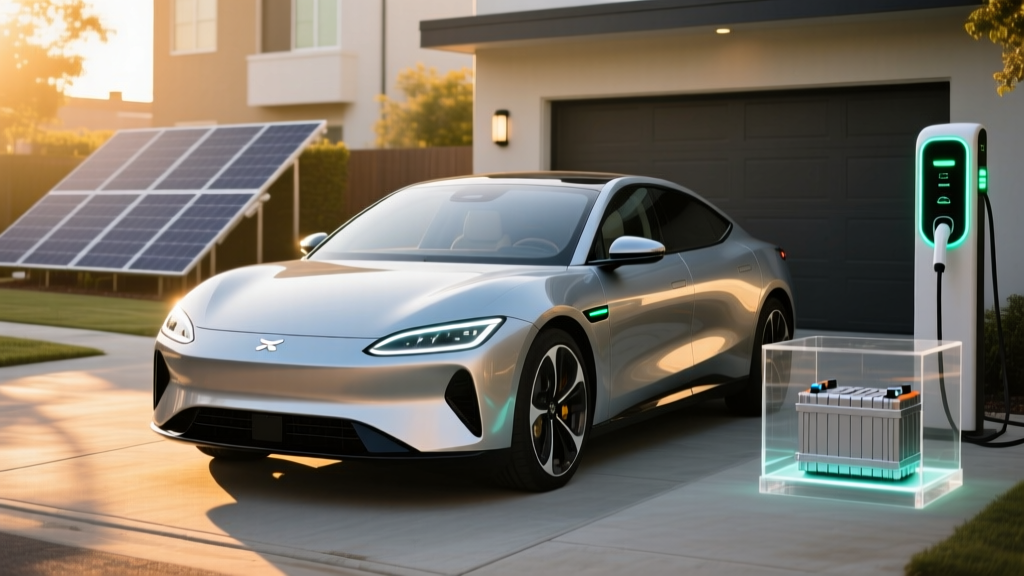
Level 2 (240V, dedicated circuit): This is the standard most EV owners install. A 48-amp Level 2 charger (like the ChargePoint Home Flex or Tesla Wall Connector) delivers up to 11.5 kW, adding roughly 35-44 miles of range per hour. A full charge of a 75 kWh battery takes about 7-8 hours — easily done overnight.
DC Fast Charging (public, 150-350 kW): On a 250 kW Tesla Supercharger, the Model Y Long Range peaks at roughly 250 kW and charges from 10-80% in approximately 25 minutes. Note that charging speed tapers significantly above 80% to protect the battery — expect the final 20% to take nearly as long as the first 60%.
Here's what a typical Level 2 home installation costs in 2026:
| Component | Low Estimate | High Estimate | Notes |
|---|---|---|---|
| Level 2 Charger Unit | $350 | $700 | ChargePoint Home Flex, Tesla Wall Connector, Emporia |
| Electrical Permit | $50 | $250 | Varies by municipality |
| Electrician Labor (standard install) | $400 | $1,200 | 240V/50A circuit near panel |
| Panel Upgrade (if needed) | $1,500 | $3,500 | Required if panel is 100A or maxed out |
| Total (no panel upgrade) | $800 | $2,150 | |
| Total (with panel upgrade) | $2,300 | $5,450 |
If you live in an apartment or lack dedicated parking, home charging isn't an option. In that case, assess your access to reliable public Level 2 chargers (workplace, grocery store, gym) and DC fast chargers within 10 minutes of your home. Apps like PlugShare and the DOE Alternative Fuels Station Locator map coverage in your area. If public infrastructure is sparse, a PHEV may be the more practical electrified choice.
Common EV Misconceptions — Fact-Checked
| Myth | Fact |
|---|---|
| "EV batteries need replacing every few years and cost $20,000." | Federal law mandates battery warranties of at least 8 years/100,000 miles. Real-world degradation data shows most NMC batteries retain 85-90% capacity after 150,000 miles. LFP batteries (used in base Tesla Model 3, some Ford and Hyundai models) degrade even slower. Full replacement is rare and typically costs $8,000-$15,000, not $20,000+. |
| "EVs are worse in winter." | Range does drop 20-30% in sub-freezing temperatures due to cabin heating demands and slower electrochemistry. But preconditioning (warming the battery and cabin while plugged in) recovers much of that loss. EVs also start instantly in cold weather — no cranking, no warm-up idle. |
| "There aren't enough charging stations." | As of early 2026, the U.S. has over 190,000 public charging ports. Coverage is strong along major interstates and in metro areas, though rural "charging deserts" persist. The Tesla Supercharger network (now open to NACS-equipped vehicles from Ford, GM, Rivian, and others) added significant reliability and coverage. |
| "EVs are more expensive to insure." | Generally true — EV insurance premiums run 15-25% higher than comparable gas cars due to higher repair costs (specialized parts, battery protection). However, the gap is narrowing as EV market share grows and repair networks expand. |
| "The tax credit is $7,500 for everyone." | The §30D credit phases based on your income, the vehicle's MSRP, battery sourcing requirements, and whether the manufacturer has hit any caps. Not every EV qualifies for the full amount, and some qualify for a partial credit ($3,750). Always check the fueleconomy.gov tax credit lookup for your specific vehicle. |
First-Time EV Buyer: What You Actually Need to Know
If you've never owned an EV, the learning curve is manageable but real. Here are the non-obvious realities that spec sheets won't tell you:
- Plan trips around charging, not just range. A 320-mile EPA range sounds like enough for a 300-mile trip, but you'll want a buffer. In practice, plan to charge at roughly the 200-230 mile mark on highway drives (70-80 mph consumes more energy than the EPA combined cycle assumes).
- Charging curves matter more than peak kW. A vehicle that "peaks at 250 kW" may sustain that rate for only 5-10 minutes before tapering. Look at 10-80% charge times, not peak numbers.
- Regenerative braking changes how you drive. Most EVs offer strong regen that slows the car when you lift off the accelerator, enabling "one-pedal driving" in city traffic. It takes a week to adjust, then you'll miss it in a gas car.
- Your electrical panel may need an upgrade. Before buying an EV, have an electrician assess your home panel. A 200-amp panel with spare capacity handles a Level 2 charger easily; a 100-amp panel likely needs a $1,500-$3,500 upgrade.
- LFP vs NMC battery chemistry affects how you charge. LFP (lithium iron phosphate) batteries can and should be charged to 100% regularly. NMC (nickel manganese cobalt) batteries last longer if you keep daily charges at 80% and only hit 100% before long trips.
Decision Framework: Which Electrified Vehicle Is Right for You?
Choose a Battery-Electric Vehicle (BEV) if:
- You have reliable home Level 2 charging (garage, driveway, or dedicated spot)
- Your daily commute is under 80 miles round-trip
- You take road trips fewer than 6 times per year (or don't mind 20-30 minute charging stops)
- You want the lowest per-mile energy cost (~$0.04-$0.06/mile on home electricity vs ~$0.12/mile for gas)
- You qualify for the full or partial §30D tax credit
Choose a Plug-In Hybrid (PHEV) if:
- You lack consistent home charging access (apartment, street parking)
- You frequently drive 300+ miles and don't want to plan charging stops
- Your daily commute is under 40 miles (most PHEVs cover this on electric-only power)
- You want electrification without any range anxiety in cold weather or remote areas
Stick with a Gas Hybrid (HEV) if:
- You have zero charging access and no realistic path to getting it
- Your budget is under $30,000 and you want maximum fuel efficiency without a plug
- You tow frequently or drive in extreme conditions where EV range loss is a dealbreaker
A Note on All Electric Boats (And Where to Learn More)
For readers specifically interested in all electric boats, the marine electrification space is advancing rapidly but operates under different constraints than road EVs. Battery weight and energy density matter far more on water (there's no regenerative braking to recoup energy, and you can't simply pull over to charge). Leading electric boat manufacturers in 2026 include:
- X Shore (Sweden) — the X Shore 1, starting around €299,000, with roughly 100 nautical miles of range at cruising speed
- Candela (Sweden) — hydrofoiling electric boats like the C-8, using 80% less energy than conventional hulls
- Arc Marine (USA) — the Arc One, a 24-foot electric wakeboard boat starting around $300,000
- Frauscher (Austria) — luxury electric dayboats with BMW i3-derived battery technology
These are fascinating products, but they fall outside AutoEdgeView's scope. For marine-specific coverage, we recommend dedicated boating publications. For everything related to electric cars, SUVs, trucks, and charging infrastructure, you're in the right place — browse our latest EV reviews and guides for data-driven, spec-precise analysis.
Frequently Asked Questions
Do all electric boats qualify for any federal tax incentives?
No. The federal §30D clean vehicle credit applies only to road-going vehicles that meet specific criteria (on-road use, four wheels, MSRP and income caps, battery sourcing rules). Electric boats, personal watercraft, and off-road vehicles do not qualify. Some states may offer separate marine electrification incentives — check your state energy office.
What's the cheapest way to start driving electric in 2026?
The most affordable new EVs in 2026 include the Nissan Leaf S (~$28,140 MSRP, 149-mile range) and the Chevrolet Equinox EV LT (~$33,000 MSRP, 319-mile range). Both may qualify for the §30D credit depending on your income and the vehicle's sourcing compliance. On the used market, the used EV credit offers up to $4,000 (30% of sale price, max $4,000) for vehicles under $25,000 sold by a licensed dealer.
How long does it take to charge an EV at home?
On a Level 2 home charger (11.5 kW), a typical 75 kWh battery charges from 10% to 80% in about 5 hours. On a standard 120V outlet (Level 1), the same charge would take over 3 days. Most EV owners charge overnight on Level 2 and wake up to a full battery every morning.
Is a PHEV better than a full EV for someone new to electric driving?
For many first-time buyers, yes. A PHEV like the Toyota RAV4 Prime (42 miles EV-only range) lets you experience electric commuting without changing your road-trip habits. You get the quiet, instant-torque feel of electric driving daily, and the gas engine covers longer trips. It's the lowest-risk entry point into electrification.
Will my EV battery degrade significantly in 5 years?
Based on aggregated fleet data, most modern EV batteries lose approximately 5-10% of their original capacity over the first 5 years / 75,000 miles. LFP-chemistry batteries (found in standard-range Tesla Model 3/Y, some BYD and Hyundai models) show even less degradation — often under 5% over the same period. All new EVs sold in the U.S. carry a minimum 8-year/100,000-mile battery warranty covering capacity below 70% of original.