Quick Verdict: Is the All Black Tesla Model Y Worth the Upcharge?
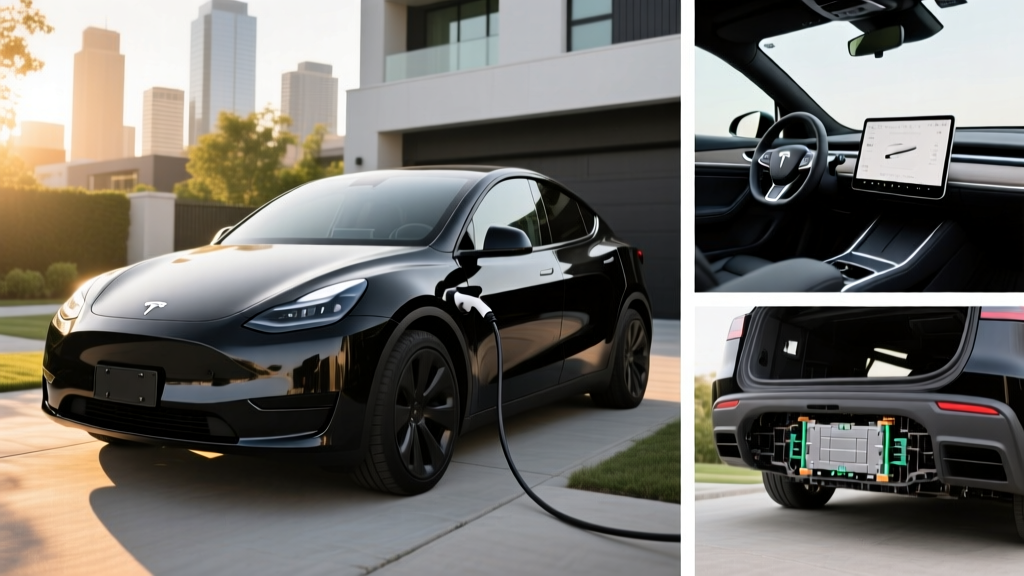
The all black Tesla Model Y — configured with Solid Black paint, black wheels, and the black-and-white interior — has become one of the most popular aesthetics in Tesla's lineup. But beyond the stealthy look, the 2026 Model Y Long Range AWD remains a benchmark electric crossover: 320 miles of EPA range, a 250 kW peak DC fast-charge rate, and access to Tesla's Supercharger network. The all-black configuration adds roughly $2,000 to the build in paint and wheel upgrades, pushing the as-tested price near $50,000 before incentives. If you want a daily-drivable EV with top-tier charging infrastructure and minimal compromise on cargo space, the blacked-out Model Y still sets the bar — though insurance costs and panel-gap consistency remain fair criticisms.
Range, Efficiency & Real-World Expectations
The 2026 Tesla Model Y Long Range AWD carries an EPA-estimated 320 miles of range on its 78.1 kWh usable battery pack (NMC chemistry). Combined efficiency lands at 122 MPGe, or roughly 27 kWh per 100 miles — among the best in the midsize electric SUV segment.
EPA 320 mi is measured on a mixed cycle. Expect ~275–290 mi on sustained highway driving at 70–75 mph, and ~240–260 mi in cold weather (below 32°F) where cabin heating and battery resistance take a toll. The heat pump on the 2026 Model Y helps mitigate winter losses compared to older EVs, but a 15–20% range drop in freezing temps is normal physics, not a defect. In mild city driving with regenerative braking, some owners report exceeding 330 mi.
| Spec | Value |
|---|---|
| EPA Range | 320 miles |
| Battery (usable) | 78.1 kWh, NMC |
| Efficiency | 122 MPGe / 27 kWh/100mi |
| Drivetrain | Dual-Motor AWD |
| Horsepower | 384 hp combined |
| 0–60 mph | 4.8 seconds |
| Peak DC Fast Charge | 250 kW |
| 10–80% DC Charge | ~25 minutes |
| Level 2 Home Charge | 11.5 kW (~44 mi/hr) |
| Cargo (rear seats up) | 30.2 cu ft |
| Cargo (rear seats folded) | 72.1 cu ft |
| Rear Legroom | 36.5 in |
Charging Speed: DC Fast, Level 2 & Home Setup
Tesla's charging ecosystem is a genuine ownership advantage. The 2026 Model Y Long Range AWD supports a peak DC fast-charge rate of 250 kW on V3 and V4 Superchargers. In practice, the charge curve peaks near 250 kW up to roughly 40% state of charge (SoC), then tapers progressively. A 10–80% session takes approximately 25 minutes under ideal battery preconditioning — meaning you've navigated to a Supercharger and the car has warmed the pack.
| Level | Power | Miles Added per Hour | Typical Use |
|---|---|---|---|
| Level 1 (120V) | ~1.4 kW | ~5 mi/hr | Emergency / trickle |
| Level 2 (240V, 48A) | 11.5 kW | ~44 mi/hr | Home overnight |
| DC Fast (Supercharger V3/V4) | Up to 250 kW | ~1,000+ mi/hr (peak) | Road trips |
For home charging, Tesla's Wall Connector at 48 amps on a 60A circuit delivers 11.5 kW — enough to replenish a full battery in about 7 hours. Installation typically runs $800–$2,000 depending on panel proximity and whether your home needs a service upgrade. The Model Y uses the NACS connector natively, and with the 2026 standardization of NACS across most automakers, Supercharger access is now open to competitors — though Tesla owners still benefit from seamless plug-and-charge integration and navigation-based preconditioning.
Performance & Driving Dynamics
The dual-motor AWD powertrain produces 384 hp and delivers a 4.8-second 0–60 mph time — quick for a family crossover, and the instant torque makes highway merging effortless. The 2026 Model Y "Juniper" refresh brought revised suspension tuning that noticeably improves ride comfort over the pre-2025 model, reducing the crashy impact over sharp bumps that plagued earlier versions.
Regenerative braking remains strong and predictable. Tesla removed the user-adjustable regen setting several years ago, so one-pedal driving is the default and only mode. Most owners adapt within a week. The steering is precise but artificially weighted — a common Tesla characteristic that some enthusiasts find numb on long highway stretches.
All Black Configuration: Pricing, Trims & Tax Credit
Building an all black Tesla Model Y means selecting Solid Black paint ($2,000 upgrade from the free Pearl White), optional 20" black wheels or the standard 19" with black aero covers, and the available black-and-white premium interior ($1,000). Here's how the pricing breaks down:
| Item | Cost |
|---|---|
| Long Range AWD Base MSRP | $47,990 |
| Solid Black Paint | +$2,000 |
| Black-and-White Interior | +$1,000 |
| Destination Fee | +$1,390 |
| Total Before Incentives | $52,380 |
| Federal §30D Credit (if eligible) | −$7,500 |
| Effective Price After Credit | ~$44,880 |
- MSRP Cap: SUVs/vans/pickups must be under $80,000 — Model Y qualifies ✓
- Buyer Income Cap: AGI ≤ $150,000 (single), $225,000 (head of household), $300,000 (joint) — verify per IRS
- Battery Sourcing: Critical minerals and battery components must meet phased-in domestic/free-trade sourcing thresholds — Tesla's US-built packs have largely met 2026 requirements, but always confirm the specific VIN at purchase
- Point-of-Sale Transfer: You can transfer the credit to the dealer at purchase for an immediate price reduction rather than waiting for tax filing
Note: Credit eligibility is VIN-specific and subject to change. Confirm with your tax professional and the IRS seller-reporting tool before purchase.
Interior, Tech & Driver Assistance
The 2026 Juniper-refreshed Model Y interior is a meaningful step up. Ambient lighting, ventilated front seats, a rear-seat touchscreen, and improved sound insulation bring it closer to luxury competitors. The 15.4-inch center display handles everything — there are no physical buttons, which remains polarizing. The black-and-white interior option looks striking against the black exterior but shows scuffs on the white seat bolsters over time.
Tech highlights:
- 15.4" touchscreen with navigation, streaming, and gaming
- 8-camera Tesla Vision suite (no radar or ultrasonic sensors)
- Basic Autopilot included; FSD (Supervised) available for $8,000 or $99/mo
- Over-the-air updates continuously add features
- Phone-as-key with Bluetooth proximity unlock
Both Autopilot and Full Self-Driving (Supervised) are SAE Level 2 driver-assist systems. You must keep your hands on the wheel and eyes on the road at all times. Tesla's camera-only vision system is capable on highways but can struggle with construction zones, faded lane markings, and adverse weather. It is not a Level 4 autonomous system like Waymo's driverless robotaxis.
Warranty, Ownership Costs & Who It Suits
Tesla's warranty covers the battery and drive unit for 8 years / 120,000 miles (whichever comes first), with a guaranteed minimum 70% capacity retention. The limited vehicle warranty is 4 years / 50,000 miles. This is competitive with Hyundai/Kia's 10-year battery warranty on paper, though Tesla's real-world degradation data from high-mileage fleets shows most packs retain 85–90% capacity at 100,000 miles.
Who the all black Model Y suits best:
- Daily commuters with home charging: 320 mi range means charging once or twice a week
- Small families: 72.1 cu ft cargo space with seats folded handles strollers, groceries, and road-trip luggage
- Road trippers: Supercharger network reliability is still the gold standard for long-distance EV travel
- Style-conscious buyers: The all-black config has strong resale appeal and a premium aesthetic
Who should look elsewhere: Buyers needing three rows (consider the Kia EV9), those in areas with no home charging access, or anyone who prefers physical buttons and traditional dealer service experiences.
- 320-mi EPA range with class-leading efficiency
- 250 kW Supercharger access with seamless plug-and-charge
- Spacious cargo area (72.1 cu ft) and practical liftback design
- Strong performance (4.8s 0–60) with dual-motor AWD
- Continuous OTA updates add real feature value over time
- All-black config holds strong resale demand
- Solid Black paint shows swirl marks and requires maintenance
- No physical controls — everything through the touchscreen
- Insurance premiums run 15–25% higher than segment average
- Panel gap inconsistency still reported on some builds
- FSD ($8,000) remains a Level 2 system despite the name
- Service center wait times can be long in some metro areas
Frequently Asked Questions
What is the real-world range of the all black Tesla Model Y?
The EPA rates it at 320 miles, but expect around 275–290 miles on highway-heavy drives and 240–260 miles in freezing weather. City driving with regen can push past 330 miles in mild conditions.
How fast does the Model Y charge at home and on the road?
On a DC Supercharger, it peaks at 250 kW and charges from 10–80% in about 25 minutes. At home on a Level 2 Wall Connector (11.5 kW), it adds roughly 44 miles per hour, fully recharging overnight in ~7 hours.
Does the all black Tesla Model Y qualify for the $7,500 federal tax credit?
The Model Y Long Range AWD (MSRP under $80,000) meets the vehicle MSRP cap. Eligibility depends on your income (AGI limits apply), and the battery must meet 2026 critical-mineral and component sourcing thresholds. Most US-built Model Y units currently qualify, but always verify the specific VIN through the IRS clean vehicle credit tool before purchasing.
Is the all black Model Y worth it vs. the Hyundai Ioniq 5 or Ford Mustang Mach-E?
The Model Y wins on charging infrastructure (Supercharger network), cargo space, and efficiency. The Ioniq 5 offers faster 10–80% charging (18 min on 350 kW) and a more distinctive design. The Mach-E provides a more traditional driving feel and physical controls. If Supercharger reliability and range are your top priorities, the Model Y holds the edge.
How much does the all black paint cost to maintain?
Tesla's Solid Black is a single-stage paint that shows swirl marks and water spots more than metallic colors. Many owners invest in a ceramic coating ($1,000–$2,000) or paint protection film (PPF, $2,500–$5,000 for full front) to preserve the finish. Budget for hand washing or touchless washes to avoid automatic-brush damage.
What is the battery warranty on the 2026 Model Y?
Tesla covers the battery and drive unit for 8 years or 120,000 miles, guaranteeing at least 70% capacity retention. Real-world fleet data suggests most NMC packs retain 85–90% at the 100K-mile mark under normal use.