Quick Answer: The Alfa Romeo Junior Elettrica is the brand's first and currently only fully electric car available in global markets. It offers up to 217 miles of WLTP range (approximately 180–195 miles EPA-estimated), a 54 kWh battery, and DC fast charging up to 100 kW. The high-performance Veloce variant bumps output to 280 hp. As of 2026, Alfa Romeo has not confirmed U.S. availability for the Junior Elettrica, and the brand's broader EV roadmap—including an electric Giulia and Stelvio—remains in the announced/preliminary stage. If you're in the U.S. and want an Alfa Romeo EV today, your options are essentially zero; if you're in Europe or tracking future models, this guide covers what's real, what's coming, and what ownership actually costs.
Alfa Romeo's Electric Lineup: What Exists in 2026
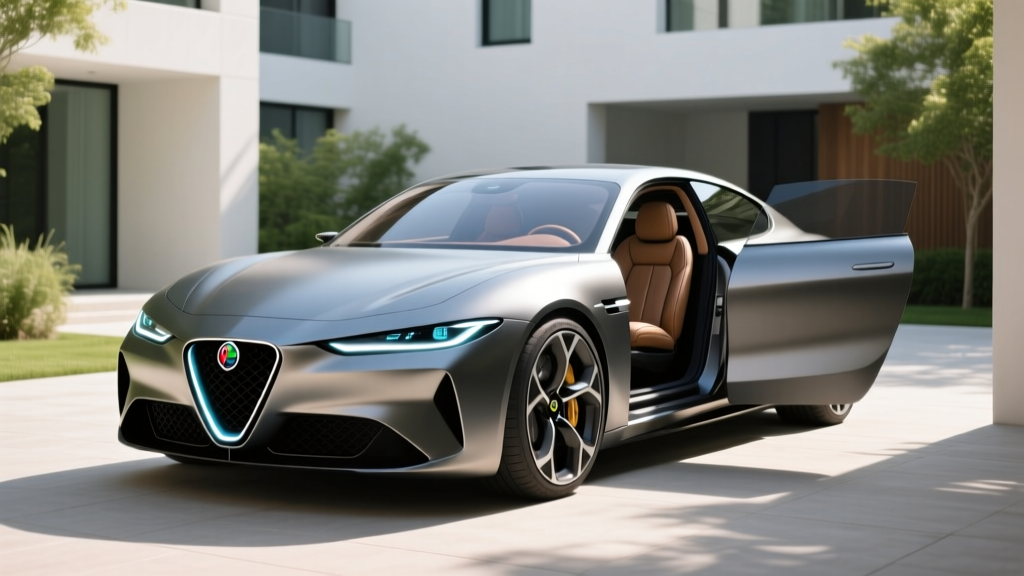
Alfa Romeo entered the EV space with the Junior (originally launched as the Milano before a naming dispute forced a rebrand). The Junior Elettrica sits on the Stellantis e-CMP2 platform shared with the Peugeot e-2008, Jeep Avenger, and Fiat 600e. It's a B-segment crossover aimed squarely at urban and suburban European buyers.
For U.S. buyers, the situation is straightforward: Alfa Romeo currently sells only the Giulia and Stelvio in America, both with conventional powertrains. The brand has confirmed plans to go fully electric by 2027, but that timeline applies primarily to European markets. An electric Giulia successor and an electric Stelvio replacement have been announced but carry no confirmed U.S. launch dates or finalized specs.
Here's what's actually in production:
| Spec | Junior Elettrica (Base) | Junior Elettrica Veloce |
|---|---|---|
| Battery (usable) | 51 kWh (NMC) | 51 kWh (NMC) |
| WLTP Range | ~217 mi (350 km) | ~205 mi (330 km) |
| Estimated EPA Range | ~180–195 mi | ~170–185 mi |
| Power | 156 hp (115 kW) | 280 hp (208 kW) |
| 0–62 mph (0–100 km/h) | 9.0 sec | 5.9 sec |
| Max DC Charge Rate | 100 kW | 100 kW |
| 10–80% DC Charge | ~30 min | ~30 min |
| AC Charging (Level 2) | 11 kW (3-phase, Europe) | 11 kW (3-phase, Europe) |
| Drivetrain | FWD | FWD |
| Starting MSRP (Europe) | ~€35,000 | ~€42,000 |
Sources: Alfa Romeo official specs, Stellantis e-CMP2 platform data.
Charging Speed and Infrastructure: What to Expect
The Junior Elettrica's 100 kW peak DC fast-charge rate is the weakest link in its spec sheet by modern standards. Competitors like the Hyundai Kona Electric (peak ~100 kW but with a larger battery) and the Volvo EX30 (153 kW peak on the extended-range variant) charge noticeably faster on long trips.
Understanding the difference between kW (power, or how fast energy flows into the battery) and kWh (energy, or total battery capacity) is critical here. A 100 kW peak rate sounds reasonable, but it only applies to a narrow window of the charge curve—typically between 10% and 40% state of charge. Above 60%, the rate tapers significantly, often dropping below 50 kW. This is why the 10–80% time of ~30 minutes matters more than the peak number.
| Charging Level | Power | Miles Added Per Hour | Typical Use Case |
|---|---|---|---|
| Level 1 (120V household) | ~1.4 kW | ~4–5 mi/hr | Emergency / overnight trickle |
| Level 2 (240V home, single-phase) | ~7.4 kW | ~22–26 mi/hr | Daily home charging (U.S.) |
| Level 2 (3-phase, Europe) | 11 kW | ~33–38 mi/hr | Standard European home/public |
| DC Fast Charge | Up to 100 kW | ~150–180 mi/hr (peak) | Road trips, 10–80% in ~30 min |
For U.S. buyers hypothetically importing or future-proofing: a standard Level 2 home charger (240V, 32A) would replenish the Junior's battery from empty to full in roughly 7 hours. That's perfectly adequate for overnight charging but means you'll want reliable home charging access—public-only ownership with a 51 kWh battery is punishing.
The Junior uses a CCS2 connector in Europe. If Alfa Romeo brings this model or its successors to North America, it would almost certainly adopt the NACS (Tesla-style) connector, which has become the de facto U.S. standard as of 2025–2026.
EV vs Gas: Cost Comparison for the Alfa Romeo Buyer
The closest gas-powered alternative in Alfa Romeo's own lineup is the Giulia (starting around $47,000 in the U.S.) or, in Europe, a Junior Hybrid variant. Let's compare the Junior Elettrica against a typical B-segment gas crossover at European pricing, since that's where this car lives:
| Category | Junior Elettrica (EV) | Gas Crossover (e.g., Peugeot 2008) |
|---|---|---|
| Purchase Price | ~€35,000 | ~€28,000 |
| Fuel/Energy (5 yr, 75,000 km) | ~€3,200 (home charging avg) | ~€8,400 (petrol at €1.80/L) |
| Maintenance (5 yr) | ~€800 | ~€2,500 |
| Insurance (5 yr avg) | ~€4,500 | ~€3,800 |
| Estimated Depreciation | ~€14,000 | ~€12,000 |
| Total 5-Year Cost | ~€57,500 | ~€54,700 |
The EV saves substantially on fuel and maintenance but gives back some of that advantage through higher purchase price, insurance premiums (EV insurance runs 10–20% higher on average), and steeper depreciation driven by rapid EV market evolution. The break-even point typically arrives around year 6–7, assuming consistent home charging at residential electricity rates.
For U.S. buyers considering a future electric Alfa Romeo (like the anticipated Giulia EV), the math shifts. U.S. electricity costs average $0.16/kWh nationally, meaning a full charge of a ~80 kWh battery pack (expected for a mid-size EV) would cost roughly $12.80 at home—compared to $50–$65 filling a gas tank. The IRS §30D federal tax credit could offset up to $7,500 at point of sale, but eligibility depends on MSRP caps ($55,000 for sedans, $80,000 for SUVs), buyer income limits ($150K single / $300K joint), and battery critical-mineral sourcing requirements that change annually.
What First-Time EV Buyers Need to Know About Alfa Romeo
If you're drawn to Alfa Romeo's design language and driving dynamics but are new to EVs, several ownership realities deserve honest attention:
Home charging is nearly mandatory. With a 51 kWh battery and ~180 miles of real range, relying exclusively on public DC fast charging would mean stopping every 2–3 days for most commuters. Public charging also costs 2–4× more per kWh than home charging, erasing most of the fuel-cost advantage. If you live in an apartment without charging access, an EV with this battery size is impractical.
Cold weather is a real range killer. The Junior Elettrica lacks a heat pump in base European trim (confirm by market). Without one, cabin heating draws directly from the traction battery, compounding the 15–25% range loss that all EVs experience in freezing temperatures. Preconditioning the battery while plugged in helps but requires planning.
The charging curve matters more than the peak rate. Marketing materials highlight "100 kW DC fast charging" but don't mention that this peak sustains for only 10–15 minutes before tapering. On a road trip, budget 35–40 minutes per stop to go from 10% to 80%, not the 30-minute figure you might calculate from the peak rate alone.
Battery degradation is slow but real. Stellantis warranties the Junior's NMC battery at 70% capacity retention over 8 years / 160,000 km. Real-world data from similar e-CMP2 platform vehicles shows typical degradation of 8–12% over the first 100,000 km, meaning your 180-mile range might become 160 miles by year 5–6. This is normal and not catastrophic, but it's worth factoring in.
Common Misconceptions About Alfa Romeo's EV Plans
| Myth | Fact |
|---|---|
| "Alfa Romeo has an electric Giulia you can buy now." | The electric Giulia is announced for ~2027 on the STLA Large platform. As of 2026, the Giulia is gas-only in all markets. |
| "The Junior Elettrica is available in the United States." | Alfa Romeo does not sell the Junior in the U.S. The brand's American lineup is limited to Giulia and Stelvio. |
| "100 kW charging means it charges at that speed the whole time." | Peak rate applies only to a narrow SoC window (roughly 10–40%). Average sustained rate is closer to 60–70 kW across the 10–80% session. |
| "Alfa Romeo is going all-electric in 2026." | The 2027 all-electric target applies to Europe. U.S. timelines and model availability remain unconfirmed. |
| "EVs have no maintenance costs." | EVs eliminate oil changes, spark plugs, and transmission fluid, but still require tire rotation, brake fluid checks, cabin filters, and eventual tire replacement (EVs wear tires ~20% faster due to instant torque and heavier weight). |
What's Coming Next: Electric Giulia, Stelvio, and the STLA Large Platform
Alfa Romeo's parent company Stellantis has invested heavily in the STLA Large platform, which will underpin the next-generation electric Giulia and Stelvio. Announced specs suggest:
- Battery options from ~87 kWh to over 100 kWh (NMC chemistry)
- Range targets of 400+ miles (WLTP) for the top-spec sedan—roughly 340–360 miles EPA
- DC fast charging up to 350 kW (800V architecture), enabling 10–80% in under 20 minutes
- Dual-motor AWD variants with 500+ hp for the Quadrifoglio performance models
These are preliminary/announced figures. Final EPA ratings, U.S. pricing, and availability dates have not been published. Stellantis has suggested 2027 for European launches, with U.S. availability potentially following in 2028. If these specs hold, the electric Giulia would compete directly with the BMW i4, Tesla Model 3 Performance, and Hyundai Ioniq 6.
Decision Framework: Should You Wait for an Alfa Romeo EV?
Choose to wait for an Alfa Romeo EV if:
- You're in Europe and the Junior Elettrica's ~200-mile range fits your commute (under 80 miles round-trip daily)
- You have reliable Level 2 home charging and rarely drive more than 250 miles in a single day
- Brand loyalty and design matter more to you than having the best charging speed or longest range in the segment
- You're willing to wait until 2027–2028 for the electric Giulia/Stelvio and want something with more range and faster charging than the Junior
Look elsewhere now if:
- You're a U.S. buyer—Alfa Romeo simply doesn't sell an EV here today
- You need 300+ miles of range for frequent road trips (the Junior's 51 kWh battery isn't built for this)
- Fast DC charging matters—100 kW peak is a generation behind rivals like the Hyundai Ioniq 5 (240 kW), Kia EV6 (240 kW), or Tesla Model Y (250 kW)
- You need AWD—the Junior Elettrica is front-wheel drive only
- You want to maximize the U.S. §30D tax credit—no current Alfa Romeo EV qualifies because none are sold in the U.S.
If you're a U.S. buyer who loves the Alfa Romeo brand and wants electrification today, the closest alternatives include the BMW i4 (307 miles EPA, from ~$52,200), the Tesla Model 3 Long Range (363 miles EPA, from ~$42,490), or the Hyundai Ioniq 6 (361 miles EPA, from ~$37,500)—all of which offer substantially more range, faster charging, and confirmed U.S. availability with potential §30D tax credit eligibility.
Frequently Asked Questions
Is the Alfa Romeo Junior Elettrica sold in the United States?
No. As of 2026, Alfa Romeo does not sell the Junior in any variant in the U.S. market. The brand's American lineup consists only of the Giulia and Stelvio, both with internal combustion powertrains.
What is the real-world range of the Alfa Romeo Junior Elettrica?
The WLTP rating is 217 miles (350 km) for the base model. In real-world mixed driving at highway speeds, expect approximately 155–170 miles. In freezing weather, that can drop to 120–145 miles. The U.S. EPA has not officially rated this vehicle.
How fast does the Junior Elettrica charge?
Peak DC fast-charge rate is 100 kW, achieving a 10–80% charge in approximately 30 minutes. However, the sustained average rate across that session is closer to 60–70 kW due to charge-curve tapering above 60% state of charge. On a Level 2 home charger (7.4 kW, U.S. single-phase), a full charge takes about 7 hours.
Will the electric Alfa Romeo Giulia qualify for the U.S. federal tax credit?
It's too early to say. The IRS §30D tax credit requires final assembly in North America, compliance with MSRP caps ($55,000 for sedans), buyer income limits, and battery critical-mineral sourcing requirements. Until Stellantis confirms U.S. specs, pricing, and manufacturing location, credit eligibility is unknown. Consult a tax professional before making purchase decisions based on incentive assumptions.
What battery chemistry does the Junior Elettrica use?
The Junior Elettrica uses an NMC (nickel manganese cobalt) lithium-ion battery. NMC offers higher energy density than LFP (lithium iron phosphate) but is more sensitive to sustained high state-of-charge storage. For longevity, avoid routinely charging to 100% unless needed for a long trip—daily charging to 80% is ideal for NMC chemistry.
Is Alfa Romeo going fully electric?
Alfa Romeo has announced plans to transition to an all-electric lineup by 2027 in Europe. The next-generation Giulia and Stelvio will be built on Stellantis's STLA Large platform with battery-electric powertrains. However, U.S. timelines and the possibility of continued hybrid offerings in certain markets have not been definitively clarified.