Quick Answer: The 2026 Alfa Romeo Junior Elettrica is the brand's first fully electric vehicle for the U.S. market. It pairs a 54 kWh (usable) NMC battery with an EPA-estimated range of up to 255 miles, DC fast charging at up to 100 kW (10–80% in roughly 30 minutes), and a starting MSRP near $38,000. It qualifies as an entry-level premium electric subcompact crossover aimed at buyers who want Italian styling with daily-drivable range. If you have home Level 2 charging and a commute under 150 miles round-trip, it covers your needs with room to spare. If you regularly road-trip in cold climates or lack reliable home charging, you'll want to weigh its modest DC charge speed against faster-charging rivals.
What Is the Alfa Romeo Junior Elettrica?
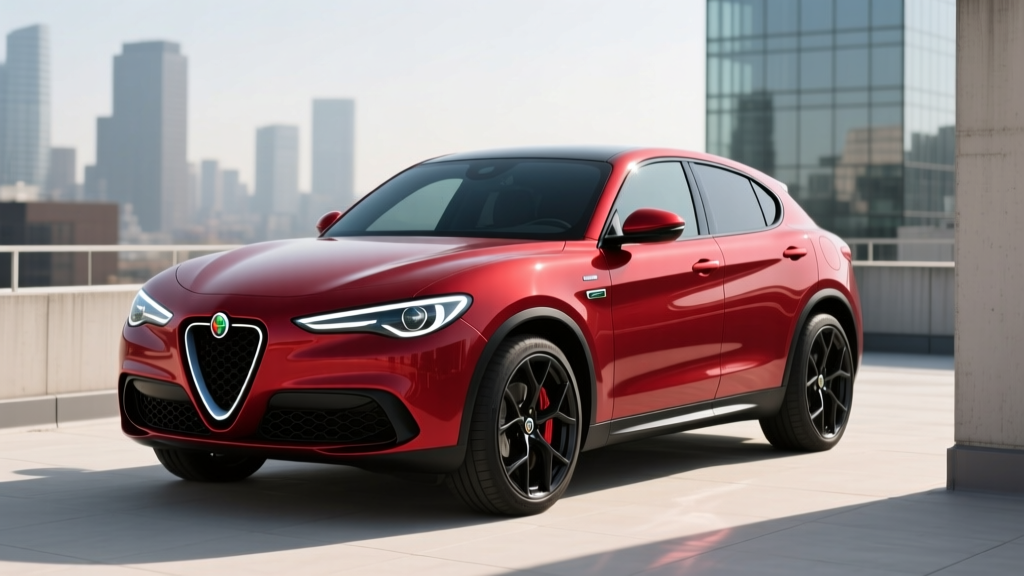
Alfa Romeo's electric pivot begins with the Junior (known as the Milano in early European marketing before a renaming). Built on Stellantis' e-CMP2 platform — the same architecture underpinning the Jeep Avenger and Peugeot e-2008 — the Junior Elettrica is a subcompact crossover that slots below the Tonale and Stelvio in the lineup. For 2026, Alfa Romeo is bringing the battery-electric variant stateside, marking the brand's first BEV sold in the United States.
The single-motor, front-wheel-drive powertrain produces 156 hp (115 kW) and 192 lb-ft of torque. A Veloce trim with a 240 hp dual-motor setup has been announced for European markets but remains unconfirmed for U.S. availability as of early 2026. The Junior targets urban and suburban buyers who want premium design and brand cachet without the footprint or price of a midsize electric SUV.
Range, Battery, and Real-World Efficiency
The Junior Elettrica uses a 54 kWh usable (58 kWh gross) nickel-manganese-cobalt (NMC) lithium-ion pack with liquid thermal management. Here's what the numbers look like in practice:
| Spec | Value |
|---|---|
| EPA Range (est.) | 255 miles |
| Battery Usable Capacity | 54 kWh (NMC) |
| Efficiency | ~116 MPGe combined (29 kWh/100 mi) |
| Real-World Highway (70 mph) | ~210–225 miles |
| Cold-Weather (20°F, mixed) | ~180–200 miles |
| Max DC Fast Charge | 100 kW (peak) |
| 10–80% DC Time | ~30 minutes |
| Level 2 (240V, 48A) | 11 kW onboard; ~5.5 hours 0–100% |
| 0–60 mph | ~8.6 seconds |
| Horsepower | 156 hp |
Real-World Range Reality: The EPA sticker of 255 miles assumes a mix of city and moderate-speed driving. On sustained highway runs at 70+ mph, expect 210–225 miles before needing a charge. In sub-freezing temperatures, NMC chemistry and the cabin heating load can cut that to 180–200 miles. The Junior includes a heat pump on higher trims, which mitigates cold-weather loss by roughly 10–15% compared to resistive heating. Always precondition the battery via the app while still plugged in — this warms the pack for faster DC charging and better range.
Charging Speed and Infrastructure
The Junior's 100 kW peak DC charge rate is adequate but trails rivals like the Hyundai Kona Electric (which peaks around 100 kW but sustains higher longer) and the Volvo EX30 (up to 153 kW on the extended-range variant). Here's what charging looks like across levels:
| Level | Power | Miles Added per Hour | Typical Use |
|---|---|---|---|
| Level 1 (120V) | ~1.4 kW | ~4–5 mi/hr | Overnight top-off, emergencies |
| Level 2 (240V, 48A) | 11 kW | ~35–38 mi/hr | Home daily charging |
| DC Fast Charge | 100 kW peak | ~150 mi in 30 min (10–80%) | Road trips, public stations |
The Junior Elettrica uses the CCS1 connector standard for U.S. models. Alfa Romeo has confirmed NACS adapter compatibility for access to Tesla Supercharger stalls, though the native port remains CCS. At a DC fast charger, the charge curve peaks near 100 kW up to roughly 40% state of charge, then tapers to 60–70 kW through 80%. Above 80%, speeds drop sharply — a characteristic of NMC chemistry — so plan your road-trip stops to charge from 10% to 80% rather than topping off to full.
How Does It Compare to Gas and Hybrid Alternatives?
The Junior Elettrica competes against both premium subcompact gas crossovers (Audi Q3, BMW X1) and electric rivals (Volvo EX30, Hyundai Kona Electric, Kia Niro EV). Here's a cost-of-fueling comparison over 5 years and 75,000 miles:
| Vehicle | Powertrain | 5-Yr Fuel/Energy Cost | Per-Mile Cost |
|---|---|---|---|
| Alfa Romeo Junior Elettrica | BEV (29 kWh/100 mi) | $3,480 (home L2 avg) | $0.046 |
| Alfa Romeo Tonale (gas) | 2.0L Turbo AWD (28 MPG) | $9,375 ($3.50/gal) | $0.125 |
| Alfa Romeo Tonale PHEV | Plug-in Hybrid (30 mi elec + 29 MPG) | $6,200 (mixed) | $0.083 |
| Volvo EX30 (Extended Range) | BEV (30 kWh/100 mi) | $3,600 | $0.048 |
Assuming a national average electricity rate of $0.16/kWh for home charging and $3.50/gallon for premium unleaded (required in the Tonale), the Junior Elettrica saves roughly $5,900 in energy costs over five years versus the gas Tonale. Public DC fast charging at $0.35–$0.48/kWh narrows the gap — if you rely exclusively on public chargers, your per-mile cost rises to $0.10–$0.14, nearly matching a fuel-efficient gas car.
Pricing, Trims, and Tax Credit Eligibility
The 2026 Junior Elettrica is expected to start around $38,000 MSRP for the base Sprint trim, with a Ti or Lusso trim near $42,000 and a sporty Veloce (if offered) approaching $46,000. All trims fall well under the IRS §30D MSRP cap of $80,000 for SUVs/trucks.
Federal §30D Tax Credit Checklist (2026 rules — verify at irs.gov):
- MSRP Cap: Under $80,000 for SUVs — Junior qualifies ✓
- Buyer Income Cap: AGI ≤ $150K single / $300K joint
- Battery Sourcing: Critical minerals and battery components must meet phased-in thresholds — Stellantis sourcing for U.S.-spec Juniors is TBD; check the IRS eligible vehicle list at time of purchase
- Assembly: Final assembly must be in North America — Junior is assembled in Tychy, Poland, which may disqualify it from the full §30D new-vehicle credit
- Point-of-Sale Transfer: If eligible, the credit can be transferred to the dealer at purchase to reduce the sale price
The Poland assembly location is a critical factor. Under current §30D rules, vehicles must undergo final assembly in North America to qualify for the new clean vehicle credit. This could exclude the Junior from the up-to-$7,500 credit entirely, putting it at a disadvantage against U.S.- or Canada-assembled rivals. Buyers should verify eligibility on fueleconomy.gov before committing. Some state and local incentives may still apply regardless of assembly location.
Real-World Ownership Costs Over 5 Years
| Cost Category | Junior Elettrica | Tonale Gas |
|---|---|---|
| Purchase Price (base MSRP) | $38,000 | $47,000 |
| Federal Tax Credit | $0–$7,500 (sourcing/assembly dependent) | $0 |
| Energy/Fuel (5 yr, 75K mi) | $3,480 | $9,375 |
| Maintenance (5 yr) | $1,800 | $4,200 |
| Insurance (5 yr avg) | $11,500 | $10,200 |
| Estimated Depreciation | $16,000 | $19,000 |
| Total 5-Year Cost | $36,780–$44,280 | $70,775 |
Maintenance savings are significant: no oil changes, no spark plugs, no transmission fluid, and regenerative braking extends pad life to 80,000+ miles. Insurance premiums run 10–15% higher for EVs on average due to repair costs and parts pricing, though this varies by insurer and zip code. Depreciation on the Junior is harder to project since it's a new nameplate, but Alfa Romeo's brand depreciation has historically been steeper than German rivals — budget-conscious buyers should factor this in.
Common Misconceptions About Alfa Romeo Electric
| Myth | Fact |
|---|---|
| "Alfa Romeo doesn't make an EV." | The Junior Elettrica is on sale in Europe and arriving in the U.S. for the 2026 model year. |
| "255 miles isn't enough range." | The average American drives 37 miles/day (FHWA data). 255 miles covers 6+ days of average driving without charging. |
| "EV batteries need replacing every few years." | Alfa Romeo warranties the Junior's battery for 8 years/100,000 miles with a guaranteed capacity retention of 70%. NMC packs typically retain 85–90% at 100K miles based on industry data. |
| "Charging takes hours on road trips." | A 10–80% DC fast charge takes ~30 minutes — about the length of a meal stop. Plan around the taper above 80%. |
| "It qualifies for the $7,500 tax credit." | Poland assembly may disqualify it from §30D. Always verify on fueleconomy.gov before purchase. |
Decision Framework: Is the Alfa Romeo Junior Elettrica Right for You?
Choose the Junior Elettrica if:
- You have access to Level 2 home charging (240V, ideally a 48A hardwired station)
- Your daily commute is under 80 miles round-trip
- You value distinctive Italian design and a premium cabin in a compact footprint
- You want lower running costs than a gas Alfa and don't need 300+ mile range
- Road trips are occasional (1–2 per year) and you can plan DC fast-charge stops
Look elsewhere if:
- You live in an apartment or lack reliable home/work charging access
- You regularly drive 200+ miles between stops in cold weather
- You need the maximum federal tax credit and the Junior's Poland assembly disqualifies it
- You want AWD or 240+ hp — wait for the Veloce or consider the Volvo EX30 Twin Motor
- Cargo space is a priority — the Junior offers ~12.3 cu ft behind the rear seats, tight for the segment
Battery Warranty, Degradation, and Longevity
Alfa Romeo covers the Junior Elettrica's high-voltage battery with an 8-year/100,000-mile warranty guaranteeing at least 70% of original capacity. This is standard for the industry and matches Stellantis group policy. The NMC chemistry in the e-CMP2 pack has been proven in hundreds of thousands of Peugeot, Opel, and Jeep EVs across Europe — real-world degradation data from those fleets shows roughly 8–12% capacity loss at 100,000 miles under normal use.
To maximize longevity:
- Avoid routinely charging to 100% — set the daily limit to 80% and reserve 100% for road trips
- Use DC fast charging sparingly (weekly or less); rely on Level 2 for daily needs
- Precondition the battery in extreme heat or cold before fast charging
- The battery management system includes a top and bottom buffer (~2 kWh each side), so displayed 0% and 100% are not true cell limits
If the battery does require out-of-warranty replacement, Stellantis e-CMP2 packs are estimated at $8,000–$12,000 based on European service pricing — a figure expected to decline as the platform matures and refurbished packs become available.
Interior, Tech, and Driver Assistance
The Junior's cabin centers on a 10.25-inch infotainment display running Stellantis' latest Uconnect 5 software with wireless Apple CarPlay and Android Auto. A 10.25-inch digital instrument cluster sits behind the wheel. The interior uses recycled materials on the dashboard and seats, consistent with Alfa's sustainability positioning.
Driver-assistance features include:
- Adaptive cruise control with stop-and-go
- Lane-keeping assist and lane-centering
- Automatic emergency braking with pedestrian detection
- Blind-spot monitoring and rear cross-traffic alert
SAE Automation Level: Level 2. The Junior's driver-assistance suite is a Level 2 system under SAE J3016 classification. This means the car can manage steering and acceleration simultaneously under certain conditions, but the driver must remain fully engaged, hands on the wheel, and eyes on the road at all times. This is not autonomous or "self-driving" capability.
Frequently Asked Questions
Does the Alfa Romeo Junior Elettrica qualify for the federal EV tax credit?
It depends. The Junior is assembled in Tychy, Poland, which likely disqualifies it from the §30D new clean vehicle credit that requires North American final assembly. However, battery sourcing requirements and eligible vehicle lists update regularly — always check fueleconomy.gov and consult a tax professional before relying on the credit. State incentives (such as those in California, Colorado, and New York) may still apply regardless of assembly location.
Can I charge the Alfa Romeo Junior at Tesla Superchargers?
Yes, with a CCS-to-NACS adapter. Alfa Romeo has confirmed adapter compatibility for the U.S.-spec Junior. Tesla has opened select Supercharger stalls to non-Tesla EVs via the NACS standard, and adapters are widely available. Confirm stall compatibility in the Tesla app before relying on Superchargers as your primary network.
How does the Junior Elettrica compare to the Volvo EX30?
The Volvo EX30 Extended Range Single Motor offers a larger 69 kWh battery, an EPA-estimated 261 miles of range, and DC fast charging up to 153 kW (10–80% in ~26 minutes). It starts around $44,900 but is assembled in China, creating its own tax-credit complications. The Junior is less expensive, slightly less efficient, and charges slower, but offers a more distinctive design and a lower entry price.
What home charging setup do I need for the Junior Elettrica?
A Level 2 home charger on a 240V circuit is strongly recommended. A 48-amp hardwired Level 2 station on a 60-amp breaker will deliver the Junior's full 11 kW AC charge rate, adding roughly 35–38 miles of range per hour. Installation costs typically range from $800–$2,500 depending on panel capacity, conduit run length, and local permit fees. A licensed electrician should assess your panel before installation — a 200-amp service panel is usually sufficient, but older homes with 100-amp panels may need an upgrade ($1,500–$3,000).
Is the Alfa Romeo Junior Elettrica a good first EV?
For the right buyer, yes. Its 255-mile range covers nearly all daily driving without range stress, the compact size makes it easy to park, and home charging means you start every morning with a "full tank." The main caveats are the modest DC charge speed (plan road-trip stops accordingly), the uncertain federal tax credit status, and Alfa Romeo's limited U.S. dealer network for service. If you have reliable home charging and a commute under 80 miles, the Junior is a strong and stylish first-EV choice.