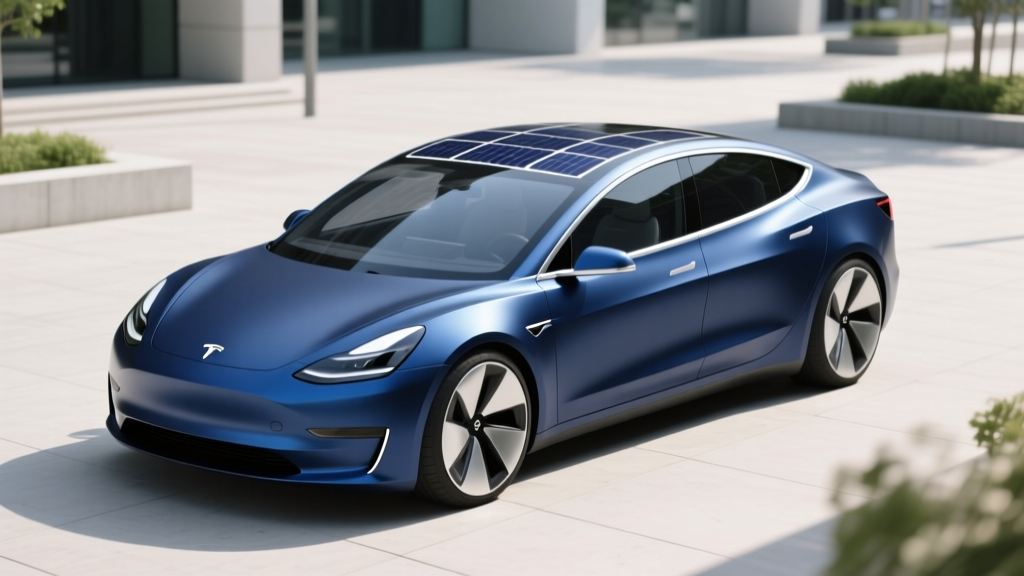
If you've been searching for "Airica Tesla" online, you're not alone — the term has been trending among EV shoppers looking for Tesla's next affordable model. But here's the straight answer upfront: there is no Tesla vehicle officially named "Airica." What buyers are actually hunting for is Tesla's long-rumored compact, affordable EV — often referred to internally as the "next-generation vehicle," "Model 2," or "Redwood" in various reports and earnings calls.
As of early 2026, Tesla has not announced a production model called Airica, nor has it listed such a name on its website or in any SEC filing. What has been discussed is a lower-cost Tesla platform targeting a sub-$30,000 price point, built on a next-generation manufacturing architecture. Below, we break down what's confirmed, what's rumored, and what the competitive landscape looks like if and when this vehicle arrives.
What Is the "Airica Tesla" — And Does It Actually Exist?
The name "Airica" appears to be an internet-born mashup — possibly a blend of "America" and Tesla's naming conventions, or a mishearing of internal project codenames that circulated on forums and social media. Tesla's official lineup as of 2026 includes the Model 3, Model Y, Model S, Model X, Cybertruck, and the refreshed Model 3 Highland. No "Airica" badge exists on any production or concept vehicle.
That said, the search intent behind "Airica Tesla" is clear: buyers want to know about Tesla's affordable compact EV — a vehicle Elon Musk has referenced at various investor events as critical to Tesla's long-term volume growth. At Tesla's 2023 Investor Day, the company outlined a next-generation platform designed to cut production costs roughly in half compared to the Model 3/Y architecture. Since then, details have been sparse and occasionally contradictory.
What We Know About Tesla's Next-Gen Compact Platform
Here's what has been publicly discussed or credibly reported about Tesla's affordable EV platform:
| Attribute | Estimated / Reported | Confidence Level |
|---|---|---|
| Official Name | Unknown (not "Airica") | Not announced |
| Target Base Price | ~$25,000 – $30,000 | Medium (Musk statements, analyst estimates) |
| Battery Chemistry | LFP (Lithium Iron Phosphate) likely | High (cost-reduction strategy aligns with LFP) |
| Estimated Battery Capacity | ~50–60 kWh usable | Low (speculative based on target range) |
| Estimated EPA Range | ~250–300 miles | Low |
| Platform | Next-gen "unboxed" manufacturing | High (confirmed at 2023 Investor Day) |
| Drivetrain | RWD likely (AWD possible) | Medium |
| Production Timeline | Late 2026 – 2027 (estimated) | Low (delays have been common) |
| Charging Standard | NACS (native Tesla connector) | Very High |
The "unboxed" manufacturing process Tesla described involves assembling large sub-sections of the vehicle independently and then joining them — a departure from traditional sequential assembly lines. The goal is to reduce factory floor space by ~40% and cut per-unit production cost significantly. Whether this translates directly to a $25,000 sticker remains to be seen, especially with inflation, tariff fluctuations, and raw material cost variability.
LFP Battery Chemistry: What an Affordable Tesla Likely Means
If Tesla's compact EV arrives at a sub-$30,000 price, it will almost certainly use LFP (lithium iron phosphate) battery chemistry rather than the nickel-based NMC/NCA cells found in Long Range and Performance variants. Tesla already uses LFP in Standard Range (now called "Rear-Wheel Drive") Model 3 and Model Y vehicles.
| Factor | LFP (Likely for Compact) | NMC/NCA (Long Range/Performance) |
|---|---|---|
| Energy Density | Lower (~160 Wh/kg cell-level) | Higher (~250+ Wh/kg cell-level) |
| Cost per kWh | Lower (no nickel/cobalt) | Higher |
| Cycle Life | Longer (3,000+ cycles typical) | Shorter (~1,000–2,000 cycles) |
| Cold-Weather Performance | More range loss in freezing temps | Better cold-weather retention |
| Charging to 100% | Tesla recommends periodic 100% charges for calibration | Daily limit ~80% recommended |
| Safety / Thermal Stability | Superior (less prone to thermal runaway) | Good, but lower threshold |
For buyers, LFP means a battery that will likely outlast the car itself in terms of cycle life, with the trade-off of somewhat less range per kilogram and more sensitivity to extreme cold. In real-world terms, if this compact Tesla targets 270 miles EPA, expect closer to 210–230 miles in freezing winter highway driving — a pattern consistent with current LFP-equipped Model 3 RWD sedans.
Charging Expectations: NACS, Supercharger Access, and DC Speed
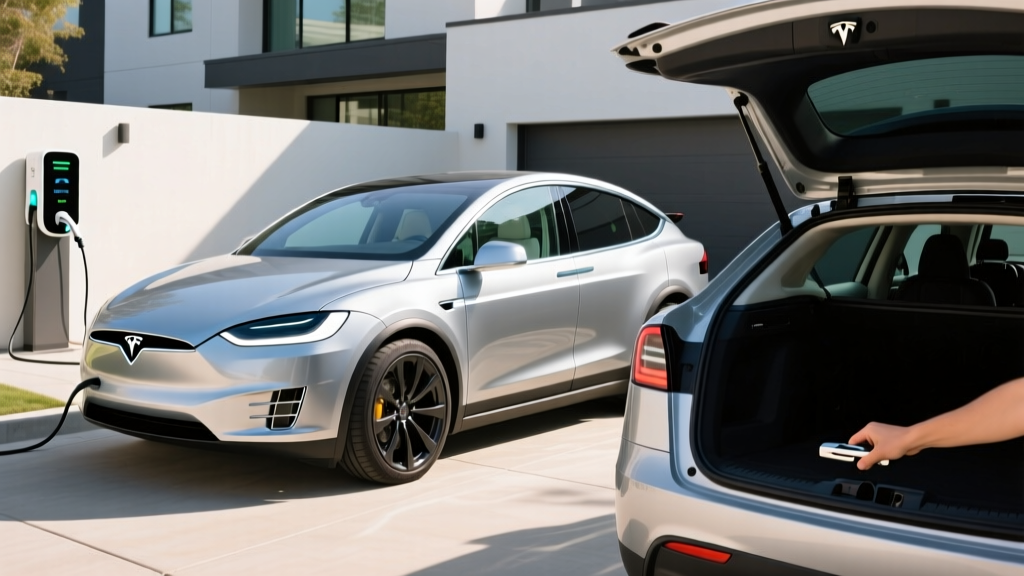
Any new Tesla will ship with the NACS (North American Charging Standard) connector natively, giving it seamless access to Tesla's Supercharger network — consistently rated the most reliable DC fast-charging ecosystem in North America.
Based on Tesla's current architecture trajectory, here's a reasonable estimate for charging performance in a compact, LFP-based Tesla:
| Charging Level | Power / Rate | Estimated Speed |
|---|---|---|
| Level 1 (120V household) | ~1.4 kW | ~3–5 miles per hour |
| Level 2 (240V home, 48A) | ~11.5 kW | ~30–40 miles per hour |
| DC Fast Charge (peak) | ~170–250 kW (est.) | 10–80% in ~25–30 min (est.) |
A critical note on charging curves: peak kW is not sustained kW. Current LFP Model 3 vehicles peak around 170 kW at low states of charge but taper significantly above 60% SoC. The 10–80% time is the practical metric to watch — and for a ~55 kWh LFP pack, even a 170 kW peak could yield reasonably quick stops. The smaller the battery, the faster the absolute charge time, even at lower peak kW, because there are fewer kWh to replenish.
Pricing, Tax Credits, and the Affordability Question
The entire premise of Tesla's compact EV hinges on price. Elon Musk has floated a ~$25,000 target at various points, though he has also cautioned that actual pricing depends on production costs at scale and macroeconomic conditions.
| Scenario | Est. Base MSRP | Est. After §30D Credit | Notes |
|---|---|---|---|
| Optimistic | $25,000 | $17,500 | Full $7,500 credit; requires US battery sourcing compliance |
| Likely | $28,000 – $30,000 | $20,500 – $22,500 | Partial or full credit depending on mineral sourcing |
| Conservative | $32,000+ | $24,500+ | If LFP cells sourced from non-FTA countries at launch |
Federal tax credit eligibility under IRS §30D is the wild card. To qualify for the full $7,500 credit, the vehicle must meet:
- MSRP cap: Sedans must be ≤$55,000; SUVs/trucks ≤$80,000 — a compact Tesla would easily clear this.
- Buyer income cap: Modified AGI ≤$150,000 (single) or ≤$300,000 (joint).
- Battery component manufacturing: Increasing percentages of battery components must be manufactured or assembled in North America (thresholds increase yearly through 2029).
- Critical minerals sourcing: Increasing percentages of critical minerals must be sourced from the US or FTA partners.
- Foreign Entity of Concern (FEOC) exclusion: Battery components and critical minerals cannot come from FEOCs (primarily targeting Chinese supply chains) — a significant challenge for LFP cells, which are predominantly manufactured in China.
The FEOC restriction is the biggest hurdle. Most global LFP cell production is concentrated in China (CATL, BYD). If Tesla sources LFP cells from its own US production lines or from FTA-partner suppliers, the credit becomes viable. If not, buyers may see only a partial credit ($3,750) or none at all at launch. Always consult a tax professional and check the latest fueleconomy.gov credit listings before purchasing.
How It Would Compare to Today's Affordable EVs
Even without confirmed specs, we can map Tesla's rumored compact against the 2026 affordable EV landscape. Here's how the competitive field looks:
| Vehicle | Base MSRP | EPA Range | Battery (kWh) | DC Fast Peak |
|---|---|---|---|---|
| Tesla Model 3 RWD | ~$38,990 | 272 mi | ~60 (LFP) | 170 kW |
| Chevrolet Equinox EV | ~$33,000 | ~319 mi | ~85 (NMC) | 150 kW |
| Hyundai Kona Electric | ~$32,975 | 261 mi | ~65 (NMC) | 100+ kW |
| Nissan LEAF (if still in production) | ~$28,140 | 212 mi | ~60 (NMC) | ~100 kW (CHAdeMO) |
| Tesla Compact (Rumored) | ~$25,000–$30,000 | ~250–300 mi (est.) | ~50–60 (LFP est.) | ~170–250 kW (est.) |
The competitive advantage Tesla would bring isn't just price — it's the Supercharger network, native NACS compatibility, over-the-air updates, and the brand's software-first approach. But competitors like the Equinox EV already offer 300+ miles of range at aggressive prices, and Hyundai/Kia's E-GMP platform delivers strong charging speeds with 800V architecture.
Should You Wait for Tesla's Affordable EV or Buy Now?
Buy now if:
- You need a vehicle within the next 6 months
- The Chevrolet Equinox EV or Hyundai Kona Electric meets your range and budget needs today
- You want confirmed tax credit eligibility rather than gambling on future sourcing rules
- You prefer known quantities — warranty, service network, real-world owner data
Wait if:
- Your current vehicle is functional and you can hold off 12–18 months
- Supercharger network access is your top charging priority
- A sub-$30,000 Tesla would unlock EV ownership for your budget
- You're willing to accept first-model-year risk (potential build-quality issues, software bugs)
Frequently Asked Questions
Is the "Airica" a real Tesla model I can order?
No. As of 2026, Tesla has not announced, named, or listed any vehicle called "Airica." The name appears to be an internet rumor or misnomer. Tesla's confirmed lineup includes Model 3, Model Y, Model S, Model X, and Cybertruck. A next-generation compact EV has been discussed at investor events but has no official name or release date.
What will Tesla's cheapest car cost?
Tesla has targeted a ~$25,000 price point for its next-generation compact platform, but actual MSRP will depend on production costs, battery sourcing, and market conditions at launch. Current estimates from analysts range from $25,000 to $32,000 for a base model. No official pricing has been published.
Will Tesla's compact EV qualify for the $7,500 federal tax credit?
It depends on battery sourcing at the time of purchase. The MSRP cap ($55,000 for sedans) and buyer income limits would likely be met. However, the FEOC (Foreign Entity of Concern) restrictions on battery components and critical minerals — particularly relevant for LFP chemistry — could limit eligibility at launch. Check IRS §30D guidance and consult a tax professional before relying on credit eligibility.
How does the rumored Tesla compact compare to a used Model 3?
A used 2022–2024 Model 3 in the $22,000–$28,000 range offers ~272–358 miles of EPA range (depending on trim), proven Supercharger access, and mature software. A new compact Tesla might offer less range but would come with a full warranty, newer hardware, and potentially the §30D credit. The used-EV credit (§25E) offers up to $4,000 on qualifying pre-owned EVs priced under $25,000.
When will Tesla release its affordable compact EV?
Production timelines have shifted multiple times. Early reports suggested late 2025, but as of early 2026, no official date has been confirmed. Industry analysts estimate production could begin in late 2026 or 2027, likely starting at Gigafactory Texas. Treat any specific date claims as speculative until Tesla issues an official press release.
Sources: Tesla 2023 Investor Day presentations, IRS §30D Clean Vehicle Credits, fueleconomy.gov, manufacturer specifications. All estimated specs in this article are based on industry reporting and analyst projections, not confirmed Tesla data.