Search for "affordable Tesla Model X" and you'll find a paradox. The Model X is Tesla's flagship SUV — a 5,000-pound, falcon-wing-doored, dual-motor family hauler that starts well above the national average vehicle price. Yet buyers keep searching for ways to make it work financially. This review dissects the 2026 Tesla Model X from every cost and capability angle to answer the core question: can you realistically call a Model X affordable, and what does ownership actually look like?
We'll cover EPA and real-world range, charging speed curves, exact pricing by trim, federal tax credit eligibility under current IRS §30D rules, and how the Model X stacks up against rivals like the Rivian R1S, BMW iX, and Mercedes EQS SUV. If you're weighing this purchase, you need numbers — not marketing.
2026 Tesla Model X: Quick Verdict
The Tesla Model X remains a compelling three-row electric SUV with best-in-class Supercharger access, strong performance, and over 300 miles of EPA range. But "affordable" is relative. With a base MSRP starting around $79,990 for the Long Range AWD and climbing past $94,990 for the Plaid, this is a luxury vehicle by any measure. The federal tax credit can soften the blow, but eligibility is far from guaranteed due to income caps, battery-sourcing requirements, and MSRP limits that we'll detail below.
If you need three rows, want Tesla's Supercharger network, and can absorb the price, the Model X delivers. If your budget is truly tight, the used EV market (with its separate $4,000 used-vehicle credit) or a smaller Tesla like the Model Y will stretch your dollar further.
Range, Efficiency & Real-World Expectations
| Spec | Long Range AWD | Plaid |
|---|---|---|
| EPA Range | ~335 miles | ~326 miles |
| Battery Capacity (usable) | ~100 kWh (NMC) | ~100 kWh (NMC) |
| Efficiency (MPGe) | ~103 MPGe combined | ~98 MPGe combined |
| Efficiency (kWh/100 mi) | ~33 kWh/100 mi | ~34 kWh/100 mi |
| 0-60 mph | 3.8 seconds | 2.5 seconds |
| Horsepower | ~670 hp | ~1,020 hp |
| Drivetrain | Dual-Motor AWD | Tri-Motor AWD |
| Top Speed | 155 mph | 163 mph |
| Towing Capacity | 5,000 lbs | 5,000 lbs |
The Model X Long Range carries an EPA-estimated ~335 miles of range. In real-world driving, expect the following:
- City/commute driving (moderate speeds, regen-heavy): 310–340 miles — close to or even slightly above EPA thanks to regenerative braking.
- Highway cruising (70-75 mph): 260–290 miles. The Model X's large frontal area and 5,000+ lb curb weight hurt highway efficiency significantly.
- Cold weather (below 32°F / 0°C): 220–270 miles. NMC chemistry loses roughly 20-30% range in freezing temperatures, and the heavy cabin/battery heating load compounds this. Tesla's heat pump helps, but physics wins.
- Towing (near max 5,000 lbs): 150–190 miles. If you plan to tow a trailer long distances, plan charging stops accordingly.
Bottom line: plan trips around ~260 miles of usable range to maintain a comfortable buffer.
The Model X uses an NMC (nickel manganese cobalt) battery pack, which prioritizes energy density over the cycle-life longevity of LFP chemistry found in some Tesla Model 3/Y Standard Range variants. NMC gives you the range and performance this heavy SUV demands, but Tesla recommends daily charging to 80-90% for battery longevity — only charge to 100% when you need the full range for a trip.
Charging Speed: DC Fast, Level 2 & Home Setup
| Charging Level | Power / Rate | Time or Miles Added | Connector |
|---|---|---|---|
| Level 1 (120V household) | ~1.4 kW | ~3-4 miles per hour | NACS (Tesla) with adapter |
| Level 2 (240V home / public) | Up to 11.5 kW (48A) | ~30-34 miles per hour; full charge ~9-10 hrs | NACS (Tesla Wall Connector) |
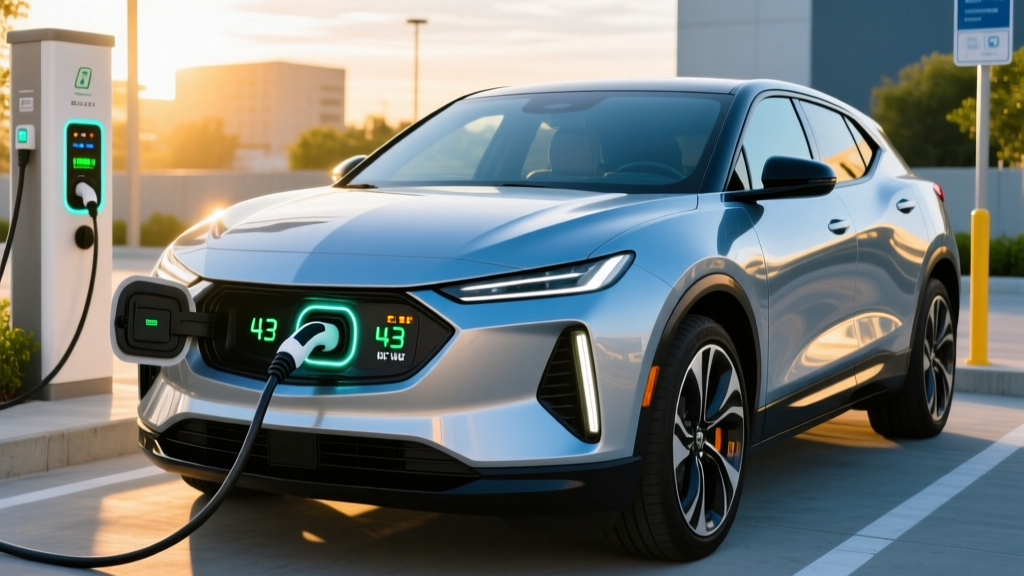
| DC Fast Charging (Supercharger V3) | Peak ~250 kW | 10-80% in ~30 minutes | NACS (native) |
| DC Fast Charging (CCS via adapter) | Peak ~170-200 kW (adapter-limited) | 10-80% in ~38-45 minutes | CCS1 with Tesla CCS adapter |
kW vs. kWh refresher: kW (kilowatts) measures charging power — how fast energy flows into the battery. kWh (kilowatt-hours) measures battery capacity — how much total energy the pack stores. The Model X has ~100 kWh of capacity and can accept up to 250 kW of charging power at peak.
The charging curve reality: The Model X hits its peak ~250 kW rate only at low state-of-charge (typically 5-20% SoC) and with a preconditioned battery (the car does this automatically when you navigate to a Supercharger). Above 50% SoC, the rate tapers to ~100-120 kW, and above 80% it drops further to protect the NMC cells. This is why manufacturers quote 10-80% times — the last 20% takes nearly as long as the first 60%.
Home charging setup: For daily use, a Tesla Wall Connector on a 60-amp circuit delivers 11.5 kW / 48 amps, adding roughly 30-34 miles of range per hour. An overnight charge (8-10 hours) fully replenishes the pack. Installation costs typically range from $800-$2,500 depending on your electrical panel capacity and run distance — consult a licensed electrician for a site-specific quote. If your home has a 100-amp main panel, you may need a panel upgrade ($1,500-$3,000+) before adding a 60-amp EV circuit.
Pricing, Trims & Federal Tax Credit Eligibility
| Trim | Base MSRP | Est. As-Tested* | §30D Credit Eligible? |
|---|---|---|---|
| Model X Long Range AWD | ~$79,990 | $84,000-$92,000 | See rules below |
| Model X Plaid (Tri-Motor) | ~$94,990 | $98,000-$108,000 | See rules below |
*As-tested pricing reflects common options: 22" wheels, enhanced Autopilot or FSD (Supervised), premium interior colors, six-seat configuration.
The IRS §30D clean vehicle credit can provide up to $7,500 for qualifying new EVs. However, the Model X faces several hurdles:
- MSRP Cap: SUVs/vans/pickups must have an MSRP at or below $80,000. The Model X Long Range base MSRP (~$79,990) squeaks under this cap, but adding virtually any option pushes it over — at which point the credit is lost entirely.
- Buyer Income Cap: Adjusted gross income must not exceed $300,000 (joint filers), $225,000 (head of household), or $150,000 (single). See IRS §30D guidelines for current-year details.
- Battery Sourcing Requirements: The credit splits into two $3,750 halves — one for critical minerals sourcing and one for battery component manufacturing. Tesla's supply chain has been shifting toward North American sourcing, but eligibility can change model-year to model-year. Always verify current eligibility on fueleconomy.gov before purchasing.
- Point-of-Sale Transfer: If eligible, you can transfer the credit to the dealer at purchase for an immediate price reduction, rather than waiting to claim it on your tax return.
Practical reality: Most Model X buyers will configure their vehicle above the $80,000 MSRP cap, disqualifying them from the federal credit. If you want the credit, you must order a base Long Range with no options that push MSRP over $80,000 — and confirm eligibility at the time of purchase.
Used Model X alternative: The §25E used clean vehicle credit offers up to $4,000 (30% of sale price, max $4,000) for qualifying used EVs priced at or below $25,000. Given Model X resale values, finding one under $25,000 is extremely difficult — this credit is more realistic for older Model 3 or Leaf purchases.
Interior, Cargo & Passenger Space
The Model X offers seating for five, six, or seven passengers depending on configuration. The second-row options are where buyers spend the most time deciding:
- 5-seat (standard bench): Maximum cargo flexibility, flat-folding second row.
- 6-seat (individual captain's chairs): More comfortable for adults in row two, but eliminates the middle seat and reduces cargo versatility. Adds ~$6,500.
- 7-seat (bench + small third row): The third row is best suited for children — legroom is tight for adults on anything beyond short trips.
Cargo volume (approximate):
- Behind third row: ~37 cu ft (with 5-seat config, behind second row)
- Behind second row (folded): ~72-75 cu ft
- Maximum (all rear seats folded): ~85-88 cu ft
- Front trunk (frunk): ~6.5 cu ft — enough for a charging cable bag and small groceries
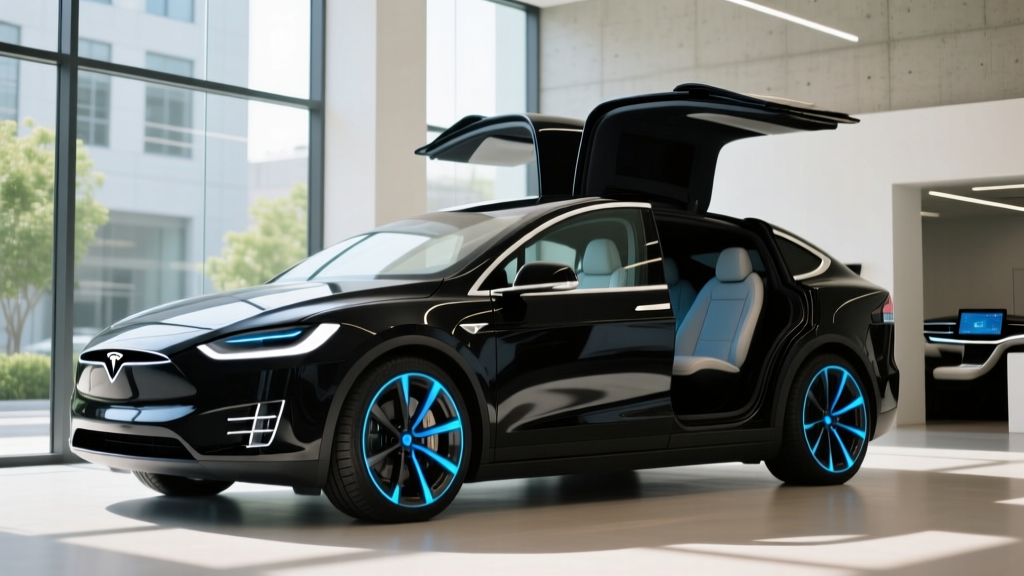
Compared to the Rivian R1S (~105 cu ft max) or the Kia EV9 (~82 cu ft), the Model X's cargo space is competitive but not class-leading — the sloping roofline and rear motor hardware eat into volume. The falcon-wing rear doors are dramatic and genuinely useful in tight parking spaces (they articulate upward rather than outward), but they add mechanical complexity and have historically been a source of seal and sensor issues in earlier model years.
Technology, Driver Assistance & Drawbacks
The Model X runs Tesla's latest infotainment stack on a 17-inch center touchscreen with a secondary 8-inch rear passenger display. Wireless phone mirroring is absent — Tesla uses its own app ecosystem. The yoke steering wheel (optional) remains polarizing; a conventional round wheel is standard.
Autopilot and FSD (Supervised): Every Model X comes with basic Autopilot (traffic-aware cruise control and lane centering). Enhanced Autopilot (~$6,000) adds auto lane change, Navigate on Autopilot, and Smart Summon. Full Self-Driving (Supervised) (~$8,000 or $99/month) adds traffic light/stop sign recognition and city-street autosteer.
Despite the "Full Self-Driving" name, Tesla's FSD (Supervised) is an SAE Level 2 driver-assistance system. You must keep your hands on the wheel (or demonstrate attentiveness via the cabin camera), monitor the road at all times, and be ready to take over instantly. This is fundamentally different from SAE Level 4 robotaxi services like Waymo, which operate without any driver involvement in geofenced areas. Never treat FSD as a substitute for an attentive driver.
Notable drawbacks:
- Panel gaps and build consistency: Tesla's build quality has improved, but Model X panel gap variability and occasional interior trim rattles still surface in owner forums. Do a thorough pre-delivery inspection.
- No Apple CarPlay / Android Auto: If you rely on phone-mirrored navigation or music apps, you'll need to adapt to Tesla's native interface.
- Insurance costs: The Model X carries higher-than-average insurance premiums due to repair costs, aluminum body panels, and sensor-dense front/rear fascias. Get quotes before committing.
- Falcon-wing door maintenance: The articulated doors use ultrasonic sensors to avoid obstacles, but they add complexity. Out-of-warranty repairs can be costly.
How It Compares: Model X vs. Key Competitors
| Spec | Tesla Model X LR | Rivian R1S (Dual) | Kia EV9 GT-Line | BMW iX xDrive50 |
|---|---|---|---|---|
| Starting MSRP | ~$79,990 | ~$79,900 | ~$73,900 | ~$87,250 |
| EPA Range | ~335 mi | ~321 mi | ~270 mi | ~324 mi |
| Max DC Charge kW | 250 kW | ~200 kW | ~236 kW | ~200 kW |
| 10-80% DC Time | ~30 min | ~36 min | ~24 min | ~34 min |
| 0-60 mph | 3.8 sec | 4.5 sec | 5.0 sec | 4.4 sec |
| Third Row | Tight (kids) | Usable (adults short trips) | Best in class | N/A (2-row) |
| Towing | 5,000 lbs | 7,700 lbs | 5,000 lbs | 3,500 lbs |
| Charging Network | Supercharger (native) | NACS + Rivian Adventure | CCS (NACS adapter avail.) | CCS (NACS adapter avail.) |
- Choose the Tesla Model X if: You prioritize Supercharger network reliability, want the fastest performance in the segment, and value Tesla's over-the-air update ecosystem. Best for tech-forward families who road-trip frequently and want seamless DC fast charging.
- Choose the Rivian R1S if: You need serious towing capacity (7,700 lbs), genuine off-road capability, and a more usable third row. Better for outdoor/adventure families willing to trade some range for utility.
- Choose the Kia EV9 if: Budget matters most and you need the best third-row space. The EV9 undercuts the Model X by $6,000-$15,000 and offers the most passenger-friendly interior, though with less range and no native NACS connector (yet).
- Choose the BMW iX if: You only need two rows, value luxury interior materials and ride quality, and prefer a traditional dealership experience. The iX is the quietest, most refined ride — but it's a five-seater, not a family hauler.
Battery Warranty & Long-Term Ownership
Tesla covers the Model X battery and drive unit under an 8-year / 150,000-mile warranty (whichever comes first), with a guaranteed minimum 70% capacity retention over that period. This is competitive with Rivian's 8-year/175,000-mile battery warranty and slightly more generous on miles than the industry-standard 8-year/100,000-mile coverage.
Real-world degradation data from Tesla's fleet suggests NMC packs in the Model X/S lose roughly 10-12% capacity over the first 100,000 miles, with the curve flattening significantly afterward. Following Tesla's recommended charging practices (daily limit of 80-90%, minimizing DC fast charging to road trips, avoiding prolonged 100% or near-0% states) will help maximize longevity.
Out-of-warranty battery replacement for a ~100 kWh NMC pack currently runs $15,000-$22,000 depending on labor and whether Tesla uses a new or remanufactured pack. This is a significant long-term cost to factor in if you plan to own the vehicle beyond 150,000 miles.
- ~335 miles EPA range — among the highest for any 3-row EV SUV
- Supercharger network: 60,000+ stalls globally, highest reliability rates
- 250 kW peak DC fast charging; 10-80% in ~30 min
- Class-leading acceleration (3.8s Long Range, 2.5s Plaid)
- Falcon-wing doors: practical in tight spaces, always a conversation starter
- OTA updates continuously add features post-purchase
- 8-year/150,000-mile battery warranty
- Base MSRP ~$79,990; most configurations exceed $80K tax-credit cap
- Real-world highway range drops to ~260-290 miles
- Third row only practical for children
- No Apple CarPlay / Android Auto
- Falcon-wing doors add mechanical complexity and potential repair cost
- Higher-than-average insurance premiums
- Build quality inconsistency still reported by some owners
Who Is the Model X Actually For?
The 2026 Tesla Model X makes the most sense for:
- Tech-savvy families who road-trip: Supercharger access makes cross-country travel genuinely easy, and the range means fewer stops than most competitors.
- Performance-oriented SUV buyers: No three-row EV this size hits 60 mph in 3.8 seconds (or 2.5 in the Plaid). The acceleration is startling for a family vehicle.
- Tesla ecosystem loyalists: If you already own a Tesla, have a Powerwall, or use solar, the integrated ecosystem (app, Wall Connector, OTA updates) is a genuine convenience advantage.
It's a harder sell for budget-conscious buyers (consider a used Model Y or the Kia EV9), serious off-roaders (Rivian R1S), or anyone who needs a genuinely adult-usable third row (EV9 or a minivan).
Frequently Asked Questions
What is the real-world range of the 2026 Tesla Model X?
The EPA rates the Model X Long Range at ~335 miles. In real-world driving, expect 310-340 miles in city conditions, 260-290 miles at highway speeds (70-75 mph), and 220-270 miles in freezing weather. Towing near the 5,000-lb max drops range to roughly 150-190 miles.
How fast does the Model X charge at home and on the road?
On a Level 2 Tesla Wall Connector (11.5 kW / 48A), the Model X gains ~30-34 miles per hour, fully charging overnight in ~9-10 hours. On a V3 Supercharger, it peaks at ~250 kW, reaching 10-80% in approximately 30 minutes with a preconditioned battery. Charging slows significantly above 80% to protect the NMC cells.
How much does the Model X cost after tax credits?
The Model X Long Range starts at ~$79,990. If you configure it at or below the $80,000 SUV MSRP cap, meet the income requirements (under $300K joint / $150K single), and the battery sourcing qualifies, you could receive up to $7,500 via the §30D credit — bringing the effective price to ~$72,490. However, most buyers add options that push MSRP above $80,000, disqualifying them entirely. Always verify eligibility on fueleconomy.gov and consult a tax professional before relying on the credit.
Does the Tesla Model X qualify for the federal EV tax credit?
It can, but with major caveats. The base Long Range MSRP (~$79,990) falls under the $80,000 SUV cap, but virtually any factory option pushes it over. You must also meet IRS income caps and the vehicle's battery must satisfy critical-minerals and component-sourcing thresholds that change periodically. The Plaid trim (~$94,990) exceeds the MSRP cap and does not qualify. Check the latest eligibility list on the IRS clean vehicle credit page.
Is the Model X worth buying vs. the Rivian R1S or Kia EV9?
If Supercharger access, acceleration, and range are your top priorities, the Model X wins. If you need towing capacity (7,700 lbs) or off-road ability, the Rivian R1S is better. If budget and third-row passenger space matter most, the Kia EV9 offers the best value at $6,000-$15,000 less. Test-drive all three before deciding.
What are the biggest pros and cons of the Model X?
Top pros: class-leading range and performance, Supercharger network, fast DC charging, OTA updates, falcon-wing doors. Top cons: high starting price (most configs lose the tax credit), tight third row, no phone mirroring, higher insurance costs, falcon-wing door repair complexity.
How long will the Model X battery last?
Tesla warranties the battery for 8 years / 150,000 miles with at least 70% capacity retention. Fleet data suggests NMC packs in the Model X lose ~10-12% over the first 100,000 miles with normal use. Out-of-warranty replacement costs $15,000-$22,000. Following recommended charging practices (80-90% daily limit, minimize 100% charges) extends longevity.