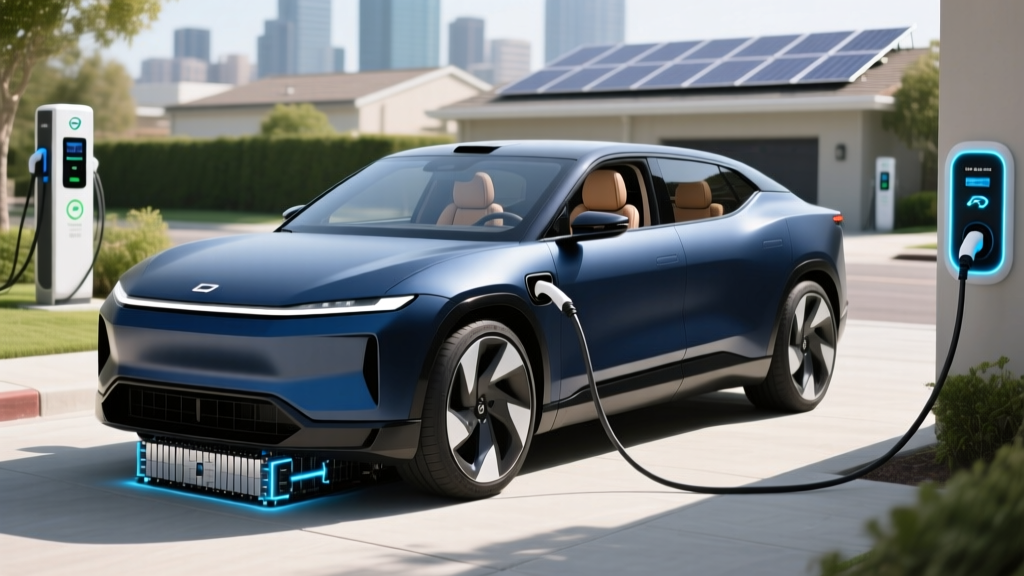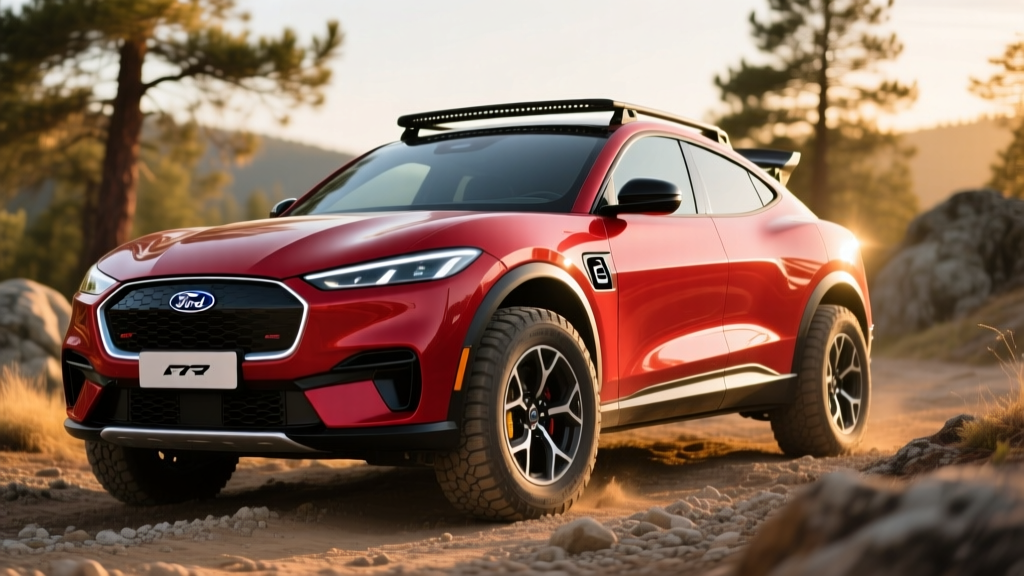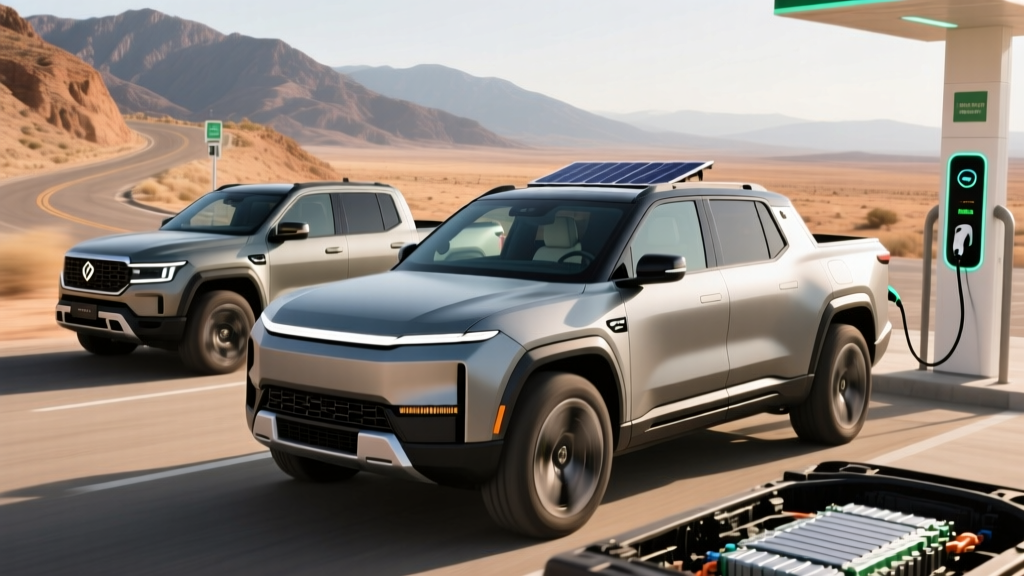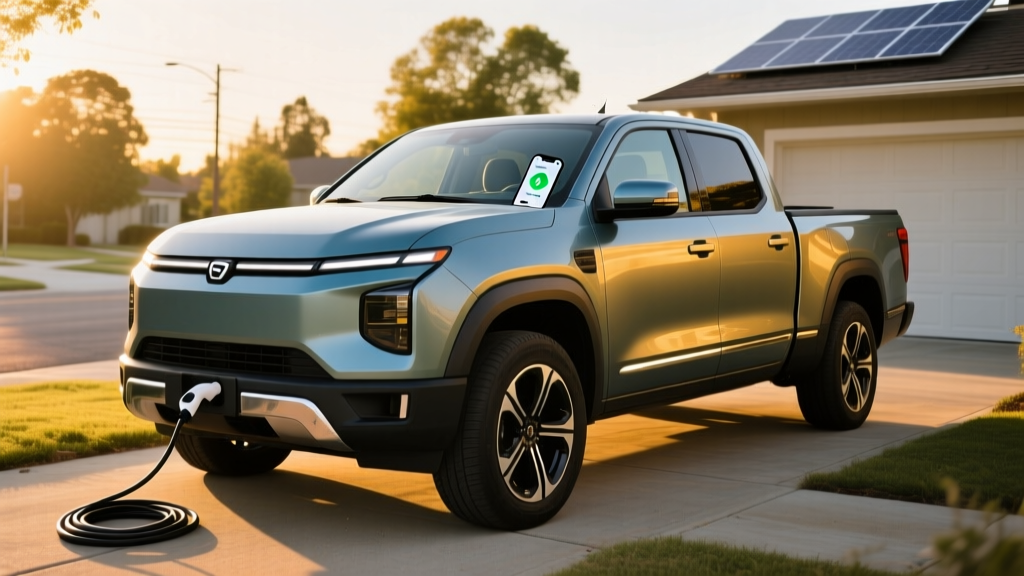
If you're shopping for an affordable electric truck in 2026, the Ford Maverick EV (starting around $35,000 MSRP) and the base Chevrolet Silverado EV 3WT (~$42,000 before incentives) anchor the budget end of the market. After the federal §30D tax credit—up to $7,500 if you meet income, MSRP, and battery-sourcing requirements—the effective entry price drops meaningfully. But "affordable" only matters if the truck fits your driving pattern, charging access, and payload needs. Below, we break down the real numbers buyers need: EPA range, charging speeds, 5-year cost of ownership, and the decision framework that separates a smart buy from an expensive mistake.
The 2026 Affordable Electric Truck Lineup at a Glance
The electric truck market has consolidated around a few key players at the lower price tiers. Here's what's actually orderable in 2026, with manufacturer-confirmed specs:
| Model | Base MSRP | EPA Range | Battery (kWh / Chemistry) | Peak DC Charge (kW) | 10–80% Time | 0–60 mph | Max Tow |
|---|---|---|---|---|---|---|---|
| Ford Maverick EV (FWD) | ~$35,000 | ~300 mi | ~80 kWh / NMC | ~150 kW | ~28 min | ~7.5 sec | 2,000 lb |
| Chevrolet Silverado EV 3WT | ~$42,000 | ~280 mi | ~100 kWh / NMC | ~200 kW | ~24 min | ~6.8 sec | 8,000 lb |
| Rivian R1T (Standard Pack) | ~$72,000 | ~270 mi | ~106 kWh / NMC | ~220 kW | ~22 min | ~4.5 sec | 11,000 lb |
| Tesla Cybertruck RWD (base) | ~$62,000 | ~250 mi | ~100 kWh / NMC | ~250 kW | ~18 min | ~4.1 sec | 7,500 lb |
Sources: fueleconomy.gov, manufacturer press sites. Specs reflect 2026 model-year estimates; confirm with dealer at order time.
Notice the price gap: the Maverick EV undercuts the Cybertruck by nearly $27,000. But "affordable" shifts once you factor in tax credits, charging infrastructure, and how you actually use a truck.
Federal Tax Credit: Who Actually Gets $7,500?
The §30D Clean Vehicle Credit can knock up to $7,500 off your tax liability—or, under the point-of-sale transfer provision, reduce your dealer price directly. But eligibility is not automatic. Current IRS rules impose three hard gates:
- MSRP cap: Vans/pickups/SUVs must have a base MSRP ≤ $80,000. (Maverick EV, Silverado EV 3WT, and Cybertruck RWD all clear this; Rivian R1T dual-motor trims may not.)
- Buyer income cap: AGI ≤ $150,000 (single) / $225,000 (head of household) / $300,000 (joint).
- Battery sourcing: A percentage of critical minerals and battery components must be sourced from the U.S. or FTA partners—percentages tighten yearly. Vehicles with China-sourced graphite or cathode may qualify for only $3,750 or $0.
- Point-of-sale transfer: You can assign the credit to the dealer at purchase, lowering your out-of-pocket. If your tax liability is below $7,500, this is the only way to capture full value.
Always verify eligibility on the IRS clean vehicle portal before signing paperwork. Dealer salespeople often misstate sourcing compliance.
5-Year Cost of Ownership: EV Truck vs Gas Truck
Sticker price tells only part of the story. Let's model a realistic 5-year / 75,000-mile ownership cycle comparing the Ford Maverick EV against its gas sibling, the Maverick Hybrid AWD (EPA 42 MPG combined, ~$28,000 MSRP).
| Cost Category (5 yr / 75k mi) | Maverick EV (est.) | Maverick Hybrid AWD |
|---|---|---|
| Purchase price (after §30D credit) | ~$27,500 | ~$28,000 (no EV credit) |
| Fuel / electricity | ~$3,400 (home L2 @ $0.14/kWh) | ~$6,200 (@ $3.40/gal, 42 MPG) |
| Maintenance (tires, fluid, brakes) | ~$1,800 | ~$3,200 |
| Insurance (avg annual × 5) | ~$9,500 | ~$7,800 |
| Estimated depreciation | ~$12,000 | ~$10,500 |
| Total 5-yr cost | ~$54,200 | ~$55,700 |
Assumptions: 70% home charging, 30% DC fast charging at $0.40/kWh; regional electricity and gas averages; insurance premiums from industry averages for compact pickups. Your numbers will shift based on utility rates, mileage, and state incentives.
The EV wins narrowly on total cost—but only if you charge mostly at home. If you rely entirely on public DC fast charging at $0.40–$0.55/kWh, your fuel line doubles to ~$6,000+, erasing the advantage. This is the single most important variable for first-time EV truck buyers.
Real-World Range: What the EPA Sticker Doesn't Tell You
EPA 300 miles ≠ 300 usable miles. Expect ~240–260 miles on a highway road trip at 70 mph, and as low as ~190–210 miles in sub-30°F weather with cabin heat. Towing cuts range by 35–50% depending on trailer weight and aerodynamics—a 2,000 lb boat on the Maverick EV realistically limits you to ~160 miles before needing a charge.
Electric trucks face unique range penalties because of their slab-sided aerodynamics and weight. The charge curve also matters: a "150 kW peak" charger only sustains that rate up to ~30–40% SoC, then tapers. A 10–80% session on the Maverick EV at a 150 kW station averages closer to 95–110 kW sustained. Plan road trips around 20–25 minute charging stops every ~180 miles to keep stress low.
For buyers in the Mountain West, Upper Midwest, or rural areas with sparse DC infrastructure, a PHEV or gas truck remains the pragmatic choice until charging corridors mature. Check PlugShare or the DOE's Alternative Fuels Station Locator for your common routes before committing.
Home Charging: The Make-or-Break Factor
Level 2 home charging (240V, 32–48A) is what makes an electric truck financially and logistically viable for most owners. A typical installation for a 48A hardwired wallbox runs:
| Item | Typical Range |
|---|---|
| Level 2 charger hardware (ChargePoint, Wallbox, Emporia) | $400–$700 |
| Electrician labor (50–60 ft run, 240V/60A circuit) | $800–$2,000 |
| Panel upgrade (if 200A panel is maxed) | $1,500–$3,500 |
| Permit & inspection | $150–$400 |
| Total (no panel upgrade) | $1,350–$3,100 |
| Total (with panel upgrade) | $2,850–$6,600 |
At 48A / 11.5 kW, a depleted 80 kWh Maverick EV battery refills in roughly 7–8 hours—overnight. If you rent, live in a condo without garage access, or street-park, an EV truck becomes a fundamentally different ownership proposition. In those cases, weigh a PHEV like the (still-available used) Ford F-150 PowerBoost hybrid, which offers short EV range without charging dependency.
Common Misconceptions About Budget Electric Trucks
| Myth | Fact |
|---|---|
| "Electric trucks can't tow." | They can, but range drops 35–50%. A Silverado EV towing 8,000 lb realistically reaches ~140–160 mi. Plan accordingly. |
| "The battery will need replacing in 5 years." | Modern NMC packs are warrantied 8 yr / 100,000 mi for ≥70% capacity retention (NHTSA-mandated minimum). Real-world degradation data shows ~10–15% loss over 150k miles for liquid-cooled packs. |
| "You'll save $10,000 over gas." | Only if you charge at home, drive moderate miles, and qualify for the full credit. Public-charging-dependent owners in cold climates may break even. |
| "Level 2 is 'self-driving'." | ADAS like Ford BlueCruise and GM Super Cruise are SAE Level 2—hands-off on mapped highways, but eyes-on and legally your responsibility. Not autonomous. |
Decision Framework: Is an Affordable Electric Truck Right for You?
Buy the Maverick EV if: You have Level 2 home charging, drive <150 miles/day on non-towing days, live in a temperate or mild-cold climate, and qualify for §30D. It's the cheapest path into an electric truck that's genuinely usable as a daily driver.
Buy the Silverado EV 3WT if: You need 8,000-lb towing capacity, have a worksite with destination charging, or run a small fleet where TCO and instant torque matter more than sticker price.
Stick with a gas or hybrid truck if: You tow frequently over 200-mile routes, live in a charging desert, street-park without L2 access, regularly operate below 0°F, or your AGI disqualifies you from §30D. The Maverick Hybrid (42 MPG, $28k) is arguably the best value truck on the market for these buyers.
Wait if: You're eyeing LFP-battery trims (lower cost, longer cycle life, but ~15% less range) expected from multiple OEMs by 2027, or if your state has pending rebate programs that could stack with federal credit.
FAQ: First-Time EV Truck Buyer Questions
How long does it take to charge an electric truck at home?
On a 48A Level 2 charger (11.5 kW), an 80 kWh pack refills from empty in ~7 hours. Most owners plug in nightly and wake to 80–90% SoC—never visiting a gas station.
Will an electric truck work in winter?
Yes, but plan for 25–35% range loss below freezing. Preconditioning the battery while plugged in (a feature on all mainstream EV trucks) mitigates charging-speed loss. A heat pump—standard on Maverick EV—reduces cabin-heating energy draw vs. resistive heaters.
Can I use an electric truck for job-site power?
Many EV trucks offer V2L (vehicle-to-load) via bed outlets—typically 2–7.2 kW. That's enough to run job-site saws, compressors, or tailgate electronics for a full day without a generator.
Is insurance really more expensive for electric trucks?
On average, 15–25% higher than equivalent gas trucks, driven by higher repair costs for battery-adjacent damage and specialized labor. Shop quotes from EV-friendly insurers (Progressive, Geico, and Lemonade have competitive EV programs) before purchase.
What happens if the battery degrades?
Federal law mandates 8 yr / 100,000 mi warranty covering capacity below 70%. Out-of-warranty replacement for an 80–100 kWh pack currently runs $12,000–$18,000, though prices trend down ~8% annually as cell costs fall.