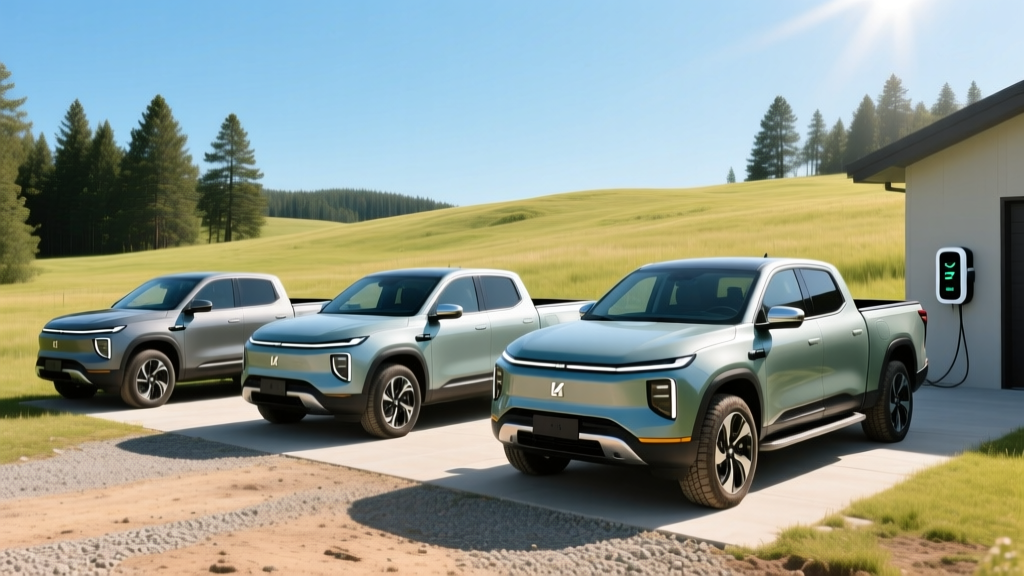
The Short Answer: What Is the Most Affordable Electric Pickup Truck in 2026?
If you need a true body-on-frame work truck with towing capacity and over 300 miles of EPA range, the Ford F-150 Lightning (starting around $54,995 before incentives) remains the most accessible full-size electric pickup. If your needs lean toward urban commuting and light hauling, the Ford Maverick EV (announced for late 2025/2026, starting near $38,000 estimated) will be the cheapest electric pickup once it reaches dealers. For maximum range on a relative budget, the Chevrolet Silverado EV 4WT starts near $55,000 and delivers an EPA-estimated 380+ miles — the longest range in the segment.
The realistic "affordable" threshold for a capable electric pickup today sits between $40,000 and $55,000 before federal tax credits, which can reduce effective cost by up to $7,500 if you meet IRS §30D eligibility rules on income, MSRP caps, and battery sourcing.
The Current Affordable Electric Pickup Truck Lineup
The electric truck market in 2026 has matured past the early-adopter phase, but "affordable" remains relative. These vehicles are larger, heavier, and require bigger battery packs than sedans — which keeps base prices higher. Here is where the main contenders stand on paper and in practice.
| Spec | Ford F-150 Lightning (Std Range) | Ford F-150 Lightning (Ext Range) | Chevy Silverado EV 4WT | Ford Maverick EV (Est.) |
|---|---|---|---|---|
| Base MSRP | $54,995 | $69,995 | $55,000 | ~$38,000 |
| EPA Range | 240 mi | 320 mi | 380 mi | ~250 mi (est.) |
| Battery (usable) | 98 kWh (NMC) | 131 kWh (NMC) | 200 kWh (NMC) | ~75 kWh (est.) |
| Peak DC Fast Charge | 150 kW | 150 kW | 350 kW | ~150 kW (est.) |
| 10–80% DCFC Time | ~41 min | ~41 min | ~20 min | ~30 min (est.) |
| Level 2 Charge Rate | 19.2 kW (80A) | 19.2 kW (80A) | 19.2 kW | ~11.5 kW (est.) |
| Horsepower | 563 hp | 563 hp | 510 hp | ~238 hp (est.) |
| 0–60 mph | ~4.5 sec | ~4.5 sec | ~5.4 sec | ~7.0 sec (est.) |
| Max Towing | 7,700 lbs | 10,000 lbs | 8,000 lbs | ~2,000 lbs (est.) |
| Battery Warranty | 8 yr / 100k mi | 8 yr / 100k mi | 8 yr / 100k mi | 8 yr / 100k mi (est.) |
Note: Maverick EV specs are preliminary estimates based on Ford announcements and the hybrid Maverick platform; final figures will be confirmed at launch. Always verify current pricing at the EPA's fueleconomy.gov.
Real-World Range: What the EPA Sticker Doesn't Tell You
Range Reality Check
F-150 Lightning Std Range (EPA 240 mi): Expect 190–210 miles at sustained highway speeds (70–75 mph). In cold weather (below 30°F), plan for 150–175 miles. Towing a 5,000-lb trailer? Range drops to roughly 100–130 miles depending on terrain and speed.
F-150 Lightning Ext Range (EPA 320 mi): Highway driving yields approximately 250–280 miles. Cold weather reduces this to 200–230 miles. Towing heavy cuts range by 40–50%.
Silverado EV 4WT (EPA 380 mi): Real-world highway driving nets roughly 300–330 miles. Its massive 200 kWh battery provides a larger buffer, but cold-weather loss of 20–30% still applies, bringing it to ~260–290 miles.
These losses are physics, not defects. Lithium-ion batteries face increased internal resistance in cold temperatures, and cabin heating draws significant energy (unlike a gas truck that uses waste engine heat). The Lightning's available heat pump helps mitigate this, but it does not eliminate it. If your daily commute exceeds 100 miles round-trip in a cold climate, the Extended Range Lightning or Silverado EV is the pragmatic choice.
Electric Pickup vs. Gas Pickup: 5-Year Cost Breakdown
The sticker price of an electric truck is higher than a comparable gas model, but the total cost of ownership (TCO) often tells a different story — especially when you factor in fuel savings, reduced maintenance, and available tax credits.
| Cost Category (5 Years / 75,000 mi) | F-150 Lightning (Std Range) | F-150 Gas (XLT, 2.7L EcoBoost) | Difference |
|---|---|---|---|
| Purchase Price (MSRP) | $54,995 | $42,000 | +$12,995 |
| Federal Tax Credit (§30D) | −$7,500 (if eligible) | $0 | −$7,500 |
| Effective Purchase | $47,495 | $42,000 | +$5,495 |
| Fuel / Electricity (75k mi) | $4,200 (home L2, $0.14/kWh avg) | $10,500 ($3.50/gal, 20 MPG avg) | −$6,300 |
| Maintenance | $1,200 | $3,500 | −$2,300 |
| Insurance (5-yr avg) | $9,500 | $7,500 | +$2,000 |
| Total 5-Year Cost | $62,395 | $63,500 | EV saves ~$1,105 |
This comparison assumes home Level 2 charging at a national-average electricity rate. Public DC fast charging at $0.35–$0.50/kWh would raise the Lightning's energy cost to roughly $6,000–$7,500 over 5 years, narrowing the savings. If you rely exclusively on public charging, the TCO advantage shrinks considerably.
The maintenance gap is real: no oil changes, no transmission fluid, no spark plugs, and regenerative braking significantly extends brake pad life. However, EV insurance premiums run 15–25% higher on average due to higher repair costs for battery and structural damage, per industry data.
Charging at Home and on the Road: What You Actually Need
An electric pickup's 100+ kWh battery changes the home-charging calculus compared to a smaller EV. Here is what each charging level delivers in practical terms:
| Level | Power (kW) | Miles Added per Hour | Full Charge Time (131 kWh Pack) |
|---|---|---|---|
| Level 1 (120V outlet) | 1.4 kW | ~2–3 mi/hr | ~50+ hours (impractical) |
| Level 2 (240V, 48A) | 11.5 kW | ~20–23 mi/hr | ~12–14 hours |
| Level 2 (240V, 80A) | 19.2 kW | ~34–38 mi/hr | ~7–8 hours |
| DC Fast (150 kW peak) | 150 kW | ~180+ mi/hr (peak) | 10–80% in ~41 min |
| DC Fast (350 kW peak) | 350 kW | ~300+ mi/hr (peak) | 10–80% in ~20 min |
For a truck with a 131 kWh battery, a standard 48-amp Level 2 home charger (the most common residential install) will not fully replenish the pack overnight if you have drained it below 20%. You will need an 80-amp circuit — which requires a 100-amp breaker and likely a panel upgrade if your home has a standard 100-amp or 150-amp electrical panel.
Typical Home Level 2 Installation Costs for an Electric Pickup
| Item | Cost Range |
|---|---|
| Level 2 charger (48A–80A hardwired) | $500–$1,200 |
| Electrician labor (standard install) | $800–$2,000 |
| Panel upgrade (200A service, if needed) | $1,500–$3,500 |
| Permit and inspection | $100–$400 |
| Total (no panel upgrade) | $1,400–$3,600 |
| Total (with panel upgrade) | $2,900–$7,100 |
Always get a quote from a licensed electrician. Costs vary significantly by region, conduit run length, and existing panel capacity.
On the road, the F-150 Lightning's 150 kW peak charge rate is adequate but not class-leading. The Silverado EV's 350 kW capability on 800-volt architecture means significantly shorter stops — a meaningful advantage on road trips. Keep in mind that peak charge rate is not sustained: all batteries taper charging speed above 80% State of Charge (SoC) to protect cell longevity. A "10–80% in 41 minutes" spec means the final 20% can take an additional 30+ minutes.
Federal Tax Credit Eligibility: The $7,500 Question
The IRS §30D clean vehicle credit can reduce the effective price of an electric pickup by up to $7,500 — and as of 2024, it can be transferred to the dealer at point of sale, functioning as an instant discount. But eligibility is not automatic. Here is the checklist:
- MSRP Cap: Vans, SUVs, and pickup trucks must have an MSRP at or below $80,000. All current Lightning and Silverado EV trims qualify.
- Buyer Income Limits: Adjusted gross income must not exceed $300,000 (married filing jointly), $225,000 (head of household), or $150,000 (single).
- Battery Component Sourcing: A percentage of battery components must be manufactured or assembled in North America (threshold increases annually). Check the latest fueleconomy.gov credit tracker for the specific vehicle and model year.
- Critical Minerals: A percentage of critical minerals must be sourced from the U.S. or a free-trade-agreement country (threshold also increases annually).
- Point-of-Sale Transfer: You can transfer the credit to the dealer for an upfront price reduction, but you must still meet income requirements when filing taxes — if you exceed the cap, the IRS will claw it back.
The battery-sourcing and critical-mineral requirements are the most volatile factor. A vehicle that qualifies in January may lose partial or full credit eligibility mid-year as thresholds tighten. Always verify current eligibility before signing a purchase agreement.
Common Misconceptions About Affordable Electric Trucks
| Myth | Fact |
|---|---|
| "Electric trucks can't tow." | The F-150 Lightning tows up to 10,000 lbs and the Silverado EV up to 8,000 lbs — comparable to many gas half-ton configs. The trade-off is range: towing at highway speeds cuts range by 40–50%. |
| "You'll save $7,500 no matter what." | The §30D credit has income caps, MSRP caps, and battery-sourcing requirements. Not every buyer or every trim qualifies. Verify on irs.gov before budgeting for it. |
| "Electric trucks cost more to insure but break even anyway." | Insurance premiums are 15–25% higher, and this is a real ongoing cost. TCO break-even depends heavily on how much you drive, your electricity rate, and whether you charge at home vs. public stations. |
| "The battery will need replacing in 5 years." | Modern NMC packs are warranted for 8 years/100,000 miles at 70% capacity retention. Industry degradation data shows most packs retain 85–90% capacity after 100,000 miles. Full replacement (rare) costs $15,000–$25,000 for a truck-class battery. |
| "A standard home outlet is fine for charging." | Level 1 (120V) adds about 2–3 miles per hour to a truck battery. For a 131 kWh pack, a full charge takes over 50 hours. A Level 2 (240V) installation is effectively mandatory for daily use. |
Decision Framework: Which Affordable Electric Pickup Truck Is Right for You?
Choose Based on Your Actual Use Case
Choose the Ford F-150 Lightning (Std Range) if: You drive under 150 miles daily, have home Level 2 charging, want proven capability with strong dealer support, and your budget tops out near $55K. It's the most well-rounded affordable electric pickup truck for mixed use.
Choose the Ford F-150 Lightning (Ext Range) if: You regularly drive 200+ miles, live in a cold climate where range loss is significant, or tow occasionally and need the range buffer. The $15,000 premium buys 80 additional EPA miles and a larger towing capacity (10,000 lbs).
Choose the Chevrolet Silverado EV if: Maximum range is your top priority, you take frequent road trips (350 kW charging is a major advantage), or you want GM's Ultium platform. The 380-mile EPA range is the longest in any electric pickup.
Wait for the Ford Maverick EV if: Your needs are urban/suburban, you rarely tow more than 2,000 lbs, you want the lowest possible entry price (~$38K), and you can wait for production availability. It will be the cheapest electric pickup truck on the market — but it is a compact unibody truck, not a body-on-frame workhorse.
Stick with a gas or hybrid truck if: You lack access to home or workplace Level 2 charging, regularly tow heavy loads over long distances, live in a region with sparse DC fast-charging infrastructure, or your budget is under $35,000. A hybrid truck like the F-150 PowerBoost or Maverick Hybrid offers meaningful fuel savings without charging dependency.
Frequently Asked Questions
What is the cheapest electric pickup truck available in 2026?
Among full-size trucks currently on sale, the Ford F-150 Lightning at $54,995 is the most affordable. The anticipated Ford Maverick EV (~$38,000) will undercut it significantly once available, but it is a compact truck with limited towing capacity.
Can I charge an electric pickup truck on a regular household outlet?
Technically yes, but practically no. A standard 120V outlet (Level 1) adds only 2–3 miles of range per hour. Fully recharging a 131 kWh Lightning battery would take over 50 hours. A 240V Level 2 home charger is strongly recommended and costs $1,400–$7,100 to install depending on your electrical panel.
How much does it cost to charge an electric truck at home?
At the national average electricity rate of ~$0.14/kWh, fully charging the F-150 Lightning's 131 kWh Extended Range battery costs approximately $18.34. That delivers about 320 EPA miles — equivalent to roughly $56 in gasoline at $3.50/gallon and 20 MPG. Your savings depend on local electricity rates and whether you have access to time-of-use pricing for cheaper overnight charging.
Do electric pickup trucks qualify for the $7,500 federal tax credit?
Many do, but eligibility depends on your income (must be under $150K single / $300K joint), the truck's MSRP (must be under $80,000 for trucks), and battery component/mineral sourcing requirements that change annually. Check the current status on irs.gov before purchasing. The credit can be transferred to the dealer at point of sale for an instant discount.
How does cold weather affect electric truck range?
Expect 20–30% range loss in sustained below-freezing temperatures. The F-150 Lightning's 240-mile Std Range drops to roughly 170–190 miles in cold weather; the 320-mile Extended Range drops to approximately 225–255 miles. Preconditioning the battery while plugged in (available on both Ford and GM trucks) helps mitigate this loss and also improves DC fast-charging speeds in cold conditions.
Is an electric truck practical for towing?
Electric trucks have strong towing capacity on paper (up to 10,000 lbs for the Lightning), and instant torque makes them capable pullers. The limitation is range: towing at highway speeds typically cuts range by 40–50%. If you tow a 5,000-lb trailer on a 200-mile trip, you will need to charge along the way. For frequent heavy towing over long distances, a gas or diesel truck remains more practical today.