The Short Answer: Advantages and Disadvantages of Electric Cars
Advantages: Lower fuel cost per mile ($0.04–$0.06/mi on home electricity vs. $0.12–$0.16/mi for gas), minimal maintenance (no oil changes, fewer brake replacements thanks to regen), instant torque, zero tailpipe emissions, and access to the federal §30D tax credit (up to $7,500, subject to income, MSRP, and battery-sourcing rules).
Disadvantages: Higher upfront purchase price (averaging $5,000–$8,000 more than comparable gas models before incentives), longer refueling times (18–35 minutes for a 10–80% DC fast charge vs. 5 minutes at a gas pump), reduced range in cold weather (15–30% loss below freezing), and dependence on home or workplace charging access for daily convenience.
The right choice depends on your driving patterns, climate, charging access, and budget. Below, we break down every factor with real numbers.
Range, Efficiency, and the Real-World Gap
The EPA range sticker is a starting point, not a guarantee. Real-world efficiency depends heavily on speed, temperature, and terrain. A vehicle rated at 310 miles EPA may deliver 250–270 miles at sustained 75 mph highway speeds, and as little as 210–240 miles in sub-freezing winter conditions.
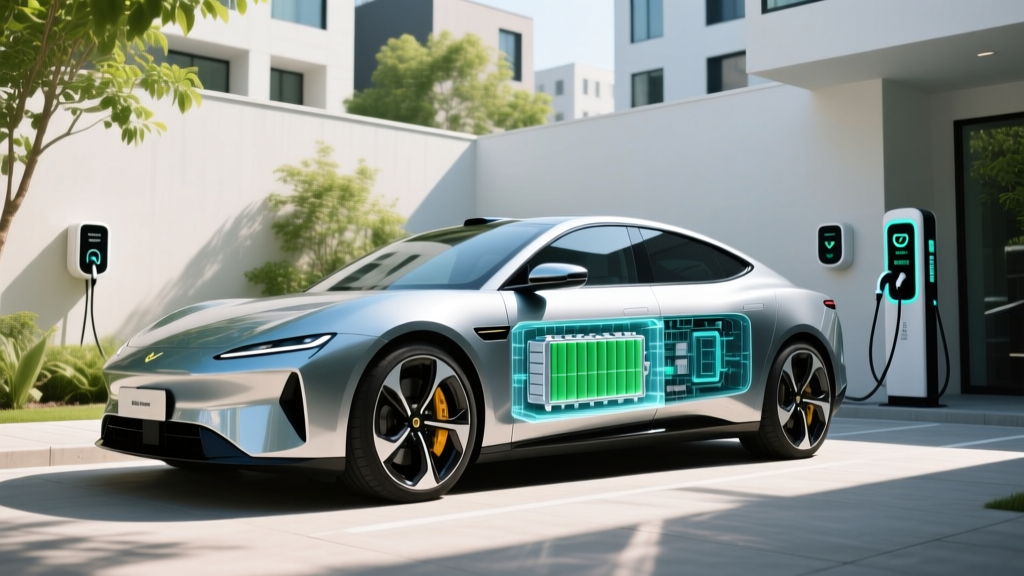
Battery chemistry matters here. Vehicles using NMC (nickel manganese cobalt) cells tend to offer higher energy density (more range per pound) but degrade slightly faster under repeated DC fast charging. LFP (lithium iron phosphate) packs, found in base-trim Tesla Model 3 and Model Y vehicles, sacrifice some range density but tolerate daily 100% charging and exhibit slower long-term degradation.
| Metric | EV (e.g., Hyundai Ioniq 6 SE) | Gas (e.g., Honda Accord 1.5T) |
|---|---|---|
| EPA Range / Tank | 361 mi (EPA) | 430 mi (14.8 gal × 29 combined MPG) |
| Real-World Highway Range | ~290–310 mi | ~380–400 mi |
| Cold-Weather Range (20°F) | ~250–275 mi | ~370 mi (minimal loss) |
| Efficiency | 140 MPGe / 24 kWh/100mi | 29 MPG combined |
| Energy Cost per Mile | $0.05 (home, $0.16/kWh) | $0.13 (gas at $3.70/gal) |
According to fueleconomy.gov, the Ioniq 6 SE achieves 140 MPGe combined. That translates to roughly $550 in annual electricity cost at 15,000 miles driven — compared to approximately $1,900 in gasoline for the Accord at $3.70/gallon. Over five years, the fuel savings alone can reach $6,500–$7,000, partially offsetting the EV's higher purchase price.
Charging Speed, Infrastructure, and Access
Charging remains the single biggest friction point for EV ownership — and the factor most dependent on your personal situation.
Charging Levels at a Glance
| Level | Power | Miles Added/Hour | Typical Use Case | Cost to Install/Use |
|---|---|---|---|---|
| Level 1 (120V) | 1.4 kW | 3–5 mi/hr | Overnight, low daily mileage | $0 (included cord) |
| Level 2 (240V) | 7.2–11.5 kW | 25–45 mi/hr | Home/workplace daily charging | $500–$2,000 install |
| DC Fast Charge | 50–350 kW | 150–300 mi in 20 min | Road trips, quick top-ups | $0.30–$0.50/kWh public |
A critical distinction for new buyers: kW (kilowatts) measures power — how fast energy flows into the battery. kWh (kilowatt-hours) measures energy capacity — the size of the battery. Think of kW as the flow rate of a hose and kWh as the size of the bucket.
Peak DC fast-charging rates are not sustained. A vehicle advertising "250 kW peak" may only hold that rate between 10–30% State of Charge (SoC), then taper progressively. Real-world 10–80% charging times on a 250 kW-capable EV with an 84 kWh battery typically run 18–28 minutes, depending on battery temperature and preconditioning. Without preconditioning — where the car warms the battery before arriving at the charger — speeds can drop by 40–50%.
Home Charging: The Make-or-Break Factor
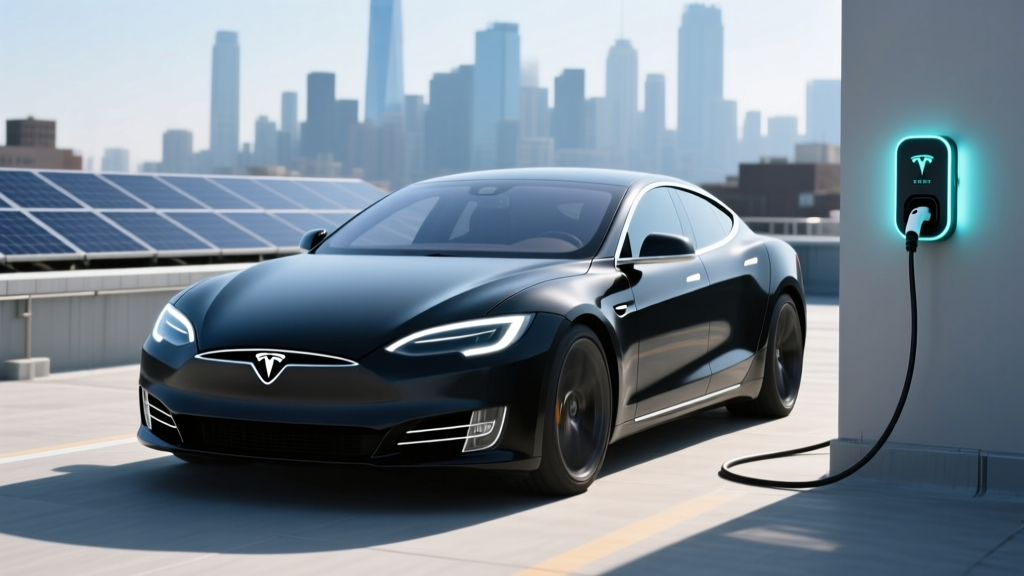
For most EV owners, home Level 2 charging is the foundation. A 240V/48A hardwired station adds roughly 30–40 miles of range per hour of charging, meaning a depleted 300-mile battery recovers fully overnight in 8–10 hours.
Installation costs vary widely. If your electrical panel has spare capacity (a 200-amp service with open breaker slots), expect to pay $800–$1,500 total for equipment and electrician labor. If your home needs a panel upgrade from 100A to 200A, costs can jump to $2,500–$5,000. Always get a licensed electrician to assess your panel before purchasing equipment.
If you cannot charge at home — apartment dwellers, street-parkers, condo residents without EV infrastructure — an EV is still possible but requires reliance on public charging or workplace stations. This adds time cost (20–40 minute charging sessions 2–3 times per week) and monetary cost (public DC fast charging at $0.35–$0.50/kWh approaches the per-mile cost of gasoline in some regions).
Total Cost of Ownership: The Full Picture
Purchase price tells only part of the story. Here's a five-year cost comparison between a typical EV and a comparable gas sedan, assuming 15,000 miles/year and current average energy prices.
| Cost Category | EV (e.g., Tesla Model 3 RWD) | Gas (e.g., Toyota Camry LE) |
|---|---|---|
| Base MSRP | $38,990 | $28,400 |
| Federal Tax Credit (§30D) | −$7,500 (if eligible) | $0 |
| Effective Purchase Price | $31,490 | $28,400 |
| Fuel/Energy (5 yrs, 75K mi) | $2,750 (home charging) | $9,750 (gas at $3.70/gal) |
| Maintenance (5 yrs) | $1,200 (cabin filter, wipers, tires) | $3,500 (oil, filters, brakes, belts) |
| Insurance (5 yrs, avg.) | $9,500 ($1,900/yr) | $7,500 ($1,500/yr) |
| Home Charger Install | $1,200 | $0 |
| Estimated Depreciation | $14,000 | $11,500 |
| 5-Year Total | $60,140 | $60,650 |
Key takeaways from this comparison:
- Fuel savings are real and substantial — roughly $7,000 over five years with home charging.
- Maintenance savings add another $2,300 — EVs have no engine oil, transmission fluid, timing belts, or exhaust systems to service. Brake pads last significantly longer due to regenerative braking handling most deceleration.
- Insurance costs more for EVs — typically 15–25% higher premiums due to higher repair costs and specialized parts. Get quotes before purchasing.
- Depreciation has been volatile — EV resale values fluctuated significantly in 2023–2025 due to Tesla price cuts and market shifts. Current depreciation is stabilizing but varies by model.
- The §30D tax credit is not guaranteed — eligibility depends on your taxable income (≤$150K single / ≤$300K joint), vehicle MSRP (≤$55K sedans / ≤$80K SUVs/trucks), battery component sourcing, and critical mineral requirements. Verify current rules at irs.gov before relying on the credit.
Common Misconceptions: Myth vs. Fact
| Myth | Fact (with Data) |
|---|---|
| "EV batteries need replacing every 5 years" | Federal law mandates battery warranties of 8 years/100,000 miles minimum. Real-world data shows most EV batteries retain 85–92% capacity after 100,000 miles. Full replacements are rare and typically cost $8,000–$18,000 if out of warranty. |
| "EVs are worse for the environment because of electricity generation" | Even on coal-heavy grids, EVs produce fewer lifetime emissions than gas cars per the Union of Concerned Scientists. On the US average grid, an EV emits the equivalent of a 91 MPG gas car. On cleaner grids (California, Pacific Northwest), the equivalent exceeds 150 MPG. |
| "You can't take an EV on a road trip" | The Tesla Supercharger network has 6,000+ US stalls; Electrify America and others add thousands more. A 600-mile trip requires 1–2 charging stops of 20–25 minutes each — roughly 40–50 minutes added to a 9-hour drive. |
| "EVs are slow" | Even a base Tesla Model 3 RWD hits 0–60 mph in 5.8 seconds. The Hyundai Ioniq 5 N does it in 3.4 seconds. Electric motors deliver instant torque from zero RPM — no turbo lag, no downshift delay. |
| "Public charging is always broken" | Reliability varies by network. Tesla Superchargers maintain ~99.5% uptime per independent surveys. Non-Tesla networks (Electrify America, EVgo) have improved but still average 85–92% uptime in J.D. Power studies. Plan backup stops on road trips. |
Performance, Driving Experience, and Safety
EVs offer a fundamentally different driving character. The instant torque delivery means strong acceleration from any speed without waiting for a transmission downshift. The low center of gravity (battery pack mounted under the floor) reduces body roll and improves handling stability.
One-pedal driving — using regenerative braking to decelerate by lifting off the accelerator — reduces brake wear and can recapture 15–25% of energy in stop-and-go traffic. Most EVs allow you to adjust regen strength or turn it off entirely.
On safety, EVs consistently earn top ratings. The heavy battery pack lowers rollover risk, and the absence of an engine block allows larger front crumple zones. Check IIHS and NHTSA for specific model ratings — most current EVs earn Top Safety Pick+ or 5-star ratings.
Regarding driver-assistance systems: features like Tesla Autopilot, Ford BlueCruise, and GM Super Cruise are all SAE Level 2 — they assist with steering and speed but require continuous driver supervision. They are not self-driving. Only Level 4 services like Waymo's robotaxis operate without a human driver, and those are limited to specific metro areas.
Decision Framework: Should You Buy an EV?
Choose a Battery-Electric Vehicle (BEV) If:
- You have access to home or workplace Level 2 charging
- Your daily commute is under 100 miles round-trip (covers 95%+ of US drivers)
- You want the lowest per-mile operating cost and minimal maintenance
- You qualify for the §30D tax credit (check income and vehicle eligibility)
- You take road trips 2–4 times per year and can plan 20-minute charging stops
Choose a Plug-In Hybrid (PHEV) If:
- You lack reliable home charging but want some electric driving
- You frequently drive 200+ miles in a single day where charging stops would be disruptive
- You want electric commuting (20–45 miles EV range) with gas flexibility for longer trips
- You live in a very cold climate where EV range loss is a significant concern
Stick with a Gas or Standard Hybrid (HEV) If:
- You have no access to home or workplace charging and public infrastructure is sparse in your area
- Your budget is strictly under $25,000 and you need a new or nearly-new vehicle
- You regularly tow heavy loads (towing drastically cuts EV range — a 5,000-lb trailer can reduce range by 40–50%)
- You live in a remote area with limited charging infrastructure and drive long distances daily
First-Time EV Buyer Checklist
- Verify your home electrical capacity. Have an electrician confirm your panel can support a 240V/40–48A circuit. Budget $800–$2,000 for installation (more if a panel upgrade is needed).
- Test your actual commute distance. Track a week of driving. If 90% of your days fall under 80 miles, a 250+ mile EPA range EV will serve you well even with cold-weather and highway reductions.
- Check §30D tax credit eligibility. Confirm the specific model/trim you want qualifies, that your income falls within limits, and that the vehicle meets current battery-sourcing requirements. The point-of-sale transfer option lets you apply the credit at purchase rather than waiting for tax filing.
- Get insurance quotes before buying. EV insurance premiums vary significantly by insurer. Some companies offer EV-specific discounts; others charge 20%+ more than equivalent gas models.
- Test-drive for regen comfort. Regenerative braking feels different from a gas car's coasting behavior. Spend 15+ minutes in the driver's seat adjusting regen settings to find what feels natural.
- Download the charging apps. Before delivery day, install PlugShare, ChargePoint, EVgo, and/or Electrify America apps. Create accounts and check charger availability along your most common routes.
Do electric cars save you money long-term?
Yes, in most scenarios. Fuel savings of $1,200–$1,800/year (with home charging) and maintenance savings of $400–$600/year typically offset the higher purchase price within 5–7 years. The §30D tax credit accelerates payback to 2–4 years if you qualify. However, if you rely entirely on expensive public DC fast charging ($0.35–$0.50/kWh), fuel savings shrink significantly, and the payback period extends.
How long do EV batteries actually last?
Current data from multiple manufacturers and fleet studies shows most EV batteries retain 85–92% of original capacity after 100,000 miles. Federal warranty requirements mandate coverage for at least 8 years/100,000 miles with a capacity retention threshold (typically 70% of original). LFP chemistry batteries tend to show slower degradation than NMC, though both chemistries are proving durable in real-world use. Catastrophic battery failure is rare; gradual capacity loss is the norm.
Are EVs practical in cold climates?
EVs work in cold weather but with reduced range. Expect 15–30% range loss at temperatures below 32°F, with the worst losses occurring below 10°F. A 300-mile EPA-rated EV may deliver 210–255 miles in harsh winter conditions. Mitigation strategies include preconditioning the battery while plugged in (warming it using grid power rather than battery power), using seat/steering wheel heaters instead of cabin air heating, and selecting an EV with a heat pump (standard on most 2025–2026 models), which is 2–3× more efficient than resistive heating.
What happens if I can't charge at home?
EV ownership without home charging is possible but less convenient. You'll rely on workplace charging, public Level 2 stations, or DC fast chargers. Plan for 2–3 charging sessions per week of 20–40 minutes each. Costs will be higher — public DC fast charging at $0.40/kWh costs roughly $0.12–$0.16 per mile, approaching gasoline costs. If this is your situation, a PHEV (which can run on gas when charging isn't available) may be a better fit.
Do EVs hold their resale value?
EV depreciation has been volatile. In 2023–2024, aggressive Tesla price cuts and rapid battery-tech improvements caused some used EVs to depreciate 40–50% in two years. As of 2026, depreciation is stabilizing as prices normalize and battery longevity data builds confidence. Expect 45–55% value retention at 3 years for mainstream EVs — slightly below the gas-car average of 50–60%, but improving. Models from brands with strong reliability reputations (Hyundai, Kia, Toyota) tend to hold value better.