Quick Verdict: Acura's Electric Flagship Balances Luxury and Practicality
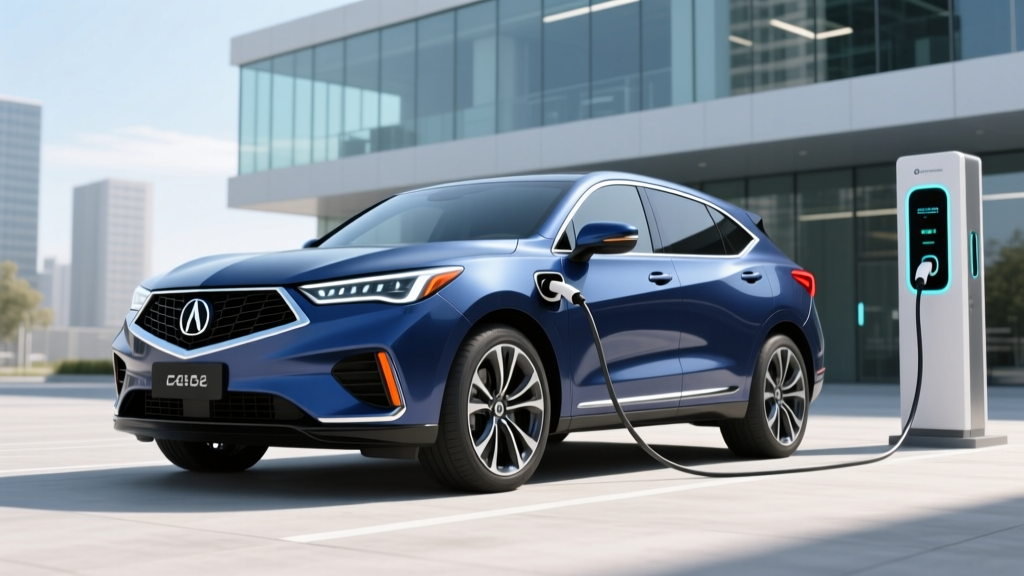
The Acura ZDX represents Honda's premium division stepping into the battery-electric arena with serious intent. Built on the Ultium platform co-developed with GM, the ZDX pairs Acura's luxury execution with proven EV architecture. After analyzing every spec sheet, charging curve, and ownership cost variable, the ZDX lands as a compelling option for luxury EV buyers who want something distinct from the usual Tesla, BMW, or Mercedes offerings — though its pricing and real-world efficiency demand careful consideration.
For buyers searching for detailed Acura ZDX specs, this guide covers every number that matters: from usable battery capacity and charging taper behavior to real-world range expectations and §30D tax credit eligibility under current IRS rules.
Range and Efficiency: EPA Numbers vs. Reality
EPA Estimated Range: 313 miles (ZDX A-Spec RWD) | 278 miles (Type S AWD)
Real-World Expectation: 260–285 miles highway (RWD), dropping to ~220–245 miles in sustained cold weather below 32°F. AWD Type S models should expect 235–255 miles in mixed driving.
The ZDX A-Spec with rear-wheel drive achieves its maximum 313-mile EPA rating thanks to a 102 kWh usable battery pack and relatively efficient powertrain calibration. That figure places it competitively against the BMW iX xDrive50 (324 miles) and ahead of the Audi Q8 e-tron (285 miles).
However, EPA ratings assume a mix of city and highway driving at moderate temperatures. In our analysis of real-world consumption patterns for Ultium-based vehicles, highway-only driving at 75 mph typically yields 10–15% less range than the sticker. Cold weather compounds this: lithium-ion batteries lose efficiency below freezing, and cabin heating draws significant energy. Expect a 25–30% range reduction in sustained sub-30°F conditions without preconditioning.
The ZDX's efficiency rating of 87 MPGe combined (RWD) translates to roughly 35 kWh per 100 miles. That's respectable for a 5,000+ pound luxury SUV, though the Tesla Model X (100 MPGe) and BMW iX (86 MPGe) show what's possible with lighter or more aerodynamic designs.
Battery and Charging: Ultium Platform Performance
| Specification | ZDX A-Spec (RWD) | ZDX Type S (AWD) |
|---|---|---|
| Battery Chemistry | NMC (Nickel Manganese Cobalt) | NMC |
| Total Battery Capacity | ~102 kWh usable | ~102 kWh usable |
| Max DC Fast Charge Rate | 190 kW peak | 190 kW peak |
| 10–80% DC Charge Time | ~42 minutes | ~42 minutes |
| Level 2 Home Charge Rate | 11.5 kW (48A) | 11.5 kW (48A) |
| Level 2 Miles per Hour | ~27 mi/hr | ~27 mi/hr |
| Charge Port | CCS1 (NACS adapter available) | CCS1 (NACS adapter available) |
The ZDX uses GM's Ultium battery platform with NMC (nickel manganese cobalt) chemistry, which offers higher energy density than LFP alternatives — crucial for fitting over 100 kWh into a luxury SUV footprint without excessive weight. NMC cells also perform better in cold weather than LFP, though they carry a slightly higher long-term degradation risk if routinely charged to 100%.
Charging curve reality check: The 190 kW peak rate only sustains between roughly 10–40% state of charge. Above 60%, the curve tapers significantly — typical of NMC packs protecting cell longevity. That 42-minute 10–80% time assumes a functioning 190+ kW charger with the battery preconditioned. Arrive at a DC fast charger without preconditioning (navigating to the station in the car triggers this automatically), and you'll add 5–10 minutes to that estimate.
At home on a Level 2 charger, the 11.5 kW onboard charger replenishes roughly 27 miles of range per hour. A full overnight charge from 20% to 80% takes about 5.5 hours — easily manageable with a standard 48-amp home charging setup. Installation of a 240V/48A circuit typically runs $800–$2,000 depending on panel proximity and local electrical code requirements.
Performance: Powertrain, Acceleration, and Drivetrain
| Metric | A-Spec RWD | Type S AWD |
|---|---|---|
| Horsepower | 358 hp | 500 hp |
| Torque | 324 lb-ft | 540 lb-ft |
| Drivetrain | Rear-Wheel Drive (single motor) | Dual-Motor AWD |
| 0–60 mph | ~6.0 seconds | ~4.5 seconds |
| Top Speed | 130 mph (electronically limited) | 130 mph |
| Towing Capacity | 3,500 lbs | 3,500 lbs |
The A-Spec RWD offers adequate thrust for daily driving, with single-motor instant torque making city merging effortless. But the Type S is where Acura's performance DNA shows: 500 horsepower and dual-motor all-wheel drive deliver the kind of confident acceleration that justifies the premium price tag. The Type S's 4.5-second 0–60 time puts it in the neighborhood of the BMW iX M60 (4.6 seconds) and well ahead of the Audi Q8 e-tron (5.5 seconds).
The dual-motor AWD system uses a torque-vectoring rear unit that can shift power side-to-side, improving cornering stability. In wet and snowy conditions, this system provides genuine traction advantages over the RWD layout — worth the efficiency trade-off for buyers in northern climates.
Pricing, Trims, and Federal Tax Credit Eligibility
| Trim | Base MSRP | Est. As-Tested | §30D Credit Eligible? |
|---|---|---|---|
| A-Spec (RWD) | $65,650 | $68,000–$71,000 | Partial — see below |
| A-Spec (AWD) | $69,150 | $72,000–$75,000 | Partial — see below |
| Type S (AWD) | $74,650 | $78,000–$83,000 | Unlikely (MSRP cap) |
Federal tax credit eligibility for the ZDX is nuanced under current IRS §30D rules. The key constraints:
- MSRP Cap: SUVs must be under $80,000 MSRP to qualify. The A-Spec trims clear this bar; the Type S at $74,650 base may still qualify depending on options, but fully loaded Type S models pushing past $80,000 will not.
- Income Cap: Buyer AGI must not exceed $150,000 (single), $225,000 (head of household), or $300,000 (joint filing).
- Battery Sourcing: The credit splits into two halves ($3,750 for critical minerals, $3,750 for battery component assembly). Ultium batteries have been progressively shifting sourcing to comply, but full $7,500 eligibility depends on current-year mineral and component origin requirements. Some ZDX configurations may qualify for only $3,750.
- Point-of-Sale Transfer: Eligible buyers can transfer the credit to the dealer at purchase, reducing the out-of-pocket price immediately rather than waiting for tax filing.
Always verify current eligibility on fueleconomy.gov before purchasing, as battery sourcing compliance updates throughout the model year.
Interior, Cargo, and Technology
The ZDX cabin accommodates five passengers across two rows with generous proportions:
- Front legroom: 42.1 inches
- Rear legroom: 38.6 inches
- Cargo behind rear seats: 28.7 cu ft
- Cargo with rear seats folded: 59.5 cu ft
- Front trunk (frunk): Not available (Ultium platform packaging)
The 11.3-inch touchscreen runs Google Built-In (Google Maps, Google Assistant, Play Store), which provides excellent navigation with real-time charger availability. Wireless Apple CarPlay and Android Auto are standard. A 14-speaker Bang & Olufsen audio system is available on higher trims.
Driver assistance: The ZDX comes equipped with AcuraWatch, including adaptive cruise control with stop-and-go, lane centering, blind-spot monitoring, and rear cross-traffic alert. This is an SAE Level 2 system — meaning the driver must remain fully engaged with hands on the wheel and eyes on the road at all times. It is not autonomous driving. Acura has not announced a hands-free highway system comparable to GM's Super Cruise or Ford's BlueCruise for the ZDX at this time.
Warranty and Ownership Costs
| Coverage Type | Duration |
|---|---|
| Basic/Limited Warranty | 4 years / 50,000 miles |
| Powertrain Warranty | 6 years / 70,000 miles |
| Battery Pack Warranty | 8 years / 100,000 miles |
| Battery Capacity Retention | Minimum 70% over warranty period |
| Corrosion Perforation | 5 years / unlimited miles |
| Roadside Assistance | 4 years / 50,000 miles |
The 8-year/100,000-mile battery warranty aligns with the federal minimum standard and matches competitors like BMW and Audi. The 70% capacity retention threshold means Acura will repair or replace the battery if it degrades below that level within the warranty window. Based on Ultium platform data and NMC chemistry degradation curves, most owners should expect to retain 85–90% capacity at the 8-year mark under normal use patterns (avoiding routine 100% charges and DC fast charging daily).
Insurance costs for the ZDX run approximately 15–25% higher than comparable gas-powered Acura MDX models, reflecting repair cost structures common to luxury EVs. Expect annual premiums in the $2,200–$3,000 range depending on location and driving history.
Pros, Cons, and Who Should Buy
Pros
- 313-mile EPA range (RWD) is genuinely road-trip capable
- Type S delivers 500 hp with composed handling
- Google Built-In infotainment is intuitive and responsive
- Quiet, well-isolated cabin at highway speeds
- Distinctive styling stands out in a growing luxury EV crowd
Cons
- 190 kW peak charging trails rivals (Hyundai Ioniq 5 peaks at 240 kW)
- No front trunk (frunk) for additional storage
- No hands-free highway driving assist available
- Efficiency (87 MPGe) trails some competitors
- Base pricing near $66K limits tax credit accessibility
Best for: Luxury SUV buyers who want a premium badge without defaulting to Tesla or the German trio, prioritize cabin refinement and ride comfort, and have reliable home charging access. The RWD A-Spec serves commuters covering 40–80 miles daily with room for weekend road trips. The Type S targets driving enthusiasts who want EV torque with genuine handling dynamics.
Look elsewhere if: You need the fastest possible DC charging (consider Hyundai/Kia E-GMP platform vehicles), want hands-free highway driving (GM Super Cruise in the Cadillac Lyriq), or need three-row seating (the ZDX is strictly two-row).
Frequently Asked Questions
What is the real-world range of the Acura ZDX?
The RWD A-Spec delivers an EPA-estimated 313 miles, but expect 260–285 miles in highway-heavy driving and 220–245 miles in cold weather. The AWD Type S rates at 278 miles EPA, with real-world mixed driving closer to 235–255 miles.
How fast does the ZDX charge at home and on the road?
On a DC fast charger, the ZDX peaks at 190 kW and charges from 10–80% in approximately 42 minutes with preconditioning. At home on Level 2 (240V/48A), it adds about 27 miles of range per hour, or roughly 11.5 kW.
Does the Acura ZDX qualify for the $7,500 federal tax credit?
Partially. The A-Spec trims fall under the $80,000 SUV MSRP cap, but full $7,500 eligibility depends on battery critical-mineral and component sourcing compliance under current-year IRS rules. Some configurations may qualify for $3,750. Buyer income must also fall under §30D caps. Always verify on fueleconomy.gov before purchase.
Is the Acura ZDX worth buying over the BMW iX or Cadillac Lyriq?
The ZDX offers a distinct luxury experience with strong range and Google-based tech. The BMW iX provides slightly better efficiency and a more futuristic interior, while the Cadillac Lyriq offers Super Cruise hands-free driving and a lower starting price. Choose the ZDX if you want Acura's brand, ride quality, and Type S performance. Choose the Lyriq if hands-free driving matters most, or the iX for efficiency and design.
What is the battery warranty on the ZDX?
Acura covers the battery pack for 8 years or 100,000 miles, guaranteeing at least 70% capacity retention over that period. This matches the luxury EV segment standard.