The Acura ZDX marks Honda's premium brand entry into the battery-electric space, riding on the General Motors Ultium platform shared with the Cadillac Lyriq. For buyers researching the Acura ZDX length, garage fitment, and real-world practicality, the numbers tell a compelling story — but the ownership experience depends on more than exterior dimensions. This review covers range, charging, pricing, and daily usability with the exact figures you need to decide.
Acura ZDX Length, Dimensions, and Garage Fitment
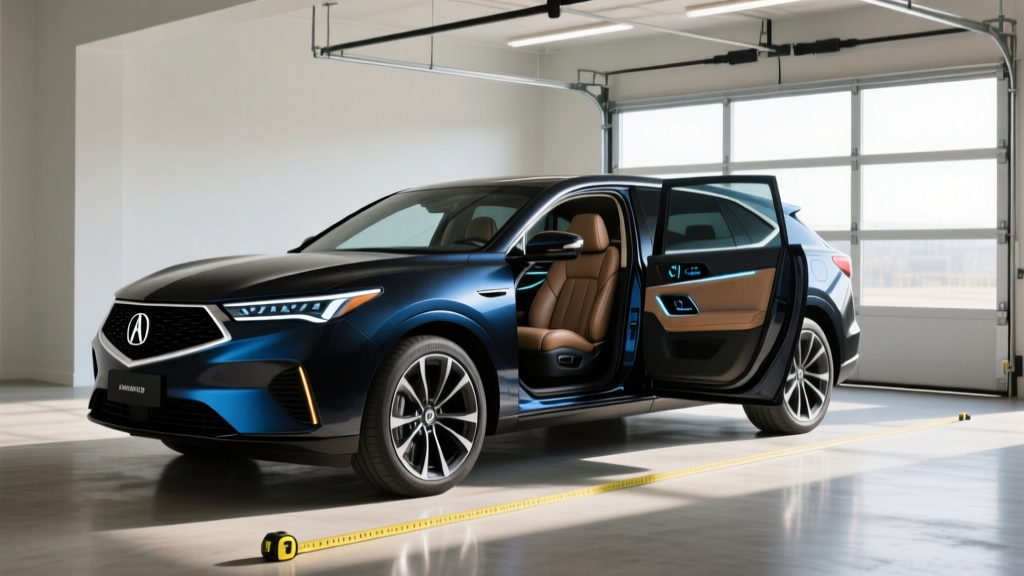
Let's address the primary search directly. The 2026 Acura ZDX measures 197.7 inches (5,022 mm) in overall length, placing it firmly in the midsize-to-large luxury electric SUV segment. Here is the full dimensional breakdown:
| Dimension | Measurement |
|---|---|
| Overall Length | 197.7 in (5,022 mm) |
| Wheelbase | 121.8 in (3,094 mm) |
| Overall Width (w/ mirrors) | 85.2 in (2,164 mm) |
| Overall Width (w/o mirrors) | 77.0 in (1,956 mm) |
| Overall Height | 63.7 in (1,618 mm) |
| Ground Clearance | 7.1 in (180 mm) |
| Curb Weight (AWD) | ~5,900 lbs |
At 197.7 inches, the ZDX is roughly 10 inches longer than the Tesla Model Y and about 2 inches shorter than the BMW iX. Most standard US residential garages (typically 20 to 24 feet deep) accommodate the ZDX with room to spare, but if you're working with a compact single-car garage under 20 feet, you'll want to measure carefully — especially factoring in wall-mounted Level 2 charging equipment that may protrude 6 to 10 inches from the back wall.
Range, Battery, and Real-World Efficiency
The 2026 ZDX is available with two battery configurations tied to its drivetrain options. The rear-wheel-drive (RWD) A-Spec trim carries a 102 kWh usable battery pack (NMC lithium-ion chemistry, part of GM's Ultium modular architecture), while the dual-motor all-wheel-drive (AWD) variants use the same pack with different software and motor tuning.
| Trim / Drivetrain | EPA Range | Real-World Expectation |
|---|---|---|
| A-Spec RWD | 313 miles | ~270–285 mi (mixed); ~245–260 mi (highway 75 mph); ~210–230 mi (cold weather, 20°F) |
| A-Spec AWD | 304 miles | ~260–275 mi (mixed); ~235–250 mi (highway); ~200–220 mi (cold weather) |
| Type S AWD | 278 miles | ~240–255 mi (mixed); ~215–230 mi (highway); ~185–205 mi (cold weather) |
Source: fueleconomy.gov. Cold-weather estimates assume 20°F ambient with cabin heating; highway estimates assume sustained 70–75 mph. Your results will vary based on terrain, driving style, and climate preconditioning.
The ZDX A-Spec RWD achieves an EPA-rated 98 MPGe combined (roughly 34 kWh per 100 miles). The AWD A-Spec drops to about 94 MPGe, and the performance-oriented Type S settles at approximately 85 MPGe (39 kWh/100 mi). For a nearly 6,000-pound luxury SUV, these figures are competitive with the Lyriq and slightly behind the more aerodynamic BMW iX xDrive50.
The NMC chemistry in the Ultium pack prioritizes energy density over cycle life compared to LFP (lithium iron phosphate). This means more range per kilogram of battery, but Acura recommends keeping daily charging between 20% and 80% State of Charge (SoC) to minimize long-term degradation — only charging to 100% when you need the full range for a road trip. The pack's active thermal management system includes a liquid cooling loop that preconditioning can optimize before fast-charging sessions.
Charging Speed: DC Fast, Level 2, and Level 1
Charging capability is where the Ultium platform shows its strengths — and its limitations relative to 800V architectures like Hyundai/Kia's E-GMP.
| Charging Level | Power / Rate | Speed / Time | Notes |
|---|---|---|---|
| DC Fast Charging (Peak) | 190 kW (max) | 10–80% in ~30 minutes | CCS1 connector; charge curve tapers significantly above 80% |
| DC Fast Charging (Sustained 10–60%) | ~150–170 kW avg | ~180 mi added in 20 min | With battery preconditioning enabled via nav routing |
| Level 2 (Home / Public AC) | 11.5 kW (48A) | ~25–27 miles per hour | Full charge in ~9.5 hours (0–100%) |
| Level 1 (120V Household) | 1.4 kW (12A) | ~3–4 miles per hour | Emergency / trickle only; ~30+ hours for full charge |
The 190 kW peak DC fast-charge rate is solid for a 400V architecture, but it's important to understand the charge curve. The ZDX will sustain its highest charge rates (150–190 kW) roughly between 10% and 50% SoC. From 50% to 80%, the rate tapers to approximately 80–120 kW as the battery management system protects cell health. Above 80%, charging slows dramatically — expect 30+ additional minutes to go from 80% to 100% on DC. For road trips, the practical strategy is to charge from 10–80% (adding roughly 215 miles of range in the RWD model) and move on.
For home charging, the onboard 11.5 kW AC charger is a strong point. With a properly installed 48-amp Level 2 wall connector on a 60-amp dedicated circuit, you'll recover roughly 25–27 miles of range per hour — meaning a typical overnight session (8–10 hours) easily replenishes a full day's driving. Installation costs for a Level 2 home setup typically range from $800 to $2,500 depending on panel proximity and whether your electrical panel needs an upgrade to 200A service. Always consult a licensed electrician for final specifications.
Performance: 0-60, Horsepower, and Drivetrain
| Trim | Drivetrain | Horsepower | Torque (lb-ft) | 0-60 mph |
|---|---|---|---|---|
| A-Spec | RWD (single rear motor) | 340 hp | 325 | ~6.0 sec |
| A-Spec AWD | AWD (dual motor) | 490 hp | 450 | ~4.7 sec |
| Type S | AWD (dual motor, performance tune) | 500 hp | 526 | ~4.0 sec |
The Type S variant, with its 500 horsepower and performance-tuned adaptive air suspension, is genuinely quick. But for most buyers, the A-Spec AWD's 490 hp and sub-5-second 0-60 time is more than adequate for highway merging and passing. The RWD model's 6.0-second sprint is relaxed by EV standards but perfectly livable.
Regenerative braking offers multiple levels selectable via steering-wheel paddles, though the ZDX does not offer true one-pedal driving to a complete stop in all modes — you'll still use the brake pedal at low speeds in the default setting. The maximum regen level recovers energy aggressively on downhill grades and in stop-and-go traffic.
Cargo, Passenger Space, and Practicality
The ZDX's 121.8-inch wheelbase — one of the longest in the segment — translates directly to interior volume:
| Measurement | Specification |
|---|---|
| Front Headroom | 39.4 in |
| Front Legroom | 41.7 in |
| Rear Headroom | 38.2 in |
| Rear Legroom | 38.5 in |
| Cargo (behind 2nd row) | 28.0 cu ft |
| Cargo (2nd row folded) | 58.0 cu ft |
| Front Trunk (Frunk) | Not available (hood houses HVAC components) |
| Towing Capacity (AWD, equipped) | 1,500 lbs |
The absence of a frunk is a notable omission compared to the Ford Mustang Mach-E or Rivian R1S, which use their front compartments for additional storage. Acura uses that space for climate-control hardware. The 28.0 cu ft behind the second row is competitive with the Cadillac Lyriq (28.0 cu ft) but trails the Tesla Model X (behind its second row) and Rivian R1S significantly.
For families, the ZDX comfortably fits two rear-facing child seats in the second row with adequate front-seat adjustment remaining. The flat floor (no transmission tunnel) makes the middle rear seat genuinely usable for a third passenger on shorter trips.
Pricing, Trims, and Federal Tax Credit Eligibility
| Trim | Base MSRP | Est. As-Tested* | §30D Credit Potential | Effective Price** |
|---|---|---|---|---|
| A-Spec RWD | $65,850 | $67,500 | Up to $7,500 (see rules) | ~$58,350 |
| A-Spec AWD | $69,850 | $72,000 | Up to $7,500 (see rules) | ~$62,350 |
| Type S | $74,850 | $78,000 | Up to $7,500 (see rules) | ~$67,350 |
*As-tested includes destination and common option packages. **Effective price assumes full §30D credit eligibility.
- MSRP Cap: SUVs must have an MSRP at or below $80,000. All ZDX trims qualify on MSRP.
- Buyer Income Cap: Modified AGI must not exceed $300,000 (joint), $225,000 (head of household), or $150,000 (single).
- Battery Sourcing: The $7,500 credit splits into $3,750 for critical-mineral sourcing and $3,750 for battery-component sourcing. Requirements tighten annually. The ZDX's GM Ultium pack (assembled in the US) has historically met component requirements, but critical-mineral sourcing depends on current-year supply chain compliance.
- Point-of-Sale Transfer: Eligible buyers can transfer the credit to the dealer at purchase, reducing the purchase price directly rather than waiting for a tax refund.
- Verify before buying: Check the latest eligibility on IRS.gov qualified vehicle list, as sourcing compliance can change between model years.
Technology, Driver Assistance, and Ownership
The ZDX features an 11.3-inch touchscreen infotainment system running Acura's latest interface with wireless Apple CarPlay and Android Auto, Google Built-In (Maps, Assistant, Play Store), and a 14-speaker Bang & Olufsen audio system on higher trims. An 11-inch digital instrument cluster sits ahead of the driver.
On the driver-assistance front, the ZDX comes equipped with AcuraWatch, which includes adaptive cruise control with low-speed follow, lane-keeping assist, blind-spot monitoring, and automatic emergency braking. This is an SAE Level 2 driver-assistance system — meaning the driver must remain fully engaged, hands on or near the wheel, and eyes on the road at all times. It is not a self-driving system.
Notably, the ZDX does not currently offer a hands-free highway driving feature comparable to GM's Super Cruise (available on the Cadillac Lyriq) or Ford's BlueCruise. This is a meaningful competitive gap for a luxury EV in this price range. Acura has indicated future over-the-air updates may expand capability, but as of the 2026 model year, hands-on supervision is required.
Warranty coverage:
- Battery & Powertrain: 8 years / 100,000 miles (with a capacity retention threshold of approximately 60–70% of original capacity, per GM Ultium warranty terms)
- Bumper-to-Bumper: 4 years / 50,000 miles
- Corrosion: 5 years / unlimited miles
- Roadside Assistance: 6 years / 70,000 miles
Pros, Cons, and Competitive Verdict
- Spacious cabin with class-leading wheelbase and rear legroom
- Strong 190 kW DC fast-charge capability on CCS1
- 11.5 kW onboard AC charger enables fast home Level 2 recovery
- All trims under $80K MSRP cap — federal credit eligible (subject to sourcing)
- Type S delivers genuine 500-hp performance
- Quiet, well-damped ride quality on adaptive air suspension (Type S)
- No frunk — unusual for an EV at this price point
- No hands-free driving assist (Super Cruise unavailable despite GM platform)
- 1,500-lb towing capacity trails competitors (Rivian R1S: 7,700 lbs)
- Type S range drops to 278 mi EPA — modest for the price
- NMC battery requires 20–80% daily discipline vs. LFP's 100% tolerance
- Cargo volume (28 cu ft) is midpack, not class-leading
Who Should Buy the Acura ZDX?
The ZDX fits a specific buyer: someone who wants a premium, comfortable electric SUV for daily commuting and regular road trips, values interior space and ride refinement over maximum cargo utility or towing, and prefers the Acura dealer experience and brand positioning. It's a strong family hauler and commuter — the 38.5 inches of rear legroom and quiet cabin make it excellent for school runs and highway cruising.
It is not the right choice if you need serious towing capacity (look at the Rivian R1S or Ford F-150 Lightning), hands-free highway driving (Cadillac Lyriq with Super Cruise), or maximum cargo volume with a frunk (Tesla Model X). The ZDX also doesn't offer an LFP battery option, which matters to buyers who want the simplicity of daily 100% charging without degradation concerns.
Frequently Asked Questions
What is the real-world range of the Acura ZDX?
The EPA rates the RWD A-Spec at 313 miles and the AWD at 304 miles. In real-world mixed driving, expect roughly 270–285 miles (RWD) and 260–275 miles (AWD). Sustained highway driving at 75 mph reduces this to approximately 245–260 miles, and cold weather (20°F) with cabin heating can drop range by 25–35%, yielding roughly 210–230 miles for the RWD model.
How fast does the ZDX charge at home and on the road?
On a DC fast charger, the ZDX peaks at 190 kW and charges from 10–80% in approximately 30 minutes. At home on a 48-amp Level 2 charger (11.5 kW), it adds about 25–27 miles of range per hour, fully recharging overnight in roughly 9.5 hours.
Does the Acura ZDX qualify for the $7,500 federal EV tax credit?
All ZDX trims fall under the $80,000 SUV MSRP cap. However, full credit eligibility depends on your income (under $300K joint / $150K single), and the battery must meet current-year critical-mineral and component sourcing requirements under IRS §30D. Verify the ZDX's status on the IRS qualified vehicles list before purchasing. The credit can be transferred to the dealer at point of sale.
Is the ZDX worth buying vs. the Cadillac Lyriq or Tesla Model X?
The ZDX offers a more premium interior feel than the Lyriq and a quieter ride, but it lacks Super Cruise hands-free driving. Versus the Model X, the ZDX is more affordable and has a traditional luxury cabin, but the Tesla offers falcon-wing doors, a frunk, more cargo space, and access to the Supercharger network (though the ZDX's CCS1 adapter for NACS is increasingly available). Choose the ZDX if you want Acura's refinement and don't need hands-free driving or heavy towing.
What is the Acura ZDX length and will it fit in my garage?
The 2026 Acura ZDX is 197.7 inches (16.5 feet) long. Most standard US garages (20–24 feet deep) accommodate it comfortably. If your garage is under 20 feet deep or you plan to install a wall-mounted Level 2 charger on the back wall, measure carefully — the charger adds 6–10 inches of depth.
Does the ZDX have a frunk?
No. The Acura ZDX does not include a front trunk. The space under the hood houses HVAC and power electronics. All cargo storage is in the rear (28.0 cu ft behind the second row, 58.0 cu ft with seats folded).