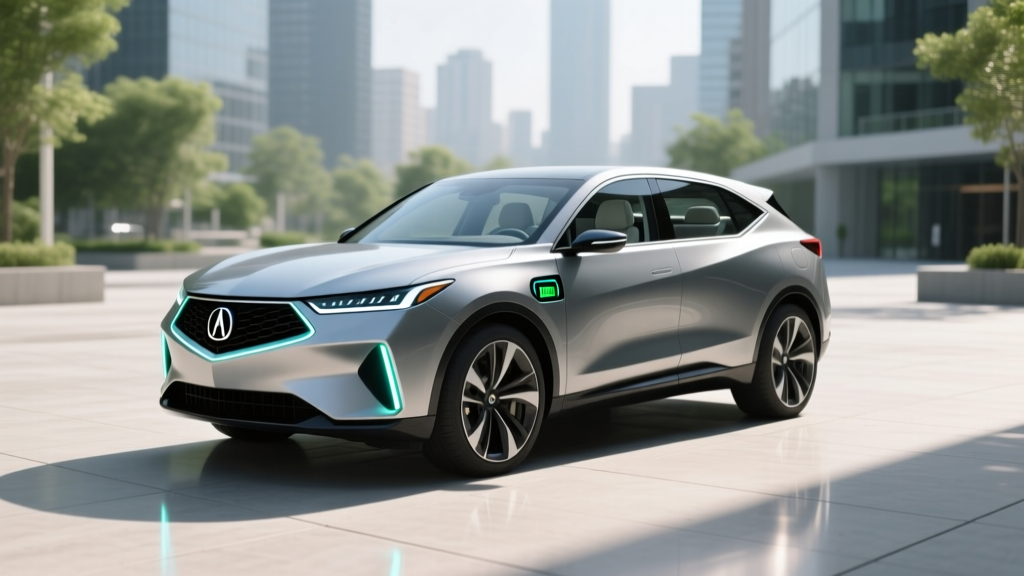
The Acura ZDX represents Honda's luxury division's serious entry into the premium electric SUV segment, built on General Motors' Ultium platform. For buyers searching for Acura ZDX lease specials, understanding what lies beneath the sleek exterior — from its NMC battery chemistry to its real-world charging behavior — is essential before signing any agreement. This review breaks down every number that matters.
EPA Range vs. Real-World Expectations
EPA Estimated: 313 miles (A-Spec RWD) / 278 miles (Type S AWD)
Real-World Expectation: Expect 260–285 miles in mixed driving for the A-Spec RWD, and 230–255 miles for the Type S. Highway-dominant trips at 75+ mph reduce range by roughly 10–15%. In cold weather (below 32°F), plan for a 20–30% reduction, bringing the Type S down to approximately 190–210 miles on a full charge.
Range, Battery, and Efficiency Breakdown
The 2026 Acura ZDX uses a 102 kWh usable battery pack (gross capacity approximately 112 kWh) featuring GM's NMC (nickel-manganese-cobalt) lithium-ion chemistry. NMC offers higher energy density than LFP, which translates to more range in a lighter package — but it also means you'll want to avoid routinely charging to 100% for daily use. Acura recommends an 80% daily charge limit to preserve long-term battery health.
Efficiency varies significantly by trim and drivetrain:
| Spec | A-Spec (RWD) | A-Spec (AWD) | Type S (AWD) |
|---|---|---|---|
| EPA Range | 313 mi | 304 mi | 278 mi |
| MPGe (Combined) | 94 MPGe | 91 MPGe | 85 MPGe |
| kWh/100 mi | 36 kWh | 37 kWh | 40 kWh |
| Battery (Usable) | 102 kWh NMC | 102 kWh NMC | 102 kWh NMC |
For context, 40 kWh/100 mi in the Type S is thirsty by EV standards — comparable to the GMC Hummer EV's efficiency profile. The heavier curb weight (over 5,900 lbs for the Type S) and performance-tuned dual motors explain the consumption penalty. If efficiency is a priority, the A-Spec RWD is the clear winner.
Charging Speed: DC Fast Charge and Home Level 2
Charging capability is where the ZDX's GM Ultium architecture shows its strengths — and one notable limitation.
| Charging Level | Rate | Speed / Time |
|---|---|---|
| Level 1 (120V, 12A) | ~1.4 kW | ~4 mi/hr — emergency use only |
| Level 2 (240V, 48A) | 11.5 kW | ~33 mi/hr — full charge in ~9.5 hours |
| DC Fast Charge (Peak) | 190 kW | 10–80% in ~28 minutes |
The ZDX's 190 kW peak DC fast-charge rate is competitive but not class-leading. The Hyundai Ioniq 5 and Kia EV6 can peak at 240+ kW thanks to their 800V architectures, while the ZDX runs on GM's 400V system. In practice, you'll see the ZDX sustain roughly 150–170 kW through the 20–60% state-of-charge window before tapering. The 10–80% time of approximately 28 minutes is acceptable for road-trip stops but noticeably slower than the sub-20-minute performers.
One important note: the 2026 ZDX ships with a NACS (North American Charging Standard) port, granting native access to Tesla Supercharger stations (V3 and V4) without an adapter. This significantly expands your public charging network, particularly in rural corridors where CCS-only stations are sparse.
For home Level 2 charging, the onboard 11.5 kW charger means a full overnight replenishment is realistic. A typical commute of 40 miles round-trip requires only about 1.5 hours of Level 2 charging to recover. Installation of a 48A hardwired Level 2 charger typically costs $800–$2,000 depending on panel capacity and run length — budget accordingly.
Performance and Drivetrain
The ZDX offers two distinct performance personalities:
- A-Spec RWD: Single rear motor, 358 hp, 324 lb-ft torque, 0–60 mph in ~6.0 seconds
- A-Spec AWD: Dual motor, 490 hp, 0–60 mph in ~5.0 seconds
- Type S AWD: Dual motor (performance-tuned), 500 hp, 557 lb-ft torque, 0–60 mph in ~4.5 seconds
The Type S delivers genuine performance-SUV acceleration, but the trade-off is the range and efficiency penalty noted above. For most buyers, the A-Spec AWD strikes the best balance: 490 hp is more than adequate, and the 304-mile EPA range keeps road-trip anxiety manageable.
Ride quality benefits from the Ultium platform's low center of gravity and Acura's tuned adaptive dampers (standard on Type S, available on A-Spec). The ZDX is a competent cruiser rather than a track weapon — think of it as a luxury GT with electric torque rather than a sports car.
Interior, Cargo, and Technology
The ZDX's cabin is a significant step up from previous Acura EV efforts, borrowing heavily from GM's premium EV interior playbook.
- Infotainment: 11.3-inch touchscreen with Google Built-In (Google Maps, Google Assistant, Play Store)
- Instrument cluster: 11.0-inch digital display
- Wireless: Apple CarPlay and Android Auto standard
- Audio: 18-speaker Bang & Olufsen system (standard on Type S, available on A-Spec)
- Driver assist: AcuraWatch suite including adaptive cruise, lane-keeping, and blind-spot monitoring. Acura Hands-Free Driving (SAE Level 2) is available on select trims for highway use — note that this requires driver supervision at all times and is not autonomous driving.
Cargo and passenger space:
| Dimension | Measurement |
|---|---|
| Cargo (behind 2nd row) | 26.3 cu ft |
| Cargo (2nd row folded) | 57.6 cu ft |
| Front legroom | 41.7 in |
| Rear legroom | 38.2 in |
| Frunk (front trunk) | Not available |
The absence of a frunk is a missed opportunity — competitors like the Hyundai Ioniq 5 and Rivian R1S offer meaningful front storage. Cargo space behind the second row is modest for the class; if you regularly haul bulky gear, the BMW iX and Rivian R1S offer more volume.
Pricing, Lease Specials, and Tax Credit Eligibility
The 2026 Acura ZDX is positioned in the competitive premium midsize EV SUV segment:
| Trim | Base MSRP | Est. As-Tested | §30D Credit Eligible? |
|---|---|---|---|
| A-Spec RWD | $65,850 | $67,500 | Subject to sourcing/income rules |
| A-Spec AWD | $69,850 | $72,000 | Subject to sourcing/income rules |
| Type S | $74,850 | $78,500 | Subject to sourcing/income rules |
Federal §30D Tax Credit Requirements (2026)
- MSRP Cap: SUVs must be at or below $80,000 — all ZDX trims qualify on MSRP alone
- Buyer Income Cap: AGI must not exceed $150,000 (single), $225,000 (head of household), or $300,000 (joint)
- Battery Sourcing: Critical minerals and battery components must meet escalating domestic/free-trade-agreement thresholds — GM's Ultium batteries have improving but evolving compliance. Verify current-year status at IRS.gov's qualifying vehicle list
- Point-of-Sale Transfer: Eligible buyers can transfer the credit to the dealer at purchase, reducing the out-of-pocket price immediately
Leasing Considerations: When searching for Acura ZDX lease specials, understand that the federal §30D tax credit is technically claimed by the lessor (the financing company), not the lessee. However, competitive lease programs often pass this savings through as a capitalized cost reduction — effectively lowering your monthly payment. Acura has historically offered lease cash incentives that, when combined with the lessor's tax credit benefit, can bring effective monthly payments well below what a purchase would yield. Always ask the dealer to itemize how the tax credit is reflected in the lease terms.
A typical 36-month lease on an A-Spec AWD with $5,000 down might range from $699–$849/month depending on money factor, residual value, and whether lease cash or loyalty incentives apply. Compare this against purchasing at ~$1,100–$1,300/month on a 72-month loan at prevailing rates.
Ownership Costs and Warranty
Acura backs the ZDX with competitive warranty coverage:
- Battery & Powertrain: 8 years / 100,000 miles (battery guaranteed to retain ≥70% capacity)
- Bumper-to-Bumper: 4 years / 50,000 miles
- Corrosion: 5 years / unlimited miles
- Roadside Assistance: 4 years / 50,000 miles
The 70% capacity retention threshold is industry-standard but not generous — Hyundai and Kia guarantee the same, while some competitors offer 80%. For an NMC battery, expect roughly 10–15% degradation over 100,000 miles under normal use, meaning you'll likely never hit the warranty threshold.
Estimated 5-year ownership costs benefit from lower fueling (electricity at $0.14/kWh national average yields ~$0.05/mi vs. $0.15/mi for a comparable gas SUV at 22 MPG), reduced maintenance (no oil changes, fewer brake replacements due to regen), but higher insurance premiums (EVs typically cost 15–25% more to insure). According to fueleconomy.gov, the ZDX A-Spec AWD's annual fuel cost is approximately $700, compared to $2,400+ for a similarly sized gas-powered luxury SUV.
Pros, Cons, and Who Should Consider the ZDX
Pros
- 313-mile EPA range on A-Spec RWD is class-competitive
- NACS port provides native Tesla Supercharger access
- Google Built-In infotainment is responsive and well-integrated
- Strong performance (500 hp Type S) without sacrificing daily comfort
- Hands-free highway driving assist available
- MSRP under §30D cap on all trims
Cons
- 190 kW peak DC charge rate is slower than 800V competitors
- No frunk — missed cargo opportunity
- Type S efficiency (40 kWh/100 mi) is poor
- Rear cargo space (26.3 cu ft) trails key rivals
- NMC chemistry requires 80% daily charge discipline
- Higher insurance costs than gas equivalents
Who the ZDX suits best: The ZDX is ideal for luxury-oriented commuters and small families who want a premium badge, hands-free highway assist, and access to the Supercharger network — without the Tesla ecosystem. It works well for suburban daily driving with periodic road trips under 250 miles. It's less suited for buyers who need maximum cargo space, fastest possible DC charging, or who want LFP battery longevity with 100% daily charging freedom.
Frequently Asked Questions
What is the real-world range of the 2026 Acura ZDX?
Expect 260–285 miles in mixed driving for the A-Spec RWD (EPA: 313 mi) and 230–255 miles for the Type S AWD (EPA: 278 mi). Highway driving, cold weather, and aggressive acceleration all reduce range meaningfully. Plan conservatively for trips in winter conditions.
How fast does the ZDX charge at home and on the road?
At home on a 48A Level 2 charger (11.5 kW), you'll add approximately 33 miles per hour, with a full charge in about 9.5 hours. On DC fast chargers, the ZDX peaks at 190 kW, reaching 10–80% in approximately 28 minutes. The NACS port gives you native access to Tesla Superchargers.
Does the Acura ZDX qualify for the $7,500 federal tax credit?
All trims fall under the $80,000 SUV MSRP cap, but eligibility depends on your income (AGI limits apply), and battery sourcing compliance, which changes annually. Check the IRS qualifying vehicle list for the current model year's status. If leasing, the lessor claims the credit, but savings may be passed through as reduced payments.
Is the ZDX worth it vs. the BMW iX, Hyundai Ioniq 5, or Tesla Model X?
The ZDX competes on luxury feel, NACS Supercharger access, and hands-free driving assist. Against the BMW iX, it offers more range but less cargo space. Against the Ioniq 5, it's pricier and charges slower but delivers a more premium interior. Against the Model X, it's significantly more affordable with comparable range but lacks the Falcon Wing doors and Level 3-capable hardware claims. For NHTSA safety ratings and IIHS crash test results, check those agencies directly as they become available for the current model year.
What are the best Acura ZDX lease specials to look for?
Look for dealer-advertised lease cash that stacks with the lessor's federal tax credit benefit. The best deals typically appear at month-end and quarter-end, with loyalty incentives for existing Acura/Honda owners adding $500–$1,500 in additional cap cost reduction. Always request a full lease breakdown showing money factor, residual, and all incentives applied.