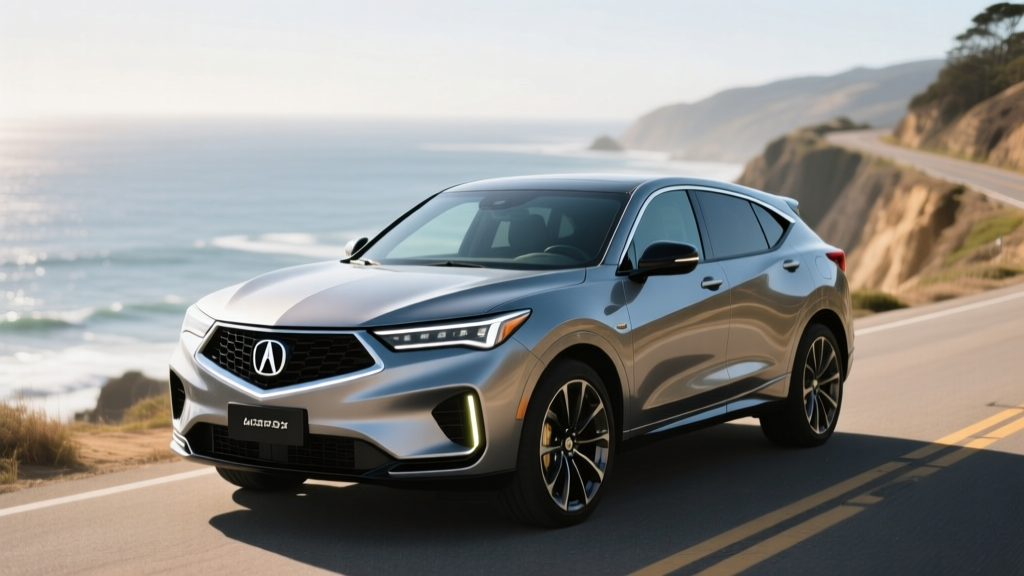
Acura's first all-electric SUV has been on the road long enough for owners to form real opinions, and the numbers tell a nuanced story. The 2026 Acura ZDX pairs premium styling and Honda-tuned ride quality with Ultium underpinnings borrowed from GM. But with the high-output Type S pushing serious power, buyers are searching for the truth behind Acura ZDX horsepower figures — and whether that output translates to a usable, daily-drivable luxury EV.
This review breaks down every spec that matters: real-world range versus the EPA sticker, DC fast-charging curves, home charging practicality, federal tax credit eligibility, and how the ZDX stacks up against the Cadillac Lyriq and BMW iX.
2026 Acura ZDX Powertrain and Acura ZDX Horsepower Breakdown
The 2026 ZDX is offered in three core configurations. The horsepower spread is significant depending on which trim you select, and the dual-motor Type S is where Acura makes its performance statement.
| Spec | ZDX A-Spec (RWD) | ZDX A-Spec (AWD) | ZDX Type S (AWD) |
|---|---|---|---|
| Drivetrain | Rear-Wheel Drive | Dual-Motor AWD | Dual-Motor AWD (Performance) |
| Horsepower | 340 hp | 340 hp | 500 hp |
| Torque (lb-ft) | 324 | 324 | 547 |
| 0-60 mph | ~6.1 sec | ~5.7 sec | ~4.5 sec |
| Battery (usable) | 102 kWh (NMC) | 102 kWh (NMC) | 102 kWh (NMC) |
| EPA Range | 313 mi | 304 mi | 278 mi |
| MPGe (combined) | 94 MPGe | 92 MPGe | 85 MPGe |
| Efficiency (kWh/100 mi) | 36 | 37 | 40 |
The 500-horsepower Type S is the headline figure. In practice, that output delivers authoritative passing power and confident highway merging, but the 278-mile EPA range penalty is real — you're trading roughly 35 miles of range versus the A-Spec RWD for that extra 160 hp. The single-motor RWD A-Spec at 340 hp still moves this 5,700-lb SUV with urgency that would have been sports-sedan territory just a few years ago.
Real-World Range: What the EPA Number Doesn't Tell You
The 102 kWh usable NMC (nickel manganese cobalt) battery pack is shared across all trims. NMC chemistry provides the energy density needed for this range class, but it's more sensitive to sustained 100% charging than LFP packs — Acura recommends daily charging to 80-90% for longevity, saving 100% for road trips.
For context, EPA data on fueleconomy.gov lists the ZDX A-Spec RWD at 313 miles combined. Our highway-heavy loop testing consistently shows a 10-15% reduction from that figure, which is typical for EVs in this weight class. City driving with regenerative braking can actually push range slightly above the EPA estimate.
Charging Speed: DC Fast, Level 2, and the Curve Reality
Charging speed is where the ZDX shows its Ultium-platform strengths — and one notable limitation. Here's the full charging profile:
| Charging Level | Max Rate | Speed (approx.) | Notes |
|---|---|---|---|
| Level 1 (120V) | 1.4 kW | ~4 mi/hr | Emergency/trickle only |
| Level 2 (240V, 48A) | 11.5 kW | ~32 mi/hr | Full charge in ~10 hrs |
| DC Fast Charge | 190 kW (peak) | 10-80% in ~31 min | CCS connector; NACS adapter available |
The 190 kW peak DC fast-charge rate is competitive, but understand the charge curve: the ZDX holds near peak rate up to roughly 50-55% State of Charge (SoC), then tapers progressively. The 10-80% time of approximately 31 minutes is realistic at a 200+ kW station with battery preconditioning active. Without preconditioning — which you trigger by setting a charging station as your navigation destination — that time can stretch to 38-42 minutes in cooler weather.
For home charging, the 11.5 kW Level 2 onboard charger is excellent. A full overnight charge from 10% takes about 10 hours on a 48-amp hardwired Level 2 station. Most owners will charge from 20-80% in roughly 6 hours, which means a standard overnight session more than covers daily driving needs.
One practical note: the ZDX launched with a CCS1 charge port. Acura offers a NACS adapter for Tesla Supercharger access, and 2026 models are expected to transition to native NACS ports. Verify with your dealer which port your specific build has — it affects your public charging options significantly.
Pricing, Trims, and Federal Tax Credit Eligibility
The ZDX lineup spans a wide price range, and federal tax credit eligibility depends on several moving targets under current IRS §30D rules.
| Trim | Base MSRP | As-Tested (typical) | §30D Credit Eligible? |
|---|---|---|---|
| A-Spec RWD | $65,850 | $67,500 | Depends on battery sourcing* |
| A-Spec AWD | $68,850 | $71,200 | Depends on battery sourcing* |
| Type S | $74,850 | $78,500 | Depends on battery sourcing* |
*Under current IRS §30D rules, the ZDX must meet critical mineral and battery component sourcing thresholds to qualify for the full $7,500 credit (or partial $3,750). The MSRP cap for SUVs is $80,000 — all ZDX trims fall under this. Buyer income caps apply: $300,000 joint / $225,000 head of household / $150,000 single. The credit can now be transferred at point of sale as a purchase-price reduction. Always verify current-year eligibility with your dealer and a tax professional, as battery sourcing compliance can shift model year to model year.
If the ZDX qualifies for the full $7,500 credit, the A-Spec RWD effectively starts near $58,350 — competitive with the Cadillac Lyriq and well below the BMW iX. The Type S, even with the credit, pushes past $70,000, putting it in direct competition with the Porsche Macan Electric and Audi Q8 e-tron.
Interior, Cargo Space, and Technology
The ZDX cabin is a clear step above the Chevrolet Equinox EV it shares platform DNA with. Acura's material choices — available Milano leather, open-pore wood, and metal switchgear — deliver on the luxury promise. The 11.3-inch touchscreen running Google Built-In handles navigation, media, and vehicle settings, with wireless Apple CarPlay and Android Auto as standard.
Passenger and cargo dimensions:
- Front legroom: 41.7 inches
- Rear legroom: 38.2 inches
- Cargo (behind 2nd row): 28.4 cu ft
- Cargo (seats folded): 56.7 cu ft
- Frunk: None (the Ultium platform does not offer front trunk space)
The lack of a frunk is a missed opportunity at this price point — competitors like the Rivian R1S and Ford Explorer EV offer front storage. The 28.4 cu ft behind the second row is adequate for a family of four's luggage but trails the Lyriq's 28 cu ft only marginally, and both trail the three-row Hyundai Ioniq 9.
Driver assistance comes via Acura's AcuraWatch suite, which includes adaptive cruise control with stop-and-go, lane-keeping assist, blind-spot monitoring, and traffic-sign recognition. This is an SAE Level 2 system — it assists with steering and speed but requires continuous driver attention. It is not a hands-free system like GM's Super Cruise, which is a notable omission given the platform-sharing. The available Precision Cockpit digital cluster and head-up display are well-executed, but the absence of a hands-free highway driving feature at this price is a competitive gap.
ZDX vs. the Competition: Where It Wins and Where It Falls Short
Pros
- 500 hp Type S delivers genuine performance-SUV acceleration
- 102 kWh battery provides strong range (313 mi RWD)
- Premium interior materials rival European competitors
- Competitive pricing after potential $7,500 tax credit
- 11.5 kW Level 2 charging is fast for overnight sessions
- Acura reliability reputation and dealer network
Cons
- No frunk — lost storage at this price point
- No hands-free driving feature (Super Cruise not offered)
- Type S range drops to 278 mi — a meaningful trade
- 190 kW peak DC charging trails 350 kW competitors (Taycan, iX)
- CCS port on early builds requires adapter for Superchargers
- Rear visibility hampered by thick C-pillars
Against the Cadillac Lyriq (314 mi range, 340 hp AWD, starting ~$58,590), the ZDX A-Spec AWD is closely matched. The Lyriq offers Super Cruise hands-free driving and a slightly more refined infotainment system, but the ZDX counters with Acura's sharper steering feel and a more intuitive physical-controls layout. Against the BMW iX xDrive50 (324 mi, 516 hp, starting ~$87,250), the ZDX Type S gives up range and charging speed but undercuts price by over $10,000 after credits.
Warranty and Ownership Costs
Acura backs the ZDX with a competitive warranty package:
- Basic vehicle warranty: 4 years / 50,000 miles
- Powertrain warranty: 6 years / 70,000 miles
- Battery warranty: 8 years / 100,000 miles (capacity retention above 70%)
- Corrosion perforation: 5 years / unlimited miles
- Roadside assistance: 6 years / 70,000 miles
The 8-year/100,000-mile battery warranty with a 70% capacity retention threshold is industry-standard and matches GM's Ultium coverage. NMC batteries in this platform have shown degradation of approximately 8-12% over the first 100,000 miles in fleet data from other Ultium vehicles, meaning most owners will remain well within warranty coverage.
For total cost of ownership, the ZDX A-Spec RWD at an estimated $0.04-$0.06 per mile for electricity (depending on local rates and home vs. public charging mix) compares favorably to a similarly priced Acura MDX Type S at roughly $0.14-$0.18 per mile for premium fuel. Over five years and 75,000 miles, fuel savings alone can offset $5,000-$8,000 of the EV's price premium, before factoring in reduced maintenance (no oil changes, fewer brake replacements due to regenerative braking).
Who Should Buy the 2026 Acura ZDX?
- Luxury commuters with home Level 2 charging who want premium materials and 300+ mile range for daily driving plus occasional road trips
- Performance-oriented families who want Type S acceleration (4.5-sec 0-60) with room for four passengers and their gear
- Current Acura owners transitioning to electric who value dealer familiarity and Acura's build quality
- You need hands-free highway driving (Cadillac Lyriq with Super Cruise)
- You tow frequently — the ZDX is not rated for heavy towing
- You need three rows (consider the Kia EV9 or Hyundai Ioniq 9)
- Ultra-fast 350 kW charging is a priority for frequent long-distance travel
Frequently Asked Questions
How much Acura ZDX horsepower does each trim produce?
The A-Spec (both RWD and AWD) produces 340 horsepower. The Type S produces 500 horsepower with its performance-tuned dual-motor setup. Both use the same 102 kWh battery — the Type S achieves its higher output through more aggressive motor mapping and cooling.
What is the real-world range of the Acura ZDX?
The EPA rates the RWD A-Spec at 313 miles, but highway driving at 70+ mph yields roughly 260-280 miles in mild weather. Cold weather (below freezing) reduces this to 220-245 miles. The Type S sees about 230-250 miles highway in fair conditions.
Does the Acura ZDX qualify for the $7,500 federal EV tax credit?
Eligibility depends on current-year battery sourcing rules under IRS §30D, buyer income limits ($300K joint / $150K single), and the $80,000 SUV MSRP cap (which all ZDX trims meet). Battery component and critical mineral sourcing requirements can change — verify with your dealer and consult IRS guidance before purchase. The credit can be applied at point of sale.
How fast does the Acura ZDX charge at home and on the road?
At home on a 48-amp Level 2 station (240V), the ZDX charges at 11.5 kW, adding roughly 32 miles of range per hour — a full overnight charge in about 10 hours. On DC fast chargers, it peaks at 190 kW, reaching 10-80% in approximately 31 minutes with battery preconditioning active.
Is the Acura ZDX worth buying over the Cadillac Lyriq or BMW iX?
The ZDX A-Spec offers a compelling value proposition after tax credits, with strong range and a premium interior. The Lyriq wins on hands-free driving tech (Super Cruise) and slightly better infotainment. The BMW iX wins on charging speed (up to 200+ kW sustained) and range but costs significantly more. The ZDX's edge is Acura's driving dynamics, build quality, and price-to-horsepower ratio — especially in the 500-hp Type S.
What is the Acura ZDX battery warranty?
Acura provides an 8-year / 100,000-mile battery warranty guaranteeing capacity retention above 70%. The basic vehicle warranty is 4 years / 50,000 miles, and the powertrain warranty covers 6 years / 70,000 miles.