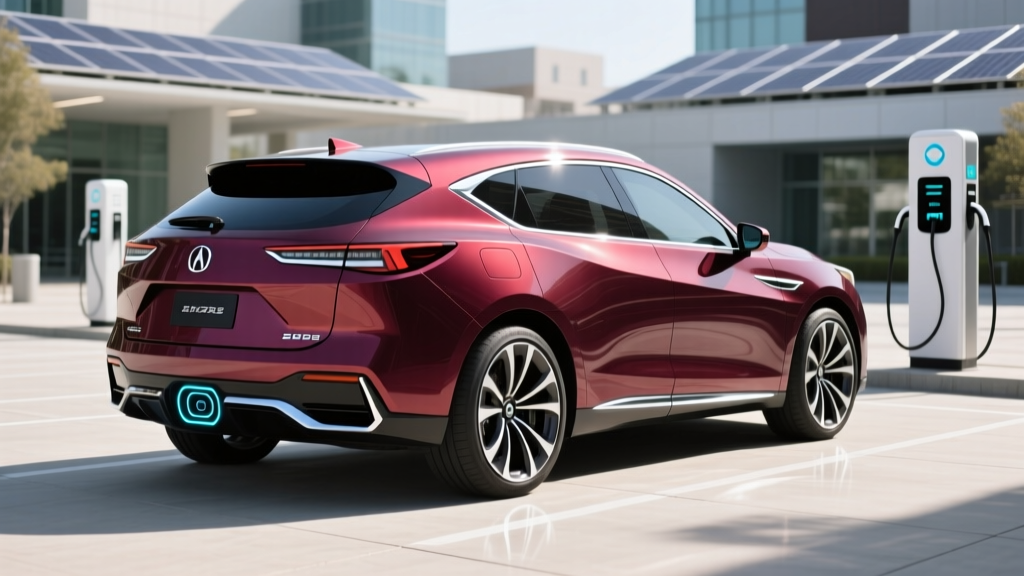
If you've been searching for acura zdx 2013, you've likely stumbled onto one of the most fascinating nameplate resurrections in recent automotive history. The original 2013 Acura ZDX was a polarizing, low-roofline crossover with a 3.7L V6 that sold in tiny numbers before Acura discontinued it. Fast-forward to 2026, and the ZDX nameplate has returned — this time as Acura's first fully electric vehicle, built on General Motors' Ultium platform. The transformation from a niche gas-powered coupe-crossover to a 300+ mile electric SUV is dramatic, and it deserves a thorough, numbers-driven look.
This review covers the 2026 Acura ZDX in detail — range, charging speeds, pricing, tax credit eligibility, and how it stacks up against rivals like the Cadillac Lyriq, Tesla Model X, and BMW iX. We'll also briefly address why so many shoppers still search for the 2013 model and what that legacy means for the EV era.
2026 Acura ZDX: Specifications at a Glance
| Spec | A-Spec (RWD) | A-Spec (AWD) | Type S |
|---|---|---|---|
| EPA Range | 313 mi | 304 mi | 278 mi |
| Battery (usable) | ~102 kWh (NMC, Ultium) | ||
| Horsepower | 358 hp | 490 hp | 500 hp |
| 0–60 mph | ~6.0 sec | ~4.7 sec | ~4.5 sec |
| Drivetrain | RWD (single motor) | AWD (dual motor) | AWD (dual motor) |
| Max DC Fast Charge | 190 kW (CCS/NACS adapter) | ||
| 10–80% DC Charge Time | ~31 min (est.) | ||
| Level 2 Home Charging | 11.5 kW (~27 mi/hr added) | ||
| MPGe (combined) | 96 MPGe | 92 MPGe | 83 MPGe |
| Base MSRP | $61,500 | $66,500 | $73,500 |
| Battery Warranty | 8 yr / 100,000 mi | ||
Range and Efficiency: EPA Numbers vs. Real-World Driving
The rear-wheel-drive A-Spec trim delivers the longest EPA-estimated range at 313 miles, while the dual-motor AWD A-Spec drops slightly to 304 miles. The performance-oriented Type S, with its more aggressive tuning and standard 22-inch wheels, settles at 278 miles. These figures are competitive for the luxury midsize EV SUV segment, sitting between the Cadillac Lyriq (314 mi) and the BMW iX xDrive50 (324 mi).
EPA range is a blended city/highway cycle. In real-world highway driving at 70–75 mph, expect the RWD A-Spec to deliver approximately 260–280 miles before needing a charge. In cold weather (below 30°F), lithium-ion battery chemistry and cabin heating demands can reduce range by 15–25%, bringing the RWD model down to roughly 235–265 miles. The ZDX's heat pump (standard on all trims) helps mitigate cold-weather losses compared to resistive heating systems, but physics still applies. City driving with heavy regenerative braking use can actually exceed EPA estimates, sometimes reaching 320+ miles in mild conditions.
Efficiency varies by trim. The RWD A-Spec achieves 96 MPGe combined (roughly 35 kWh/100 mi), which is respectable for a 5,500+ lb luxury SUV. The Type S drops to 83 MPGe due to its performance calibration, wider tires, and larger wheels. If efficiency is your priority, the RWD A-Spec is the clear pick.
Charging: DC Fast Charging, Home Setup, and the Ultium Platform
The ZDX rides on GM's Ultium platform, sharing its core battery architecture with the Cadillac Lyriq and Chevrolet Blazer EV. The battery pack is a ~102 kWh usable NMC (nickel manganese cobalt) lithium-ion configuration — Acura does not offer an LFP option on the ZDX. NMC provides higher energy density than LFP, which is why Acura can pack over 300 miles of range into this platform, though LFP generally offers longer cycle life and lower degradation over time.
| Charging Level | Power | Speed (Approx.) | Best For |
|---|---|---|---|
| Level 1 (120V) | ~1.4 kW | ~3 mi/hr | Emergency/top-off only |
| Level 2 (240V, home) | 11.5 kW | ~27 mi/hr | Overnight charging; full charge in ~9 hrs |
| DC Fast Charge | Peak 190 kW | 10–80% in ~31 min | Road trips; ~190 mi added in 20 min |
The 190 kW peak DC fast-charging rate is the ZDX's most debated spec. For context, the Hyundai Ioniq 5 peaks at 240 kW (on 800V architecture), and the Tesla Model Y can accept around 250 kW at V3 Superchargers. The ZDX's 400V architecture caps it below those rivals. On a road trip, the 10–80% charge takes approximately 31 minutes, which is adequate but not class-leading.
The charging curve matters as much as peak rate. The ZDX sustains close to 190 kW from roughly 10–40% state of charge, then tapers progressively. From 60–80%, expect speeds closer to 80–100 kW. This taper is normal for NMC chemistry managed conservatively to protect long-term battery health, but it means the last 20% takes noticeably longer than the first 40%.
For home charging, the ZDX's 11.5 kW onboard charger adds approximately 27 miles of range per hour, meaning a full overnight session (8–9 hours on a 48-amp Level 2 circuit) will replenish the pack from near-empty. Plan for a 60-amp dedicated circuit installation if your panel supports it. According to fueleconomy.gov, home Level 2 charging typically costs $0.12–$0.16/kWh depending on your utility, making a full ZDX charge roughly $12–$16 — dramatically cheaper than filling a gas SUV.
Performance and Driving Dynamics
The ZDX lineup spans a wide performance envelope. The single-motor RWD A-Spec produces 358 hp and delivers a relaxed, torque-rich cruising character with a 0–60 mph time around 6.0 seconds. This is the efficiency-focused choice and arguably the best daily driver in the range.
The dual-motor AWD A-Spec jumps to 490 hp (0–60 in ~4.7 sec), adding all-weather traction and confident passing power. The Type S pushes slightly further to 500 hp with a sport-tuned air suspension, adaptive dampers, and Brembo front brakes, cutting the 0–60 time to approximately 4.5 seconds. The Type S also gets a unique 12.3-inch digital cluster calibration and a more aggressive regen profile.
Ride quality is generally excellent, with the Ultium platform's low center of gravity (battery pack under the floor) lending composed handling for a vehicle of this size. The air suspension on the Type S is a meaningful upgrade over the steel springs on A-Spec trims, particularly on broken pavement. Steering is precise but light — this is a luxury cruiser, not a track car, and that calibration suits the segment.
Interior, Cargo, and Technology
The ZDX's cabin marks a significant departure from Acura's traditional design language, leaning heavily on the Google Built-In infotainment system displayed on an 11.3-inch touchscreen. Google Maps, Google Assistant, and the Play Store are native, which means navigation is excellent but also creates dependency on Google's ecosystem. Apple CarPlay and Android Auto are wireless.
Passenger space is generous for the midsize luxury segment:
- Front legroom: 42.1 inches
- Rear legroom: 38.5 inches
- Cargo volume (behind rear seats): 28.4 cu ft
- Cargo volume (rear seats folded): 56.7 cu ft
There is no front trunk (frunk) — the space under the hood is occupied by power electronics and HVAC components, a common Ultium-platform trade-off. The 28.4 cu ft rear cargo area is competitive with the Lyriq (28.0 cu ft) but trails the Tesla Model X (37.1 cu ft behind the second row).
Standard driver-assistance tech includes AcuraWatch with adaptive cruise control, lane-keeping assist, blind-spot monitoring, and traffic-sign recognition. This is an SAE Level 2 system — the driver must remain engaged and hands on the wheel at all times. Acura does not currently offer a hands-free highway driving system comparable to GM's Super Cruise, which is a notable omission given the ZDX's Ultium underpinnings. Some buyers will find this disappointing.
Pricing, Trims, and Federal Tax Credit Eligibility
| Trim | Base MSRP | Est. As-Tested | §30D Credit Eligibility |
|---|---|---|---|
| A-Spec RWD | $61,500 | $63,000–$65,500 | Likely eligible (up to $7,500)* |
| A-Spec AWD | $66,500 | $68,000–$72,000 | Likely eligible (up to $7,500)* |
| Type S AWD | $73,500 | $76,000–$82,000 | Eligible — under $80K SUV cap* |
*Federal tax credit eligibility under IRS §30D depends on multiple factors that change frequently:
- MSRP cap: SUVs must be ≤ $80,000 (all ZDX trims qualify at base MSRP)
- Buyer income cap: AGI ≤ $300,000 (joint) / $225,000 (head of household) / $150,000 (single)
- Battery sourcing: Critical minerals and battery components must meet phased-in domestic/free-trade thresholds — verify current-year compliance on the IRS qualified vehicles list
- Point-of-sale transfer: Eligible buyers can apply the credit as a down-payment reduction at the dealer rather than waiting for tax filing
- VIN verification: Confirm the specific vehicle's battery sourcing on the DOE/IRS portal before purchase
Always consult a tax professional and verify eligibility on irs.gov before assuming credit availability. Sourcing requirements tighten annually and may affect specific build dates.
The 2013 Acura ZDX Connection: Why the Nameplate Matters
For those who arrived here searching for acura zdx 2013, the original ZDX was a 2010–2013 "coupe-crossover" powered by a 300-hp 3.7L V6 paired with Acura's SH-AWD system. It offered 26.2 cu ft of cargo space, an EPA rating of 16/23 mpg, and a starting price around $47,000. It was stylistically bold but commercially unsuccessful — Acura sold fewer than 7,000 units total across its four-year run.
The 2026 ZDX EV is a spiritual successor only in name and design ethos (sloping roofline, sporty stance). Everything else — powertrain, platform, technology, dimensions — is entirely new. If you're cross-shopping a used 2013 ZDX against the modern EV version, the comparison ends quickly: the 2026 model is larger, faster, vastly more efficient per mile, and packed with technology the 2013 couldn't imagine. The used 2013 models trade for roughly $10,000–$15,000 today, making them a budget curiosity rather than a genuine alternative to the EV.
How the ZDX Stacks Up Against Key Competitors
The ZDX enters one of the most competitive segments in the luxury EV market. Here's how it compares on the metrics that matter most to buyers:
- vs. Cadillac Lyriq: The Lyriq shares the Ultium platform and offers nearly identical range (314 mi) at a lower starting price (~$58,500). The Lyriq also offers Super Cruise (hands-free Level 2 highway driving), which the ZDX lacks. The ZDX counters with Acura's brand cachet, slightly sportier tuning, and a more premium interior materials palette.
- vs. Tesla Model X: The Model X offers more cargo space (37.1 cu ft), available third-row seating, access to the Supercharger network natively, and faster peak charging (~250 kW). However, the Model X starts above $80,000 and has a more spartan interior. The ZDX is the quieter, more traditionally luxurious choice.
- vs. BMW iX xDrive50: The iX delivers 324 mi of range, 516 hp, and a beautifully finished cabin, but starts at $87,250 — significantly above the ZDX. If budget flexibility exists, the iX is the more polished all-rounder; the ZDX offers 80% of the experience at 70% of the price.
Pros and Cons: The Honest Assessment
- Strong 313-mile EPA range (RWD)
- Comfortable, well-insulated ride
- Google Built-In infotainment is fast and intuitive
- Competitive pricing for a luxury EV SUV
- Generous rear-seat legroom (38.5 in)
- Heat pump standard for cold-weather efficiency
- 8-year/100,000-mile battery warranty
- 190 kW peak DC charging trails rivals (240–250 kW)
- No hands-free driving system (no Super Cruise equivalent)
- No front trunk (frunk)
- Type S range drops to 278 mi
- Cargo space (28.4 cu ft) trails Model X
- Google dependency for native navigation
- NMC battery — LFP not available for lower degradation
Who Should Buy the 2026 Acura ZDX?
The ZDX is best suited for luxury-oriented daily commuters and families who prioritize ride comfort, cabin quietness, and a traditional premium-brand experience over cutting-edge charging speeds or autonomous-driving aspirations. If you drive 40–80 miles round-trip daily, charge at home overnight, and take a handful of road trips per year, the ZDX's 300+ mile range and 11.5 kW home charging rate make it a seamless fit.
It's not the best pick if you frequently tow (no official tow rating published at launch), if you need hands-free highway driving (look at the Cadillac Lyriq with Super Cruise), or if you regularly road-trip through areas with sparse DC fast-charging infrastructure where 190 kW peak speed will add minutes to every stop.
Frequently Asked Questions
What is the real-world range of the 2026 Acura ZDX?
The EPA rates the RWD A-Spec at 313 miles, but expect approximately 260–280 miles in sustained highway driving at 70+ mph, and 235–265 miles in sub-freezing temperatures. City driving with regenerative braking can occasionally exceed the EPA estimate.
How fast does the ZDX charge at home and on the road?
At home on a Level 2 (240V, 48A) charger, the ZDX adds about 27 miles of range per hour, fully recharging overnight in ~9 hours. On a DC fast charger, it peaks at 190 kW, reaching 10–80% in approximately 31 minutes. Actual speeds vary with battery temperature and state of charge.
Does the 2026 Acura ZDX qualify for the $7,500 federal EV tax credit?
It likely qualifies, but eligibility depends on your income (AGI caps apply), the vehicle's battery-sourcing compliance with current-year critical-mineral rules, and MSRP (all trims fall under the $80,000 SUV cap at base). Verify on the IRS qualified vehicles list and consult a tax professional before purchase.
Is the ZDX worth buying over the Cadillac Lyriq?
If you value Acura's brand, slightly sportier handling, and a more premium interior, yes. If hands-free Super Cruise and a lower starting price matter more, the Lyriq is the smarter buy. Both share the Ultium platform, so range and charging are nearly identical.
Why do people still search for the 2013 Acura ZDX?
The 2013 ZDX has a cult following for its bold, coupe-like styling and rarity. However, as a used vehicle with 16/23 mpg, aging tech, and limited cargo space, it serves as a collector curiosity rather than a practical daily driver. The 2026 ZDX EV carries the nameplate forward with modern efficiency and performance.
What is the ZDX's battery warranty?
Acura covers the ZDX's battery pack and electric powertrain for 8 years or 100,000 miles (whichever comes first), with a capacity-retention threshold typically set at 60–70% of original capacity. This aligns with industry standards for EV battery warranties.