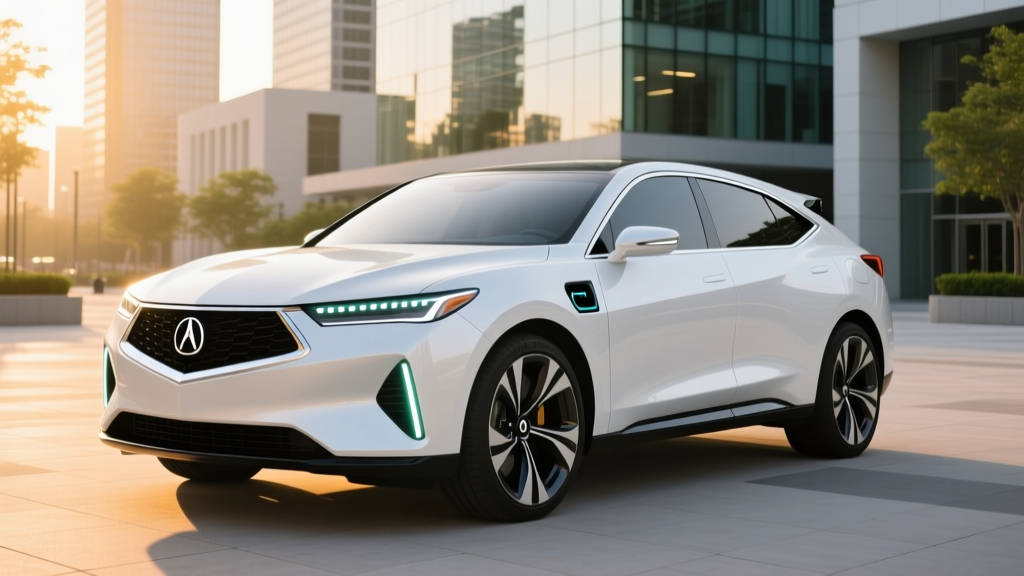
Acura's first all-electric vehicle is also likely its last — at least for now. Honda confirmed in late 2024 that the Acura ZDX, built on General Motors' Ultium platform, would be discontinued after the 2025 model year as the two automakers unwind their EV partnership. For buyers in 2026, that means any remaining ZDX inventory represents the final chance to own Honda's only ground-up electric SUV before the brand pivots to its own in-house EV architecture.
But does the ZDX's orphan status make it a bargain or a liability? We spent time with the A-Spec and Type S trims to answer that question with hard data on range, charging, pricing, and long-term ownership.
2025 Acura ZDX: Final Production Specs at a Glance
| Specification | A-Spec (RWD) | A-Spec (AWD) | Type S (AWD) |
|---|---|---|---|
| EPA Range | 313 miles | 278 miles | 278 miles |
| Battery (usable) | ~102 kWh (NMC lithium-ion, Ultium platform) | ||
| Horsepower | 358 hp | 490 hp | 500 hp |
| 0-60 mph | ~6.4 sec | ~5.0 sec | ~4.5 sec |
| Drivetrain | RWD, single motor | AWD, dual motor | AWD, dual motor |
| Max DC Fast Charge | 190 kW (CCS1 connector) | ||
| 10-80% DC Time | ~42 minutes | ||
| Level 2 Home Charge | 19.2 kW (11.5 kW typical), ~25-36 mi/hr | ||
| MPGe (combined) | 94 MPGe | 87 MPGe | 85 MPGe |
| Efficiency | 36 kWh/100mi | 39 kWh/100mi | 40 kWh/100mi |
| Cargo (rear seats up) | 28.3 cu ft | ||
| Cargo (seats folded) | 56.8 cu ft | ||
| Rear Legroom | 38.2 inches | ||
| Base MSRP | $65,850 | $68,850 | $74,850 |
| Battery/Powertrain Warranty | 8 years / 100,000 miles | ||
Range Reality: What the EPA Sticker Doesn't Tell You
The rear-wheel-drive A-Spec ZDX achieves an EPA-estimated 313 miles of range — a genuinely competitive number in the midsize luxury EV segment. The dual-motor AWD versions drop to 278 miles, a 35-mile penalty that reflects the added weight and friction of the second motor.
- City/commuter driving (A-Spec RWD): 290-310 miles — regenerative braking recovers energy in stop-and-go traffic
- Highway cruising at 75 mph: 250-275 miles — aerodynamic drag hits the ZDX's boxy SUV profile hard
- Cold weather (below 32°F): 210-245 miles — the Ultium platform's battery preconditioning helps, but expect 20-30% range loss in deep cold
- Type S highway + cold combined: As low as 185-200 miles — the performance trim's wider tires and sport tuning further reduce efficiency
According to EPA data on fueleconomy.gov, the ZDX A-Spec RWD's 36 kWh/100mi efficiency is middle-of-the-pack for luxury electric SUVs. The BMW iX xDrive50 achieves 86 MPGe combined with a more aerodynamic shape, while the Cadillac Lyriq (which shares the Ultium platform) manages 89 MPGe in AWD form. The ZDX's tall stance and aggressive front fascia create drag that shows up at highway speeds.
Charging Speed: 190 kW Peak, But Watch the Curve
The ZDX supports DC fast charging at up to 190 kW via its CCS1 connector. That's respectable but no longer class-leading — the Hyundai Ioniq 5 peaks at 240 kW, and Tesla's V4 Superchargers push 250+ kW to compatible vehicles.
| Charging Level | Power | Speed / Time | Use Case |
|---|---|---|---|
| Level 1 (120V household) | ~1.4 kW | ~3-4 miles per hour | Emergency / overnight trickle |
| Level 2 (240V, 48A) | 11.5 kW | ~25 miles per hour | Standard home charging |
| Level 2 (240V, 80A) | 19.2 kW | ~36 miles per hour | Requires upgraded home circuit |
| DC Fast (peak) | 190 kW | 10-80% in ~42 min | Road-trip stops |
| DC Fast (sustained 10-50%) | ~140-170 kW | ~150 miles in 20 min | Best charging-curve window |
Charging curve reality check: The 190 kW figure is a peak that holds roughly from 10-30% State of Charge. Beyond 50%, the Ultium battery management system tapers aggressively to protect the NMC cells. Expect roughly 80-90 kW from 50-70%, and below 40 kW once you cross 80%. If you're road-tripping, the optimal strategy is to charge from 10-60% (roughly 20 minutes for ~160 miles) and move on, rather than waiting for 80%.
The ZDX lacks NACS (Tesla Supercharger) compatibility from the factory. Acura has not confirmed a NACS adapter program, and with production ending, it's unlikely one will materialize. This means ZDX owners are effectively locked into CCS networks — Electrify America, EVgo, and ChargePoint — which have improved reliability but still trail Tesla's Supercharger network in coverage and uptime. You can use a third-party CCS-to-NACS adapter (like the Lectron or A2Z), but these add cost and a point of failure.
Performance and Driving Impressions
The Type S variant delivers genuine performance-SUV thrills. With 500 horsepower and dual-motor AWD, it hits 60 mph in approximately 4.5 seconds — quick enough to embarrass a Porsche Macan S off the line. The torque is instant and relentless, and the low center of gravity (battery pack under the floor) keeps body roll surprisingly contained for a 5,800-pound vehicle.
The A-Spec RWD, at 358 hp and 6.4 seconds to 60, is the more rational choice. It's still quick by any measure, and the single-motor setup maximizes range. For daily commuting and family hauling, the RWD's extra 35 miles of range matters more than the Type S's extra 142 hp.
The ZDX rides on a multi-link front and five-link rear suspension. The Type S adds adaptive dampers and air suspension, which provides a genuinely plush ride when set to Comfort mode. Road noise isolation is excellent — a benefit of the Ultium platform's acoustic engineering, shared with the Cadillac Lyriq.
Interior, Tech, and Practicality
The ZDX's cabin borrows heavily from Acura's ICE lineup, which is both a compliment and a criticism. The 11-inch digital instrument cluster and 11.3-inch center touchscreen run Google Built-In, meaning Google Maps, Google Assistant, and the Play Store are natively integrated. Wireless Apple CarPlay and Android Auto are standard.
Notable tech features include:
- AcuraWatch Plus: Adaptive cruise control, lane-keeping assist, blind-spot monitoring, rear cross-traffic alert — all standard
- Hands-free driving assist: Available on higher trims, a Level 2 system similar to GM's Super Cruise but limited to pre-mapped highways
- 18-speaker Bang & Olufsen audio: Standard on Type S, optional on A-Spec — genuinely one of the best audio systems in the segment
- Over-the-air updates: Supported, though with production ending, the update roadmap is uncertain
Cargo space is the ZDX's weak point. At 28.3 cubic feet behind the second row, it trails the BMW iX (35.5 cu ft), the Tesla Model X (37.1 cu ft), and even its platform-mate, the Cadillac Lyriq (28.0 cu ft — essentially a wash). Fold the rear seats and you get 56.8 cu ft, which is adequate but not generous for a vehicle this size. The ZDX also lacks a front trunk (frunk), which is a missed opportunity given the Ultium platform's packaging flexibility.
Rear-seat legroom at 38.2 inches is competitive, and the flat floor (no transmission tunnel) makes the middle seat usable for adults on shorter trips. Seat comfort is good, with available 18-way power adjustment and ventilation on the Type S.
Pricing, Tax Credits, and the Orphan-EV Equation
| Trim | Base MSRP | As-Tested (loaded) | §30D Credit Eligible? | Est. After Credit |
|---|---|---|---|---|
| A-Spec RWD | $65,850 | $68,450 | Yes (if sourced) | ~$58,350 |
| A-Spec AWD | $68,850 | $71,950 | Yes (if sourced) | ~$61,350 |
| Type S AWD | $74,850 | $78,450 | Yes (if sourced) | ~$67,350 |
Federal tax credit eligibility requires careful navigation. Under IRS §30D rules, the ZDX qualifies as an SUV (MSRP cap of $80,000), and all trims clear that threshold. However, the full $7,500 credit depends on two sourcing requirements: critical minerals ($3,750) and battery component sourcing ($3,750). Because the ZDX is built on GM's Ultium platform in Spring Hill, Tennessee, it has historically qualified for the full credit — but battery-sourcing rules tighten annually. Verify current eligibility on fueleconomy.gov's tax credit page and consult a tax professional before relying on the credit.
Buyer income caps also apply: $300,000 joint / $225,000 head of household / $150,000 single filer (modified AGI). As of 2024, the credit can be transferred to the dealer at point of sale, reducing your purchase price directly — but confirm your dealer participates in the IRS advance payment program.
The orphan-EV question: will Acura/Honda support the ZDX long-term? Honda has committed to honoring all factory warranties, and the Ultium powertrain shares parts with the Cadillac Lyriq, Chevrolet Blazer EV, and GMC Hummer EV — so mechanical service should remain available. However, Acura-specific body panels, trim pieces, and infotainment software may become scarce within 5-7 years. Depreciation is the bigger financial risk: orphan EVs historically lose value faster than supported models (see: the Chrysler Pacifica Hybrid's resale trajectory).
ZDX vs. the Competition: How It Stacks Up
| Attribute | Acura ZDX A-Spec AWD | Cadillac Lyriq AWD | BMW iX xDrive50 | Tesla Model Y LR AWD |
|---|---|---|---|---|
| EPA Range | 278 mi | 307 mi | 324 mi | 308 mi |
| Battery | 102 kWh NMC | 102 kWh NMC | 111.5 kWh NMC | ~75 kWh NMC |
| DC Fast Charge Peak | 190 kW | 190 kW | 195 kW | 250 kW |
| 0-60 mph | 5.0 sec | 5.0 sec | 4.4 sec | 4.8 sec |
| Cargo (rear up) | 28.3 cu ft | 28.0 cu ft | 35.5 cu ft | 30.2 cu ft |
| Base MSRP | $68,850 | $66,295 | $92,795 | $49,990 |
| NACS (Supercharger) | No (adapter needed) | No (adapter avail.) | No (adapter avail.) | Yes (native) |
| Production Status | Discontinued | Active | Active | Active |
The ZDX's closest rival is the Cadillac Lyriq — same Ultium bones, same 102 kWh battery, same 190 kW charge rate. The Lyriq edges ahead on range (307 vs. 278 miles in AWD) thanks to slightly better aerodynamics, and it benefits from GM's ongoing investment and a confirmed NACS adapter program. If you're cross-shopping these two, the Lyriq is the safer long-term bet.
The BMW iX is the segment benchmark for driving dynamics and cargo space but starts $24,000 higher. The Tesla Model Y undercuts the ZDX by nearly $20,000, offers native Supercharger access, and delivers comparable range — but its interior quality doesn't touch the Acura's.
- You find a heavily discounted leftover at a dealer (target 15%+ off MSRP)
- You value Acura's brand prestige and cabin refinement over cutting-edge EV tech
- You primarily charge at home and rarely road-trip more than 250 miles
- You want the Type S's 500-hp performance at a lower price than a BMW iX M60
- Long-term parts availability and resale value concern you
- You need native NACS/Supercharger access for road trips
- You want the latest OTA update pipeline and active development
Ownership Costs: 5-Year Projection
Running the ZDX A-Spec AWD for five years and 75,000 miles, assuming $0.14/kWh home charging and 30% DC fast charging at $0.40/kWh:
- Electricity cost: ~$4,200 (vs. ~$8,800 in gasoline for a comparable Acura MDX at 21 MPG combined)
- Maintenance: ~$1,200 (no oil changes, minimal brake wear from regen, cabin filters and tire rotations)
- Insurance: ~$12,500 (EV premiums run 15-25% higher than ICE equivalents — get quotes before buying)
- Estimated depreciation: $32,000-$38,000 (orphan-EV risk pushes this higher than the Lyriq's ~$28,000)
- 5-year total cost of ownership: ~$50,000-$56,000 (before tax credit; ~$42,500-$48,500 after)
The ZDX's 8-year/100,000-mile battery and powertrain warranty matches the industry standard and provides meaningful coverage. If the battery degrades below 70% of original capacity within that period, Acura will repair or replace it. For context, Ultium batteries in early Lyriqs are showing minimal degradation — roughly 3-5% loss after 30,000 miles — which is encouraging for ZDX longevity.
Pros, Cons, and Final Verdict
- 313-mile EPA range (RWD) is genuinely competitive
- Type S delivers 500 hp and real performance-SUV dynamics
- Refined, quiet cabin with excellent B&O audio
- Google Built-In infotainment is responsive and useful
- Strong potential for dealer discounts as production ends
- 8-year/100,000-mile battery warranty
- Production ending — long-term parts and resale risk
- No native NACS/Supercharger access; adapter-dependent
- Cargo space (28.3 cu ft) trails key competitors
- 190 kW peak DC charging is outpaced by newer platforms
- No front trunk (frunk)
- AWD range drops sharply to 278 miles
- Type S price ($74,850+) enters BMW iX territory
Frequently Asked Questions
What is the real-world range of the Acura ZDX?
The RWD A-Spec achieves 313 miles EPA, but expect 250-275 miles in real-world highway driving and 210-245 miles in freezing weather. The AWD versions (278 miles EPA) deliver roughly 230-255 miles on the highway and 185-210 miles in cold conditions.
How fast does the ZDX charge at home and on the road?
At home on a 240V Level 2 charger, the ZDX adds roughly 25-36 miles of range per hour (11.5-19.2 kW depending on your circuit). On DC fast chargers, it peaks at 190 kW, reaching 10-80% in approximately 42 minutes. Real-world road-trip stops of 10-60% take about 20 minutes.
Does the Acura ZDX qualify for the $7,500 federal EV tax credit?
The ZDX is eligible under IRS §30D, but the full $7,500 depends on battery-sourcing requirements that tighten annually. The MSRP is under the $80,000 SUV cap, and buyer income limits apply ($300K joint / $150K single). Verify current eligibility at irs.gov and consult a tax professional.
Is the ZDX worth buying now that production is ending?
Only at a significant discount. If you can negotiate 15-20% off MSRP, the ZDX becomes a compelling value — especially the Type S at under $65,000 after credit. At full MSRP, the Cadillac Lyriq is a safer long-term investment with the same Ultium platform and active production support.
Will Acura/Honda still service the ZDX after production ends?
Honda has committed to honoring all factory warranties. The Ultium powertrain shares components with multiple GM vehicles, so mechanical service should remain available. However, Acura-specific trim, body panels, and software updates may become limited within 5-7 years.
How does the ZDX compare to the Cadillac Lyriq?
They share the same Ultium platform, 102 kWh battery, and 190 kW charging. The Lyriq AWD achieves 307 miles of EPA range vs. the ZDX's 278, has a confirmed NACS adapter, and benefits from ongoing production and OTA updates. The ZDX's advantage is Acura's brand cachet and the Type S's 500-hp performance option.