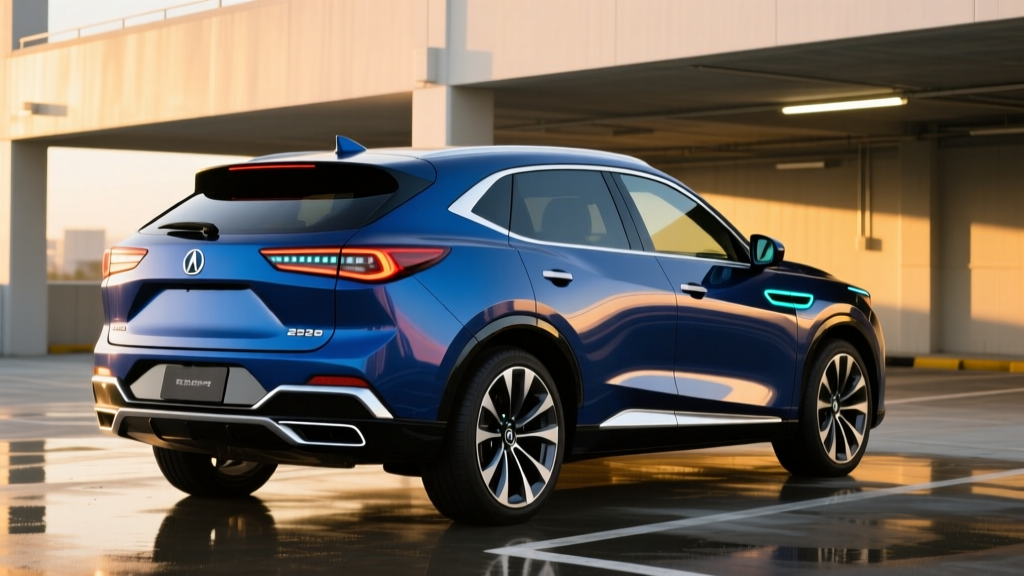
The Acura ZDX represents Honda's premium electric push built on General Motors' Ultium platform. As a midsize luxury electric SUV sharing its bones with the Cadillac Lyriq, the ZDX aims to blend Acura's precision-tuned driving dynamics with proven long-range electric architecture. After spending time with the specs, charging data, and competitive landscape, here's everything buyers need to know before putting down a deposit.
Quick Verdict: Where the ZDX Fits in the Luxury EV SUV Market
The 2026 Acura ZDX occupies a specific niche: buyers who want a premium electric crossover with strong range, comfortable highway cruising, and Acura's dealer network — but who don't need the performance extremes of a BMW iX or the brand cachet of a Mercedes EQE SUV. The ZDX's 313-mile EPA range in A-Spec RWD trim is genuinely competitive, and its Ultium battery architecture delivers respectable (if not class-leading) DC fast-charging speeds. Where it falls short is in charging speed versus Hyundai/Kia's 800V rivals and in the software polish of its Google-built infotainment. For a luxury daily driver and road-trip companion, the ZDX makes a compelling case — particularly if you can capture the federal tax credit.
2026 Acura ZDX Key Specifications
| Specification | A-Spec (RWD) | A-Spec (AWD) | Type S (AWD) |
|---|---|---|---|
| EPA Range | 313 miles | 304 miles | 278 miles |
| Battery (usable) | 85.5 kWh | 85.5 kWh | 85.5 kWh |
| Chemistry | NMC (Ultium) | NMC (Ultium) | NMC (Ultium) |
| Horsepower | 358 hp | 490 hp | 500+ hp (est.) |
| 0–60 mph | ~6.2 sec | ~5.0 sec | ~4.5 sec (est.) |
| Max DC Charge Rate | 190 kW | 190 kW | 190 kW |
| 10–80% DC Time | ~42 min | ~42 min | ~42 min |
| Level 2 Rate | 11.5 kW | 11.5 kW | 11.5 kW |
| MPGe (combined) | 94 MPGe | 90 MPGe | ~82 MPGe (est.) |
| Drivetrain | Rear-Wheel Drive | Dual-Motor AWD | Dual-Motor AWD |
| Base MSRP | $58,950 | $61,950 | $70,950 |
Range, Efficiency & Real-World Expectations
EPA Range vs. Real-World Range
EPA Estimate: 313 miles (A-Spec RWD) / 304 miles (A-Spec AWD)
Real-World Expectation: Plan for roughly 260–285 miles on mixed highway driving at 70–75 mph in moderate temperatures. In cold weather (below 35°F), expect a 15–25% reduction, bringing usable range to approximately 220–250 miles for the RWD model. City driving with regenerative braking can push range closer to or slightly above the EPA sticker.
The ZDX's 85.5 kWh usable battery (approximately 102 kWh gross) uses GM's Ultium pouch cells with nickel-manganese-cobalt (NMC) chemistry. NMC offers higher energy density than LFP (lithium iron phosphate), which is why Acura can package 313 miles into a vehicle of this size. However, NMC cells benefit from keeping state of charge (SoC) between roughly 20–80% for daily use — only charging to 100% when you need the full range for a road trip.
Efficiency lands at 94 MPGe combined for the RWD A-Spec, which translates to about 36 kWh per 100 miles. That's mid-pack for the luxury EV SUV segment — the BMW iX xDrive50 achieves a slightly better efficiency figure thanks to more aggressive heat pump integration, while the Cadillac Lyriq (sharing the same platform) posts nearly identical numbers. At the national average electricity rate of $0.16/kWh, fueling the ZDX costs roughly $5.76 per 100 miles — a meaningful savings over a comparable gas-powered Acura MDX at current fuel prices.
Charging Speed: DC Fast Charging & Home Level 2
The ZDX's Ultium platform supports a peak DC fast-charge rate of 190 kW on compatible CCS stations. Here's what that means in practice:
2026 Acura ZDX Charging Rates
| Charging Level | Power | Speed / Time | Notes |
|---|---|---|---|
| Level 1 (120V household) | ~1.4 kW | ~4 miles per hour | Emergency/trickle only |
| Level 2 (240V home) | 11.5 kW | ~33 miles per hour; full charge ~9 hrs | Requires 48A+ circuit (60A breaker recommended) |
| DC Fast Charge | Peak 190 kW | 10–80% in ~42 minutes | Speed tapers significantly above 80% SoC |
The charging-curve reality: The ZDX will not sustain 190 kW for the entire session. Expect peak rates between roughly 10–40% SoC, with the curve tapering to 120–130 kW through the 40–60% range, and further declining to under 80 kW above 70%. This is normal for NMC batteries — thermal management protects cell longevity, but it means the 10–80% time of ~42 minutes is an average, not a sustained rate.
Compared to Hyundai/Kia's E-GMP platform vehicles (Ioniq 5, EV9), which use 800V architecture to achieve 10–80% in 18 minutes at 235+ kW, the ZDX's charging speed is a clear weakness. On road trips, you'll spend roughly twice as long at each charging stop. For daily home charging, however, the 11.5 kW Level 2 rate is perfectly adequate — a full overnight replenishment adds more than enough range for any commute.
Home installation note: the ZDX's onboard charger accepts up to 11.5 kW (48 amps), so you'll want a hardwired Level 2 station rated for at least 48A on a 60A breaker. Expect home installation costs of $800–$2,500 depending on your electrical panel capacity and run distance. If your home has a 100A panel, a panel upgrade to 200A may be required, adding $1,500–$3,000 to the project.
Performance, Drivetrain & Driving Dynamics
The A-Spec RWD sends 358 hp to the rear wheels through a single motor, delivering a 0–60 mph time of approximately 6.2 seconds. That's leisurely by EV standards but perfectly adequate for highway merging and daily driving. The dual-motor AWD A-Spec bumps output to 490 hp and drops the 0–60 time to around 5.0 seconds, which feels genuinely quick for a 5,500-pound SUV.
The Type S variant is Acura's performance flagship, with GM's performance-tuned dual-motor setup pushing output above 500 hp and targeting a sub-4.5-second 0–60 time. However, the Type S sacrifices range (estimated 278 miles EPA) due to more aggressive tuning and stickier tires.
Acura has historically excelled at chassis tuning, and the ZDX benefits from GM's five-link rear suspension and available adaptive dampers. The steering is weighted appropriately for a luxury cruiser — not as sharp as a BMW iX, but more engaging than a Lexus RZ. One-pedal driving is available via steering-wheel paddles that adjust regen intensity, though it doesn't quite achieve full stop-hold capability in all conditions.
Interior Space, Cargo & Technology
The ZDX measures 197.7 inches long on a 121.8-inch wheelbase, placing it firmly in the midsize SUV category. Interior dimensions include:
- Front legroom: 42.1 inches
- Rear legroom: 38.2 inches
- Cargo volume (rear seats up): 27.2 cu ft
- Cargo volume (rear seats folded): 56.4 cu ft
- Front trunk (frunk): Not available (Ultium platform packaging)
The cabin uses an 11.3-inch portrait-oriented touchscreen running Google built-in — meaning Google Maps, Google Assistant, and the Play Store are native to the car. Navigation through Google Maps is excellent for EV routing, automatically incorporating charging stops and preconditioning the battery before arrival. Wireless Apple CarPlay and Android Auto are also included.
The AcuraWatch suite of driver-assistance features includes adaptive cruise control, lane-keeping assist, blind-spot monitoring, and rear cross-traffic alert. A hands-free driving system (similar to GM's Super Cruise) is available on higher trims, allowing hands-off highway driving on pre-mapped divided highways. This is an SAE Level 2 system — the driver must remain attentive, with eye-monitoring cameras ensuring engagement.
Driver-Assist Limitation: AcuraWatch with hands-free capability is an SAE Level 2 driver-assistance system, NOT a self-driving feature. The driver must remain engaged, monitor the road, and be prepared to take over immediately. It functions only on mapped divided highways and does not handle construction zones, unmapped roads, or complex urban environments.
Pricing, Trims & Federal Tax Credit Eligibility
2026 Acura ZDX Pricing by Trim
| Trim | Base MSRP | Est. As-Tested | §30D Credit Eligibility |
|---|---|---|---|
| A-Spec RWD | $58,950 | $61,500 (w/ packages) | Eligible (under $80K SUV cap) |
| A-Spec AWD | $61,950 | $65,000 | Eligible (under $80K SUV cap) |
| Type S AWD | $70,950 | $76,000+ | Eligible (under $80K SUV cap) |
The ZDX qualifies as an SUV under IRS classification, which means the MSRP cap for the federal §30D tax credit is $80,000 (versus $55,000 for sedans). All current trims fall below this threshold.
However, capturing the full $7,500 credit depends on several factors that change regularly under current IRS rules:
§30D Federal Tax Credit Requirements
- Buyer income cap: AGI must not exceed $300,000 (joint), $225,000 (head of household), or $150,000 (single)
- MSRP cap: Vehicle must be under $80,000 for SUVs (all ZDX trims qualify)
- Battery sourcing: Critical minerals and battery components must meet escalating domestic/free-trade-partner thresholds — verify current-year compliance on IRS.gov
- Point-of-sale transfer: Eligible buyers can transfer the credit to the dealer at purchase for an immediate price reduction rather than waiting for tax filing
- Assembly: Vehicle must undergo final assembly in North America (the ZDX is assembled at GM's Spring Hill, Tennessee plant — qualifying)
Critical caveat: Battery sourcing requirements tighten annually. The ZDX's Ultium cells are manufactured in the U.S., which positions it well for compliance, but the specific critical-mineral sourcing percentages must be verified for the exact model year at time of purchase. Always confirm eligibility with your dealer and a tax professional before relying on the credit.
Warranty Coverage & Battery Longevity
Acura backs the ZDX with the following warranty structure:
- Battery & powertrain: 8 years / 100,000 miles (whichever comes first)
- Battery capacity retention: warranted to maintain at least 60% of original capacity during the warranty period
- Limited vehicle warranty: 4 years / 50,000 miles
- Corrosion warranty: 5 years / unlimited miles
The 60% capacity retention threshold is standard for the industry but worth noting — it means Acura considers a battery with 61% of its original 85.5 kWh still "acceptable" under warranty. Real-world Ultium degradation data from GM's EV fleet suggests most owners will see approximately 5–8% capacity loss over the first 100,000 miles, with degradation slowing significantly after the initial break-in period. NMC chemistry tends to degrade more with repeated 100% charges and high-heat exposure, so daily charging to 80% and using preconditioning before fast charging will maximize longevity.
How It Compares: ZDX vs. Key Rivals
| Metric | Acura ZDX A-Spec AWD | Cadillac Lyriq AWD | BMW iX xDrive50 | Genesis Electrified GV70 |
|---|---|---|---|---|
| EPA Range | 304 mi | 307 mi | 324 mi | 236 mi |
| Battery (usable) | 85.5 kWh | 85.5 kWh | 105.2 kWh | 74.0 kWh |
| DC Fast Charge (peak) | 190 kW | 190 kW | 200 kW | 350 kW |
| 10–80% Time | ~42 min | ~42 min | ~35 min | ~18 min |
| Horsepower | 490 hp | 500 hp | 516 hp | 429 hp |
| 0–60 mph | ~5.0 sec | ~4.8 sec | ~4.4 sec | ~4.5 sec |
| Base MSRP | $61,950 | $63,990 | $87,250 | $66,450 |
| Cargo (rear up) | 27.2 cu ft | 28.0 cu ft | 35.5 cu ft | 28.7 cu ft |
The ZDX's closest sibling is the Cadillac Lyriq — both ride on the same Ultium platform with nearly identical battery packs and charging speeds. The Lyriq offers a slightly more luxurious interior and marginally more cargo space, while the ZDX counters with Acura's sportier chassis tuning and available hands-free driving tech. The BMW iX is a clear step up in performance, range, and cargo volume, but costs $25,000+ more. The Genesis Electrified GV70 charges dramatically faster thanks to its 800V architecture but sacrifices 68 miles of range.
Who Should Buy the Acura ZDX
Buy the ZDX If:
- You want a 300+ mile luxury EV SUV under $65,000 with a strong dealer/service network
- Your daily commute is under 80 miles round-trip and you have home Level 2 charging
- You value comfortable highway cruising and hands-free driving capability over raw acceleration
- You're an existing Acura/Honda owner who trusts the brand and wants to stay in the ecosystem
- You take 2–4 road trips per year and can plan around ~40-minute charging stops
Look Elsewhere If:
- You need the fastest possible DC charging for frequent long-distance driving (consider Hyundai/Kia 800V platforms)
- You need three-row seating or maximum cargo volume (the ZDX has no third row and modest cargo space)
- You want LFP battery chemistry for its longer cycle life and less degradation anxiety
- You prioritize cutting-edge infotainment and software experiences (the Google built-in system is functional but not class-leading)
Pros
- 313-mile EPA range (RWD) is competitive for the segment
- Comfortable ride quality with well-tuned adaptive dampers
- Available hands-free highway driving system
- Google built-in navigation with automatic EV route planning
- Qualifies for federal tax credit under SUV MSRP cap
- Strong Acura dealer network for service and support
Cons
- 190 kW peak DC charging is slow vs. 800V competitors (42 min 10–80%)
- No front trunk (frunk) — reduces total cargo utility
- Infotainment software is functional but lacks polish
- NMC battery requires more careful charging habits than LFP
- Rear visibility is compromised by thick C-pillars
- Type S pricing pushes near $77K as-tested, closing in on superior rivals
Frequently Asked Questions
What is the real-world range of the Acura ZDX?
The EPA rates the ZDX A-Spec RWD at 313 miles and the AWD at 304 miles. In real-world highway driving at 70–75 mph in moderate temperatures, expect approximately 260–285 miles. Cold weather (below 35°F) can reduce range by 15–25%, bringing the AWD model to roughly 225–260 miles. City driving with regenerative braking can match or slightly exceed the EPA figure.
How fast does the ZDX charge at home and on the road?
At home on a Level 2 (240V) charger, the ZDX accepts up to 11.5 kW, adding roughly 33 miles per hour — a full charge takes about 9 hours overnight. On DC fast chargers, it peaks at 190 kW and charges from 10–80% in approximately 42 minutes, though the rate tapers significantly above 80% SoC.
Does the Acura ZDX qualify for the $7,500 federal EV tax credit?
The ZDX qualifies under the §30D SUV MSRP cap of $80,000 and is assembled in Tennessee (North America). However, eligibility depends on your income (AGI limits apply), the vehicle's battery sourcing compliance for the current year, and your tax liability. The credit can be transferred to the dealer at point of sale for an immediate price reduction. Verify current-year sourcing requirements at IRS.gov and consult a tax professional.
Is the Acura ZDX worth buying over the Cadillac Lyriq or BMW iX?
The ZDX and Lyriq share the same Ultium platform with nearly identical range, battery, and charging specs. Choose the ZDX if you prefer Acura's sportier tuning, hands-free driving tech, and dealer experience. Choose the Lyriq for a slightly more upscale interior and marginally more cargo room. The BMW iX is superior in range, charging speed, and cargo volume but costs $25,000+ more — worth it only if budget allows.
What is the ZDX's battery warranty and expected lifespan?
Acura covers the battery and powertrain for 8 years or 100,000 miles, warranting at least 60% capacity retention. Based on Ultium fleet data, expect approximately 5–8% degradation over the first 100,000 miles with normal use. Charging to 80% daily (rather than 100%), using preconditioning before fast charging, and avoiding prolonged high-SoC storage will maximize long-term battery health.
Can the ZDX tow, and does it have a frunk?
The ZDX is rated to tow up to 1,500 pounds when properly equipped — sufficient for a small utility trailer but not a boat or camper. Towing will reduce range by an estimated 30–50%. The ZDX does not have a front trunk (frunk) due to Ultium platform packaging, which is a missed opportunity for additional cargo storage.
Sources: EPA fuel economy data via fueleconomy.gov, IRS §30D clean vehicle credit rules via irs.gov, Acura official specifications.