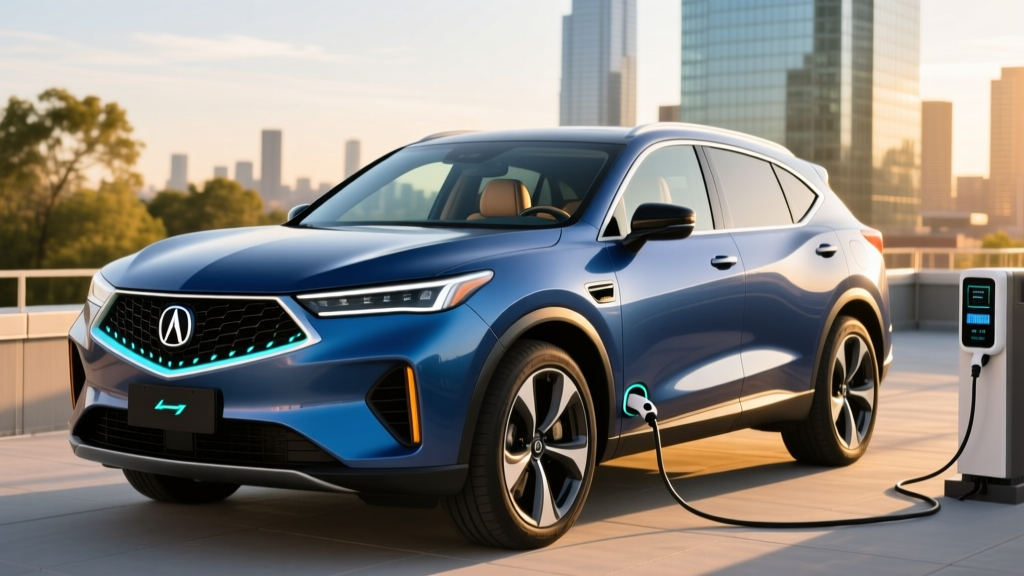
Acura's first all-electric vehicle arrives with a clear mission: translate Honda's engineering credibility into the premium electric SUV segment. The 2026 Acura ZDX electric SUV is built on GM's Ultium platform — the same architecture underpinning the Cadillac Lyriq — but Acura has tuned it with its own performance calibration, interior design language, and technology suite. After spending time with the specs, the charging data, and the competitive landscape, here's everything you need to know before putting one on your shortlist.
Quick Verdict: What the ZDX Gets Right (and Where It Falls Short)
The ZDX positions itself as a midsize luxury electric crossover aimed squarely at the Tesla Model Y, BMW iX, and Cadillac Lyriq. Its strengths are straightforward: competitive EPA range, a well-appointed cabin with Google Built-in infotainment, and standard Super Cruise hands-free driving on compatible highways. Its weaknesses are equally clear — a charging speed that trails the segment leaders, a starting price that pushes it above the federal tax credit MSRP cap for SUVs, and a rear-seat experience that doesn't quite match the spaciousness of rivals like the Genesis Electrified GV70 or the Model Y.
For buyers who value the Acura brand, want a proven Ultium powertrain, and prioritize highway comfort over track-day thrills, the ZDX is a strong contender. If maximum DC fast-charging speed or third-row seating is a priority, you'll want to cross-shop carefully.
Range, Battery, and Efficiency: The Numbers That Matter
| Specification | ZDX A-Spec (RWD) | ZDX A-Spec (AWD) | ZDX Type S (AWD) |
|---|---|---|---|
| EPA Range | 313 miles | 304 miles | 278 miles |
| Battery Capacity (usable) | ~102 kWh (NMC lithium-ion, Ultium platform) | ||
| Efficiency (MPGe combined) | 94 MPGe | 91 MPGe | 85 MPGe (est.) |
| Energy Consumption | ~36 kWh/100 mi | ~37 kWh/100 mi | ~40 kWh/100 mi |
| Drivetrain | Single-motor RWD | Dual-motor AWD | Dual-motor AWD (performance tune) |
Real-World Range Expectations
The EPA sticker says 313 miles for the RWD A-Spec, but real-world results depend heavily on how and where you drive. In mixed suburban/highway driving at moderate temperatures (60–80°F), expect 270–290 miles from a full charge. On sustained highway trips at 75+ mph, range drops to roughly 240–260 miles due to aerodynamic drag. In cold weather (below 30°F), battery chemistry limitations and cabin heating can reduce range by 20–30%, bringing usable range down to approximately 200–230 miles. The ZDX's heat pump helps mitigate cold-weather losses compared to resistance-heater EVs, but physics is physics — plan road-trip charging stops accordingly.
The 102 kWh (usable) NMC battery pack is sourced from GM's Ultium Cells joint venture with LG Energy Solution. NMC (nickel manganese cobalt) chemistry offers high energy density — which is how Acura fits 313 miles into a midsize crossover — but it does not tolerate sustained 100% state-of-charge storage as well as LFP (lithium iron phosphate) packs. For daily use, Acura recommends setting the charge limit to 80–90% and only charging to 100% when you need maximum range for a trip.
According to fueleconomy.gov, the ZDX A-Spec RWD achieves 94 MPGe combined. That's competitive with the Cadillac Lyriq (93 MPGe) but trails the more aerodynamic Tesla Model Y Long Range (122 MPGe combined). Efficiency matters not just for range — it also determines your per-mile charging cost at public DC fast chargers.
Charging Speed: Home Level 2 and DC Fast Charging
| Charging Level | Power | Charge Time / Rate | Notes |
|---|---|---|---|
| Level 1 (120V household) | ~1.4 kW | ~3–4 miles per hour | Emergency/trickle only; full charge in ~72+ hours |
| Level 2 (240V home) | 11.5 kW (max onboard) | ~30–33 miles per hour; 0–100% in ~10 hours | Requires 48A+ hardwired circuit or 60A breaker |
| DC Fast Charging | 190 kW (peak) | 10–80% in ~30 minutes | Peak rate not sustained; tapers above 60% SoC |
The ZDX's DC fast-charging peak of 190 kW is the single biggest competitive gap in this vehicle's spec sheet. The Tesla Model Y can peak at 250 kW on V3 Superchargers, the Hyundai Ioniq 5 hits 240 kW (with an 18-minute 10–80% time), and even the platform-mate Cadillac Lyriq matches 190 kW. On a road trip, that ~30-minute 10–80% session means two stops on a 600-mile drive will add roughly an hour of downtime. For most buyers, this is acceptable — but if you regularly drive long corridors with limited charger availability, the taper above 60% SoC can stretch sessions further than you'd expect from the peak number alone.
At home, the 11.5 kW onboard charger is a bright spot. On a properly installed 48-amp Level 2 circuit (like a ChargePoint Home Flex or Tesla Wall Connector with a J1772 adapter), you'll add roughly 30 miles of range per hour of charging. An overnight session of 8–10 hours easily replenishes a full day's driving. Expect a home Level 2 installation to cost between $800 and $2,500 depending on panel capacity, conduit run length, and local permit fees — with a potential 200-amp panel upgrade adding $1,500–$3,000 if your home's electrical service is older.
The ZDX uses the CCS1 connector for DC fast charging and J1772 for Level 2 AC. Acura has confirmed that future model years will transition to the NACS (Tesla) connector, and adapters are expected to be offered for access to Tesla Supercharger stations. Verify adapter availability with your dealer at purchase time.
Performance and Driving Dynamics
| Metric | ZDX A-Spec RWD | ZDX A-Spec AWD | ZDX Type S |
|---|---|---|---|
| Horsepower | 358 hp | 490 hp (est.) | ~500 hp (est.) |
| Torque | 324 lb-ft | 450 lb-ft (est.) | ~550 lb-ft (est.) |
| 0–60 mph | ~6.0 sec | ~4.5 sec | ~3.8 sec (est.) |
| Top Speed | ~130 mph (governed) | ~130 mph | ~140 mph |
The RWD A-Spec's 358 hp and 6.0-second 0–60 time make it adequately quick for daily driving and highway merging — it never feels underpowered, but it won't pin you to the seat. The dual-motor AWD variant is the sweet spot for most buyers: 490 hp, a sub-5-second 0–60, and the all-weather traction that justifies the ~$3,000 price premium and 9-mile range trade-off.
The Type S — Acura's performance halo — promises around 500 hp with a sport-tuned air suspension, larger Brembo brakes, and a more aggressive torque-vectoring calibration. It trades range (278 miles EPA) for engagement, which is the expected bargain in this segment.
Ride quality in the A-Spec is composed and quiet. The Ultium platform's low center of gravity keeps body roll in check, and the cabin isolation is genuinely premium — road and wind noise are well-suppressed at 70 mph. Regenerative braking offers multiple levels via steering-wheel paddles, and a one-pedal driving mode is available for stop-and-go commuting.
Interior, Cargo, and Technology
The ZDX's cabin marks a significant step up from Acura's previous-generation interiors. The centerpiece is an 11.3-inch touchscreen running Google Built-in — meaning Google Maps, Google Assistant, and the Play Store are native to the vehicle. Wireless Apple CarPlay and Android Auto are standard. A 11-inch digital driver display and a standard 14-speaker Bang & Olufsen audio system round out the tech.
Passenger space is adequate but not class-leading:
- Front legroom: ~42.0 inches
- Rear legroom: ~37.5 inches
- Cargo behind rear seats: ~28 cu ft
- Cargo with rear seats folded: ~60 cu ft
- Frunk (front trunk): Not available — the Ultium platform in this configuration does not include a front storage compartment
The lack of a frunk is a notable omission; the Tesla Model Y offers ~4 cu ft of front trunk space, and the Ford Mustang Mach-E provides ~4.7 cu ft. For families who rely on every cubic foot of cargo space, this matters.
On the driver-assistance front, the ZDX comes standard with AcuraWatch (adaptive cruise control, lane-keeping assist, blind-spot monitoring, automatic emergency braking). The headline feature is GM Super Cruise — available on A-Spec with the Technology Package and standard on Type S. Super Cruise enables hands-free driving on over 750,000 miles of compatible divided highways in North America, using LiDAR-mapped road data and a driver-attention camera.
Super Cruise is a Level 2 driver-assistance system. Despite being "hands-free," it requires the driver to remain attentive and ready to take over at any time. The driver-monitoring camera will issue warnings and disengage the system if you look away from the road. This is not a Level 4 autonomous vehicle — you cannot sleep, read, or use a phone while it's engaged.
Pricing, Trims, and Federal Tax Credit Eligibility
| Trim | Base MSRP | Est. As-Tested | Key Features |
|---|---|---|---|
| ZDX A-Spec (RWD) | $59,950 | $62,000–$64,000 | 313-mi range, Google Built-in, AcuraWatch, 14-spkr B&O |
| ZDX A-Spec (AWD) | $62,950 | $65,000–$68,000 | +AWD, +Super Cruise (w/ Tech Pkg) |
| ZDX Type S (AWD) | $69,950 | $72,000–$75,000 | Air suspension, Brembo brakes, perf. tune, Super Cruise std. |
Does the ZDX Qualify for the Federal §30D Tax Credit?
This is where the math gets complicated. Under current IRS §30D rules, the ZDX faces a significant hurdle: the MSRP cap for SUVs is $80,000. The A-Spec trims clear this cap easily, making them potentially eligible — but eligibility also depends on:
- Buyer income caps: Modified AGI must not exceed $150,000 (single), $225,000 (head of household), or $300,000 (joint filers)
- Battery component sourcing: A percentage of battery components must be manufactured or assembled in North America (threshold increases annually)
- Critical minerals requirement: A percentage of critical minerals must be sourced from the U.S. or a free-trade-agreement country (threshold increases annually)
- Final assembly: The vehicle must undergo final assembly in North America — the ZDX is assembled at GM's Spring Hill, Tennessee plant, which satisfies this requirement
The ZDX's Ultium battery pack is manufactured in the U.S. (Lordstown, Ohio and Lansing, Michigan facilities), which helps its sourcing compliance. However, the critical-minerals requirement has tightened each year since 2023, and compliance varies by model year and production batch. Always verify current credit eligibility on the IRS Clean Vehicle credit page and with your tax professional before relying on the credit in your purchase decision.
If eligible, the maximum credit is $7,500, which can now be transferred to the dealer as a point-of-sale rebate — effectively reducing your out-of-pocket cost at purchase. If your ZDX qualifies, the effective price of the A-Spec RWD drops to roughly $52,450, which makes the value proposition significantly more compelling against a Model Y Long Range (~$48,990 before any credit).
ZDX vs. the Competition: How It Stacks Up
| Spec | Acura ZDX A-Spec AWD | Tesla Model Y LR AWD | Cadillac Lyriq AWD | BMW iX xDrive50 |
|---|---|---|---|---|
| EPA Range | 304 mi | 311 mi | 307 mi | 324 mi |
| Battery (usable) | ~102 kWh | ~75 kWh | ~102 kWh | ~105 kWh |
| Peak DC Charge | 190 kW | 250 kW | 190 kW | 200 kW |
| 10–80% DC Time | ~30 min | ~20 min | ~30 min | ~28 min |
| 0–60 mph | ~4.5 sec | ~4.8 sec | ~5.0 sec | ~4.4 sec |
| Cargo (rear seats up) | ~28 cu ft | ~30 cu ft | ~28 cu ft | ~35 cu ft |
| Base MSRP | $62,950 | $48,990 | $63,990 | $87,250 |
| Hands-Free Driving | Super Cruise | Autopilot (FSD opt.) | Super Cruise | Driving Assistant Pro |
The ZDX's closest rival is arguably the Cadillac Lyriq — they share the Ultium platform, similar battery capacity, and identical DC charge rates. The Lyriq edges ahead slightly on interior luxury perception and cargo space, while the ZDX offers Acura's brand cachet and a sportier Type S variant. The Tesla Model Y remains the efficiency and charging-speed benchmark, with access to the Supercharger network (though CCS adapters now partially bridge that gap). The BMW iX is in a higher price bracket but offers superior range, cargo space, and interior quality.
Warranty and Long-Term Ownership
| Coverage | Term |
|---|---|
| Limited Vehicle Warranty | 4 years / 50,000 miles |
| Powertrain Warranty | 6 years / 70,000 miles |
| Battery Pack Warranty | 8 years / 100,000 miles (min. 70% capacity retention) |
| Corrosion Perforation | 5 years / unlimited miles |
| Roadside Assistance | 4 years / 50,000 miles |
The 8-year/100,000-mile battery warranty with a 70% capacity-retention floor is standard for the industry and matches GM's Ultium warranty. Real-world Ultium degradation data is still maturing (the platform launched in 2023), but early Lyriq fleet data suggests 5–8% degradation over the first 50,000 miles, which is within normal NMC expectations. The thermal management system — active liquid cooling and heating — should help preserve long-term battery health if you avoid habitual DC fast-charging to 100%.
Acura's 4-year/50,000-mile bumper-to-bumper warranty is slightly below the luxury-segment average (BMW offers 4/50, Genesis offers 5/60,000). If you plan to keep the ZDX beyond year four, an extended warranty may be worth evaluating.
Who Should Buy the Acura ZDX Electric SUV?
✅ Pros
- Competitive 313-mile EPA range (RWD)
- Google Built-in infotainment with native Maps/Assistant
- Super Cruise hands-free highway driving (available/standard by trim)
- Strong AWD performance (490 hp, ~4.5s 0–60)
- Quiet, composed ride quality
- Assembled in North America (Spring Hill, TN)
- Potential §30D tax credit eligibility (verify sourcing/year)
❌ Cons
- 190 kW DC peak is slower than Tesla, Hyundai/Kia rivals
- No front trunk (frunk)
- Rear-seat legroom trails some competitors
- Starting price near $60K; Type S approaches $70K+
- CCS1 connector only (NACS adapter TBD)
- Bumper-to-bumper warranty shorter than Genesis/BMW
- Real-world highway/cold range drops to 200–260 mi
Buy the ZDX if: You're an existing Acura loyalist who wants to go electric without leaving the brand, you value Super Cruise for frequent highway commutes, and you have reliable home Level 2 charging so the 190 kW DC rate is a secondary concern.
Look elsewhere if: You take frequent 300+ mile road trips and need the fastest possible DC charging (Tesla Model Y or Hyundai Ioniq 5), you need maximum cargo space (BMW iX), or you want a third row (Kia EV9).
Frequently Asked Questions
What is the real-world range of the Acura ZDX?
The EPA rates the RWD A-Spec at 313 miles, but real-world mixed driving typically yields 270–290 miles. Sustained highway driving at 75+ mph drops this to around 240–260 miles, and cold weather (below 30°F) can reduce range to 200–230 miles. Plan charging stops conservatively on road trips.
How fast does the ZDX charge at home and on DC fast chargers?
At home on a Level 2 (240V, 48A) charger, the ZDX adds roughly 30–33 miles of range per hour, fully recharging overnight in about 10 hours. On a DC fast charger, it peaks at 190 kW and charges from 10–80% in approximately 30 minutes. The charge rate tapers significantly above 60% state of charge.
How much does the Acura ZDX cost after tax credits?
The base A-Spec RWD starts at $59,950. If you qualify for the full $7,500 federal §30D credit (subject to income, battery-sourcing, and MSRP rules), the effective price drops to roughly $52,450. Eligibility varies by buyer and production batch — confirm with the IRS and your tax advisor before relying on the credit.
Is the Acura ZDX worth buying over the Tesla Model Y or Cadillac Lyriq?
The ZDX is worth considering if you prefer Acura's brand, want Super Cruise, and value a traditional luxury-dealer experience. The Model Y wins on efficiency, charging speed, and price. The Lyriq is the closest rival — same platform, similar specs — so the choice comes down to brand preference and interior styling taste.
Does the ZDX have a front trunk (frunk)?
No. The ZDX does not offer a front trunk. All under-hood space is occupied by power electronics and the HVAC system. Total cargo space is approximately 28 cu ft behind the rear seats and 60 cu ft with them folded.
What connector does the ZDX use, and can it charge at Tesla Superchargers?
The ZDX uses a CCS1 connector for DC fast charging and J1772 for Level 2 AC. Acura has indicated that a NACS adapter for Tesla Supercharger access will be available, but confirm availability and compatibility with your dealer before purchase, as adapter rollout timing may vary.