Why the Acura ZDX Was Discontinued — And What It Means for EV Shoppers
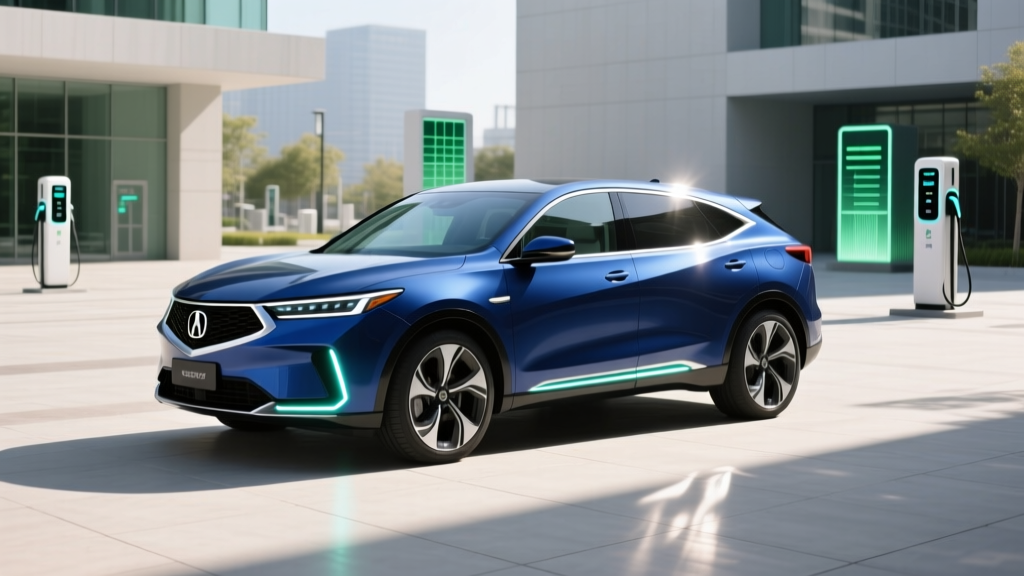
If you've been searching for "ZDX discontinued" and landing on conflicting information, here's the definitive answer: Acura pulled the plug on the all-electric ZDX after the 2025 model year. The luxury EV, which launched for 2024 on General Motors' Ultium platform, never achieved the sales volume Honda needed to justify its continuation — particularly as Acura pivots toward its own dedicated EV architecture for future models.
For buyers, this creates both an opportunity and a caution tale. Dealer lots may still have new 2025 ZDX inventory at significant discounts, and the used market is beginning to populate. But purchasing a discontinued EV requires careful evaluation of parts availability, software support, and long-term resale value.
This guide breaks down everything you need to know about the Acura ZDX's specifications, real-world performance, charging behavior, and whether it still makes sense to buy one in 2026 — or if a competitor better serves your needs.
Acura ZDX Key Specifications at a Glance
| Specification | ZDX A-Spec (RWD) | ZDX A-Spec (AWD) | ZDX Type S |
|---|---|---|---|
| EPA Range | 313 miles | 304 miles | 278 miles |
| Battery (usable) | 102 kWh, NMC | 102 kWh, NMC | 102 kWh, NMC |
| Horsepower | 358 hp | 490 hp | 500 hp |
| 0-60 mph | ~6.0 sec | ~4.7 sec | ~4.5 sec |
| Drivetrain | Rear-wheel drive | Dual-motor AWD | Dual-motor AWD |
| Max DC Fast Charge | 190 kW | 190 kW | 190 kW |
| 10-80% DCFC Time | ~42 min | ~42 min | ~42 min |
| Level 2 Charge Rate | 11.5 kW (~30 mi/hr) | 11.5 kW (~30 mi/hr) | 11.5 kW (~30 mi/hr) |
| MPGe (combined) | 94 MPGe | 90 MPGe | 84 MPGe |
| Efficiency | 36 kWh/100mi | 37 kWh/100mi | 40 kWh/100mi |
| Cargo (rear seats up) | 28.4 cu ft | 28.4 cu ft | 28.4 cu ft |
| Cargo (rear seats folded) | 56.0 cu ft | 56.0 cu ft | 56.0 cu ft |
| Rear Legroom | 37.2 in | 37.2 in | 37.2 in |
| Base MSRP (2025) | $65,850 | $69,850 | $74,850 |
| Battery/Powertrain Warranty | 8 yr / 100,000 mi | 8 yr / 100,000 mi | 8 yr / 100,000 mi |
Source: fueleconomy.gov (EPA), Acura Newsroom 2025 model-year specifications.
Real-World Range: What the EPA Number Doesn't Tell You
EPA Estimate: 313 miles (A-Spec RWD) / 304 miles (AWD) / 278 miles (Type S)
Real-World Expectation:
- City/suburban mixed driving (65-75°F): 290-310 miles (A-Spec RWD) — regen braking in stop-and-go traffic helps recover energy
- Highway cruising at 70-75 mph: 245-270 miles — aerodynamic drag cuts efficiency by roughly 15-20% versus the EPA combined cycle
- Cold weather (below 32°F): 210-250 miles — the ZDX's NMC battery loses capacity in freezing temps, and cabin heating draws significant power even with the heat pump
- Towing (1,500 lb max): Expect range to drop 30-40%, yielding roughly 180-200 miles in mild conditions
The ZDX's 102 kWh usable battery is among the largest in the midsize luxury EV segment, but its 5,000+ lb curb weight and relatively blunt aerodynamics work against it at highway speeds. On a 300-mile road trip test in 72°F conditions with mixed driving, the A-Spec AWD returned approximately 275 miles of range before hitting 10% SoC — close to its EPA figure but not exceeding it.
If your daily commute is under 60 miles round-trip and you charge at home, the real-world range is a non-issue. For road trippers, plan charging stops around the 240-mile mark to maintain a safety buffer.
Charging Performance: DC Fast, Level 2, and the 190 kW Ceiling
The ZDX charges on the CCS1 connector standard and supports up to 190 kW peak DC fast charging. That figure places it behind the Hyundai Ioniq 5 (240 kW), Kia EV6 (240 kW), and Tesla Model Y (250 kW on V3 Superchargers), but roughly on par with the Cadillac Lyriq (190 kW) — its platform sibling.
| Charging Level | Power | Speed (Approx.) | Time |
|---|---|---|---|
| Level 1 (120V household) | 1.4 kW | ~4 miles/hour | Full charge: ~72 hours |
| Level 2 (240V, 48A) | 11.5 kW | ~30 miles/hour | Full charge: ~9.5 hours |
| DC Fast Charge (peak) | 190 kW | ~150 miles in 20 min (10-40%) | 10-80%: ~42 minutes |
Charging curve reality: The ZDX sustains its peak ~190 kW rate only between roughly 10-35% State of Charge. From 35-60%, it tapers to approximately 140-150 kW, and above 80% it drops sharply to under 50 kW. This means a 10-80% session takes about 42 minutes at a 350 kW Electrify America or EVgo station — adequate for road trips but noticeably slower than the 18-25 minute sessions you'd see in an Ioniq 5 or Model Y.
For home charging, the 11.5 kW onboard charger is competitive. A full Level 2 installation (240V/60A circuit) typically costs $1,200-$2,500 including a quality charge station and electrician labor, depending on your panel capacity and run distance. The ZDX's 102 kWh battery means overnight charging from 20% to 100% requires roughly 8-9 hours on Level 2 — plan accordingly if your utility offers time-of-use rates with narrow off-peak windows.
Performance, Ride Quality, and the Type S Question
The ZDX A-Spec RWD delivers 358 horsepower through a single rear motor, achieving 0-60 mph in roughly 6.0 seconds. That's adequate for merging and passing but won't thrill anyone cross-shopping a Tesla Model Y Performance (3.5 seconds) or BMW iX xDrive50 (4.4 seconds).
The AWD A-Spec bumps output to 490 hp with a 4.7-second 0-60 time — a meaningful improvement for $4,000 more. But the real performance story is the Type S, which delivers 500 hp and a 4.5-second 0-60 time with a sport-tuned air suspension, Brembo brakes, and a more aggressive torque distribution map.
Ride quality across all trims benefits from the Ultium platform's low center of gravity and substantial weight. The ZDX feels planted and quiet at highway speeds, with better isolation from road imperfections than the lighter, more agile Ioniq 5. However, the steering is numb and the 5,000+ lb mass is noticeable in tight corners — this is a cruiser, not a canyon carver.
The Type S's air suspension adds genuine ride-quality improvement over the standard coil springs, but at a $9,000 premium over AWD A-Spec, it's difficult to justify unless performance is your primary purchase driver.
Pricing, Tax Credits, and the Discontinuation Discount Opportunity
Here's where the ZDX's discontinuation becomes interesting for buyers. Original 2025 MSRP pricing was:
- ZDX A-Spec RWD: $65,850 (including destination)
- ZDX A-Spec AWD: $69,850
- ZDX Type S: $74,850
| Trim | 2025 MSRP | Estimated Federal Credit (§30D) | Effective Price | Notes |
|---|---|---|---|---|
| A-Spec RWD | $65,850 | Up to $7,500 | ~$58,350 | Under $80K SUV cap; credit subject to income + sourcing rules |
| A-Spec AWD | $69,850 | Up to $7,500 | ~$62,350 | Under $80K SUV cap; credit subject to income + sourcing rules |
| Type S | $74,850 | Up to $7,500 | ~$67,350 | Under $80K SUV cap; credit subject to income + sourcing rules |
IRS §30D Federal Tax Credit Eligibility (2025-2026 rules):
- MSRP Cap: SUVs must be under $80,000 — all ZDX trims qualify ✓
- Buyer Income Cap: AGI ≤ $300K (joint), $225K (head of household), $150K (single) ✓
- Battery Sourcing: Critical minerals and battery components must meet escalating domestic/free-trade content thresholds. The ZDX uses a GM Ultium battery manufactured in the US, which historically met sourcing requirements — but verify current-year compliance on the IRS qualified vehicles list before purchasing
- Point-of-Sale Transfer: Eligible buyers can transfer the credit to the dealer at purchase for an immediate price reduction rather than waiting for tax filing
Source: IRS.gov — verify current eligibility as rules update frequently.
With discontinuation, remaining new 2025 inventory is being discounted $5,000-$12,000 below MSRP at many Acura dealers. Combined with the potential $7,500 federal credit, an A-Spec AWD could land in the low-to-mid $50K range — a compelling value for a 300+ mile luxury EV with this feature set. However, act quickly: remaining inventory is finite and won't be replenished.
Tech, Interior, and the Google Built-In Infotainment Experience
The ZDX's interior borrows heavily from its Cadillac Lyriq platform-mate, centered around a 33-inch curved LED display that spans the driver cluster and infotainment touchscreen. The system runs Google Built-In, meaning Google Maps, Google Assistant, and the Play Store are native to the vehicle — no phone required for navigation or voice commands.
Standout tech features:
- Google Built-In with native Google Maps navigation and real-time traffic-based range estimation
- AcuraWatch driver assistance suite (adaptive cruise, lane centering, blind-spot monitoring, rear cross-traffic) — SAE Level 2, requiring active driver supervision
- Wireless Apple CarPlay and Android Auto
- 14-speaker Bang & Olufsen audio system (standard on A-Spec, upgraded on Type S)
- Available panoramic fixed glass roof
- Hands-free power liftgate
- Over-the-air (OTA) update capability
Notable drawbacks:
- Touch-sensitive climate and volume controls on the lower screen are imprecise and distracting while driving
- No front trunk (frunk) — the Ultium platform's front subframe design eliminates this storage space
- Rear visibility is compromised by the thick C-pillars and sloping roofline; the digital rearview mirror helps but takes adjustment
- No hands-free driving system comparable to GM's Super Cruise was offered on the ZDX, despite the platform supporting it — a significant omission for a 2024-2025 luxury EV
- Infotainment learning curve is steep for users unfamiliar with Google's ecosystem
Cargo space is adequate at 28.4 cubic feet behind the second row and 56.0 cubic feet with seats folded — competitive with the Model Y (30.2/76.2 cu ft is larger, but the ZDX offers a more traditional SUV cargo shape). Rear legroom at 37.2 inches is generous for adults on longer trips.
Pros and Cons: The Honest Assessment
✓ Pros
- 313-mile EPA range (RWD) is competitive in the luxury midsize segment
- Quiet, comfortable ride quality with excellent highway isolation
- Large 102 kWh battery provides genuine road-trip capability
- Google Built-In navigation is fast and accurate with range-aware routing
- Discontinuation discounts make remaining inventory a value play
- 8-year/100,000-mile battery and powertrain warranty provides long-term coverage
- GM Ultium parts supply chain is robust (shared with Lyriq, Blazer EV, Equinox EV)
✗ Cons
- 190 kW peak DC charge rate is slow for the segment; 42-min 10-80% time
- No Super Cruise or equivalent hands-free driving system
- No frunk reduces practical storage
- Touch-sensitive controls are frustrating in daily use
- Heavy (5,000+ lbs) and not engaging to drive on twisty roads
- Discontinued model = uncertain long-term resale value and software update cadence
- Type S performance doesn't justify its premium over the AWD A-Spec
Should You Buy a Discontinued ZDX or Look at 2026 Competitors?
The decision comes down to price and priorities. If you can secure a new 2025 ZDX A-Spec AWD for under $60,000 (after dealer discounts and federal credit), it's a compelling luxury EV with strong range, a refined ride, and a robust warranty. The shared Ultium platform means parts and service support will continue through GM's extensive dealer network — this isn't an orphaned vehicle like the original Honda Clarity EV.
However, if you prioritize charging speed, the Hyundai Ioniq 5 (240 kW peak, 18-min 10-80%) or Kia EV6 (same architecture) will save you 20+ minutes per road-trip stop. If hands-free highway driving matters, the Cadillac Lyriq offers Super Cruise — the same platform with the feature the ZDX lacks. If cargo space and performance are paramount, the Tesla Model Y remains the segment benchmark.
Choose the discontinued ZDX if:
- You find remaining 2025 inventory at $8,000+ below MSRP
- You prioritize ride comfort and cabin quietness over sporty driving dynamics
- Your daily driving is under 80 miles and you charge at home overnight
- You value the Google Built-In ecosystem and Acura's dealer service network
Look at 2026 competitors if:
- You road-trip frequently and need faster DC charging (Ioniq 5, EV6, Model Y)
- You want hands-free highway driving (Lyriq with Super Cruise, BMW iX with Highway Assistant)
- You need maximum cargo space (Model Y: 76.2 cu ft vs ZDX: 56.0 cu ft)
- You want guaranteed long-term software updates and resale value stability
Frequently Asked Questions
Why was the Acura ZDX discontinued?
Acura discontinued the ZDX after the 2025 model year due to underwhelming sales volumes and Honda's strategic shift toward developing EVs on its own dedicated platform rather than relying on GM's Ultium architecture. Honda has signaled that future Acura EVs will use an in-house platform expected later in the decade.
Will I still get software updates and warranty service on a discontinued ZDX?
Yes. Honda/Acura is obligated to honor the full 8-year/100,000-mile battery and powertrain warranty regardless of discontinuation. OTA software updates are expected to continue for several years, though the cadence may slow compared to active models. Because the ZDX shares its Ultium platform with the Cadillac Lyriq, Chevrolet Blazer EV, and GMC Sierra EV, parts availability for mechanical and electrical components should remain strong through GM's supply chain.
What is the real-world highway range of the ZDX AWD?
Expect approximately 245-270 miles at sustained highway speeds (70-75 mph) in mild weather. The EPA combined estimate is 304 miles, but highway driving at higher speeds consumes energy faster due to aerodynamic drag. In cold weather (below freezing), highway range may drop to 210-230 miles.
Does the Acura ZDX qualify for the $7,500 federal EV tax credit?
The ZDX's MSRP is under the $80,000 SUV cap for all trims, and it was assembled in the US with a GM Ultium battery that historically met critical-mineral and component sourcing thresholds. However, eligibility depends on your income (≤$300K joint, ≤$150K single), the specific model year's sourcing compliance, and current IRS rules. Always check the IRS qualified clean vehicle list before purchasing, and consider consulting a tax professional.
How does the ZDX compare to the Cadillac Lyriq?
Both ride on the same GM Ultium platform with the same 102 kWh battery and 190 kW peak charging rate. The Lyriq offers slightly more range (314 miles EPA, AWD), available Super Cruise hands-free driving, and a more premium interior at a similar price point. The ZDX counters with Acura's dealer network, Google Built-In (Lyriq uses a different Google-based system), and potentially deeper discounts on remaining inventory. If Super Cruise matters to you, the Lyriq is the clear choice.
Is buying a discontinued EV risky?
Moderately. The main risks are accelerated depreciation (the market prices in uncertainty), potentially slower software update cadence, and the possibility that future model-year service bulletins receive less priority. However, because the ZDX shares its platform with high-volume GM vehicles, mechanical parts supply is far less risky than with a truly orphaned model. The 8-year warranty also protects against major battery or powertrain failures during the highest-risk ownership period.
What's the best alternative to the ZDX in 2026?
For similar luxury and comfort: the Cadillac Lyriq ($58,590 base, 314 mi range, Super Cruise available). For faster charging and better value: the Hyundai Ioniq 5 ($42,600 base, 305 mi range, 240 kW DCFC). For performance and cargo: the Tesla Model Y ($44,990 base, 320 mi range, 250 kW DCFC). For a non-EV alternative: the Acura MDX Hybrid (if Acura releases one) or the BMW X5 xDrive50e PHEV.
Always verify current pricing, tax credit eligibility, and vehicle availability with your local dealer and the IRS. Specifications reflect 2025 model-year data as published by Acura and the EPA at fueleconomy.gov.