The Acura ZDX Discontinued: What Happened and Why It Matters
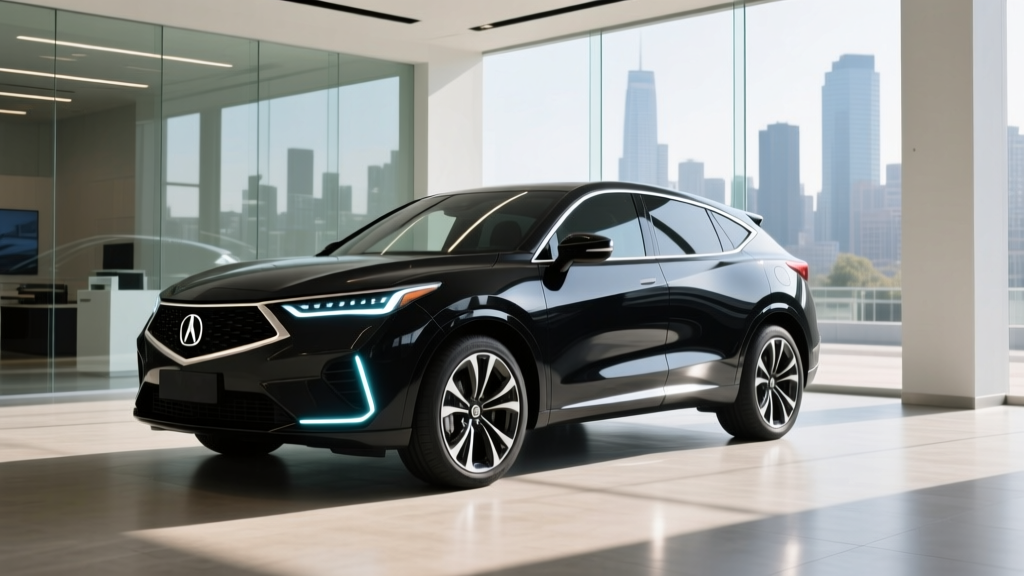
If you've been searching for a luxury electric SUV and noticed the Acura ZDX discontinued in headlines, you're not alone. Acura pulled the plug on its first-ever battery-electric vehicle after the 2024 model year — a decision that surprised many given the ZDX's competitive specs and aggressive pricing. The ZDX was built on General Motors' Ultium platform (shared with the Cadillac Lyriq and Chevrolet Blazer EV) and represented Honda's first foray into EV manufacturing through a partnership with GM.
By early 2025, Acura confirmed it would shift its EV strategy toward Honda's own e:Architecture platform, effectively ending the ZDX's short production run. For 2026 shoppers, this raises practical questions: Are leftover 2024 models still available? What do you get if you find one? And should you consider alternatives instead?
This profile covers everything you need to know about the ZDX's specs, real-world usability, and whether hunting down remaining dealer inventory is worth your time.
Range, Battery, and Real-World Efficiency
Real-World Expectation: Expect 260–290 miles on mixed highway driving in moderate temperatures. In cold weather (below 30°F), plan for 220–250 miles. The Type S, with its performance tuning and larger wheels, loses range fastest — budget 240 miles highway in ideal conditions, potentially under 210 in winter.
The ZDX uses GM's 102 kWh usable Ultium battery pack with NMC (nickel manganese cobalt) chemistry. This is a large pack by segment standards — larger than the Tesla Model Y's ~75 kWh or the Genesis Electrified GV70's 77.4 kWh — and it's the primary reason the ZDX achieves over 300 miles in its most efficient trim.
NMC chemistry offers higher energy density than LFP (lithium iron phosphate), which is why GM and Acura chose it for a vehicle targeting luxury buyers who want maximum range without sacrificing interior space to a heavier, bulkier battery. The trade-off: NMC batteries typically degrade slightly faster over time than LFP, though GM's thermal management system is robust and real-world degradation data on Ultium packs has been encouraging so far.
| Spec | A-Spec RWD | A-Spec AWD | Type S AWD |
|---|---|---|---|
| EPA Range | 325 mi | 313 mi | 283 mi |
| Battery (usable) | 102 kWh (NMC) | 102 kWh (NMC) | 102 kWh (NMC) |
| Horsepower | 358 hp | 490 hp | 500 hp |
| 0–60 mph | ~6.2 sec | ~4.7 sec | ~4.5 sec |
| MPGe (combined) | 94 MPGe | 90 MPGe | 83 MPGe |
| kWh/100 mi | 36 | 37 | 41 |
| Drivetrain | RWD (single motor) | AWD (dual motor) | AWD (dual motor) |
| Base MSRP | $59,650 | $61,650 | $70,650 |
Efficiency-wise, the ZDX is average for its class. At 36 kWh/100 miles (RWD), it's less efficient than the Tesla Model Y Long Range (~28 kWh/100 mi) but comparable to the Cadillac Lyriq (36 kWh/100 mi). The heavier Type S with its 22-inch wheels and stickier tires sips electrons at 41 kWh/100 mi — noticeable on long road trips where you'll stop to charge more frequently.
Charging Speed: DC Fast Charging and Home Level 2
Charging is where the ZDX's GM DNA shows — for better and worse.
| Charging Level | Rate | Speed |
|---|---|---|
| Level 1 (120V household) | ~1.4 kW | ~3–4 miles/hour |
| Level 2 (240V home/public) | 11.5 kW (48A) | ~28–30 miles/hour |
| DC Fast Charging (peak) | 190 kW | 10–80% in ~30 min |
| DC Fast Charging (sustained) | ~130–150 kW avg | 10–80% real-world ~35–40 min |
The ZDX uses a CCS1 connector for DC fast charging — the standard for most non-Tesla EVs sold in North America through 2024. By 2026, the industry has largely shifted to NACS (Tesla's connector), and while CCS chargers remain widely available at Electrify America, EVgo, and other networks, new installations increasingly favor NACS. Acura has not announced a retrofit adapter program for ZDX owners, though third-party CCS-to-NACS adapters from companies like Lectron are available for ~$200–$300 if you need Tesla Supercharger access.
The 190 kW peak DC charge rate is the ZDX's most notable limitation. Competitors like the Hyundai Ioniq 5 (240 kW peak, 10–80% in ~18 minutes) and even the Tesla Model Y (~250 kW peak) charge significantly faster. The ZDX's charge curve is relatively flat — it sustains around 150 kW from 10–50% SoC, then tapers to ~90 kW above 60%, and drops sharply past 80%. On a road trip, that 30-minute 10–80% window is acceptable but not class-leading.
At home on a 48-amp Level 2 charger (requiring a 60-amp circuit), the ZDX adds roughly 28–30 miles of range per hour. A full 0–100% charge takes about 9.5 hours — plan to plug in when you get home and wake up full. If your home electrical panel is limited to 200 amps and you already have high-draw appliances, consult a licensed electrician about whether a 48A EVSE is feasible or if you'll need to settle for a 32A unit (~7.7 kW, ~19 miles/hour).
Pricing, Tax Credits, and What You'll Actually Pay
The ZDX launched with aggressive pricing that undercut many luxury EV competitors. Here's the original MSRP structure and how tax credits apply:
| Trim | Base MSRP | Federal §30D Credit | Effective Price |
|---|---|---|---|
| A-Spec RWD | $59,650 | Up to $7,500* | ~$52,150 |
| A-Spec AWD | $61,650 | Up to $7,500* | ~$54,150 |
| Type S | $70,650 | Up to $7,500* | ~$63,150 |
*Federal EV tax credit eligibility under IRS §30D depends on multiple factors:
- MSRP Cap: SUVs must be under $80,000 — all ZDX trims qualify.
- Buyer Income Limits: AGI must not exceed $300,000 (joint), $225,000 (head of household), or $150,000 (single).
- Battery Sourcing: The full $7,500 requires meeting both critical-mineral and battery-component requirements. Because the ZDX uses GM's Ultium platform with US-assembled battery modules, it historically qualified for the full credit — but battery sourcing rules tighten annually. Verify current eligibility on fueleconomy.gov before purchasing.
- Point-of-Sale Transfer: As of 2024, buyers can transfer the credit to the dealer for an immediate price reduction at purchase rather than waiting to claim it on their tax return.
Because the ZDX is discontinued, any remaining new inventory in 2026 may still qualify for the federal credit if the vehicle is titled new and meets current-year sourcing requirements. However, dealers may also be offering significant discounts to clear stock — we've seen 2024 ZDX A-Spec models discounted $5,000–$8,000 off MSRP at participating dealerships, stacking with the tax credit for an effective price under $48,000.
Interior Space, Cargo, and Daily Usability
The ZDX is a midsize two-row SUV with generous dimensions:
- Cargo volume (rear seats up): 28.7 cu ft
- Cargo volume (rear seats folded): 59.9 cu ft
- Front legroom: 42.4 inches
- Rear legroom: 37.2 inches
- Front trunk (frunk): None — the Ultium platform in this configuration does not include a frunk, which is a miss at this price point.
The cabin quality is genuinely impressive — Acura's first EV didn't feel like a compromise. Soft-touch materials, a 17-inch portrait infotainment screen running Google Built-In (Google Maps, Google Assistant, and the Play Store are native), and a 14-speaker Bang & Olufsen audio system (standard on Type S, optional on A-Spec) make the ZDX feel premium. The panoramic glass roof is standard across all trims and floods the cabin with light, though it does eat into headroom slightly for taller passengers.
The lack of a frunk is a practical drawback — competitors like the Tesla Model Y (4.1 cu ft frunk) and Rivian R1S offer front storage that's useful for charging cables or groceries. The ZDX's cargo area is well-shaped but not class-leading in total volume; the Model Y offers 76.2 cu ft with seats folded.
Driver Assistance, Tech, and Safety
The ZDX comes equipped with AcuraWatch, Acura's suite of Level 2 driver-assistance features. This includes:
- Adaptive cruise control with stop-and-go
- Lane-keeping assist and lane-centering
- Blind-spot monitoring with rear cross-traffic alert
- Automatic emergency braking with pedestrian detection
- Traffic sign recognition
Notably, the ZDX does not offer hands-free driving like GM's Super Cruise (available on the Cadillac Lyriq) or Ford's BlueCruise. This is a significant omission given the ZDX shares the Ultium platform — the hardware is theoretically capable, but Acura chose not to license Super Cruise for this model. If hands-free highway driving is a priority, the Lyriq or a BMW iX with Highway Assistant are stronger choices.
The ZDX earned strong safety marks: the NHTSA awarded it a 5-star overall safety rating, and the IIHS named it a Top Safety Pick+ for 2024.
Warranty and Long-Term Ownership Considerations
Because the ZDX is discontinued, warranty coverage is a legitimate concern for 2026 buyers:
- Basic vehicle warranty: 4 years / 50,000 miles
- Powertrain warranty: 6 years / 70,000 miles
- Battery warranty: 8 years / 100,000 miles (capacity retention guaranteed above 70% of original)
Acura/Honda remains obligated to honor all factory warranties on the ZDX regardless of discontinuation. Federal law (EPA emissions warranty requirements also influence powertrain coverage expectations) ensures parts availability for a reasonable period. However, long-term parts sourcing — especially for body panels, trim pieces, and model-specific electronics — could become a concern 7–10 years out. This is the primary risk of buying a discontinued model.
For battery longevity, NMC chemistry with GM's active thermal management should deliver solid cycle life. Expect roughly 8–12% degradation over the first 100,000 miles based on early Ultium fleet data — well within the 70% warranty threshold.
Pros
- 325-mile EPA range (RWD) is excellent for the segment
- 102 kWh battery provides genuine road-trip confidence
- Premium interior with Google Built-In infotainment
- Aggressive pricing, especially with dealer discounts + tax credit
- 5-star NHTSA safety rating, IIHS Top Safety Pick+
- Strong acceleration in AWD and Type S trims
Cons
- Discontinued — long-term parts and resale uncertainty
- 190 kW peak DC charging is slow for 2026 standards
- CCS1 connector limits Supercharger access without adapter
- No hands-free driving (no Super Cruise despite Ultium platform)
- No frunk — unusual for a dedicated EV platform
- Type S efficiency drops significantly (41 kWh/100 mi)
Should You Buy a Remaining ZDX or Look Elsewhere?
The decision comes down to price and priorities. If you find a 2024 ZDX A-Spec RWD at a dealer for under $52,000 (after discounts and the $7,500 credit), it's one of the best value-per-mile-of-range propositions in the luxury EV segment. You're getting a 325-mile EPA range, a premium cabin, and strong safety credentials for Tesla Model Y money.
However, consider these alternatives if any of the following apply:
- You want faster charging and Supercharger access: The Tesla Model Y Long Range (330 mi, 250 kW peak, NACS native) or Hyundai Ioniq 5 (305 mi, 240 kW peak, NACS on 2025+ models) are stronger road-trip companions.
- You want hands-free highway driving: The Cadillac Lyriq (314 mi, Super Cruise available, same Ultium platform) gives you the ZDX's bones with Level 2+ capability.
- You're worried about discontinued-model risk: The BMW iX, Genesis Electrified GV70, or Mercedes EQB are all still in production with established dealer networks.
Look elsewhere if: You road-trip frequently and need fast DC charging, want hands-free driving tech, or prefer the security of a model with ongoing manufacturer support and predictable parts availability.
Frequently Asked Questions
Why was the Acura ZDX discontinued?
Acura discontinued the ZDX after the 2024 model year as part of Honda's strategic shift away from GM's Ultium platform. Honda is developing its own e:Architecture for future EVs, and the ZDX — along with the Honda Prologue — were interim products built on GM hardware. The partnership produced competitive vehicles but didn't align with Honda's long-term manufacturing independence goals.
What is the real-world range of the Acura ZDX?
The EPA rates the ZDX A-Spec RWD at 325 miles, but real-world highway driving in moderate temperatures typically yields 260–290 miles. In cold weather (below 30°F), expect 220–250 miles. The Type S is less efficient and typically delivers 210–240 miles in real-world mixed driving.
How fast does the ZDX charge at home and on the road?
At home on a 48A Level 2 charger, the ZDX charges at 11.5 kW, adding about 28–30 miles of range per hour (full charge in ~9.5 hours). On DC fast chargers, it peaks at 190 kW and reaches 10–80% in approximately 30 minutes under ideal conditions, though real-world sessions often take 35–40 minutes due to charge-curve tapering above 60% SoC.
Does the Acura ZDX qualify for the federal EV tax credit?
The ZDX historically qualified for the full $7,500 federal tax credit under IRS §30D, as it met battery sourcing and MSRP requirements. However, eligibility depends on your income (under $300K joint / $150K single), the vehicle's MSRP (under $80K for SUVs — all trims qualify), and current-year battery sourcing rules. Always verify on fueleconomy.gov and consult a tax professional before relying on the credit.
Is it risky to buy a discontinued EV model?
There is moderate risk. Acura/Honda must honor the factory warranty (8 years/100,000 miles on the battery), and routine maintenance parts (brakes, suspension, cabin filters) are largely shared with other Honda/Acura products. The risk lies in model-specific body panels, trim, and proprietary electronics becoming scarce 7–10 years out. Resale values may also depreciate faster than continuing models. If you plan to keep the vehicle 5+ years, weigh this carefully.
Can I use Tesla Superchargers with the ZDX?
Not natively — the ZDX has a CCS1 connector, while Tesla Superchargers use NACS. Third-party CCS-to-NACS adapters (from brands like Lectron or A2Z) are available for $200–$300 and allow Supercharger access, though charging speed may be slightly reduced compared to native NACS vehicles. Tesla has opened many Supercharger stalls to non-Tesla EVs via the Magic Dock adapter as well, but availability varies by station.