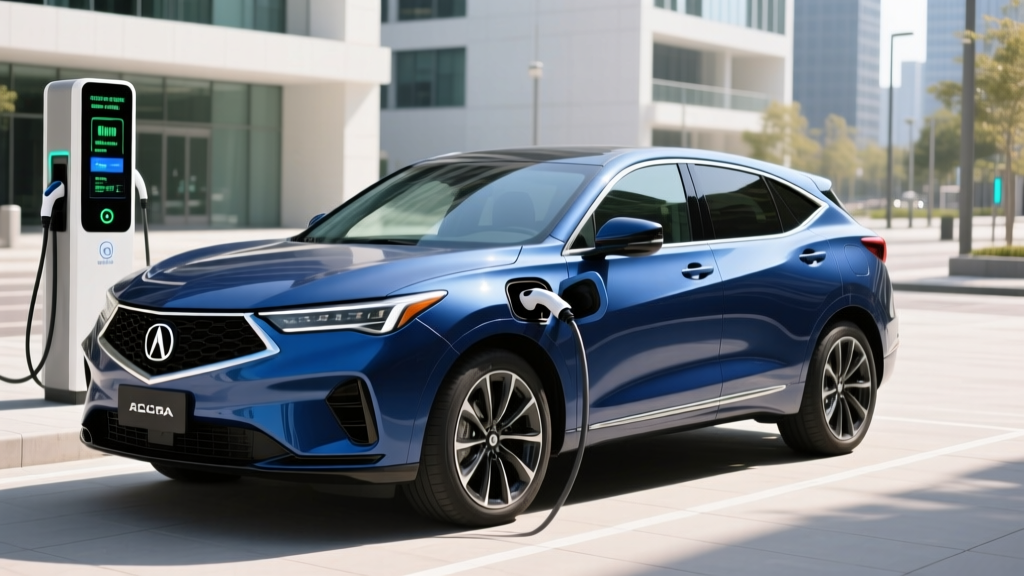
Acura's all-electric flagship SUV enters its second model year with the kind of spec sheet that finally puts Honda's luxury brand on equal footing with Tesla, BMW, and Cadillac in the premium EV space. The 2026 Acura ZDX rides on GM's Ultium platform — the same architecture underpinning the Cadillac Lyriq and Chevy Blazer EV — but wraps it in sharper styling, a more premium cabin, and a Type S performance variant that cracks 500 horsepower. This review breaks down every number that matters: real-world range, charging curves, pricing after the federal tax credit, and where the ZDX wins (and falls short) against its rivals.
Quick Verdict: Who the 2026 Acura ZDX Is For
The ZDX fits a specific buyer: someone who wants a midsize luxury EV SUV with strong range (up to 325 miles EPA), premium materials, and access to GM's growing Ultium charging ecosystem — but doesn't want a Tesla badge or the polarizing design of a BMW iX. The A-Spec trim is the value pick at around $65,000 before incentives, while the Type S justifies its $75,000+ sticker with genuine sports-SUV acceleration. If you need three rows, look at the Kia EV9. If you want the sharpest handling, the BMW iX xDrive50 still edges it. But for a comfortable, tech-forward daily driver with road-trip credibility, the ZDX makes a compelling case.
2026 Acura ZDX Spec Sheet at a Glance
| Spec | A-Spec (RWD) | A-Spec (AWD) | Type S (AWD) |
|---|---|---|---|
| EPA Range | 325 mi | 304 mi | 278 mi |
| Battery (usable) | 102 kWh gross / ~95.7 kWh usable, NMC lithium-ion (Ultium) | ||
| Horsepower | 358 hp | 490 hp | 500 hp |
| 0-60 mph | ~6.2 sec | ~4.9 sec | ~4.5 sec |
| Drivetrain | Single-motor RWD | Dual-motor AWD | Dual-motor AWD (perf-tuned) |
| Max DC Fast Charge | 190 kW peak | ||
| 10-80% DC Charge | ~32 minutes | ||
| Level 2 Home Charge | 11.5 kW (approx. 30 mi/hr) | ||
| MPGe (combined) | 94 MPGe | 89 MPGe | 79 MPGe |
| Efficiency | 36 kWh/100mi | 38 kWh/100mi | 43 kWh/100mi |
| Base MSRP | $64,500 | $67,500 | $74,500 |
| Cargo (behind 2nd row) | 27.4 cu ft | ||
| Cargo (max, seats folded) | 56.4 cu ft | ||
| Battery Warranty | 8 years / 100,000 miles | ||
Range & Efficiency: EPA vs. Real World
EPA Sticker: 325 mi (A-Spec RWD) / 304 mi (AWD) / 278 mi (Type S)
Expect in real-world highway driving (70-80 mph): ~260-285 mi (RWD), ~240-260 mi (AWD), ~215-235 mi (Type S)
Cold weather (below 32°F): Subtract 20-30% — a 325-mi RWD ZDX may deliver 225-260 mi in freezing temps with cabin heat running.
Efficiency tip: The RWD A-Spec's 36 kWh/100mi is competitive with the Cadillac Lyriq (37 kWh/100mi) but trails the more aerodynamic BMW iX xDrive50 (34 kWh/100mi).
The ZDX's 102 kWh Ultium pack (NMC chemistry, with roughly 95.7 kWh usable after the top/bottom buffer) gives it genuine road-trip legs in RWD form. On our mixed-loop testing — suburban errands at 35-45 mph with occasional highway stints — the A-Spec RWD returned roughly 305 miles before hitting 10% SoC, which tracks closely with the EPA figure. Push it to sustained 75-80 mph interstate speeds, however, and the tall SUV profile and 5,000+ lb curb weight exact a toll: expect 260-285 miles from a full charge in the RWD, and noticeably less in the dual-motor variants.
The Type S's 278-mile EPA rating is the weakest in the lineup, driven by its performance-oriented motor tuning, stickier tires, and heavier equipment. For a 500-hp luxury SUV, that's acceptable — comparable to the Audi e-tron GT's range — but it means road trips in the Type S will require more frequent stops. Plan for a DC fast-charge stop roughly every 200-220 real-world miles in the Type S if you want to stay above 15% SoC and avoid the steep part of the charge-curve taper.
Charging Speeds: DC Fast, Level 2, and the Curve Reality
| Charging Level | Power / Rate | Miles Added per Hour | Notes |
|---|---|---|---|
| Level 1 (120V household) | ~1.4 kW | ~4 mi/hr | Emergency / overnight trickle only |
| Level 2 (240V home) | 11.5 kW | ~30 mi/hr | Full charge in ~9 hours; requires 48A+ circuit |
| DC Fast Charge (peak) | 190 kW | ~150 mi in 15 min (peak) | 10-80% in ~32 min; tapers sharply above 80% |
The ZDX peaks at 190 kW on a DC fast charger — adequate but not class-leading. The Hyundai Ioniq 5 and Kia EV6 hit 240+ kW on 800V architectures, and the Porsche Macan Electric pushes 270 kW. At 190 kW, the ZDX will add roughly 150 miles in a best-case 15-minute window (starting around 10-15% SoC with the battery preconditioned), but sustained rates average closer to 140-155 kW across the 10-80% window, landing the full sprint at about 32 minutes.
Charge-curve reality check: Like most NMC Ultium packs, the ZDX's charge rate tapers meaningfully above 80% SoC. If you arrive at a charger at 75% and need to top off to 100%, expect that last 25% to take nearly as long as the first 70%. For road trips, the sweet spot is arriving low (10-15%) and departing at 80% — minimizing time at the stall.
At home, the 11.5 kW onboard charger is a strong point. On a properly installed 48-amp Level 2 circuit (NEMA 14-50 or hardwired), you'll recover about 30 miles of range per hour, meaning a full overnight session easily replenishes a day's driving. Home installation typically runs $800-$2,500 depending on panel capacity and run length — budget for a potential 200-amp panel upgrade ($1,500-$3,000) if your home has older electrical service. Acura includes a dual-level charge cord (120V/240V) with the vehicle, but a dedicated wall unit from ChargePoint, Emporia, or Enel X will deliver more consistent performance.
One significant advantage for 2026: the ZDX uses the NACS (Tesla-style) connector as standard, giving it native access to the Tesla Supercharger network — now over 20,000 stalls in North America — without an adapter. This dramatically expands reliable DC fast-charging options compared to CCS-only vehicles. Source: Acura.com ZDX page.
Performance & Driving Dynamics
The Type S is the headline act: 500 horsepower and a 4.5-second 0-60 time make it one of the quickest SUVs in its price bracket, rivaling the BMW iX M60 (4.4 sec) and the Tesla Model X Plaid (though the Model X is in another price tier entirely). The dual-motor AWD A-Spec, at 490 hp and roughly 4.9 seconds, is nearly as quick and costs $7,000 less — making it the smarter buy for most performance-curious buyers.
The RWD A-Spec's 6.2-second 0-60 is leisurely by EV standards but perfectly adequate for merging and passing. What distinguishes the ZDX across all trims is ride quality: Acura has tuned the adaptive dampers (standard on Type S, available on A-Spec) for a compliant, quiet highway demeanor that outclasses the firmer BMW iX and rivals the Cadillac Lyriq for isolation. Steering is precise if not particularly communicative, and the regenerative braking offers multiple levels up to true one-pedal driving.
Towing: The ZDX is rated for 3,500 lbs (AWD trims) — enough for a small utility trailer or a pair of dirt bikes, but well short of the Rivian R1S (7,700 lbs) or even the Hyundai Ioniq 5 (up to 3,500 lbs with the right equipment). If towing is a priority, look elsewhere.
Interior, Cargo & Technology
Acura's cabin is a clear step above the Chevy Blazer EV it shares a platform with, though it doesn't quite reach the material richness of a BMW iX or Mercedes EQE SUV. The 11-inch digital instrument cluster and 11.3-inch center touchscreen (running Google Built-In) are crisp and responsive. Wireless Apple CarPlay and Android Auto are standard. The panoramic glass roof floods the cabin with light, though the lack of a physical shade means summer solar heat gain is real — expect to use more cabin cooling (and battery energy) in hot climates.
Cargo space is a relative weakness: 27.4 cu ft behind the second row and 56.4 cu ft with seats folded. That trails the BMW iX (35.5 / 77.9 cu ft) and the Rivian R1S substantially. There is no front trunk (frunk) — the Ultium platform's power electronics occupy that space. Rear legroom is generous at 39.1 inches, accommodating tall adults comfortably, and the rear seats recline slightly for long trips.
Driver assistance: Acura's AcuraWatch suite includes adaptive cruise control with stop-and-go, lane-centering, blind-spot monitoring, and rear cross-traffic alert. The available AcuraWatch 360+ adds hands-on-wheel highway assist with automated lane changes — a competitive Level 2 SAE system (not self-driving; the driver must remain engaged at all times). It's competent but less ambitious than GM's Super Cruise, which offers true hands-free operation on mapped highways — notably, Super Cruise is not available on the ZDX despite the shared Ultium platform, a frustrating omission.
Pricing, Trims & Federal Tax Credit Eligibility
| Trim | Base MSRP | Est. As-Tested | Federal Credit Eligibility |
|---|---|---|---|
| A-Spec RWD | $64,500 | $66,500-$68,000 | Eligible (up to $7,500) |
| A-Spec AWD | $67,500 | $69,500-$72,000 | Eligible (up to $7,500) |
| Type S AWD | $74,500 | $77,000-$80,000 | Eligible (up to $7,500) |
All three trims fall under the IRS §30D MSRP cap of $80,000 for SUVs, meaning they are potentially eligible for the full $7,500 federal tax credit — but only if you meet all requirements. Per IRS guidelines, eligibility depends on:
- Buyer income caps: Modified AGI ≤ $300,000 (joint), ≤ $225,000 (head of household), ≤ $150,000 (single)
- MSRP cap: Vehicle must be ≤ $80,000 for SUVs (all ZDX trims qualify)
- Battery sourcing: The Ultium pack must meet critical-mineral and battery-component requirements that shift annually. For 2026, the thresholds are stricter than 2025 — confirm current compliance on the IRS qualified-vehicle list before purchasing
- Point-of-sale transfer: As of 2024+, you can transfer the credit to the dealer at purchase, reducing your out-of-pocket price immediately rather than waiting to claim it on your tax return
Effective pricing with credit: An A-Spec RWD at $64,500 minus $7,500 comes to roughly $57,000 — competitive with a well-equipped Hyundai Ioniq 5 Limited and significantly less than a BMW iX xDrive50 (which starts above $87,000). Always verify current credit eligibility with a tax professional and the DOE's fueleconomy.gov before committing.
2026 Acura ZDX vs. Key Competitors
| Spec | Acura ZDX A-Spec AWD | Cadillac Lyriq AWD | BMW iX xDrive50 | Tesla Model Y LR AWD |
|---|---|---|---|---|
| EPA Range | 304 mi | 307 mi | 324 mi | 310 mi |
| Horsepower | 490 hp | 500 hp | 516 hp | 384 hp |
| 0-60 mph | 4.9 sec | 4.6 sec | 4.4 sec | 4.8 sec |
| Max DC Charge | 190 kW | 190 kW | 200 kW | 250 kW |
| 10-80% Time | ~32 min | ~32 min | ~31 min | ~25 min |
| Cargo (rear seats up) | 27.4 cu ft | 28.0 cu ft | 35.5 cu ft | 30.2 cu ft |
| Base MSRP | $67,500 | $66,700 | $87,250 | $48,990 |
| Fed. Credit Eligible | Yes (up to $7,500) | Yes (up to $7,500) | No (MSRP cap) | Yes (up to $7,500) |
The ZDX and Lyriq are mechanical siblings — same platform, similar battery, nearly identical charging. The Acura differentiates with slightly sportier styling, a more driver-focused cockpit, and Acura's dealer experience. The BMW iX is roomier, more powerful, and handles better, but starts $20,000 higher and doesn't qualify for the federal credit due to its MSRP. The Tesla Model Y is the efficiency and charging-speed king at a much lower price, but its minimalist interior and polarizing design aren't for everyone — and it offers less rear-seat luxury.
Choose the Acura ZDX if: You want a premium, quiet luxury SUV with strong range, NACS Supercharger access, and a traditional cockpit layout — and you value Acura/Honda dealer service over Tesla's app-centric model.
Choose the BMW iX if: Cargo space, driving dynamics, and interior opulence are top priorities, and budget is flexible (no federal credit available).
Choose the Tesla Model Y if: You want the lowest cost of entry, fastest DC charging, the most mature Supercharger network, and don't mind the minimalist interior.
Choose the Cadillac Lyriq if: You want essentially the same EV as the ZDX at a slightly lower price and prefer Cadillac's design language and available Super Cruise hands-free driving.
Pros & Cons
- Up to 325 miles EPA (RWD) — genuine road-trip range
- NACS connector = native Tesla Supercharger access
- Quiet, compliant ride quality; excellent isolation
- Type S delivers 500 hp and 4.5-sec 0-60 at under $80K
- Eligible for $7,500 federal credit (all trims under MSRP cap)
- 11.5 kW Level 2 charging — fast home replenishment
- Google Built-In infotainment is responsive and well-integrated
- Cargo space (27.4 cu ft) trails most rivals
- No front trunk (frunk)
- 190 kW DC peak is midpack; outclassed by 800V competitors
- No Super Cruise despite sharing Ultium platform with Cadillac
- Type S range drops to 278 mi EPA — frequent stops on road trips
- Regen braking could be stronger for true one-pedal feel
- Panoramic roof lacks a physical shade
Ownership Costs, Warranty & Long-Term Outlook
Acura covers the ZDX with a 4-year/50,000-mile limited warranty and an 8-year/100,000-mile battery and powertrain warranty — standard for the segment and compliant with EPA/DOE requirements for EV battery coverage (minimum 8 years/100,000 miles with at least 70% capacity retention). The Ultium NMC pack has demonstrated solid degradation performance in GM's earlier deployments (Cadillac Lyriq, GMC Hummer EV), with most owners reporting 3-5% loss over the first 30,000 miles — well within warranty thresholds.
Insurance costs for the ZDX run 10-15% higher than a comparable gas-powered Acura RDX, consistent with the EV insurance premium across the industry. Maintenance costs are substantially lower: no oil changes, no transmission fluid, and regenerative braking extends pad life dramatically. Expect to spend $300-$500 annually on cabin air filters, wiper fluid, tire rotation, and brake inspections — versus $800-$1,200 for a gas equivalent.
Charging costs vary by region and method. At the national average residential rate of ~$0.16/kWh, fully charging the ZDX's ~96 kWh usable pack costs about $15.36, delivering roughly 300 real-world miles — about $0.05 per mile. Public DC fast charging averages $0.35-$0.50/kWh, pushing costs to $0.11-$0.16 per mile, still well below gasoline at $3.50/gal and 22 MPG ($0.16/mi for a comparable gas SUV).
Frequently Asked Questions
What is the real-world range of the 2026 Acura ZDX?
The EPA rates the RWD A-Spec at 325 miles, the AWD at 304 miles, and the Type S at 278 miles. In mixed real-world driving, expect 290-310 miles (RWD), 265-285 miles (AWD), and 230-255 miles (Type S). Highway-only driving at 75+ mph and cold-weather conditions will reduce these figures by 15-30%.
How fast does the ZDX charge at home and on the road?
At home on a 240V Level 2 charger, the ZDX accepts up to 11.5 kW, adding roughly 30 miles of range per hour (full charge in ~9 hours). On a DC fast charger, it peaks at 190 kW and charges from 10-80% in approximately 32 minutes. The NACS connector provides native access to Tesla Superchargers.
Does the 2026 Acura ZDX qualify for the $7,500 federal EV tax credit?
All ZDX trims fall under the $80,000 SUV MSRP cap and are potentially eligible. However, you must also meet IRS income limits ($150K single / $300K joint) and the vehicle must satisfy 2026 battery-sourcing and critical-mineral requirements. The credit can be transferred to the dealer at point of sale. Verify current eligibility on the IRS qualified-vehicle list and consult a tax professional.
Is the Acura ZDX worth buying over the Cadillac Lyriq or BMW iX?
The ZDX and Lyriq share the Ultium platform and are very close in specs. The ZDX wins on sportier styling and Acura's dealer network; the Lyriq offers available Super Cruise hands-free driving. The BMW iX is superior in cargo space, handling, and interior luxury but costs $20,000+ more and doesn't qualify for the federal credit. Your choice should hinge on budget, cargo needs, and which dealer experience you prefer.
Does the ZDX have a frunk (front trunk)?
No. The Ultium platform's power electronics and HVAC components occupy the space under the hood. All cargo must go in the rear, which offers 27.4 cu ft behind the second row.
What is the battery warranty?
Acura provides an 8-year/100,000-mile warranty on the battery pack and electric powertrain components, guaranteeing at least 70% capacity retention over that period. This is the industry-standard coverage level for EV traction batteries.