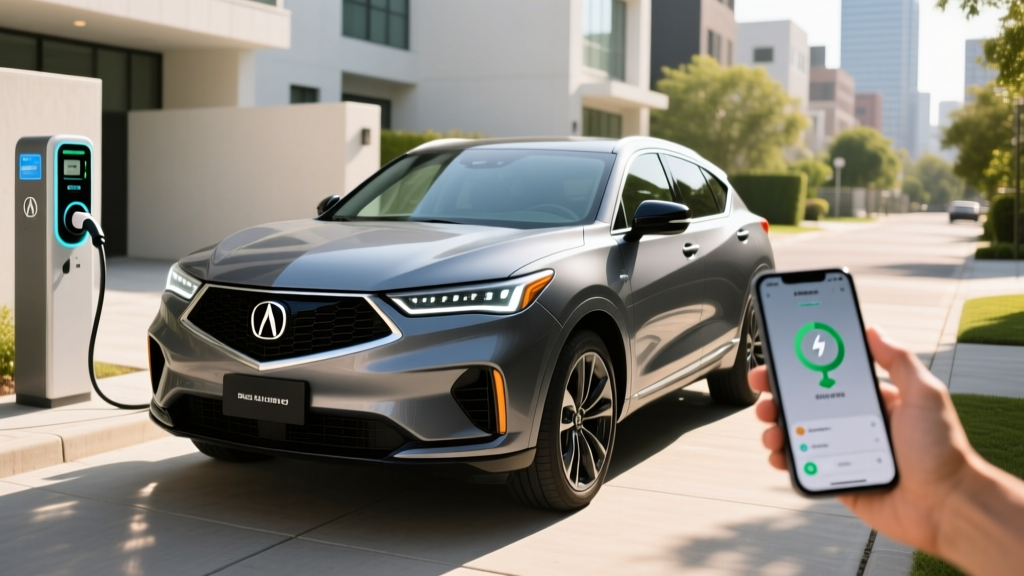
Acura's first all-electric vehicle arrives with a familiar nameplate and a borrowed backbone. The 2024 Acura ZDX rides on GM's Ultium platform — the same architecture underpinning the Cadillac Lyriq — but wears Acura styling, tuning, and a starting price that pushes firmly into luxury territory. For buyers cross-shopping electric SUVs in the $65,000–$75,000 range, the ZDX presents an interesting proposition: proven Ultium battery tech wrapped in a package that prioritizes comfort over outright performance.
We've spent time with the specs, the charging data, and the ownership math to give you everything needed to decide whether the ZDX belongs in your driveway — or whether a Lyriq, BMW iX, or Tesla Model X serves you better.
2024 Acura ZDX: Core Specifications at a Glance
| Specification | ZDX A-Spec (RWD) | ZDX A-Spec (AWD) | ZDX Type S |
|---|---|---|---|
| EPA Range | 325 miles | 304 miles | 278 miles |
| Battery (usable) | ~102 kWh (NMC) | ~102 kWh (NMC) | ~102 kWh (NMC) |
| Horsepower | 340 hp | 490 hp | 500 hp |
| 0–60 mph | ~6.0 sec (est.) | ~5.0 sec (est.) | ~4.5 sec (est.) |
| Max DC Fast Charge | 190 kW | 190 kW | 190 kW |
| 10–80% DC Time | ~30 minutes | ~30 minutes | ~30 minutes |
| Level 2 Charge Rate | 11.5 kW (~31 mi/hr) | 11.5 kW (~31 mi/hr) | 11.5 kW (~31 mi/hr) |
| MPGe (combined) | ~96 MPGe | ~89 MPGe | ~82 MPGe |
| Drivetrain | RWD single motor | AWD dual motor | AWD dual motor |
| Base MSRP | $65,850 | $69,850 | $74,850 |
Sources: fueleconomy.gov, Acura Newsroom. Performance estimates based on Ultium-platform vehicle testing. Final EPA figures may vary by model year and trim.
Range and Efficiency: What the EPA Sticker Doesn't Tell You
EPA Rated: 325 mi (RWD) / 304 mi (AWD) / 278 mi (Type S)
Highway (70–80 mph): Expect ~260–280 mi (RWD), ~240–260 mi (AWD)
Cold Weather (below 32°F): Plan for 20–30% reduction — roughly 225–260 mi (RWD)
Mixed Commuting: Most owners will see 290–310 mi in moderate conditions (RWD)
The ZDX A-Spec RWD's 325-mile EPA rating is genuinely competitive — it matches or exceeds the Cadillac Lyriq (314 mi) and BMW iX xDrive50 (324 mi) while trailing the Tesla Model X Long Range (348 mi). But the EPA sticker assumes a mix of city and highway driving in moderate temperatures.
The 102 kWh (usable) Ultium battery uses NMC (nickel manganese cobalt) chemistry, which delivers higher energy density than LFP but is more sensitive to sustained high-state-of-charge storage. For daily driving, Acura recommends setting a charge limit around 80–90% to preserve long-term battery health — which effectively gives you ~260–290 usable miles on a typical "daily" charge.
Highway efficiency takes a hit in any large crossover, and the ZDX is no exception. At sustained 75 mph speeds, expect consumption around 340–370 Wh/mile in the AWD trims, which reduces real-world range to roughly 250–270 miles before you'd want to find a charger. Cold weather compounds this: battery heating demands and cabin climate use can drop range by 20–30% in sub-freezing conditions.
Charging Speed: DC Fast Charging and Home Setup
| Charging Level | Power / Rate | Miles Added per Hour | Notes |
|---|---|---|---|
| Level 1 (120V household) | ~1.4 kW | ~3–4 mi/hr | Emergency/trickle only |
| Level 2 (240V home/public) | 11.5 kW (48A) | ~31 mi/hr | Full charge in ~9 hours |
| DC Fast Charge (peak) | 190 kW | ~180 mi in 10 min (peak) | 10–80% in ~30 min |
| DC Fast Charge (sustained avg) | ~130–150 kW | Varies by SoC | Charge curve tapers above 80% |
The ZDX's 190 kW peak DC fast-charging rate is respectable but not class-leading. The Hyundai Ioniq 5 peaks at 240 kW on 800V architecture, and Tesla's V3 Superchargers deliver 250 kW. In practice, the ZDX will sustain its peak rate only in a narrow state-of-charge window (roughly 15–45% SoC), then taper progressively. Expect a 10–80% session to take approximately 30 minutes at a functioning 190+ kW charger — adequate for road trips with planned stops, but not the fastest in the segment.
For home charging, the 11.5 kW onboard charger is a strong point. A Level 2 home station on a 60-amp circuit (48A continuous) will replenish roughly 31 miles of range per hour, meaning a depleted battery reaches full in about 9 hours — easily handled with overnight charging. Most ZDX owners will plug in nightly and rarely need DC fast charging except on road trips.
The ZDX uses the CCS1 connector standard for DC fast charging. Acura has confirmed that future models will transition to the NACS (Tesla) connector, and adapters for Tesla Supercharger access are expected to be available, but as of the 2024 model year, you'll rely on Electrify America, EVgo, ChargePoint, and other CCS-compatible networks.
Performance and Driving Dynamics
The ZDX lineup splits into two distinct personalities. The A-Spec RWD (340 hp) prioritizes range and comfort, delivering adequate acceleration with a relaxed, luxury-oriented feel. The A-Spec AWD bumps output to 490 hp with dual-motor all-wheel drive, while the Type S pushes to 500 hp with sport-tuned suspension and more aggressive throttle mapping.
None of these are track cars — the ZDX weighs over 5,700 pounds in AWD trims — but the instant torque delivery makes highway merging and city driving feel effortless. The Type S's estimated 4.5-second 0–60 time is quick by any measure, though it trails the Tesla Model X Plaid (2.5 sec) and BMW iX M60 (3.6 sec) in outright performance.
Ride quality is where the ZDX earns its luxury badge. The suspension soaks up road imperfections with composure, cabin noise levels are well-controlled, and the steering is light but precise. This is a grand-touring cruiser, not a sports SUV — and that's exactly what most luxury EV buyers want.
Pricing, Trims, and Federal Tax Credit Eligibility
| Trim | Base MSRP | As-Tested (typical) | §30D Credit Eligible? |
|---|---|---|---|
| A-Spec RWD | $65,850 | $67,500–$69,000 | Eligible (up to $7,500) |
| A-Spec AWD | $69,850 | $71,500–$73,500 | Eligible (up to $7,500) |
| Type S | $74,850 | $77,000–$80,000 | Eligible (up to $7,500) |
All ZDX trims fall under the IRS §30D MSRP cap of $80,000 for SUVs, making them potentially eligible for the full $7,500 federal tax credit — but eligibility depends on several buyer-specific and vehicle-specific factors that change frequently.
- Buyer income cap: Modified AGI ≤ $300,000 (joint) / $225,000 (head of household) / $150,000 (single)
- MSRP cap: ≤ $80,000 for SUVs (all ZDX trims qualify)
- Battery sourcing: Critical minerals and battery components must meet phased-in percentage thresholds from US or FTA-partner countries — these thresholds tighten annually
- Point-of-sale transfer: As of 2024, the credit can be transferred to the dealer at purchase, reducing the purchase price directly (requires dealer registration)
- FEOC restriction: Vehicles with battery components from a "foreign entity of concern" (e.g., certain Chinese suppliers) may lose eligibility — check the specific VIN on the IRS qualifying vehicle list
Always verify current eligibility at irs.gov and confirm with your tax professional before relying on the credit.
The ZDX is assembled at GM's Spring Hill, Tennessee plant alongside the Lyriq, which helps with domestic-content requirements. However, battery mineral sourcing rules have disqualified several EVs from the full credit in recent years, so confirming the specific VIN's eligibility is essential before signing paperwork.
Interior, Cargo, and Technology
The ZDX's cabin is a clear step above the Lyriq's in material quality and design cohesion. Soft-touch surfaces, genuine aluminum trim, and available Milano leather create a premium atmosphere. The centerpiece is an 11.3-inch touchscreen running a Google Built-In infotainment system — responsive, intuitive, and integrated with Google Maps for EV-aware route planning that factors in charging stops.
Passenger space is generous for a midsize crossover:
- Front legroom: ~42.0 inches
- Rear legroom: ~38.5 inches
- Cargo (rear seats up): ~28 cu ft
- Cargo (rear seats folded): ~60 cu ft
These dimensions are competitive with the Lyriq and BMW iX but fall short of the Tesla Model X (which offers available third-row seating and a larger frunk). The ZDX does include a modest front trunk (frunk) for additional storage.
On the driver-assistance front, the ZDX comes equipped with AcuraWatch, including adaptive cruise control, lane-keeping assist, and blind-spot monitoring. Notably, GM's hands-free Super Cruise system — an SAE Level 2 driver-assistance feature requiring driver attention — is available on the ZDX, enabling hands-free driving on over 400,000 miles of compatible highways. This is a significant differentiator vs. competitors that lack hands-free capability, though it remains a supervised system, not autonomous driving.
Super Cruise and AcuraWatch are Level 2 driver-assistance systems. The driver must remain engaged, monitor the road, and be prepared to take over at any time. These are not "self-driving" systems. Only Level 4 services (e.g., Waymo in designated zones) operate without a human driver. Never disengage attention while using Level 2 features.
Warranty and Long-Term Ownership
| Coverage | Term |
|---|---|
| Basic (bumper-to-bumper) | 4 years / 50,000 miles |
| Powertrain | 6 years / 70,000 miles |
| Battery (high-voltage) | 8 years / 100,000 miles |
| Battery capacity retention | Maintained above ~70% during warranty period |
| Roadside assistance | 6 years / 70,000 miles |
The 8-year/100,000-mile battery warranty is standard for the segment and aligns with federal requirements. The ~70% capacity retention threshold means Acura will repair or replace the battery if it degrades below that level within the warranty period. Based on Ultium-platform data from the Lyriq and other GM EVs, real-world degradation has been modest — most owners report 3–5% loss in the first year, stabilizing thereafter.
Long-term ownership costs favor the ZDX over comparable gas-powered luxury SUVs on fuel and maintenance, but insurance premiums for EVs in this price range tend to run 15–25% higher than ICE equivalents. Factor in home charger installation ($800–$2,500 depending on electrical panel condition) and you're looking at a total first-year cost that's meaningfully higher than the MSRP suggests — offset partly by the tax credit and fuel savings over time.
Pros, Cons, and the Competition
✓ Pros
- Competitive 325-mile EPA range (RWD)
- Super Cruise hands-free driving available
- Premium interior with Google Built-In
- Strong 11.5 kW Level 2 charging
- Comfortable, quiet ride quality
- Qualifies for §30D credit (verify VIN)
✗ Cons
- 190 kW DC charging trails class leaders (240–350 kW)
- Type S range drops to 278 mi
- No third-row option (unlike Model X)
- CCS1 only — no native NACS/Tesla access yet
- Heavy (~5,700 lbs) affects efficiency
- Limited real-world ownership data (first model year)
Key competitors to cross-shop:
- Cadillac Lyriq ($57,195+): Same platform, lower price, similar range — less premium interior
- BMW iX xDrive50 ($87,250+): Superior driving dynamics, faster charging, but significantly more expensive
- Tesla Model X ($79,990+): Supercharger network, faster charging, available third row — but aging interior
- Hyundai Ioniq 5 ($41,800+): Much cheaper, 800V fast charging — smaller, less luxurious
Who Should Buy the 2024 Acura ZDX?
Decision Framework
Choose the ZDX if:
- You want a premium electric SUV with a comfortable, quiet ride and don't prioritize sporty handling
- Super Cruise hands-free driving on highways is important to you
- You have home Level 2 charging and most trips fall within 250 miles
- You prefer a traditional luxury dealership experience over Tesla's direct-sales model
Look elsewhere if:
- You frequently road-trip 400+ miles and need the fastest possible DC charging
- You need a third row (Model X, Kia EV9)
- Budget is a primary concern (Lyriq, Ioniq 5 offer better value)
- You want Tesla Supercharger network access without adapters
Frequently Asked Questions
What is the real-world range of the 2024 Acura ZDX?
The EPA rates the ZDX A-Spec RWD at 325 miles, AWD at 304 miles, and Type S at 278 miles. In real-world highway driving at 70–80 mph, expect 250–280 miles depending on trim. Cold weather (below freezing) can reduce range by 20–30%. For daily commuting with regular charging, most owners will rarely approach the full range.
How fast does the ZDX charge at home and on the road?
At home on a Level 2 (240V, 48A) charger, the ZDX adds about 31 miles of range per hour, reaching a full charge in roughly 9 hours. On DC fast chargers, it peaks at 190 kW and can go from 10–80% in approximately 30 minutes under ideal conditions. Charge speed tapers significantly above 80% SoC.
Does the 2024 Acura ZDX qualify for the $7,500 federal EV tax credit?
All ZDX trims fall under the $80,000 SUV MSRP cap for §30D eligibility, and the vehicle is assembled in Tennessee. However, the full $7,500 credit depends on battery mineral/component sourcing requirements (which tighten annually) and buyer income limits ($150K single / $300K joint). Verify your specific VIN at irs.gov and consult a tax professional before purchase. The credit can be transferred to the dealer at point of sale as of 2024.
Is the Acura ZDX worth buying over the Cadillac Lyriq?
The ZDX and Lyriq share the Ultium platform and similar battery specs, but the ZDX commands a ~$8,000–$10,000 premium for a more upscale interior, Acura-specific tuning, and Super Cruise availability. If interior luxury and brand cachet matter, the ZDX justifies the cost. If value is paramount, the Lyriq delivers 90% of the experience at a significantly lower price.
Can I use Tesla Superchargers with the ZDX?
Not natively. The 2024 ZDX uses the CCS1 connector. Acura has indicated that a NACS adapter for Supercharger access will be available, but as of the 2024 model year, you'll rely on CCS-compatible networks (Electrify America, EVgo, ChargePoint). Future Acura EVs are expected to adopt NACS natively.
What is the battery warranty and expected longevity?
Acura covers the high-voltage battery for 8 years or 100,000 miles, guaranteeing it will retain at least ~70% of original capacity during that period. Based on Ultium-platform data, degradation has been modest — expect 3–5% loss in year one, stabilizing to roughly 85–90% capacity retention at 100,000 miles under normal use.